
France 1900 • Marc Walter & Sabine Arqué
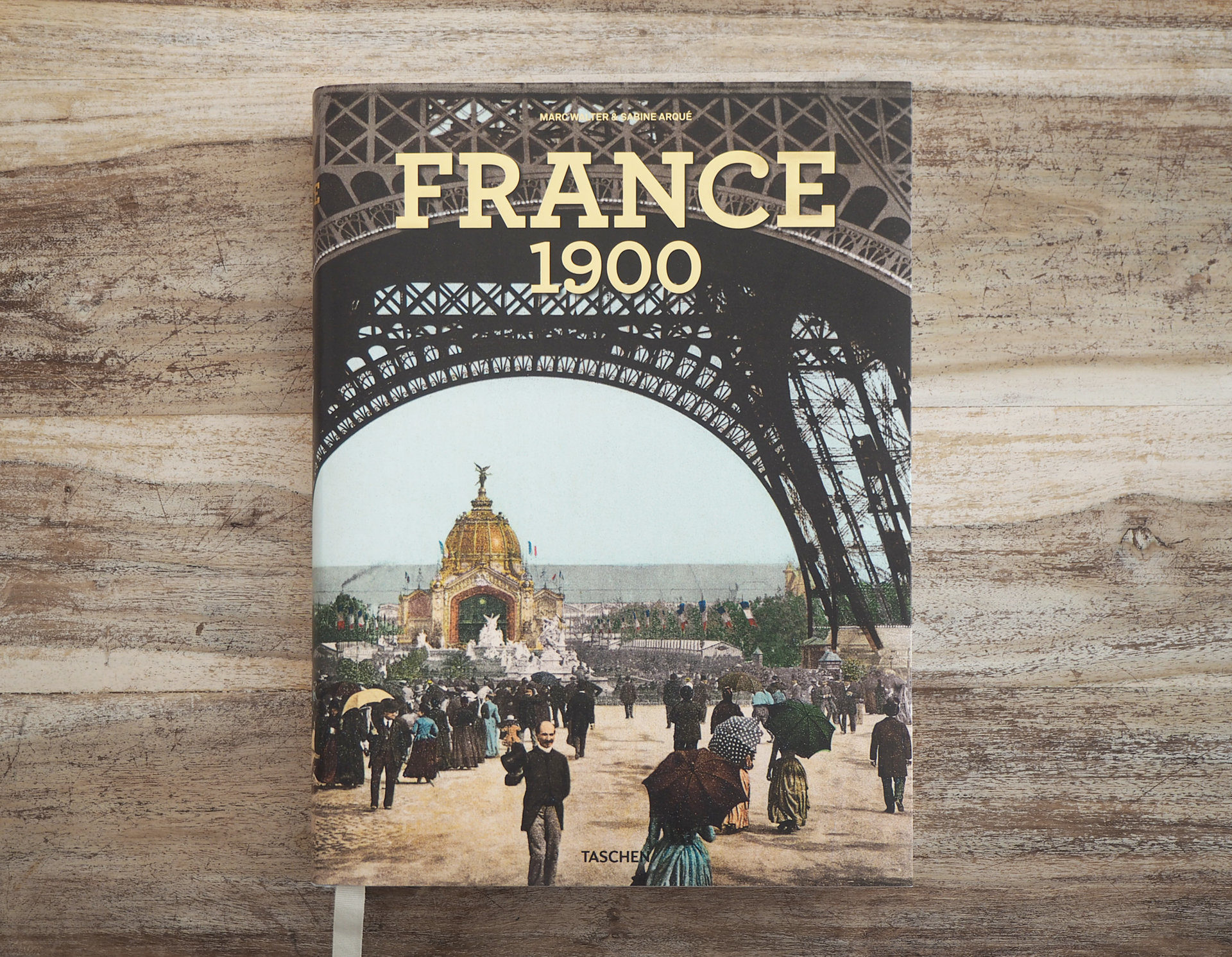
For me, the greatest writers of all time are the French authors of the nineteenth century, and I’ve spent countless hours in France of that era. Together with authors like Balzac, Dumas, Flaubert, Hugo, Stendhal, and Maupassant, I’ve traveled through the most diverse regions of France—above all, of course, Paris. Some of the great authors were active a few decades earlier, yet the Belle Époque exerts a special magic that captivates me again and again—literarily, but also in documentaries and photographs. The illustrated volume France 1900, which I’d like to introduce today, is probably the most extensive collection of photographs from that period and, in its overall design, a work of art. It’s certainly the largest book I now own, and whether its contents are equally grand is what you’ll find out in this review.
The Belle Époque covers a not entirely clearly defined period around the turn of the century. It begins roughly with the end of the Franco-Prussian War in 1871 and extends to the outbreak of the First World War in 1914. In these years—thanks to the ensuing period of peace and technological progress (and thus the continuation of the Industrial Revolution)—Europe experienced a flowering. This was clearly felt economically and culturally, even if the upswing did not reach all social classes and was concentrated especially in the cities. One of the major centers of this boom was Paris, which hosted the 1889 Exposition Universelle. There, the newly built Eiffel Tower was presented, along with inventions such as the phonograph and the telephone.
I’ve repeatedly watched documentaries about this era. For example, Arte once aired a good documentary about photographs that shopkeepers in particular liked to have taken of themselves and their storefronts. Some time ago I also blogged about a book with a fitting documentary on Colette. If you browse the web a bit, you’ll also find film footage from the Belle Époque. I also thought the documentary Glanz und Elend der Kurtisanen, Im Spiegel der Malerei (“Splendor and Misery of Courtesans, in the Mirror of Painting”) was brilliant, as well as the video about the painter Toulouse-Lautrec (whose posters can also be found in this volume). I find this period in France particularly fascinating because it was a turning point: traces of the country’s turbulent past still clung to it, and yet modernity—with technological development and numerous inventions—was already beginning to upend society completely. Over everything hangs an atmosphere very close to what Balzac describes, and especially when you read Maupassant’s novellas you notice that people back then already thought in many ways much as we do. It’s precisely the surge in art, industry, architecture, technology, travel, gastronomy, and nightlife with its demi-monde that makes this period such fertile ground for stories—and a wellspring for dreaming.

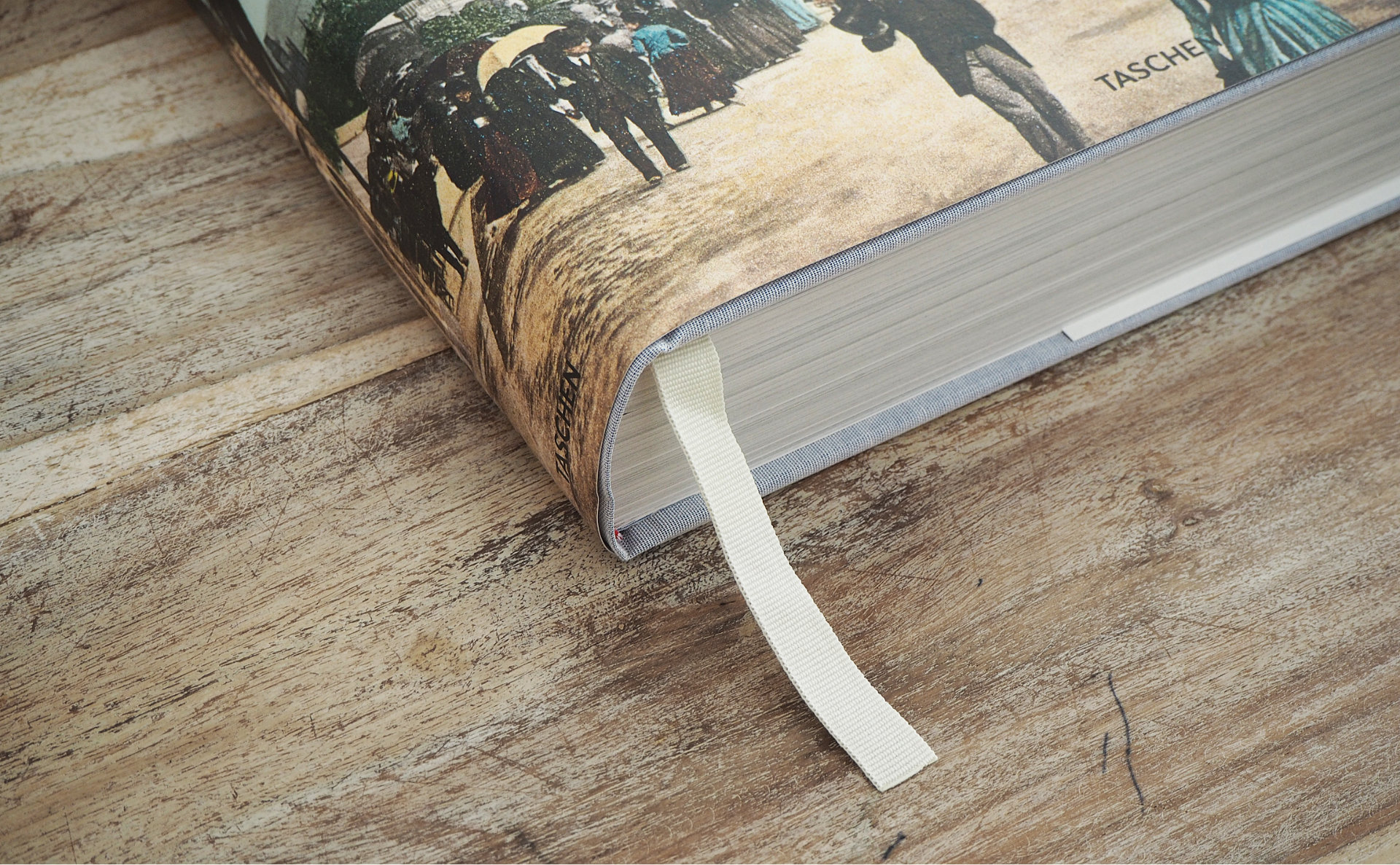
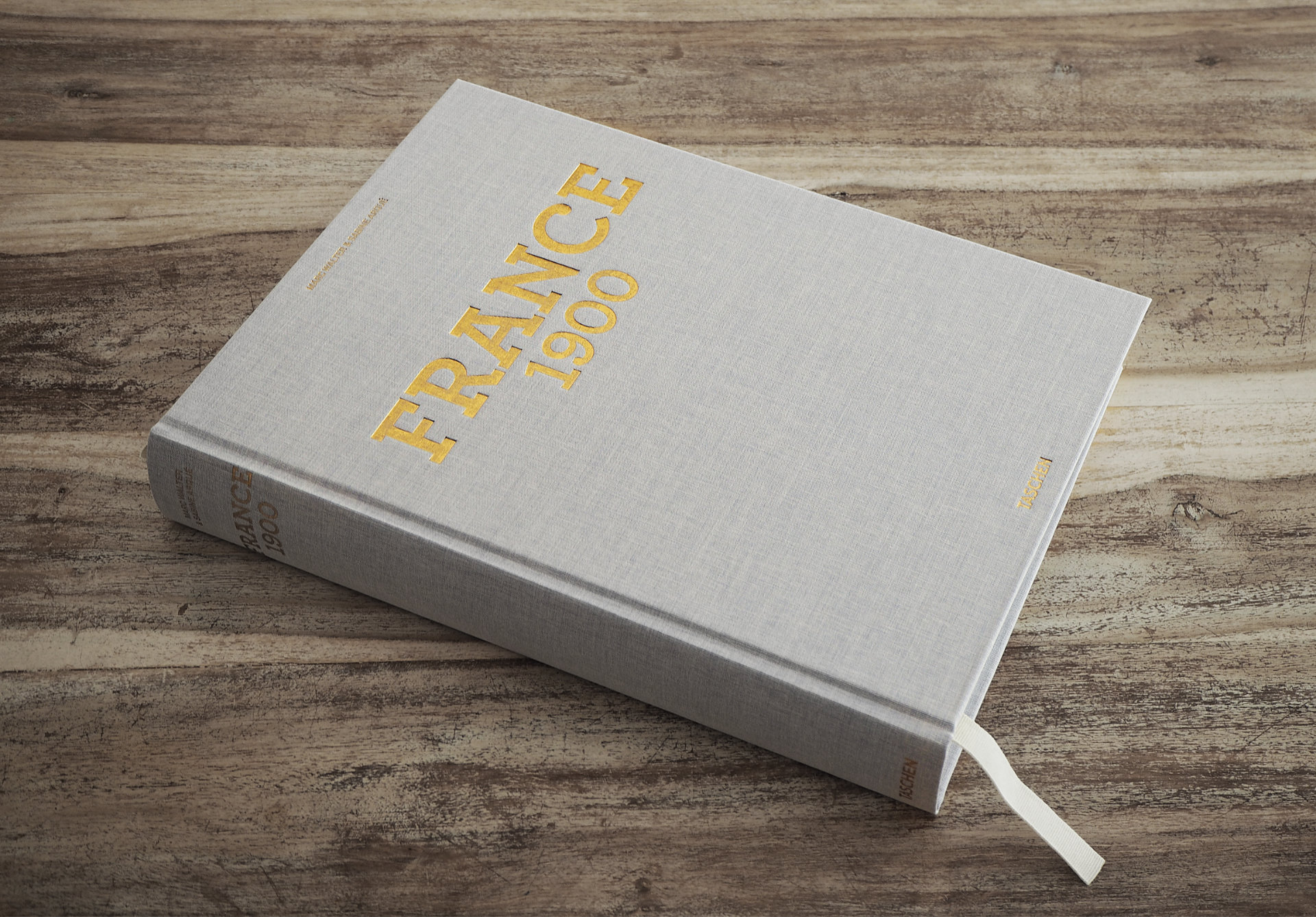
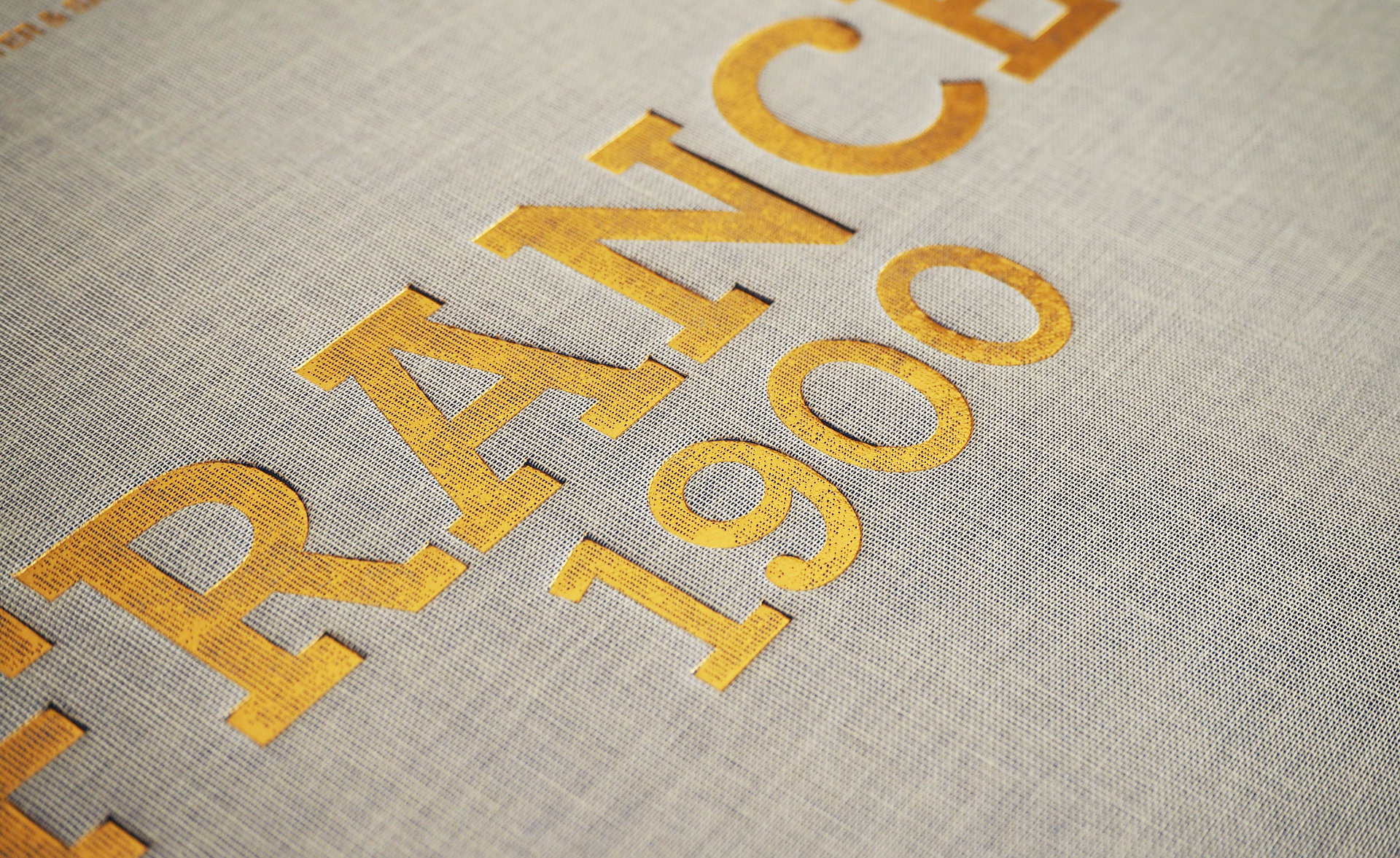
After browsing the catalog of the newly discovered Taschen publishing house, I came across this book and thought its subject was just right, but I was surprised at the premium price. When the book finally arrived at my home, it quickly became clear why. Photos never quite convey it, but the book is a powerhouse. I expected something in the format of MoonFire, which had already blown me away in terms of format, size, and production—but the volume before me exceeded my expectations. France 1900 is simply massive and by far the largest book I own; it doesn’t fit anywhere in my shelves unless I lay it on its side—and even then it sticks out quite a bit. It comes in a large box with a carrying handle, and at the top you can see a picture of the book on my reading chair—you can already tell how big it is. Its production values are as top-notch as MoonFire, and to me it’s clear that in the realm of illustrated books, few can rival Taschen anytime soon. The sturdy cloth binding, the thread stitching, the paper, the high-quality printing—everything is perfect. It even has a ribbon bookmark, though to be honest, it’s more of a ribbon strap, given how thick it is.
So the production and look are already excellent; naturally the question turns to its substance. At the heart of this volume are numerous photochrom prints. These are black-and-white photographs that were colored using a lithographic process. Especially in the years before the First World War, they were very popular and widely distributed. These photochromes look like hand-colored black-and-white photos; they’re pleasant to look at, yet they still feel very old and have their own nostalgic aura—much like old postcards. In addition, there are advertising posters, lithographs, hotel luggage labels, and ordinary photographs. As the introduction reveals, some images were also later colorized using digital processes. I particularly like the old advertising posters (primarily from the PLM railway company): they’re simply beautiful and evoke that typical mood associated with the period. The photochromes also give you a good sense of what things roughly looked like back then. Thanks to the large format, everything makes a strong impression, and once again I found myself diving deep into that vanished world.
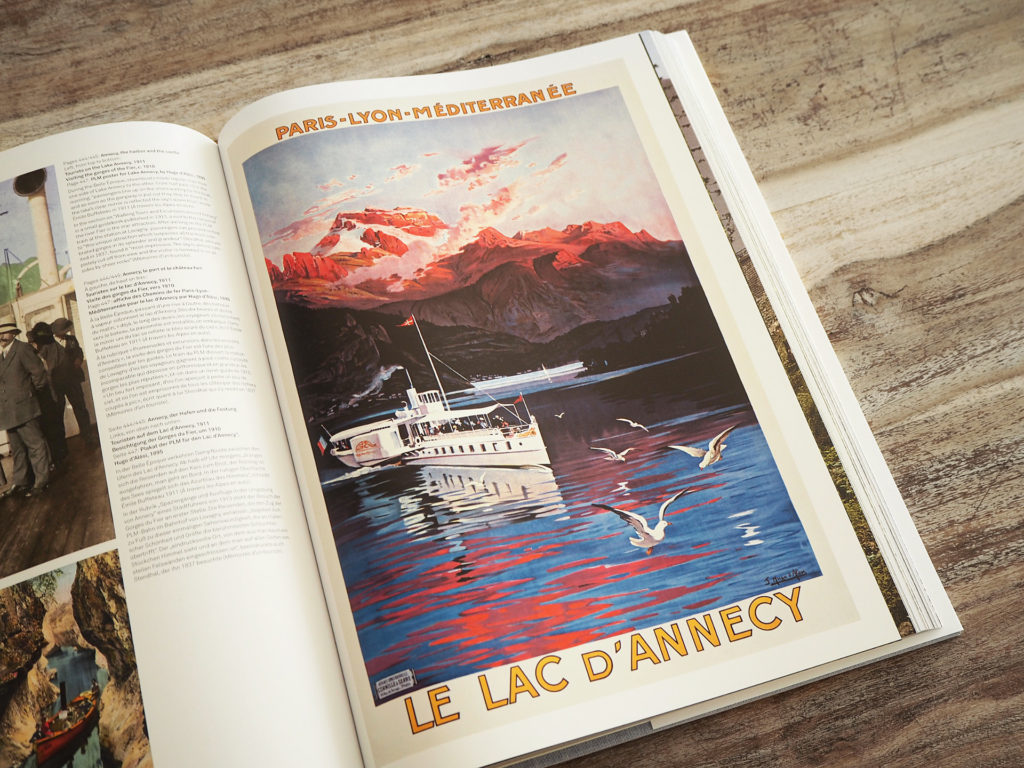
The book is trilingual, meaning all texts and captions appear in English, French, and German. That’s no problem, since there’s plenty of space at this size. While the book as a whole has less text than MoonFire, it still provides enough information to learn quite a bit about the period and the scenes depicted. Apart from the introduction and the index at the end, it’s organized by region and offers the following chapters:
- Paris and Surroundings
- The North and Normandy
- Atlantic Coast and the Pyrenees
- Loire Valley, Auvergne, and Pays d’Oc
- Champagne, the Vosges, and the Alps
- Rhône Valley and the Côte d’Azur
I find it very well structured, and you can locate places quite easily since their names also appear in the footer. While reading and viewing, I often had Google Maps open to see exactly where the places shown are located. An index at the end allows you to look up places very quickly—which I did again and again.
Each chapter has an introductory text, though these are relatively brief. In this volume, the viewing really is the focus. But the book has over 630 pages, and often several photos appear on a single page. Taking in all these images does take time and kept me occupied for several evenings. I found the captions very successful: there are frequent references and quotations related to major authors such as Flaubert, Hugo, or Fitzgerald. Anyone who loves the great French authors will certainly get their money’s worth here, continually following in their footsteps. Their impressions are recounted, and there are frequent notes on where, for example, Hugo, Stendhal, or Dumas stayed. Background on the world’s fairs, the Louvre, or other outstanding sites is also woven in repeatedly. Some captions include dates; others don’t.
Of course I kept an eye out for the many settings of my books—and I wasn’t disappointed. That makes the book a special experience, and that’s exactly what I was looking for. You see the Champs-Élysées with its carriages, just as in Dumas and Balzac. Or a lake in the Bois de Boulogne—and I can’t count how many times I’ve wandered that Bois with my characters, especially with Balzac, countless times. When you look at the images, you can easily imagine the rendezvous that took place there. Versailles appears as well, including the hamlet that Marie Antoinette had built there. I once saw a highly recommended Arte documentary about it. You’ll find the Normandy of Maupassant, Hugo, and Flaubert in the second chapter. Foremost is Le Havre, familiar from Madame Bovary and often mentioned in other books—Henry James, for instance—since the great ocean liners from America arrived there. Rouen, Flaubert’s birthplace, is also shown in several images. The picture on pages 154–155 looks exactly as I imagine Yonville: quite provincial, with timber-framed houses and somehow sleepy, gray, and dreary—perfect, so to speak, for Emma to unravel there. Saint-Malo—launch point, in Dumas and also in Balzac, for corsairs setting out against the English—is nicely depicted in several images.

I also loved the seaside resorts along the coasts, with their casinos—often in an Oriental style with minaret—which was very much in vogue (more than one boudoir of Balzac’s noble ladies had an Oriental touch). Of course, Mont Saint-Michel appears, as do the Moulin Rouge and other tourist landmarks, especially in Paris. Montmartre with its Sacré-Cœur is included as well. I was also taken with a city map of Paris without the Eiffel Tower—at the time it hadn’t yet been built. Interspersed throughout are advertising posters (including by Toulouse-Lautrec) and luggage labels.

One place that’s unfortunately missing is Angoulême, the little town from Balzac’s Lost Illusions. I would have loved to see it again, with its upper and lower town. Here I can recommend an excellent episode of Stadt, Land, Kunst on Arte that covers it in detail (in general, I highly recommend the series; it frequently features regions connected to the great authors). I also would have liked to see Guérande in Brittany, the setting of Balzac’s Béatrix. Tours, Balzac’s birthplace, does appear in a few images; for my taste, there could have been more.
A separate chapter is devoted to the Auvergne. Maupassant’s novel Mont Oriol is set in the village of Enval there. I was quite surprised to find even a picture of a farmhouse from Enval. And indeed there are images of spa towns and thermal facilities in the region—specifically Vichy, with a poster and images of the park and bathhouse. In Mont Oriol, the entrepreneurial protagonist positions his resort as a rival to Vichy, so these images likely offer an authentic depiction of the novel’s setting. The actual model for Maupassant’s novel, however, was Châtel-Guyon, a thermal park where he stayed several times between 1883 and 1887, and it’s included with a few images.
A city shown in many images is Marseille. It’s easy to imagine how it served as the starting point for Edmond Dantès’s journeys and how Alexandre Dumas drew inspiration from this great port. There’s even a picture of the Château d’If and a little anecdote. Dumas, in general, is mentioned repeatedly—for example, the Hôtel de la Réserve in Nice is shown, where Dumas often stayed.
The Côte d’Azur of the Lost Generation is covered in detail as well. Nice, Cannes, Monte Carlo, and all the major cities of the south coast are presented from their most fashionable side, with their numerous casinos. This volume leaves a truly comprehensive impression and seems to omit none of the significant French cities and sites of the time. I think Marc Walter placed a premium on completeness here and appears to have had access to an extremely extensive collection of photochromes.
What comes up a bit short, in my view, are the people of the era. The focus clearly lies on travel photography, landscapes, and architecture rather than on portraits of individuals. Many images show cities and well-known postcard motifs such as casinos, seaside resorts, and thermal baths, so it’s primarily the famous and much-visited places of the time that appear here. Of course, people are present again and again, and you do get a sense of what they looked like then; still, I missed some detailed shots that would highlight clothing and fashion more strongly. That likely requires a separate volume—it’s a subject of its own. For me, the locations that provide the settings in all my novels are the most interesting; thus I only noticed this in passing.
Editor and author Marc Walter (1949–2018) was a graphic designer, photographer, and collector. He owned one of the world’s largest collections of old photochromes and travel photographs, and France 1900 is not his first volume in this format. Taschen publishes several other books by him, including one on Germany circa 1900. I wasn’t able to find much more about Marc Walter. But looking at the image selection, an enormous amount of work must have gone into this book. The texts are by Sabine Arqué, a documentalist, picture editor, and author specializing in travel topics and the history of tourism.
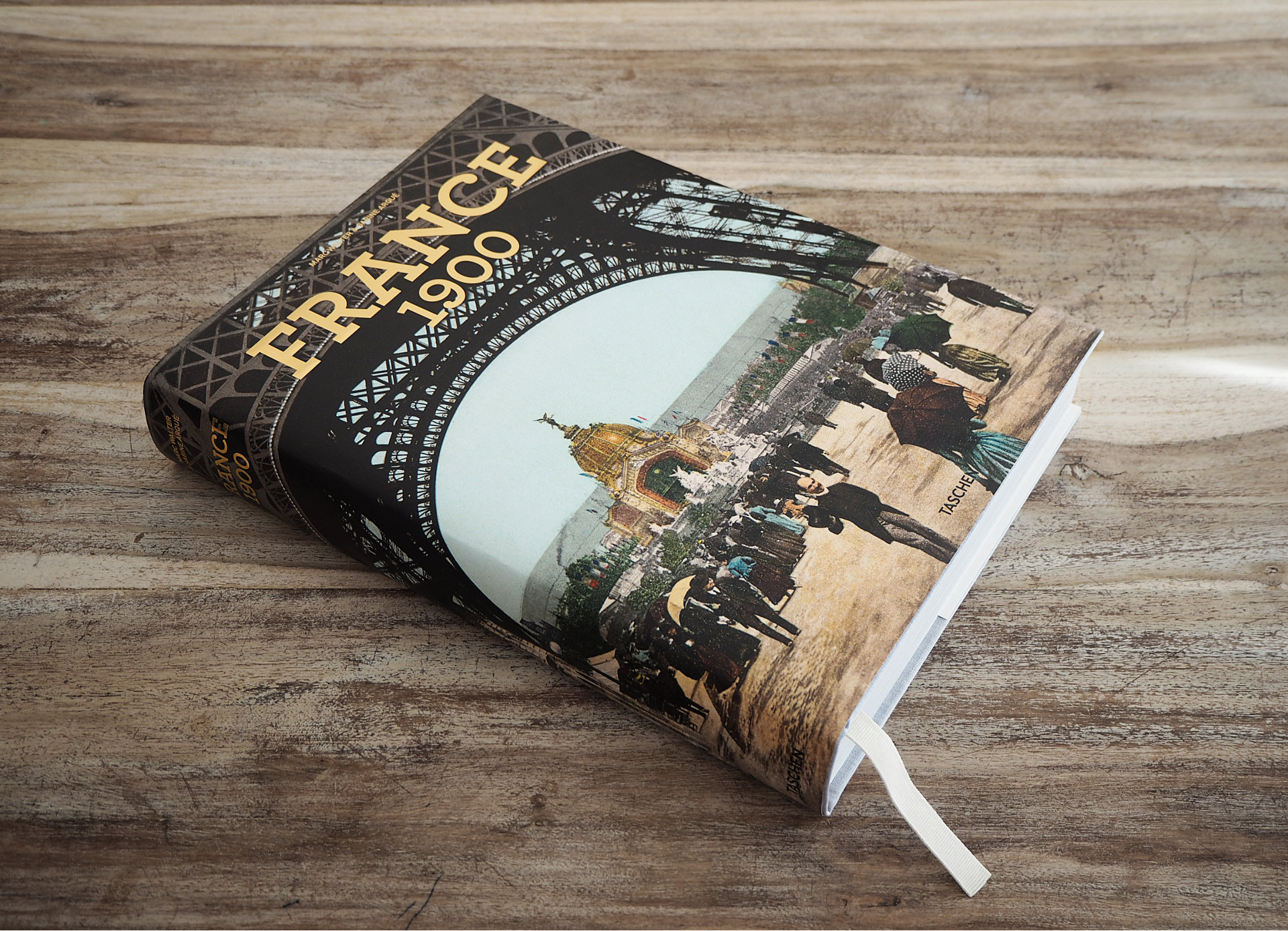
Conclusion: France 1900 is one of the most impressive illustrated books I’ve ever held in my hands, and for me Taschen has set a new benchmark here. This large-format, monumental volume offers a comprehensive look at France’s Belle Époque and won me over with its numerous photochromes, photographs, and lithographs. It’s hard to imagine another book that presents France of this era so extensively. If you’re interested in this very special span of time, this volume is a must. And if you’re as enthusiastic about the works of the great French authors as I am, you’ll find here a wonderful book that allows a unique visual journey into the fascinating France of those days. In my view, however, a particular affinity for France or the Belle Époque is necessary to make the investment worthwhile. The high price and the large format—which demands a lot of shelf space—are offset by one of the highest-quality illustrated books I’ve ever seen.
Update 18.11.2019: You’ll find a terrific documentary with painstakingly restored historical footage in the 3sat media library: La Belle Époque.
Book information: France 1900 • Marc Walter & Sabine Arqué • Taschen Verlag • 636 pages • ISBN 9783836578509
Solche Fotobände sind immer wieder hübsch anzusehen. Ich kann auch stundenlang darin rumblättern. Sie zeigen überwiegend Schönheit und Reichtum, selten die andere Seite. Du hast es in dem Post angesprochen. So ist es nun mal. Es bleiben – wie auch in unserem Leben – häufig nur die Erinnerungen an “schöne” Erlebnisse. Die weniger schönen werden von vielen verdrängt.
Übrigens zum “Premium-Preis” : Ein wahrer “Schinken” dieses Buch – und Schinken wird nach Gewicht bezahlt.
Das ist doch mal was Schickes. Allerdings sprang mir erstmal “The Grand Tour” ins Auge – auch wenn mich die Zeit um Prousts Suche und die Affäre Dreyfus ebenfalls reizt. Problem ist nur – wie beschrieben -, für diese Monstren einen geeigneten Platz zu finden. Ich wüsste mir keinen anderen als dem Fußboden. Bei dem Preis erhielte der Kauf direkt einen Feiertagscharakter. Ich könnte mir nur vorstellen solch ein Schwergewicht zu erwerben, wollte ich mich für Geleistetes selbst belohnen.
Hallo Tobi,
ich bin auch ein Fan von Bildbänden mit Fotografien und lese viele Sachbücher.
Dieses Exemplar scheint besonders prächtig zu sein und wirkt auch von deiner Vorstellung her sehr interessant. Die alten Aufnahmen von Frankreich sind bestimmt sehr interssant und die Belle Époque bietet ja auch viele schöne Motive.
Zur Zeit lese ich gerade ein Buch über den Orient-Express, das könnte dir auch gefallen.
Liebe Grüße ,
Barbara