
Der geträumte Norden • Adwin de Kluyver

After enjoying my reading of Niemandsland so much, I was determined to read Adwin de Kluyver’s newest book as well. While Niemandsland focused on Antarctica, Adwin de Kluyver turns to the North in his latest work. Just like his first book, The Dreamed North is a collection of numerous short pieces, all of which relate to the North. Could these episodes fascinate me as much as the gripping anecdotes from Antarctica? Let’s find out.
Stories about the fascinating adventures from the golden age of polar exploration are something I simply can’t get enough of. In the 19th century the poles were places that were unreachable and completely unexplored. Numerous theories swirled around what might be found there: a warm polar sea, a great volcano as Jules Verne described in his book The Adventures of Captain Hatteras (a wonderful book), or even a vast maelstrom leading into the interior of a hollow Earth. But the myth of the far North arose much earlier, and for as long as people can think, they have felt drawn there—the North makes them dream and speculate.

It is precisely this dreaming and striving toward the North that Adwin de Kluyver has made the subject of the book. Arranged chronologically, he begins with accounts of the earliest explorers in pre-Christian times. It’s not only about the exploration of the North Pole or the drive to reach it. It is also about the myth of the North and everything that surrounds it. One story tells of the Vikings or the journeys of Venetian nobles who claimed to have discovered several islands in the North Atlantic. In the end, their reports turned out to be tall tales, yet they influenced the mapping of the North for a long time. Especially up to the 19th century, theories and conclusions were very bold—and correspondingly wrong. Still, the inventiveness, curiosity, and intelligence of many scientists and explorers of the time are impressive.
The first stories only managed to excite me to a limited extent. They are indeed fascinating, but the accounts initially lacked that special something—that novella-like quality. That changed abruptly around the middle of the book, and from then on de Kluyver had me again. When he describes the path of a snowflake and how a scientist studied it, and how his wife drew them so beautifully that she influenced art for years. Or when he writes about the paintings of the artist Frederic Church, their strong connection to politics, and how a popular painting disappeared into private ownership for years—later even spurned as a free gift—only to be auctioned for a record price. Frederic Church traveled to Newfoundland to see and sketch icebergs for himself. The paintings truly are very beautiful, and anyone who has ever held a book about Humboldt will immediately recognize the style.

In another story, de Kluyven describes the creation of Santa Claus as he is known today in American culture, shaped decisively by the Bavarian-born illustrator Thomas Nast. You can also sense the author’s Dutch background—there are recurring references to his homeland. For example, there’s an episode about a Dutchman who wanted to revive Northern journeys back home.
The story that captivated me most was about a group of Inuit. A researcher had brought them from northern Greenland to New York. This small people lived very isolated in a community of about 200, and when they came to the big city, the many pathogens—and the warm climate—proved disastrous. It is shocking how ruthlessly people were exhibited in those days and how disrespectfully other cultures were treated.
One chapter describes the Thule Society, whose philosophy was a mixture of racism, spirituality, nationalism, and folklore, and which ultimately became closely connected with the NSDAP. You can always sense how political the North was. Whether it is a Swedish scholar from Uppsala locating the origins of all ancient mythology in the far North—or, of course, the various attempts to conquer the North. In the end it becomes clear that views of the North were always strongly influenced by current political and theistic currents.
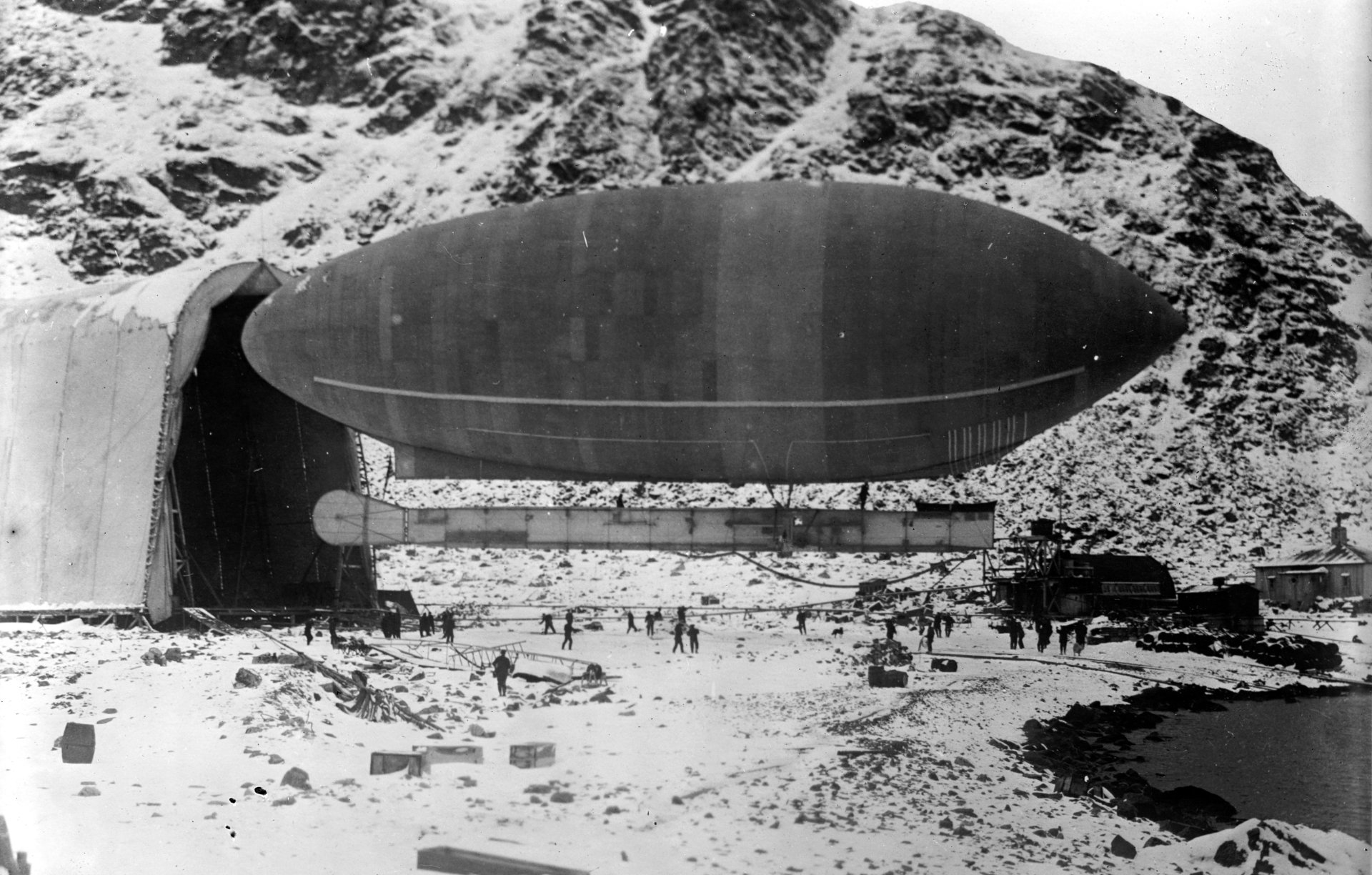
Naturally, reaching the North Pole is a topic as well—though less the expeditions to the Pole (which are mentioned) and more how, later on, the North Pole was “conquered” again and again over decades. I found a story about the airship America, with which the American journalist Walter Wellman intended to reach the North Pole from the air, especially fascinating.
Another story describes how people repeatedly tried to conquer the North Pole by air. That very often failed, and eventually flags were dropped from airplanes onto the Pole to stake one’s claim after all. The Vatican even placed a large cross at the North Pole—of course personally blessed by the Pontiff. The Russians, too, were at the Pole and even used submarines to explore what it looks like beneath it. Naturally, they planted a flag there as well—how could it be otherwise. And they determined that a mountain range connects the Pole to the Russian mainland. Unsurprisingly, they claimed the Pole for themselves on that basis. De Kluyver closes the book with a personal episode about visiting the North Cape.

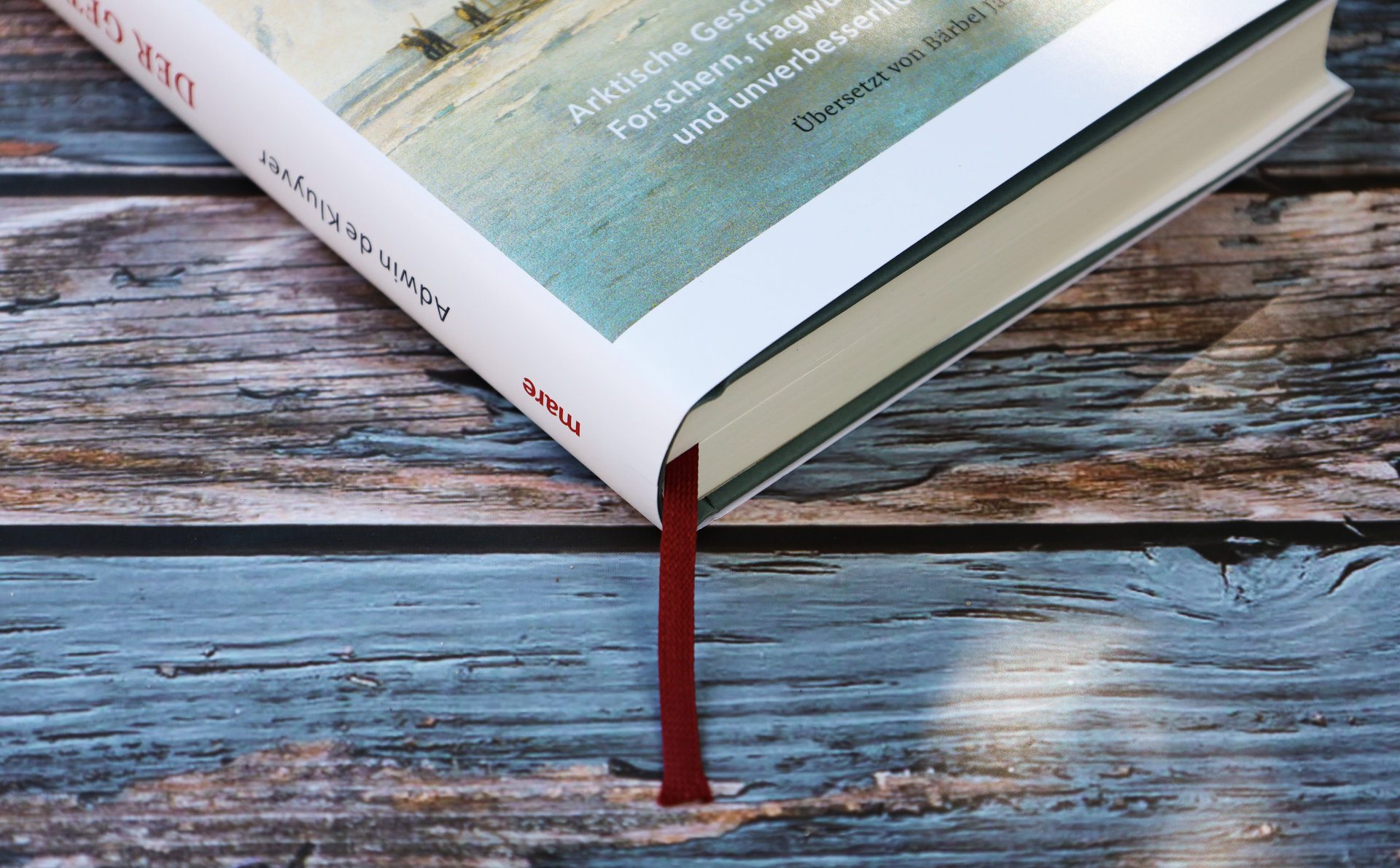
Compared with the presentation of Niemandsland, The Dreamed North is unfortunately a rather simple hardcover—but attractively designed, as with the other books in the series. The maps that preface each chapter are especially lovely. The typography is also carefully chosen and arranged. Altogether, a solid, pretty hardcover without major extras.
Conclusion: The Dreamed North lives up to its promises. Readers get a varied, colorful mix of many stories that vividly revive the myth of the North, the exploration of the Northern Hemisphere, and all the cultural connections to this distant, inhospitable place. The early-century accounts thrilled me less, but from the middle of the book on, the reading captivated me again. The author found exciting episodes that I then devoured. In terms of production, the book is more ordinary. If you liked Adwin de Kluyver’s Niemandsland, you will also greatly enjoy this book. If you don’t know it, you should definitely start with Niemandsland, which is simply a notch more beautiful in its presentation. Both books are worth reading and a pleasure.
Book information: Der geträumte Norden • Adwin de Kluyver • mare Verlag • 320 pages • ISBN 9783866487178

Ich mag auch sehr gerne “Abenteuerbücher” zu lesen. Echte Abenteuer. Deine Rezension ist mit so viel Freude und Spannung geschrieben, dass ich mir unbedingt das Buch und Niemandsland anschauen werde.
Liebe Grüße
Andrea