
Marie-Antoinette: Das geheime Tagebuch einer Königin • Benjamin Lacombe
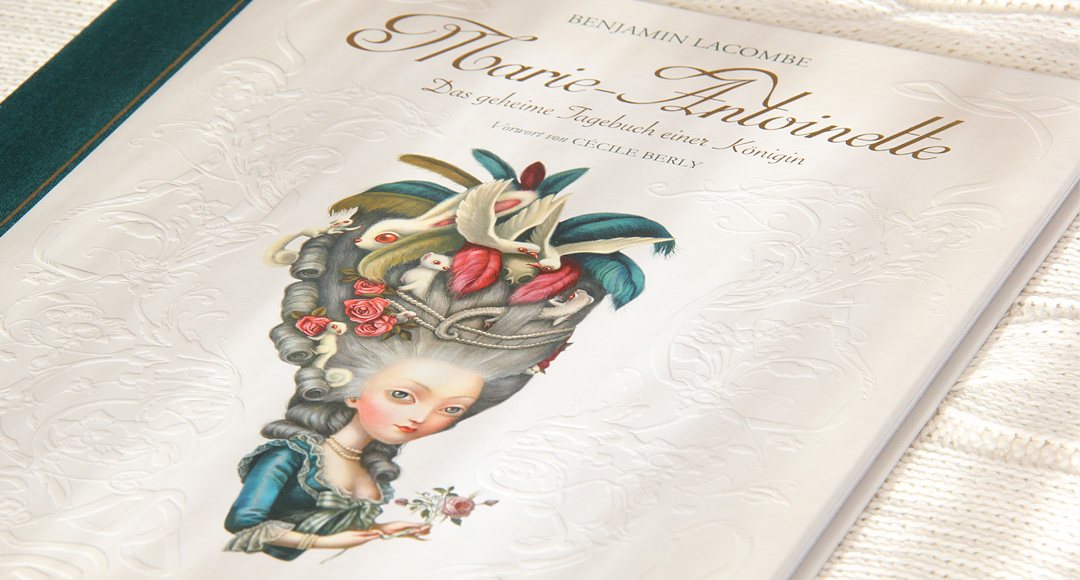
Kathrin from Phantasiereisen keeps raving about the books by French illustrator and artist Benjamin Lacombe. I’ve always found his illustrations appealing, but so far none of his books had truly caught my interest. That changed when Kathrin introduced his latest work, Marie Antoinette: The Secret Diary of a Queen, on her blog. I love 19th-century France and the literature of that period, which so often reflects the immense aftershocks of the French Revolution — a century earlier — that had brought great social and ideological upheaval and cast its long shadow on the people and writers of the following era. Inevitably, in the works of French authors one encounters again and again the events and figures of that cruel and brutal time, in which the stark contrast between wealth and poverty ultimately gave birth to the idea of human rights and republics in the minds of Europeans. For example, in Honoré de Balzac’s The Human Comedy, one enters the Conciergerie prison and walks through those impressive walls where Marie Antoinette spent her last hours. Finally, a video about the book convinced me completely.
The book is divided into four chapters and consists of genuine surviving letters from her mother, Maria Theresa (along with a few letters from Marie Antoinette herself, Mercy-Argenteau, and Count Fersen), as well as a fictional diary supposedly written by the queen. It is known that Marie Antoinette did not write much herself, so this diary — which sometimes jumps ahead by several years — is entirely fictional and written by Lacombe. The letters, on the other hand, are authentic and real. This creates an interesting blend of historical truth and invention, with the author aiming to portray a realistic image. The goal is not to provide a complete historical account or to portray Marie Antoinette with absolute accuracy, but to craft a coherent overall picture that conveys a sense of what kind of person she most likely was.
The text, diary entries, and letters read smoothly and naturally, and the language feels appropriate for a queen of that era. Lacombe stages them beautifully, with elegant handwriting and, of course, the matching paintings that both reflect and expand on the texts. With a wealth of symbolism, he expresses the emotions hinted at in the diary. The problems in her intimate relationship with the king are subtly conveyed through images, while her struggle with accusations, the admonishing influence of her mother, and her escape from the conventions of the French court are recurring themes.
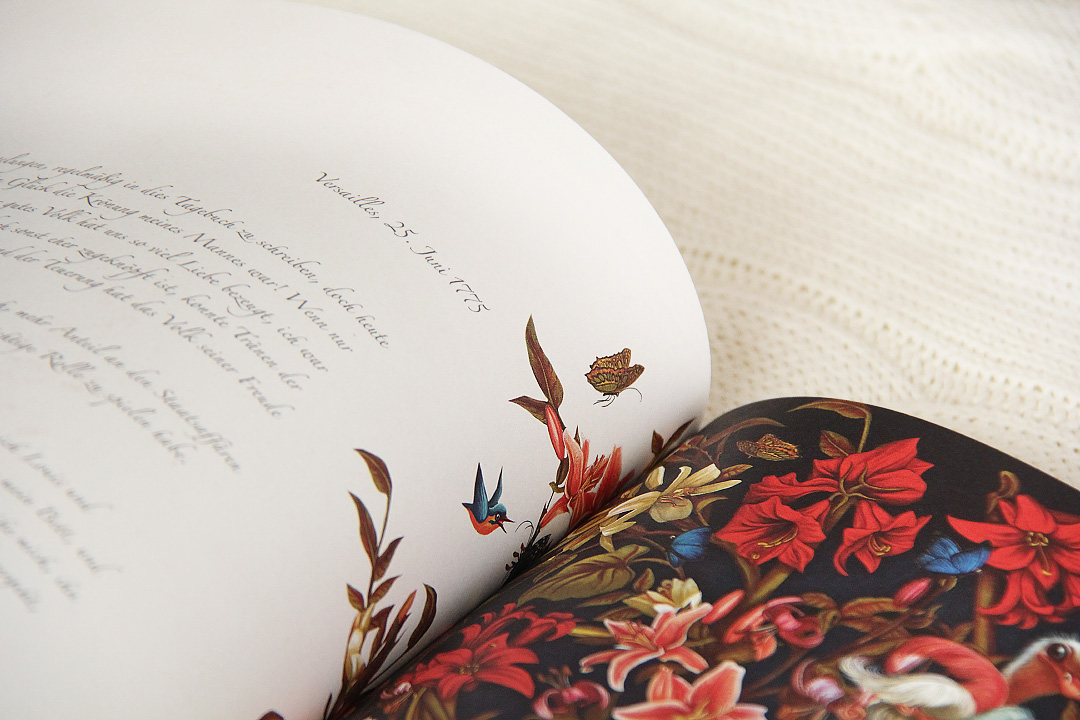
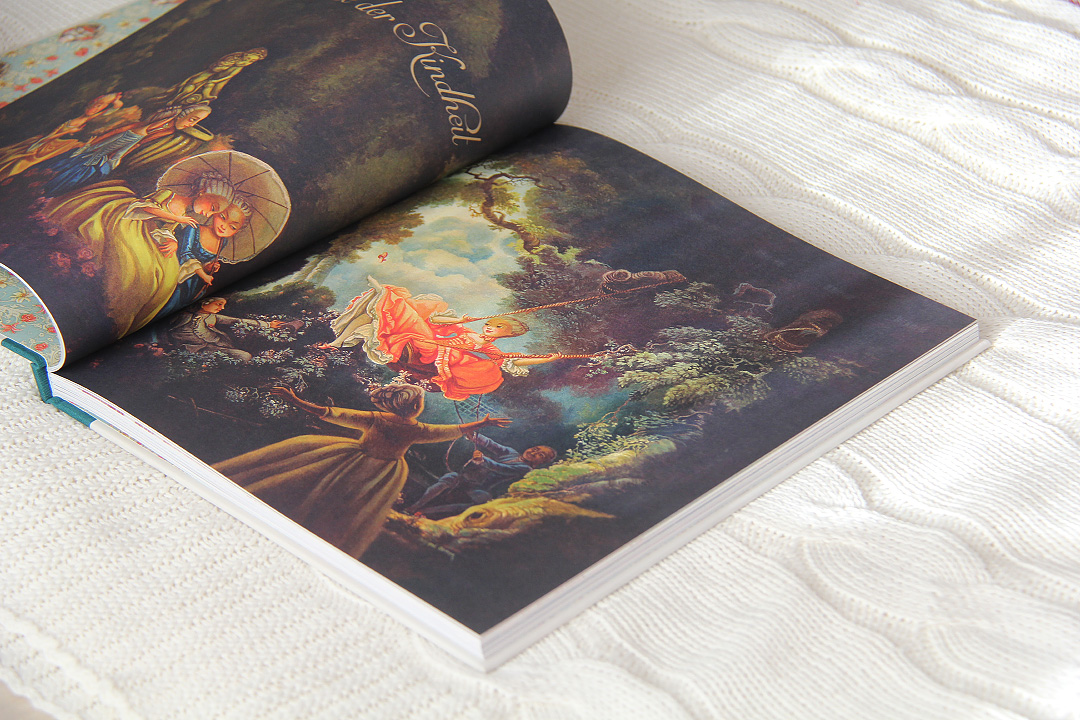
The illustrations, unsurprisingly, focus heavily on Marie Antoinette, almost always depicting the queen — adorned with her extravagant finery, enormous hairstyles, and the typical sense of excess that was so often criticized and that ultimately became her downfall. The sketches of her are beautiful, the colors and backdrops of the paintings captivating, and the style, while inspired by the many portraits of her, transforms them into something distinctly Lacombe’s own. In the background one might notice a gilded stucco ceiling from a lavish palace — much like one found in Versailles or in a painting from her era. Rococo art and the aesthetics of her time have deeply influenced Lacombe. The image of Marie Antoinette on a swing, for instance, is inspired by Jean-Honoré Fragonard’s The Swing from 1767.
As I read, I found myself drawn into Lacombe’s world of Marie Antoinette — her retreat to Petit Trianon, where she sought refuge from court etiquette and longed for nature and a simpler rural life; her uncertainty regarding the succession; and the brief mention of the Affair of the Diamond Necklace, which reveals how deeply she was entangled in a courtly life full of intrigue and conflicting interests. Axel von Fersen also appears — perhaps her lover, certainly her confidant. And, of course, the French Revolution and the execution of King Louis XVI and Marie Antoinette form an essential chapter. Here, Lacombe’s sympathy for Marie Antoinette becomes evident, and I’m not entirely sure she isn’t portrayed as too helpless, too naive, too much the victim of courtly life. While that’s not impossible, given the contrast between her opulent lifestyle and the suffering of the people, Lacombe’s depiction feels a bit too forgiving.
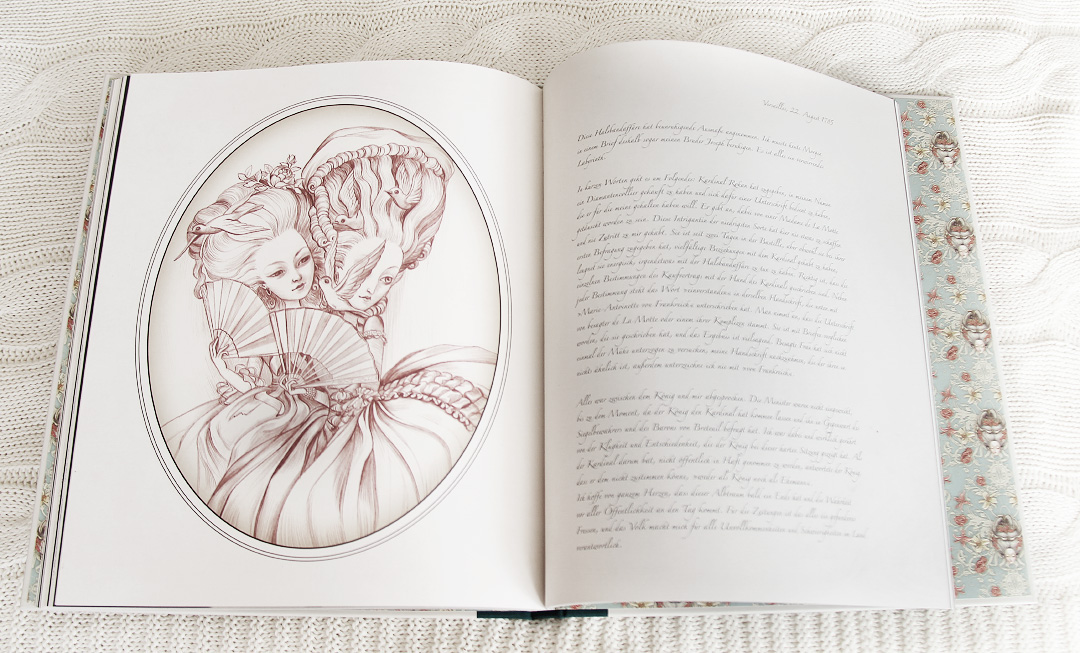
I really like the book’s format and its pleasant length. It can easily be read in one evening, and since the beautiful illustrations take center stage, it offers an atmospheric glimpse into another world. Compared with portraits from the queen’s time, Lacombe’s Marie Antoinette appeals to me far more — the image I’ve gained from this book is much more captivating than the historical reality. But that’s often how it is with books, even those without illustrations.
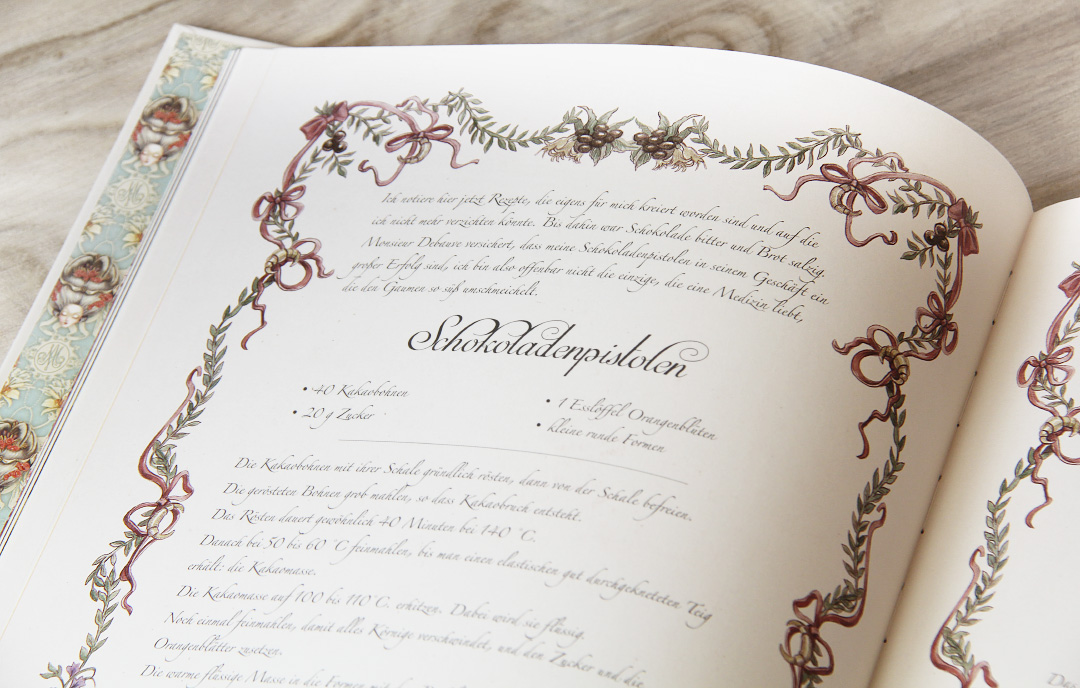
I particularly liked the little interludes that make the book more lively. For instance, it includes a recipe for chocolate pistols and half-moons — sweets that Marie Antoinette loved and indulged in generously. There’s also an excerpt from The Barber of Seville, a play she had performed in her theatre at Petit Trianon. A section on her elaborate hairstyles is also included, and with these small excursions, the book becomes a little journey of discovery into a world that suddenly feels tangible.
At the end, there is a timeline summarizing the political and personal events in a clear overview. It’s sufficient for orientation, though I still looked up more details to better understand the letters and the book’s chronology. The foreword is also a nice addition, though not much of it stayed with me — it serves more as a pleasant introduction.
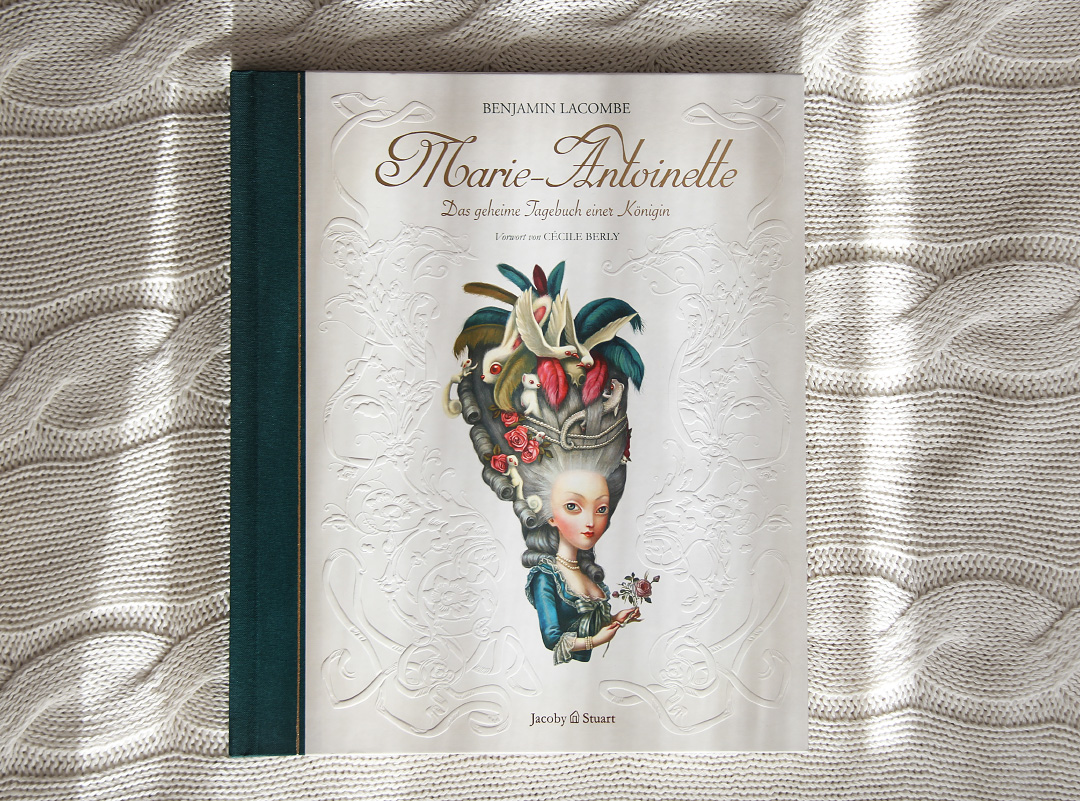
The quality of the book impressed me. The ornaments on the cover are embossed in relief, the sturdy cloth binding feels elegant, the endpapers have a lovely and appealing pattern, and the print quality is consistently excellent. Thanks to the slightly thicker paper, the book has just the right heft and feels good in the hand.
Conclusion: This illustrated book is a small work of art — with its gorgeous illustrations, strong symbolism, expressive sketches, and lovingly crafted text, it is a pleasure to read. Lacombe’s portrayal of Marie Antoinette is fascinating and engaging; the intimacy created through the fictional diary entries, combined with the artistic style inspired by the Rococo era, results in a vivid and distinctive image. How closely this portrait aligns with the real Marie Antoinette remains open to interpretation, but for the artistic enjoyment of the book, that question is secondary. The large time jumps in the diary entries lessen the reader’s emotional connection somewhat, leaving a sense of distance and mystery. A more detailed historical overview might also have been welcome. Nevertheless, Lacombe compensates for that with his illustrations, which are rich in detail and make the book worth revisiting. A beautiful work that I can recommend to anyone who loves the style of that period, is fascinated by French history, and appreciates high-quality illustration.
Book information: Marie Antoinette: The Secret Diary of a Queen • Benjamin Lacombe • Verlagshaus Jacoby & Stuart • 96 pages • ISBN 9783942787666
Hallo lieber Tobi,
also dieses Buch… ich habe mich verliebt Sonst lerne ich aber gerne dazu. Ich finde es immer schade wenn ich nachträglich bei meinen Rezi´s doch noch nen Fehler finde wenn ich sie paar Tage später selber noch mal lese und es kein andere gesehen hat oder sagen wollte : >
Ganz liebe Grüße
Romi
Ok… da oben stimmt was nicht oO jetzt hat er meinen schönen Text verunstaltet und ihn halb gelöscht wie ich sowas nicht mag :( *seufz*
Erst mal dann “Frohes Neues” noch : ) Ich hoffe du bist gut ins neue Jahr gekommen. Im Grunde wollte ich schreiben das ich mich in das Buch verliebt habe, durch Weihnachten und noch kommende Geburtstage werde ich noch geschröpft aber es ist auf meiner WL gelandet : > Ich mag die Geschichten vergangener Jahrhunderte und deren Frauen, auch wenn sie leider nicht immer so gut ausgehen :( Und ich mir oft wünsche selbst mal in der Zeit zu reisen, denn oft liest man ja doch recht widersprüchliche Dinge.
Vielen Dank für deine schöne und ausführliche Rezension :) Zu der ich noch ne Frage habe, im ersten Absatz schriebst du:
Unweigerlich findet man in den Werken der französischen Autoren immer wieder auf die Geschehnisse und auch Gestalten aus dieser grausamen und brutalen Zeit, in der die Gegensätzlichkeit zwischen Reichtum und Armut schließlich die Menschenrechte und die Republiken in den Köpfen der Europäer aus der Taufe gehoben hat.
Das liest sich seltsam, ist das so richtig? Ich lerne immer gerne dazu falls ich mich irre : ) Ich hoffe es ist ok wenn ich darauf aufmerksam mache oder danach frage, ich wünschte das auch bei mir öfter mal wer genau drüber liest und noch mal was sagt, wenn ich zwei Tage später noch mal lese und was finde bin ich immer etwas traurig wenns keiner gesehen hat ^^
Ganz liebe Grüße
auf bald
Romi
Liebe Romina,
das Buch ist wirklich gelungen, also ich kann dir nur empfehlen es weit oben auf deine Wunschliste zu setzen ;)
Was den Absatz betrifft, ist der vielleicht zu verschwurbelt formuliert. Das passiert mir manchmal. Mit dem Absatz ist folgendes gemeint: Es ist ja so, dass die Französische Revolution den Startschuss für die Aufklärung war. Besonders wurden dort das erste Mal Menschenrechte und der Bürgerrechte formuliert. Die Restauration und die Julirevolution von 1830 sind in den Büchern von zahlreichen Autoren des 19. Jahrhunderts ein Thema und dienen oft als Hintergrund für die Handlung ihrer Bücher. Beispielsweise bei Victor Hugo oder Honore de Balzac. Ein Ergebnis dieses Aufklärungsprozesses sind die Republiken, welche die europäischen Staaten nun haben und auch zum Selbstverständnis der Europäer gehören. Ich finde dieses ganze Thema sehr interessant, weil es eben genau zu dem Werteverständnis geführt hat, das wir haben, dessen sich viele aber nicht immer bewusst sind. Insbesondere nicht, welcher Entwicklungsprozess dahinter steht.
Ich wünsche Dir auch ein schönes neues Jahr und hoffe es hat für dich gut begonnen.
Liebe Grüße
Tobi
Hey Tobi :) lieben Dank für deine Antwort. Ich meinte eher von der Grammatik, den Inhalt versteht man sehr gut denn du kannst dich sehr gut ausdrücken. Aber müsste es nicht statt: Unweigerlich findet man in den Werken der französischen Autoren immer wieder auf die Geschehnisse und auch Gestalten… so: Unweigerlich findet man in den Werken der französischen Autoren immer wieder die Geschehnisse und auch Gestalten…?
Gaaaanz liebe Grüße :)
Heute Abend schaue ich mal nach deinem neuen Buchschatz :) Das Cover sah sehr interessant aus.
Romi
Huhu Romi,
ah, vielen Dank, da hab ich wieder zu kompliziert gedacht. Ich hab den Fehler gleich korrigiert.
Liebe Grüße
Tobi
landet auf meiner Wunschliste, Danke für die Vorstellung!
Klingt ja bezaubernd! Und wieder sehr schöne Fotos, die das Ganze ansprechend inszenieren. Immer eine Freude, bei dir zu lesen!
Liebe Grüße
Petra
Liebe Petra,
vielen Dank für deine Worte. Bei so einem Buch muss man aber Fotos sprechen lassen, denn die Kunst bei diesem Buch liegt in der ganzen Aufmachung und dem Gesamteindruck der sich dadurch ergibt.
Liebe Grüße
Tobi
Hallo Tobi,
mit reichlicher Verspätung finde ich heute endlich die Ruhe, um einmal überall zu kommentieren.
Ich freue mich, dass du dich “Marie-Antoinette” so schnell gewidmet hast und ich dir nicht zu viel versprochen habe, vor allem aber bin ich froh, dass Lacombe auch dich begeistern konnte. Den Aspekt, dass Marie-Antoinette vielleicht mit zu viel Nachsicht portraitiert war, kann ich nachvollziehen, auch wenn ich sie beim Lesen durchaus nicht als fehlerfrei empfunden habe – und zuletzt fand ich Lacombes Marie-Antoinette noch immer deutlich authentischer als jene in Sofia Coppolas Verfilmung. ;)
Hallo Tobi, vielen Dank für den tollen Buchtipp! Bisher kannte ich das Buch noch überhaupt nicht, mich spricht das Thema aber sehr an und die Illustationen sind so wunderwunderschön, dass ich mich gleich in das Buch verliebt habe. Vielen Dank!:)
Liebe Grüße, Krissy <3
Oh man, ich glaube ich habe mich gerade in ein Buch schockverliebt. <3 Danke für die Rezension und die tollen Bilder, ich hatte vorher noch nie von Benjamin Lacombe gehört oder eins seiner Bücher gesehen. Aber bei Themen/Personen wie Marie Antoinette kann ich sowieso nur selten widerstehen, und wenn es dann auch noch so toll aussieht… hach. :)
LG, Bianca
Liebe Bianca,
Lacombe kannte ich vorher auch nicht und nur von Kathrins Blog. Aber mir ging es wie dir, das Thema und die schöne Aufmachung war eine Kombination, der ich auch nicht widerstehen konnte. Bin gespannt wie dir das Buch gefällt.
Liebe Grüße
Tobi