
Longbourn • Jo Baker
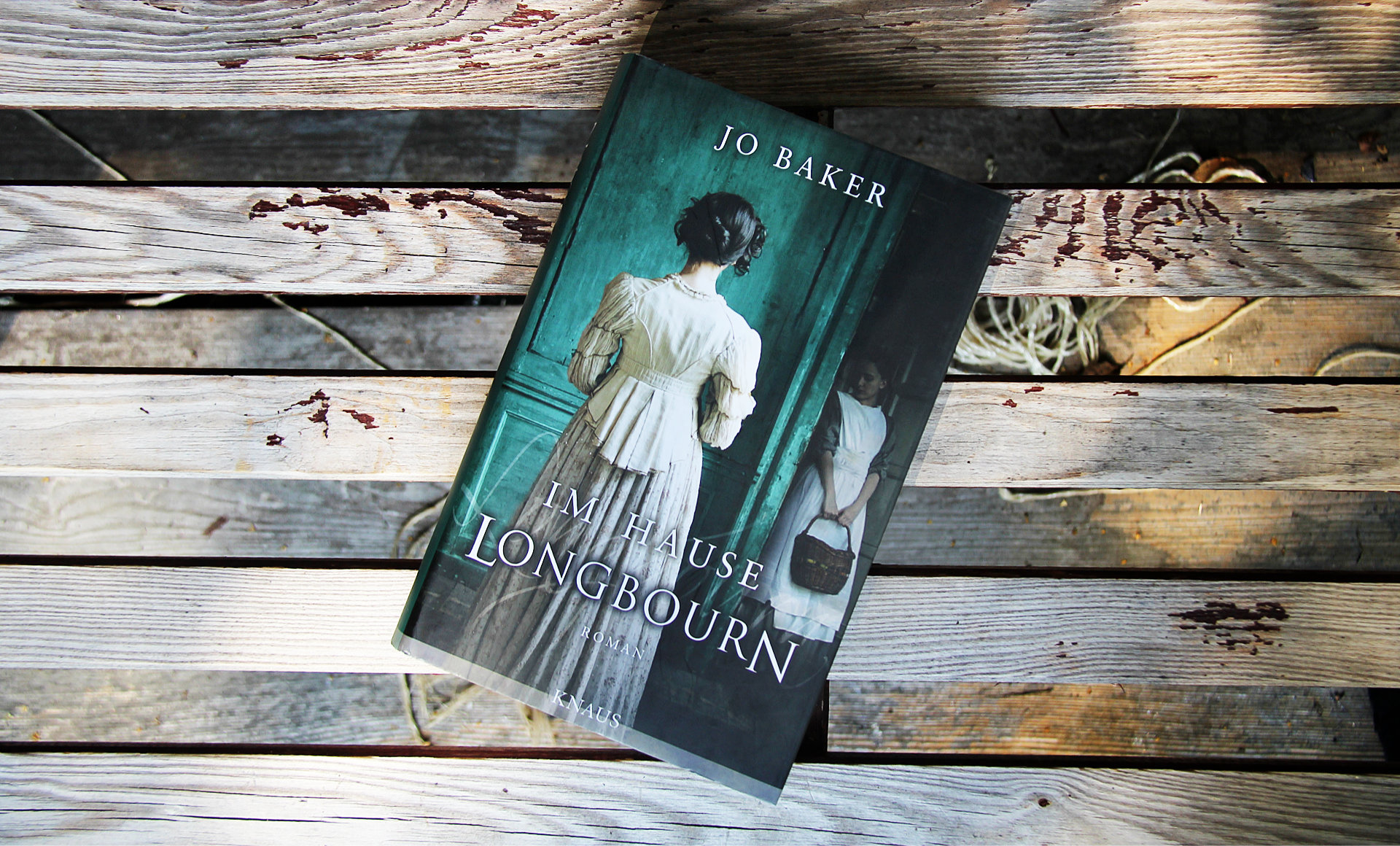
Some books sit on my pile of unread books for quite a long time before they finally get their turn. Which book I pick up always depends on my current mood, and it can take a while before I feel like a particular setting or genre again. Longbourn had to wait for over a year. But now I’ve been craving the charming England of Jane Austen, and I finally reached for this book, which I received from lovely Marina from nordbreze.de. Many thanks to Marina at this point, and a nod to her review, which, much like mine, turned out to be rather mixed.
Longbourn takes place against the backdrop of the estate and story of Jane Austen’s Pride and Prejudice. It spans the same time frame as Austen’s novel but focuses on the lives and affairs of the servants. The love story of Elizabeth and Mr. Darcy serves merely as background noise—flaring up here and there—but the real protagonist is Sarah. The housemaid lives at the Bennets’ Longbourn estate, works hard, and experiences her own love story.
Jane Austen’s books have always been rather dull in the first half and only become entertaining as they progress. Jo Baker’s novel follows this pattern quite closely in terms of pacing. The first 200 pages were, by all standards, really boring. The reader learns a bit about the life and working methods of servants in those times. That was pleasant to read at first, but it quickly wore off, and because of the extremely slow tempo, the story moved forward very sluggishly. The narrative leans heavily on the theme of injustice—while the Bennets enjoy themselves, the poor servants must toil. Of course, that was how it was in those days, and the reader already knows this, but the book didn’t develop this element meaningfully. It wasn’t enough for a thoughtful examination of the class inequality of that era. Rather, it felt like an attempt to emotionally move the reader or make them sympathize with the characters, which didn’t work for me at all. After what felt like the thousandth description of washing, cleaning, curling hair with hot irons, and hanging laundry, I simply started to skip over them.
The characters are very one-dimensional and didn’t feel tangible or real to me. Each one has a fixed role and wasn’t given any further depth. My expectations in this regard are quite high because I find those small, individual, and human nuances particularly fascinating and important in literature. I perceived Sarah as a dissatisfied young woman who wanted to experience more and would have liked to be at the center of things. But, for example, her love for the beautiful and untouched nature of England is only weakly addressed. Though Baker’s descriptions of the English countryside are sometimes truly excellent—I could easily picture the estate and its surroundings. The sense of home that Sarah feels for Longbourn is underdeveloped, as is her relationship with Polly and the other residents of Longbourn, especially the Bennet daughters. It all felt somehow unfinished to me, as if the author had only told small fragments and simply forgotten the rest.
From the middle of the book onward, the story becomes somewhat more interesting. However, in terms of both the characters and the central plot, I often felt as if I were reading one of those clichéd romance novels with glossy covers and exaggerated poses. I kept picturing a tanned, strong, muscular man heroically holding a beautiful woman in his arms. At least one of the male characters fulfills a few of those traits that some women might dream of. I found the love story and the entire plot rather conventional, unoriginal, and formulaic. In the last quarter, the book finally picks up a bit of momentum and even takes on the tone of an adventure novel in one chapter. That episode is meant to bring one of the characters closer to the reader. However, I found it exaggerated, not very believable, and somehow tacked on to the main story. The individual parts just don’t fit together well—neither with the main plot nor with the nature of the characters.
The sentences and language are quite ordinary and unremarkable, though easy to read and smooth in flow. However, the spirit of the era is entirely missing, and one rather feels like encountering contemporary characters with modern mindsets.
And what about Austen’s Pride and Prejudice? There isn’t much of it to be found here. True, there are occasional references to events from Pride and Prejudice. A servant might look through a window while the Bennets attend a ball familiar from Austen’s novel, or there’s turmoil in the house when Lydia elopes with Wickham. But mostly, this is just background noise—the servants’ story runs parallel without the two worlds truly influencing each other. Only toward the end does the Bennets’ fate intertwine slightly with that of the servants, affecting their lives somewhat. Those who love Austen’s Pride and Prejudice won’t find a revival here. (That such a thing can indeed work is proven by Andrew Motion with his book Silver: Return to Treasure Island.) It doesn’t help that, according to the author’s note, all the servants also appear in Austen’s novel (albeit unnamed).
Conclusion: Longbourn failed to win me over. The first half of the book is extremely boring, with very little happening, and even the depictions of servants’ everyday lives or the beautiful English countryside don’t make up for it. As the story progresses, the plot remains conventional, at times implausible, and reminiscent of a cheap romance novel. The one-dimensional characters contribute to this impression—they lack depth and complexity. The reunion with Elizabeth Bennet and her family is equally thin, and what remains is a flat story largely detached from Austen’s original novel. It’s a book I can’t recommend, though at least I did finish it.
Book information: Longbourn • Jo Baker • Knaus Verlag • 448 pages • ISBN 9783813506167
Puh, schade. Von der Beschreibung her hat es mich schon neugierig gemacht, aber deine Kritikpunkte haben mich eindeutig davon überzeugt, dass es nix für mich ist. Ich habe grad eh schon zu wenig Lesezeit, um mich durch langweilige Bücher durchzukämpfen.
Dieses Buch schlummert schon länger in meinem Regal und gerade bin ich ganz froh, es noch nicht gelesen zu haben. An sich finde ich die Idee ja immer noch ganz interessant und ich mag Austens Romane sehr gerne, aber deine Rezension hört sich eher so an, dass diese Lektüre kein unbedingtes “Muss” ist. Na ja, vielleicht überkommt es mich mal an einem verregneten Herbsttag es zu lesen.
Liebe Annika,
das Buch kann man nicht wirklich empfehlen. Aber als seichte Unterhaltung ist es ganz angenehm und kein kompletter Flop. Aber die Zeit ist auf jeden Fall besser investiert wenn man zu einem Austen Roman greift.
Liebe Grüße
Tobi
Hallo lieber Tobi,
ich mag Austen sehr gern. Dieses Buch war bisher also auch für mich sehr interessant und ich wollte es lesen, doch nach deiner Rezi bin ich mir nun nicht mehr ganz so sicher. Gerade an Austens Geschichten mag ich, das im Grunde nichts total dramatisches bzw. Action reiches ^^ passiert. Das “Leben” mit den normalen Auf und Abs. Doch wenn eine Sache immer wieder wiederholt wird, der Alltag (der mit Sicherheit damals so eintönig war) sich nur so im Buch darstellt, muss auch ich mir die Frage stellen ob ich das lesen möchte. Ich hatte gehofft mit einem Buch das so zu sagen “hinter die Kulissen schaut” ist es eine spannende andere Sicht, doch dies scheint mir nun nicht ganz der Fall zu sein.
Vielen lieben Dank für deine gewohnt ausführliche Meinung zu diesem Buch.
Liebe Grüße
Romi