
Pariser Symphonie • Irène Némirovsky
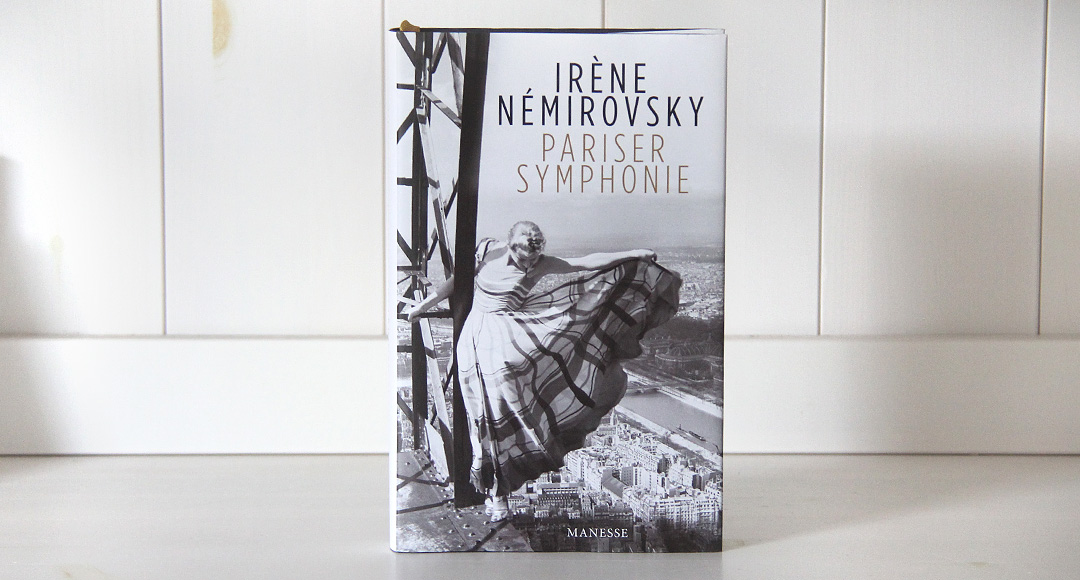
There are books that keep resurfacing, and from an initial indecision—after reading the reviews by Maike and Petra—came the decision to read this small collection of stories. The author was unknown to me, but the setting in Paris during the 1920s and 1930s offers a very atmospheric and interesting background. At the moment, I quite enjoy novellas and short stories and like to read shorter works between two hefty classics. My fear of encountering a melancholic undertone like that of Munro was dispelled by both reviews, and indeed Némirovsky’s style possesses something entirely distinctive.
When you open a book, you are always also looking into the soul of the person who wrote it. Perhaps only blurred, heavily distorted, and mediated through a controlled narrator. Still, there is always something lying between the lines—something that might be a deliberately evoked mood but which stems from a very specific, unconscious impulse of the author. This thought occurred to me quite strongly while reading this book. And the afterword reveals that this assumption is not so far off the mark.
Irène Némirovsky, born in 1903 in Kyiv and raised in St. Petersburg in an affluent household, fled to France during the Russian Civil War. There, her family regained prosperity. With her novels, she quickly became famous in the Parisian literary scene. In 1942, Némirovsky, who was of Jewish descent, was deported to Auschwitz, where she died shortly thereafter. Her children, whom her husband—shortly before his own deportation—had equipped with a suitcase full of important belongings, managed to flee and hide. In that suitcase was Némirovsky’s unfinished novel Suite Française, which was rediscovered and published only in 2004 and immediately became a great success.
The novellas in this book were written between 1929 and 1942 and tell of people—mostly women—who look back on their lives with a certain melancholy and disillusionment. This often happens in various scenes, with only a few impressions fully developed, finding their primary expression within the character herself: in her surroundings, in the way she is portrayed, or in what she reveals about herself. It is always a merciless and uninviting world, without opportunities, with little warmth or joy. Several stories also revolve around a disturbed or unresolved relationship between mother and daughter. The afterword reveals that this has autobiographical roots—Némirovsky had an unhappy childhood and felt little loved by her self-centered mother.
“One does not forgive one’s childhood. An unhappy childhood is as if your soul had died without a burial. It moans for all eternity.” (p. 216)
With her writing, she evokes very clear images and manages to sketch her characters with a strong focus and precise contours. The scenes appear vividly before the mind’s eye, and the people take shape after only a few lines—more through their traits than their appearance. Némirovsky’s style was strongly influenced by cinema and the emerging film medium. In some of the novellas in this book, that influence is especially apparent. The novella A Film reads like a tightly condensed screenplay, and Némirovsky herself called the style “cinematic novellas.” Scene changes and transitions are clearly described, and the mood and imagery indeed recall French films. At least, I am reminded of that unique atmosphere present in many French films—where little is said, the setting and the image linger on the viewer, the action suddenly becomes calm, allowing the situation to unfold fully before picking up again.
In some of the other stories, this strong influence of film elements was less noticeable to me. I believe that’s because moving images have already deeply shaped contemporary literature and changed the way stories are told. When I think back to certain fantasy novels, it now feels completely natural to present sequences visually and to imagine them as one would in a film. As readers, we grow accustomed to that quite easily.
The eleven stories in this book entertained me well; I was able to empathize with the characters, to understand and feel their situations and their reflections on their lives. The themes—unfulfilled or clouded love, tragic relationships between mother and daughter, and often dramatic turns and developments in the lives of various people—are quite well executed. The cold world Némirovsky unfolds before the reader, the disillusionment, the mercilessness that clings to these stories, all had an effect on me—but they are also the reason why this book could only captivate me to a limited extent. I deeply value a clear, honest, and realistic perspective on society, the world, and human nature; this unflinching portrayal of typically human traits is what makes books truly interesting. Yet Némirovsky depicts a world in which, as a reader, I felt very uncomfortable. I’m certain that was her intention. Still, she often evoked a sense of unease in me.
“Our frail memory preserves the faintest trace of happiness, sometimes so deeply engraved that one might mistake it for a wound.” (p. 16)
Conclusion: This worthwhile collection of stories presents, in a very vivid and “cinematic” way, various people in scene-like episodes and explores life designs centered around themes such as unfulfilled or clouded love and the problematic relationship between mother and daughter. The eleven novellas are entertaining, pleasant to read, and rich in depth. At the same time, the world Némirovsky sketches is cold, disillusioned, and merciless. The stories often evoked a certain discomfort in me, leaving me with mixed feelings. In any case, readers here encounter high literary quality.
Book information: Pariser Symphonie • Irène Némirovsky • Manesse Verlag • 240 pages • ISBN 9783717524120
Lieber Tobi, ich hoffe, das Buch machte dir Lust, mehr von dieser Schriftstellerin zu lesen. Ich bin vor allem angetan von ihren Romanen wie Suite francaise oder auch Die Hunde und die Wölfe. Ein paar Besprechungen ihrer Werke findest du unter https://phileablog.wordpress.com/?s=Ir%C3%A8ne+N%C3%A9mirovsky.
Liebe Grüße & noch einen schönen Sonntag
Petra
Eine sehr schöne Rezension und ein sehr spannendes Buch. Der Schreibstil ist schon sehr besonders, doch hat mir auf anhin gut gefallen.
Viele Grüße
Birgit