
Beren and Lúthien • J. R. R. Tolkien
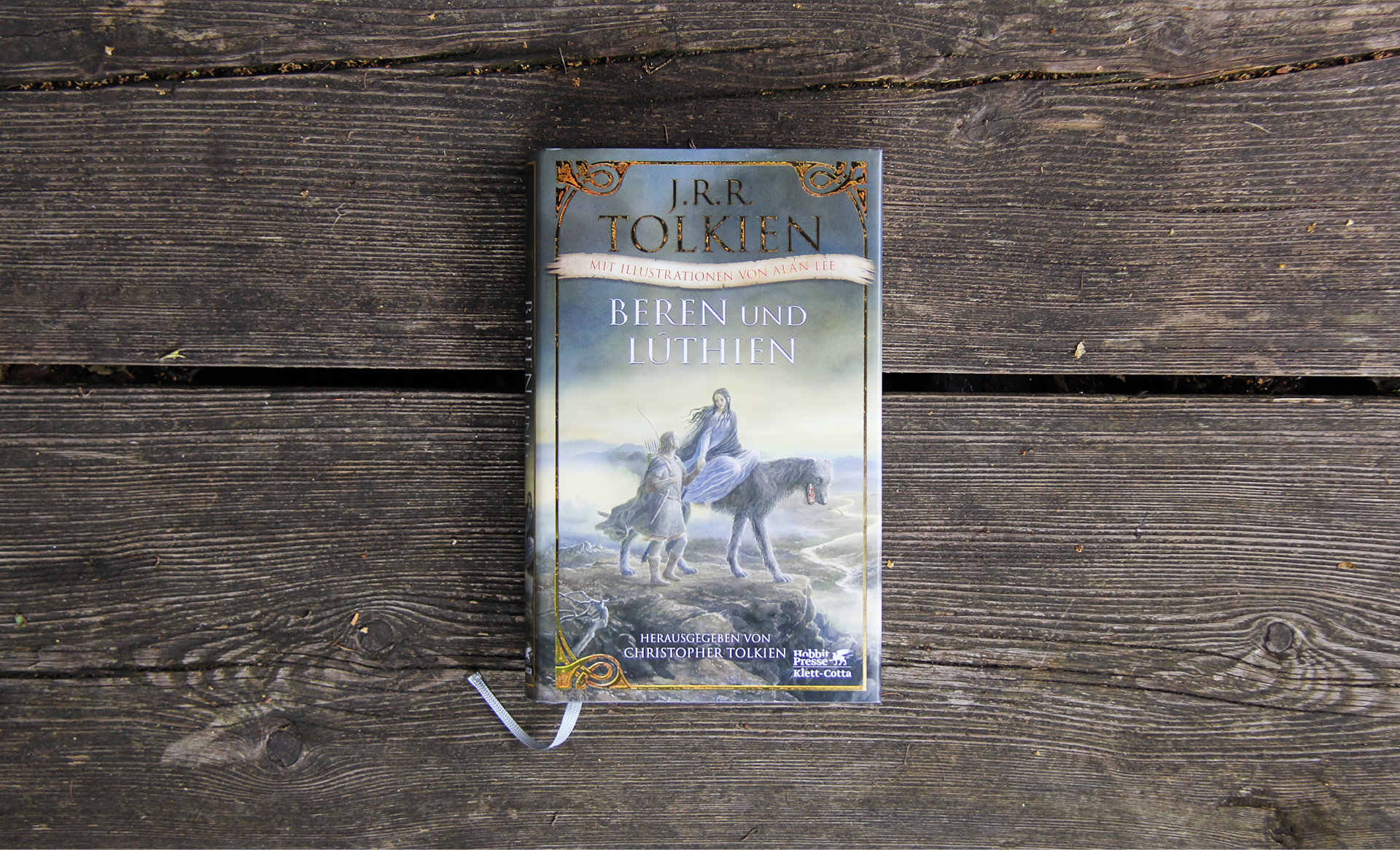
These days, I reach for fantasy novels less often and tend to choose one of the classics when I’m in the mood for an adventure. Still, I’m repeatedly drawn into beautifully crafted worlds, and the big names of fantasy literature quickly tempt me. That’s exactly what happened with the new edition of Beren and Lúthien by Tolkien, which was published this June by Klett-Cotta. What clinched it were Alan Lee’s lovely illustrations, which make the book feel remarkably cohesive. Whether that’s actually the case, you’ll find out in this review.
Last year I reread and reviewed The Hobbit and The Lord of the Rings, each in a splendid deluxe edition. I remember both books very fondly, and in particular the bond between the characters and the beauty of nature has stayed with me, alongside a truly wonderful adventure. Pre-shaped by the films and, of course, by Tolkien’s vivid descriptions, readers quickly immerse themselves in Middle-earth. Beyond these well-known books, however, Tolkien left numerous other texts dealing with the history and mythology of Middle-earth. Many volumes were compiled and published posthumously by Tolkien’s son, Christopher.
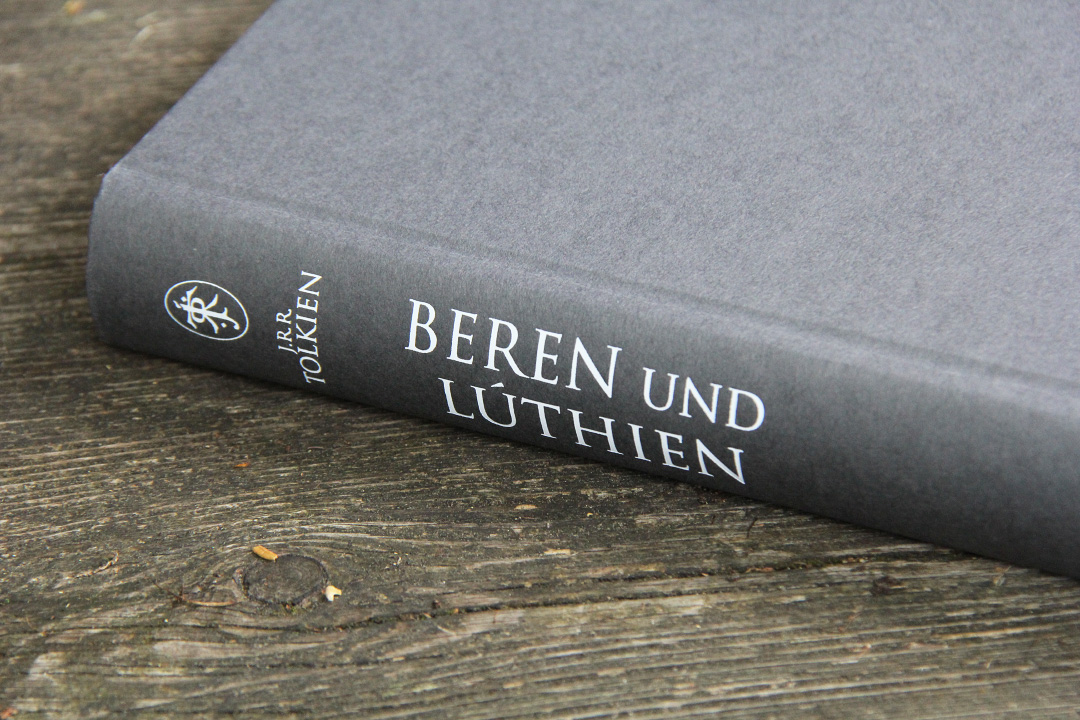
Beren and Lúthien are two figures whom Tolkien returned to and developed from his earliest writing onward. This love story runs like a red thread through many of his works and held special significance for him. In this book, Christopher Tolkien gathers the many fragments in which the story appears, arranges them chronologically, and comments on their development over the years.
The book begins with a foreword and introductory background information. For those unfamiliar with The Silmarillion, The Book of Lost Tales, and other Tolkien texts about the history of Middle-earth—as was the case for me—this is essential in order to understand the individual characters and their relationships. A glossary at the end of the book also serves as a helpful guide.
An early version was The Tale of Tinúviel, which Tolkien wrote during his frontline service in the First World War. Tolkien had erased the actual first ur-text and wrote this first version on the same sheets. The Tale of Tinúviel already contains many elements that define the love story and sets out the rough plot. Written in prose, it has a myth-like, often fairy-tale narrative style and reads quite smoothly. The story is presented compactly, and—typical of this mode of storytelling—creates little intimacy with the individual characters.
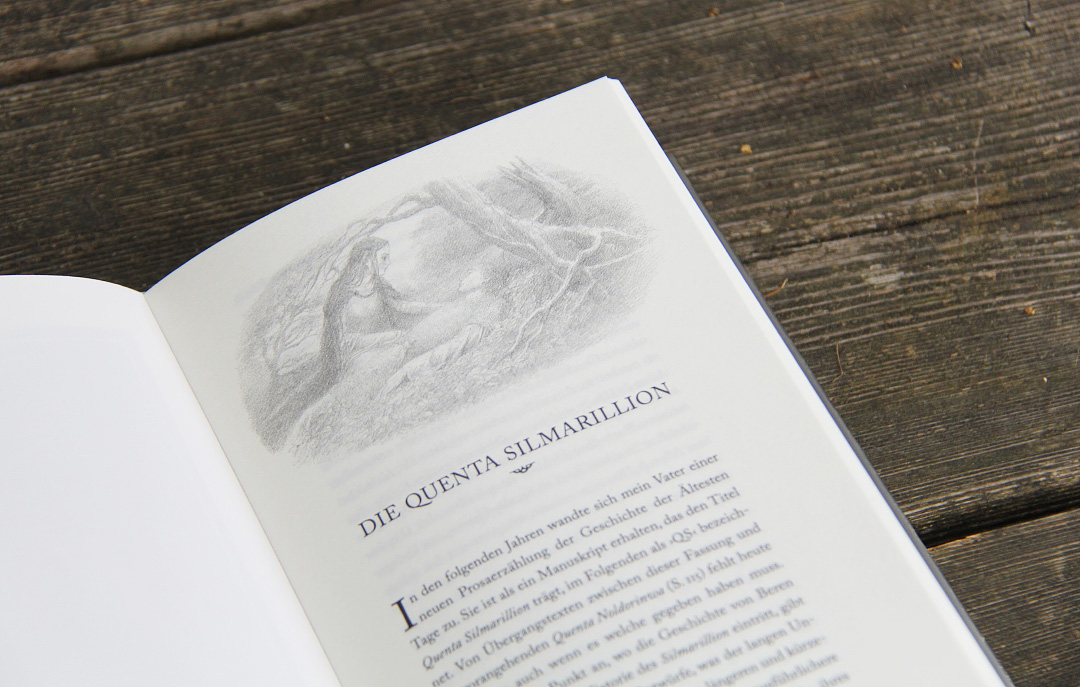
Afterwards, the further-developed story is presented in its various iterations, with Christopher Tolkien repeatedly commenting on each step. There were several sketches for The Silmarillion, mostly written in a concise and heavily compressed narrative style. One extensive, unfinished poem printed in verse—the Lay of Leithian—retells the story in its own variation. Elements of the original version disappear, and the fate of Beren and Lúthien is set within the larger context of Middle-earth’s history. While Beren is an elf in the first version, he becomes mortal in later ones.
I quite liked the first text, The Tale of Tinúviel, with its fairy-tale tone. Even if it doesn’t move you deeply, it’s entertaining, and the plot and its elements are well executed. The subsequent altered variations, which present the story in condensed form, felt more informative—serving as a foundation for understanding the Lay of Leithian in verse. I sometimes found that poem very atmospheric; Tolkien often manages to convey the mood and impressions of landscape and nature with remarkable brevity. I found especially beautiful the passage where Beren wishes to part from Lúthien, having sworn to her father to return only with the Silmaril. None of these narrative forms, however, particularly fosters empathy, leaving the impression of a beautifully packaged yet not especially moving love story.
Reading a very similar plot anew in different styles is what I found particularly fascinating about this book. You don’t see that often, and it’s interesting how different modes of composition create different effects. At the same time, that’s also the book’s major weakness: the reader is presented with the same story again and again, which soon wears thin. The intention to showcase Tolkien’s creative process will likely appeal only to die-hard fans.
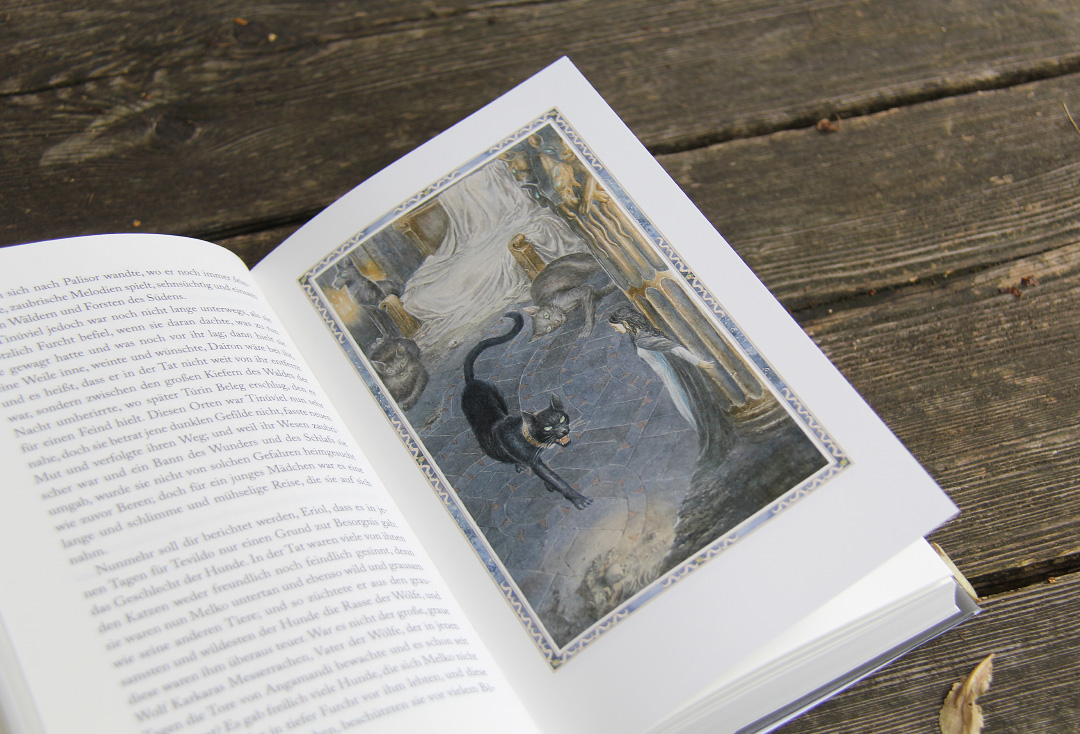
The illustrations by Alan Lee are certainly worth mentioning. They are excellent once again and genuinely enhance the mood. Especially in combination with the Lay of Leithian, I felt transported back into the world of The Lord of the Rings. The numerous sketches also elevate the book, and together with the text they create a successful blend of saga, mythology, and fantasy. I’ve always liked the presentation of Klett-Cotta’s hardcovers—from the cover design to the dust jacket and overall production. For me, that alone is a reason to choose the bound edition.
Conclusion: With Beren and Lúthien, Christopher Tolkien—in what he notes in the foreword is likely his last book—presents newly arranged texts by his father. The core love story, with its mythological and fairy-tale style, is very beautiful and well crafted. Experiencing this story in its creative development and in all its variations, however, is probably something mainly for devoted Tolkien fans. While uninitiated readers will find their way through the well-commented fragments that Christopher Tolkien has assembled from numerous sources, none of the different narrative forms delivers a gripping or moving tale. The lovely illustrations by Alan Lee are, in any case, a delight.
Book information: Beren and Lúthien • J. R. R. Tolkien • Klett-Cotta • 304 pages • ISBN 9783608961652
Moin,
man muss aber auch sagen, dass viele Manuskripte von Tolkien gar nicht zur Veröffentlichung gedacht waren, sondern nur als Hintergrund für die Ringgeschichte. Beim Silmarillion bin ich mir nicht ganz sicher, aber die Nachrichten aus Mittelerde sind auch “nur” eine Sammlung von “Zetteln”, die von seinem Sohn geordnet wurden. Ich hab Beren und Luthien nur als eBook und auch da liegt es auf dem SuB. Der Vollständigkeit halber :)
Hab ich schon erwähnt, dass ich auch eine HdR Ausgabe von Anna habe? :) Ich hab allerdings die Version in drei Büchern gewählt.
//Huebi
Liebe Huebi,
ich finde, man merkt das einigen Texten an, die veröffentlicht wurden. Aber ich kann auch verstehen, dass sein Nachlass noch veröffentlicht wurde, denn am Ende ist ja die Begeisterung bei den Lesern definitiv da.
Ui, gibt es denn irgendwo Bilder von deiner HdR Prunkausgabe? Sehr cool, dass ich dich mit Annas wunderbar gebundenen Büchern anfixen konnte ;)
Liebe Grüße
Tobi
Hi Tobi,
guckst du hier:
http://fs5.directupload.net/images/170714/jo7t26og.jpg
http://fs5.directupload.net/images/170714/omf47lzh.jpg
Ntürlich eine alte Übersetzung von Margaret Carroux, ich hab gleich in die vollen gegriffen und mir alles selbst ausgewählt, Leder, Prägung, Lesebündchen, Vorsatzpapier.
//Huebi
Hallo Huebi,
wow, nicht schlecht. Also Anna hats auch echt drauf, die sehen echt super aus. Bei der Version mit drei Büchern muss ich gleich an die grüne Ausgabe denken. Aber da gab es ja eine ganze Menge anderer. Den Hobbit habe ich als Übersetzung von Krege und fand sie nicht schlecht.
Herzliche Grüße
Tobi
Moin,
der Buchblock selbst ist die dritte Auflage der Leinenausgabe von 1984. Die hat keine Lumbekbindng und auch das Papier ist wesentlich hochwertiger und angenehmer. Die grüne kartonierte Ausgabe habe ch auch noch, aber die hat extrem gelitten, gebe ich aber auch nicht her. Keine Ahnung wo Anna diese alten Schätzchen auftreibt.
//Huebi
Am Ende war das letzte Buch aber Der Fall von Gondolin in ebenso toller Ausgsabe.
Grüße aus NZ