
Frankenstein • Mary Shelley
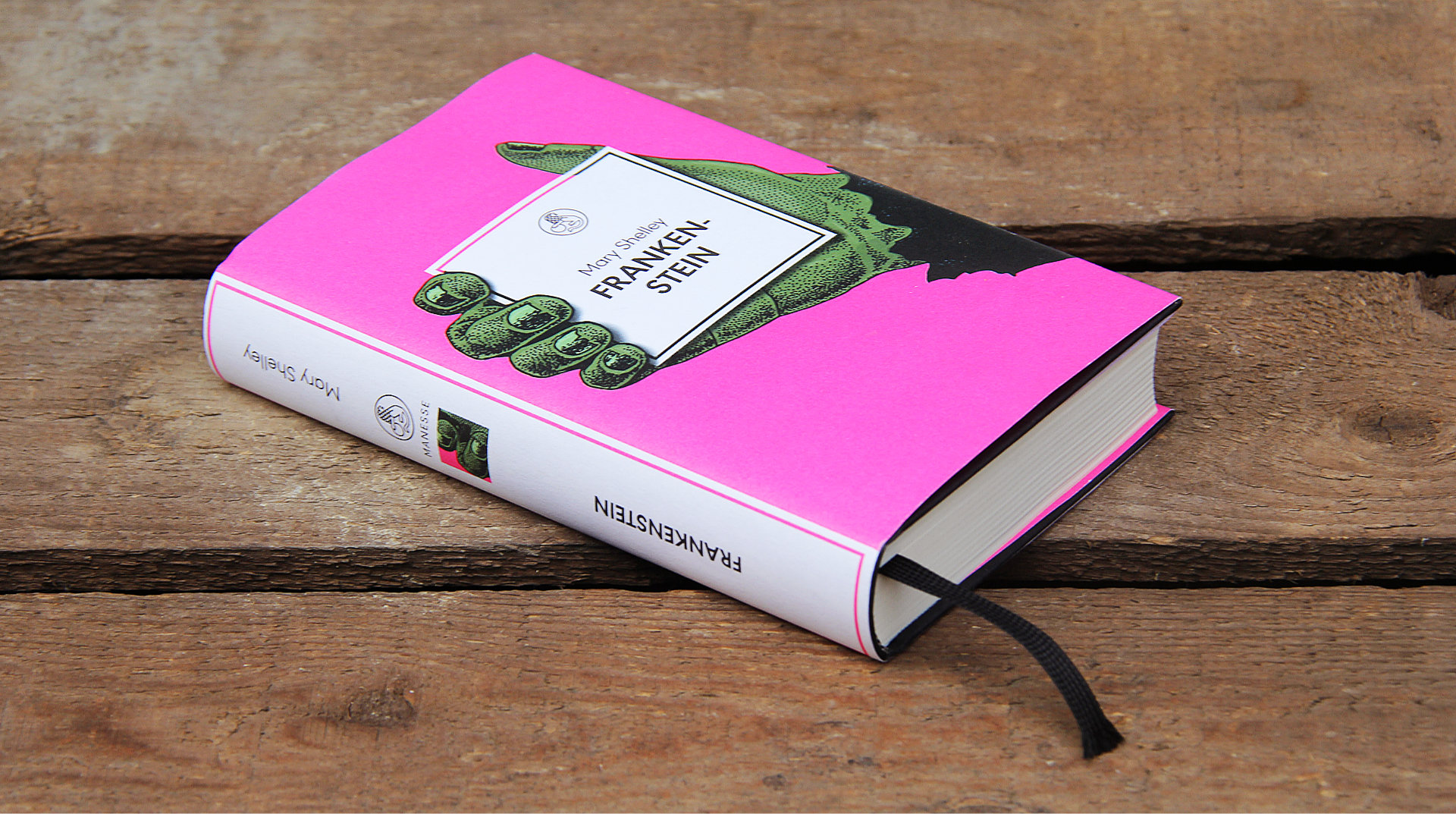
After taking a quick look at the new Manesse edition of the classic Frankenstein by Mary Shelley in my post about the Manesse relaunch, this time I’d like to offer you a full review of the novel. The title is, of course, widely known, and I primarily knew this horror story from film and television, where it pops up now and then in excerpts—usually as a poor adaptation and very clichéd in cartoons or similarly juvenile formats. Yet the 1818 tale has much more to offer and raises moral questions that remain relevant more than two hundred years later.
The story begins with several letters written by the young Englishman Walton to his sister. He wants to make history as a polar explorer, and on his voyage through the Arctic Ocean he rescues Victor Frankenstein from an ice floe. Frankenstein then recounts his life story, narrating in the first person his family background, how he created the famed creature, and the course of the dramatic adventure that followed—even to the point that he is now pursuing a mysterious figure to the North Pole. In other words, the core plot is wrapped in a frame narrative that appears only at the very beginning and the very end.
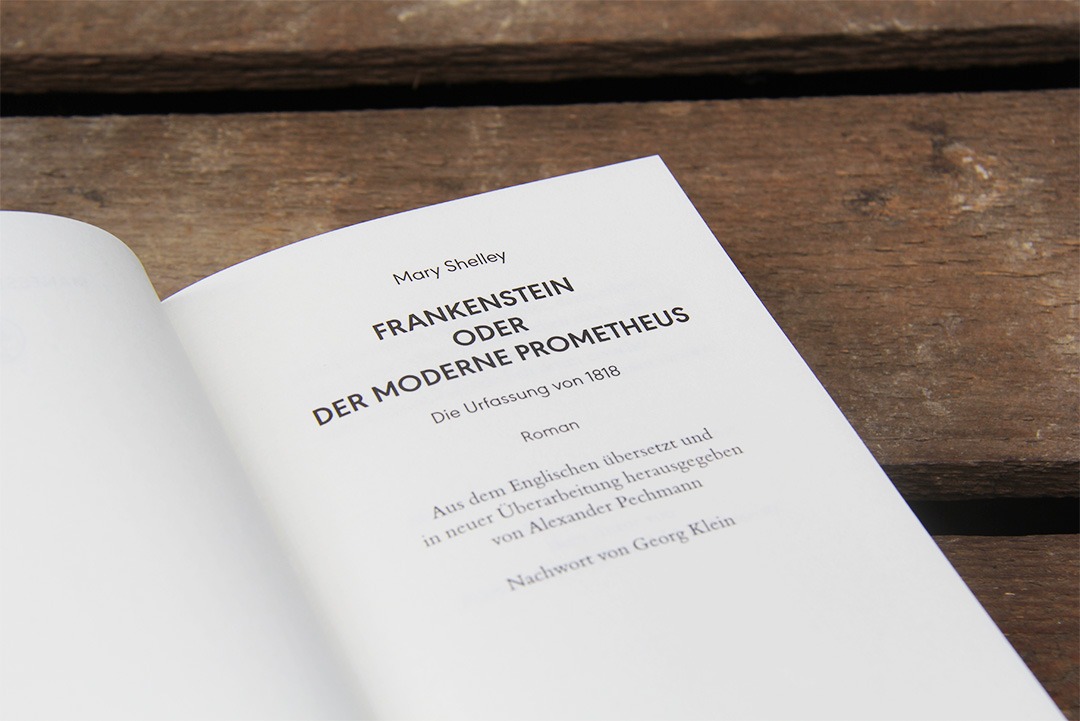
Shelley sets a very pleasant pace and entertains with an accessible style of simple sentences and an agreeable narrative voice. In a language that feels contemporary, the reader learns in detail about Frankenstein’s emotional world, and also, through letters and the accounts of others, enters the minds of various characters. The novel is exciting and engaging; as you read, you wonder how things will proceed and how it will all end. You already have a hint at the very start, since the opening with Walton offers some clues. Because of the frame narrative and because Frankenstein—and the other figures—always report retrospectively, a certain distance arises. So, even as you empathize while reading, you involuntarily begin to judge and to view the characters’ decisions in a broader context. That gives the book its allure and is likely one reason for its success.
Of course, the creation of artificial life by Frankenstein and the fate of the being that slips from its creator’s control are the core of the story. Quite different from what I had expected, the novel is less a horror story than an examination of a moral conflict—one that emerges when humans interfere with the workings of nature and life. It’s a theme that has not lost any relevance in the age of genetic engineering, artificial intelligence, big data, or deep learning. I particularly liked how the choices of both Frankenstein and the creature are mirrored in their counterpart. Each reflects the other’s moral stance—and, at the same time, humanity itself. In this way, Shelley at times attempts an abstract portrait of society and of human nature. That’s something many classics do—and what helped make many of them classics in the first place.
I was very eager to follow the process of the creature’s creation. In films, it’s always presented as a technical procedure. A machine is somehow fitted with human tissue, a brain is implanted, and—voilà—the Frankenstein monster is done. In old films it’s a hulking, manlike being with a square head and stitches; today it would probably be some sort of Terminator hybrid, a microprocessor mixed with human tissue. I always imagined the creature as a mix of the Hulk and Lady Gaga’s meat dress. In fact, Shelley remains entirely vague here and gives no indication of the creature’s exact nature. She endows it with certain capabilities superior to humans, mentions yellow skin and a terrifying appearance, but leaves everything else open. That’s a remarkable achievement: describing something without actually describing it—omitting details without disrupting the reading experience. At the same time, this is also the book’s great weakness; the tale never becomes truly plausible. But given the time in which the novel was written, what Shelley conjures here is quite successful and should be viewed in that context.
The story is always categorized as a horror tale, and in a preface to a 1830s edition the author clearly states that it ought to be one. I was never frightened at any point; I found it suspenseful, but not nerve-racking or eerie. That was likely different at the time, when the idea of a remotely “directed” monster was still quite new. The theme and the entire setup have since been copied and adapted thousands of times—often so poorly that they’ve been reduced to parody.
I also found the descriptions of nature very appealing. And although the protagonists visit a wide range of places, Shelley remains very vague about major cities and hardly describes their appearance. Not so with certain key landscapes—say, a Swiss glacier or the Orkney Islands. Of course, there’s also the classic thunderstorm with lightning that illuminates the creature. All in all, despite the frequent lack of setting details, it’s surprisingly easy to picture everything. The “movie in your head” is definitely there.
I found the story of the book’s genesis particularly interesting. In 1816, Mary spent the summer on Lake Geneva (a large portion of the novel is set in Geneva) with Lord Byron, his personal physician John Polidori, her stepsister Claire Clairmont, and her future husband Percy Shelley. Because the summer was rainy, they often stayed indoors, and at some point a book of ghost stories fell into their hands. They decided that each of them should write a tale of terror. Mary’s story was Frankenstein.
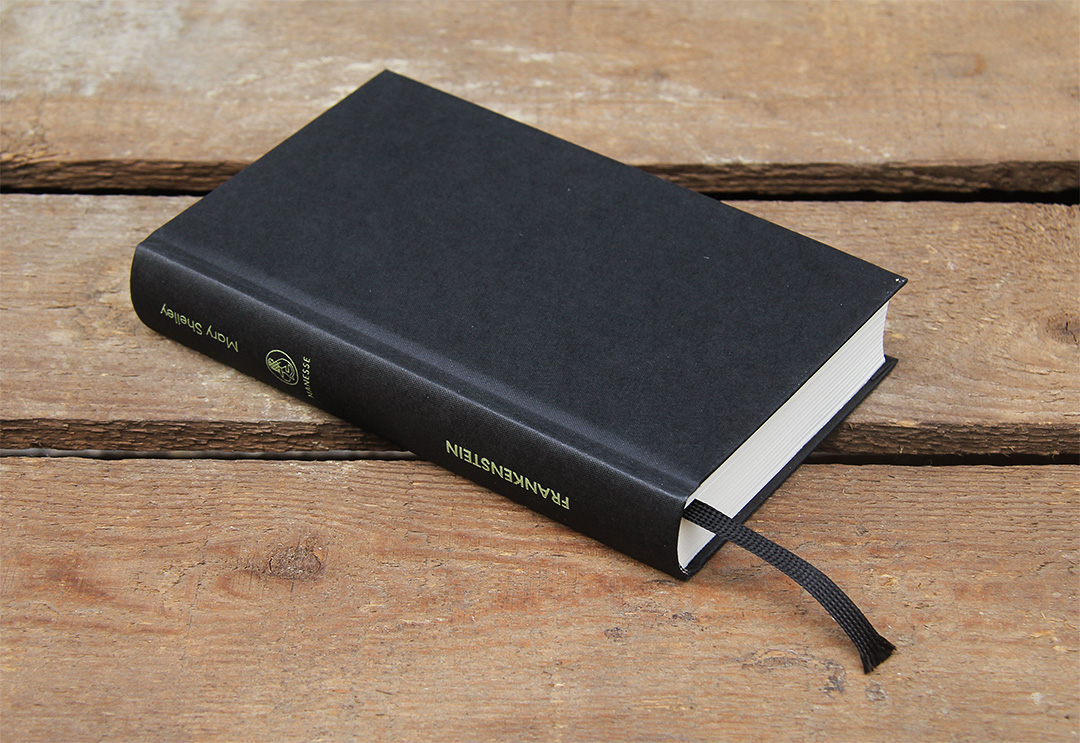
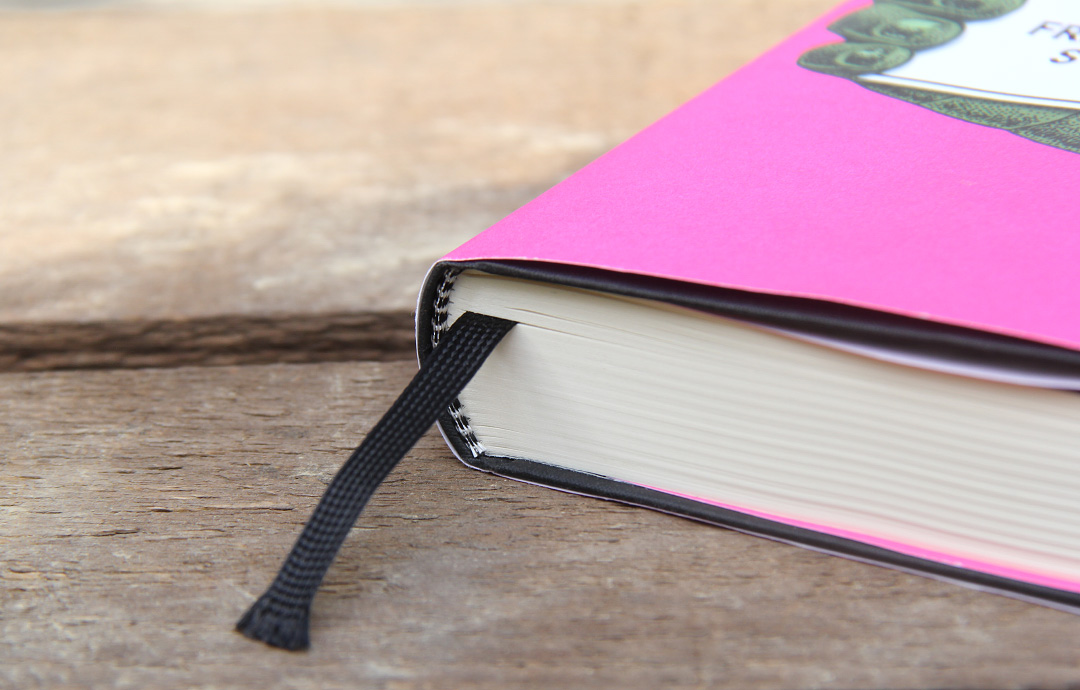
I already wrote a separate post about the book’s design in my piece on the Manesse relaunch. After reading, I have to say the design doesn’t really match the content at all. The hand reminds me more of an ape’s, and the creature bears no resemblance to that. The bolts on the endpapers don’t really capture the content either, and the pink doesn’t suit a horror story. Without the dust jacket, the black paper-over-boards binding is fitting enough, if rather plain. I would have given the whole thing a somewhat darker touch.
Conclusion: Frankenstein is an entertaining, suspenseful story that reads very smoothly and, packaged as a not-very-frightening tale of terror, raises moral questions that still possess undiminished relevance today. Shelley succeeds in following the fate of the created creature and its creator across various settings, in immersing us in the mind of a very vaguely outlined being, and thereby in illuminating human nature. Overall, however, the story didn’t completely win me over, and the plot offered no major surprises. The look into the abyss of human nature is too tentative and not comprehensive enough. A worthwhile novel—one of those classics you can’t go wrong with—that nevertheless didn’t blow me away.
Book information: Frankenstein; or, The Modern Prometheus • Mary Shelley • Manesse Verlag • 465 pages • ISBN 9783717523703
Ich find die Urfassung auch deutlich besser als die später religiös aufgeladene Version.
Aber das Cover Deiner Ausgabe ist Elfenwerk!
Auf meiner dtv-Ausgabe ist Boris Karloff als Frankensteins Geschöpf, zwar nicht super kreativ, aber nicht pink.
Und ich hatte mich damals sehr in Mary Shelley verliebt. Was für eine Biographie!
Hi Tobi,
eine schwierige Besprechung, nicht wahr? Ich hab bei Frankenstein immer Boris Karloff im Kopf, das bin ich auch beim Buch lesen nicht los geworden. Das Frankenstein-Thema ist halt insbesonders filmisch ziemlich verbrannt. Der Name Frankenstein wurdeja auch für die japanischen Alt-Godzilla-Filme hergenommen, zumindest in der deutschen “Übersetzung”, obwohl das mit Frankenstein, nichts, aber auch garnichts zu tun hatte. Ein bisschen kist esja wohl auch so bei Stokers Dracula Buch, auch da ist die Figur Dracula wohl erheblich durch die Filme mit Christopher Lee geprägt.
Eine nette Adaption der konventionellen Figur Frankenstein findet sich übrigens in dem Animationsfilm Hotel Transsilvanien – da ist es eine nette und liebenswerte Figur und der einer der besten Freunde von Graf Dracula. Hat mit dem Roman natürlich rein gar nichts zu tun :)
Schlimm finde ich den Umschlag, das Pink schreit einen ja geradezu an. Da kann ich einen Trumpf des eBooks ausspielen: da kann ich das Cover einfach austauschen :)
//Huebi
PS ich hab jetzt auch Affinity Photo auf dem Rechner und es hat Ruckzuck Photoshop Elements ersetzt.
Das Pink sticht wahnsinnig in die Augen. Wow. Wäre wohl kein Buch für mich. Finde die Diskussion aber sehr spannend.
Neri, Leselaunen
Schon allein wegen dem Cover muss ich mir diesen Klassiker wohl mal vornehmen. :-)
Hab mich auch über die optische Aufmachung gewundert und hätte mich über ein düsteres “Outfit” gefreut.
Danke für deine spannende Rezension.
Simone
oneday2bookblog