
Bonjour tristesse • Françoise Sagan
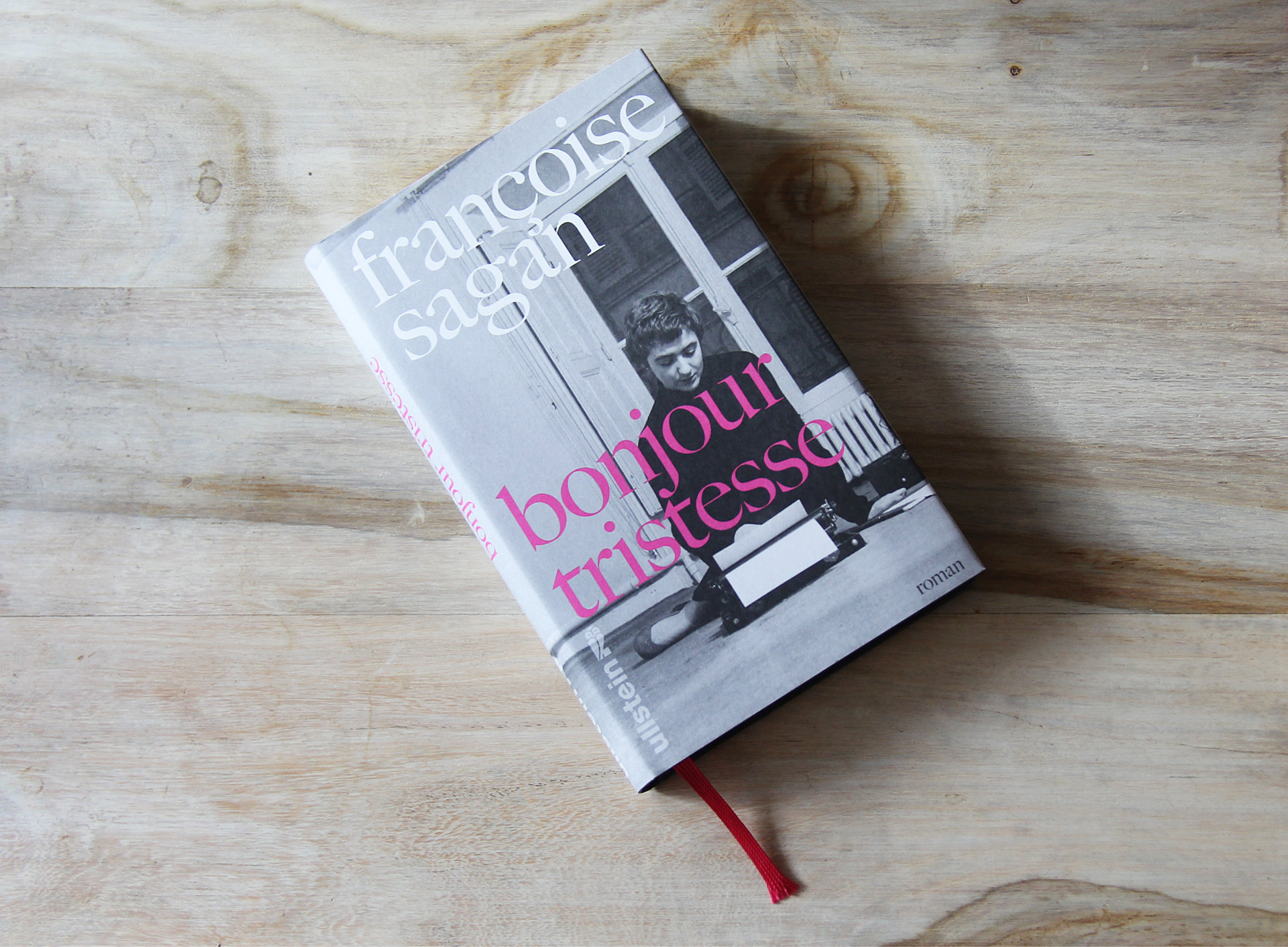
When I read In einem Monat, in einem Jahr by Françoise Sagan two years ago, I knew it wouldn’t be the last book by this author I would read. Bonjour Tristesse, being her most famous work, was the obvious next choice — but at the time, it was only available in a rather unappealing edition. Somehow, my pile of unread books had grown so high that Sagan slipped off my radar again. That is, until this year, when I discovered the new edition published by Ullstein Verlag. I couldn’t resist and had to get it — especially since, at just 176 pages, it takes only a single evening to read.
The book tells the story of young Cécile, who returns to Paris to live with her widowed father after a long stay at boarding school. He is a middle-aged womanizer who leads a carefree, hedonistic life in Parisian society and introduces his daughter to it as well. The story begins with Cécile, her father, and his current lover moving into a summer villa on the Côte d’Azur to spend a relaxed and carefree holiday. But then Anne arrives — a sharp-minded, attractive, and composed woman. Cécile feels that her carefree time with her father is threatened and begins to plot an intricate scheme.
The story is told from Cécile’s first-person perspective and reads smoothly and quickly. You’re soon caught up in the protagonist’s thoughts and world, and I found it easy to adopt her point of view within a few pages. Sagan writes in a light, effortless style that still carries great depth. Her characters feel real and multi-dimensional, and the way she portrays her protagonist, her father, and his female acquaintances makes you feel as if you’re watching a film from the 1950s. I especially liked the dialogues and her descriptions of the characters’ reactions and body language.
“When his mouth sought mine, I began to tremble with desire as he did; our kiss was without remorse or shame, only a deep search, interrupted by whispers.” (p. 33)
The settings — the villa and the beautiful Mediterranean beaches of the Côte d’Azur — evoked in me that distinct atmosphere of the region, reminding me of other novels set on the French Riviera. The carefree lifestyle, the parties, and long hours spent in bars strongly recall the novels of the Lost Generation, as also evoked in Villa America. Together with the sharp dialogues and the precise character portrayals, this creates a wonderfully dense atmosphere. The books by Alfred Hayes also have this smoky, melancholic blues of the 1950s — even if my notion of it may be a little too romanticized and not entirely true to life.
I had expected a more minimalist narrative style, as is often found among existentialist writers of the early 20th century, and which also prevailed in In einem Monat, in einem Jahr. But this novel’s language is unpretentious, and I found the character descriptions pleasantly detailed. Sagan manages to craft vivid, focused imagery with few words, yet with great expressive power. Over the course of the novel, a richly detailed picture of each character gradually emerges.
“How appealing those two cheerful, impulsive years suddenly seemed to me, those two years I had recently denied so quickly. The freedom to think, even to think wrongly or to think less, the freedom to choose my own life, to choose myself. I cannot say ‘to be myself,’ for I was nothing more than malleable dough — but at least the freedom to refuse the mold.” (p. 67)
What makes this book a true masterpiece for me is the multi-layered, detailed, and contradictory nature that Sagan brings to life through Cécile. Surely, there’s a good deal of Sagan herself in her protagonist. But Cécile is a real teenager — full of doubt, unsure of her own mind and nature, torn between admiration and disgust for those around her. She is pliable yet defiant, cynical yet tender, insecure yet self-assured, with the persistent certainty that a life full of possibilities still lies ahead. The book makes this completely tangible, just as it captures the strong influence of those carefree, decadent years she spent with her father and his circle — shaping her character profoundly.
Françoise Sagan was only 18 years old when she wrote this book in just a few weeks and published it in 1954. Her debut brought her fame and fortune, but she also led a turbulent life — with setbacks, drugs, a car accident, failed marriages, and other escapades. She wrote numerous novels and plays, and Bonjour Tristesse was also adapted into a film. For me, it’s certain that I will be reading more of her work in the future.
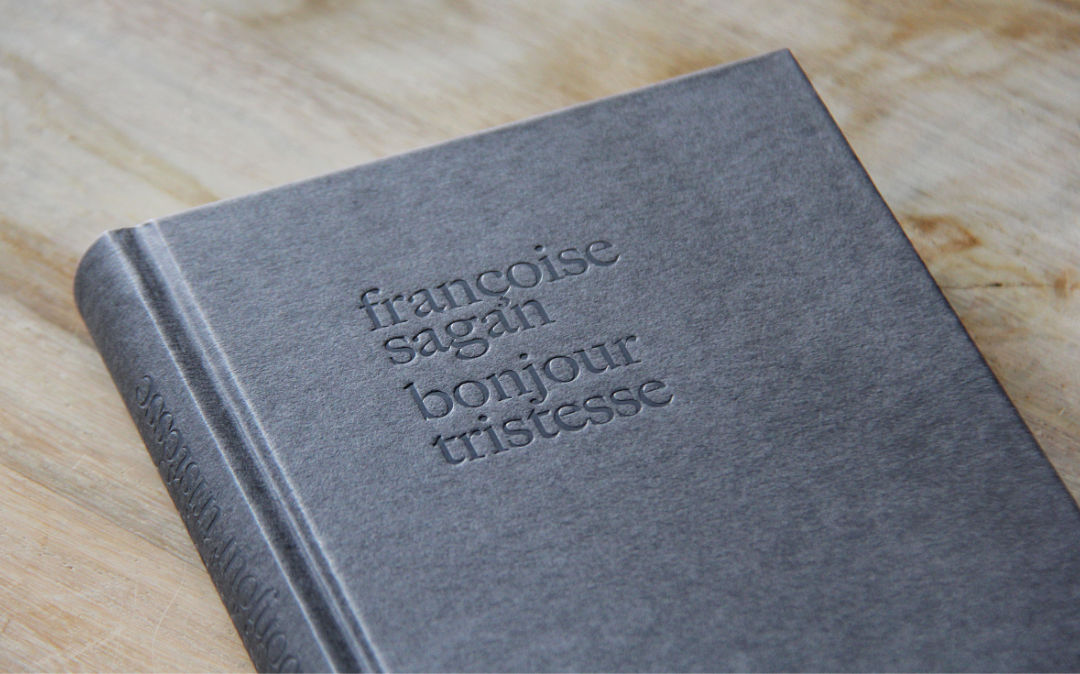
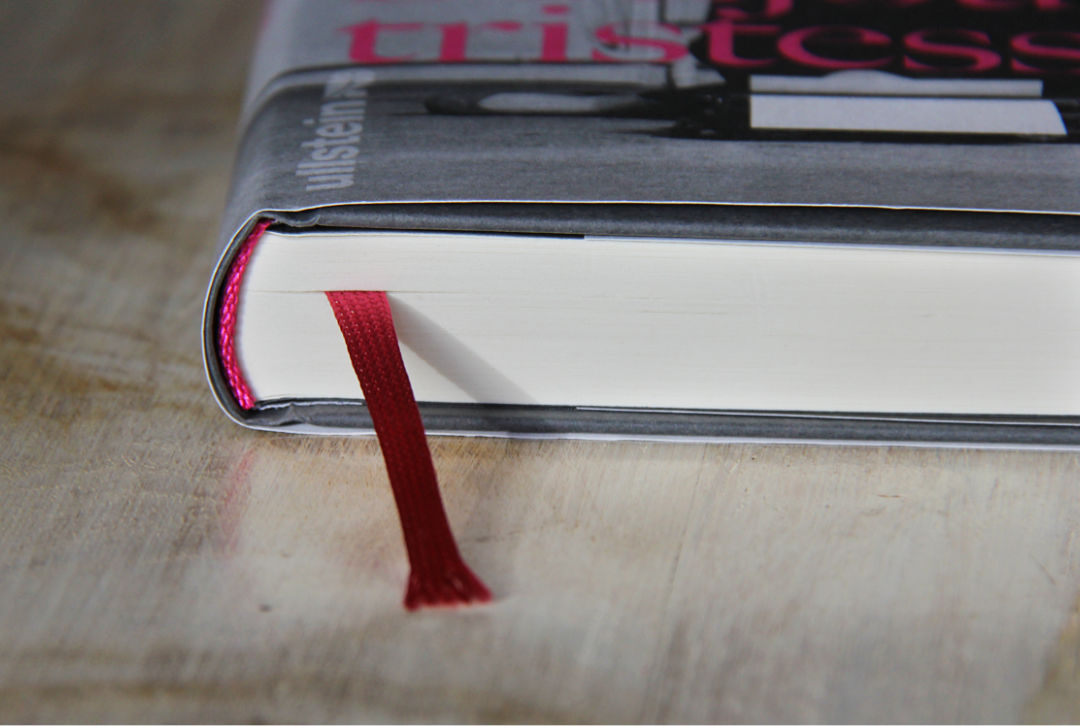
I really like this edition. The cover is somewhat average — I would have preferred something that evokes the 1950s and the Côte d’Azur. However, the book itself is well produced, with an elegant embossed cover and a beautifully colored ribbon marker that harmonizes wonderfully with the endpapers and the dark book cloth, while contrasting nicely with the dust jacket. I’m very glad I didn’t settle for one of those shabby paperback editions back then and instead waited for this beautiful version.
What didn’t appeal to me at all, however, was the afterword, which I found overly feminist and emotionally charged. I would have preferred more factual information about Sagan, her life, and the original publication. An afterword should be more objective, but this one, with its many jabs and strong focus on the scandalous impact of the book in relation to 1950s gender roles, leaned too heavily into feminist commentary. Of course, that’s an important topic, but the teenage insecurity, the brilliant characterizations, the profound insights, and the depiction of society at the time — all these elements together make this book so remarkable, especially when read in the context of today’s world.
Conclusion: This book ranks among the best for me and has rightfully become a bestseller. Sagan’s light and entertaining writing style, combined with her precise and beautiful character portrayals, the dense atmosphere she creates, the engaging dialogues, and her realistic, non-stereotypical characters make reading this novel an absolute pleasure. This lovely new edition is definitely a recommendation — with its distinctive atmosphere evoking the Côte d’Azur of the 1950s, it’s a perfect read for a day at the beach. A book I can wholeheartedly recommend.
Book information: Bonjour Tristesse • Françoise Sagan • Ullstein Hardcover • 274 pages • ISBN 9783550081385
Hallo Tobi,
vielen Dank für diese gut geschriebene Rezension des Buchklassikers, der -zumindest mir- Anregung ist, dieses Buch zu lesen. Ich finde es gut, daß Du nicht nur Neuerscheinungen besprichst, sondern auch Klassiker wie diesen. Ich freue mich auf den nächsten Beitrag.
Liebe Grete,
vielen Dank für Dein Kommentar. Es freut mich, dass ich Dich von dem Buch überzeugen konnte, denn es ist wirklich sehr gut. Abseits der prominent beworbenen Bücher gibt es eine ganze Menge zu entdecken, da wirst du hier immer wieder ein paar Geheimtipps finden. Diese Ausgabe von “Bonjour tristesse” ist allerdings eine Neuauflage, also auch ein bisschen eine Neuerscheinung ;)
Liebe Grüße
Tobi
Bonjour Tristesse – unbedingt will ich das Buch noch lesen. Schöne Erinnerung daran!
Neri, Leselaunen
Liebe Neri,
das Buch ist echt schnell gelesen, zöger nicht einen Abend dafür zu investieren. Dass ist es auf jeden Fall wert und so schrumpft der SuB ziemlich schnell ;)
Liebe Grüße
Tobi
Hallo Tobias,
deine Rezension ist wirklich sehr gut geschrieben. Ich bin aber beim Lesen hin und her geschwankt, ob das Buch was für mich wär. Am Schluß bin ich zu dem Schluß gekommen: Ja!
Grüße,
Daniela
Liebe Daniela,
das kenn ich, so geht es mir auch oft, wenn ich einen Buchtipp lese und vorher unsicher bin. Aber ich kann Dir sagen, dass sich die Lektüre lohnt. Und bei so wenig Seiten kann man schwer daneben greifen. Oft muss man aber auch für ein bestimmtes Thema oder Setting in der richtigen Stimmung sein.
Es freut mich auf jeden Fall, dass ich Dich überzeugen konnte. Aber das Buch ist auch wirklich gut!
Liebe Grüße
Tobi
Moin,
da fragt man sich, was der Tobi über Weihnachten lesetechnisch so “verbrochen” hat. Nachdem das letzte Buch -die Literaturübersich -(natürlich) nicht als EBook erhältlich ist habe ich mir 100 Seiten Shakespeare angetan. Das Buch heisst wirklich so und von Shakespeare habe ich dann nochmals die eine odr ondere Komödie gelesen. Was aber wird es bei den lesestunden geben? Hat er sich de Heenholzkrone Teil 2 angetan? Ich gestehe, ich hab Tel 1 noch immer auf dem SuB und Teil 2 liegt da jetzt auch drauf.
Und dann kommt ein französisches Werk, aber überraschend aus einer ganz anderen Epoche. Ausgehend von deiner 5-Sterne Begesterung und da das Buch nicht wirklich umfangreich ist werde ich es mal ganz oben auf dem SuB ablegen. Sagan war nämlich noch gar ncht auf meinem Radar, aus dieser Literaturepoche habe ich bisher eigentlich nur amerikanische Schriftsteller gelesen. Ausnahme war bisher Anais Nin.
Von daher wünsche ich dir einen Guten Rutsch und hoffe auf viele weitere Rezensionen von dir, die zumindest mich immer wieder von meinen eingetretenen Pfaden abbringen in andere schöne Ecken der Literatur.
//Huebi
Lieber Huebi,
ich blogge ja nicht über jedes Buch, aber aktuell lese ich wieder einen hervorragenden Geheimtipp. Darüber werde ich auf jeden Fall schreiben. Und sonst waren die letzten Wochen stark fantasy-lastig. Den zweite Teil von der Hexenholzkrone hab ich schon kurz nach dem Erscheinen gelesen. Bei Tad Williams kann ich nicht lange widerstehen ;)
Shakespeare habe ich aktuell gar nicht in der Queue. Wobei ich aktuell echt rigoros bin und mir fast keine Bücher kaufe. Weihnachten hat meinen SuB nochmal gut erhöht, aber sonst habe ich mit Ausnahme von vier Titeln auch keine Wunschliste mehr.
Ich bin gespannt, wie dir Sagan zusagt. So richtig mein Beuteschema ist es ja nicht, wobei was ist das schon. Wenn ich so schaue, was ich im letzten Jahr gelesen habe, dann ist das echt ein ziemlicher Mix.
Ich wünsche Dir auch einen guten Rutsch und ein schönes neues Jahr. Es freut mich sehr, dass ich Dich zu neuen Büchern inspirieren kann und natürlich geht es nächstes Jahr wieder weiter. Der Hanser Verlag hat beispielsweise wieder zwei sehr geniale Titel in der Vorschau.
Liebe Grüße
Tobi
Hey Tobi!
Danke für die tolle Rezension. Auch die Fotos sind wieder klasse! Ich habe das Buch auch hier und es wird auch definitiv Anfang des neuen Jahres gelesen werden!
Liebe Grüße und einen guten Rutsch ins neue Jahr 2018 von Petra
Liebe Petra,
herzlichen Dank für das Lob. Wenn das Buch schon auf deinem SuB ist, dann leg es gleich ganz nach oben. Es ist wirklich wunderbar und ja nur ein kurzes Intermezzo ;)
Liebe Grüße, einen guten Rutsch und ein schönes neues Lesejahr
Tobi