
Vier Begegnungen • Henry James
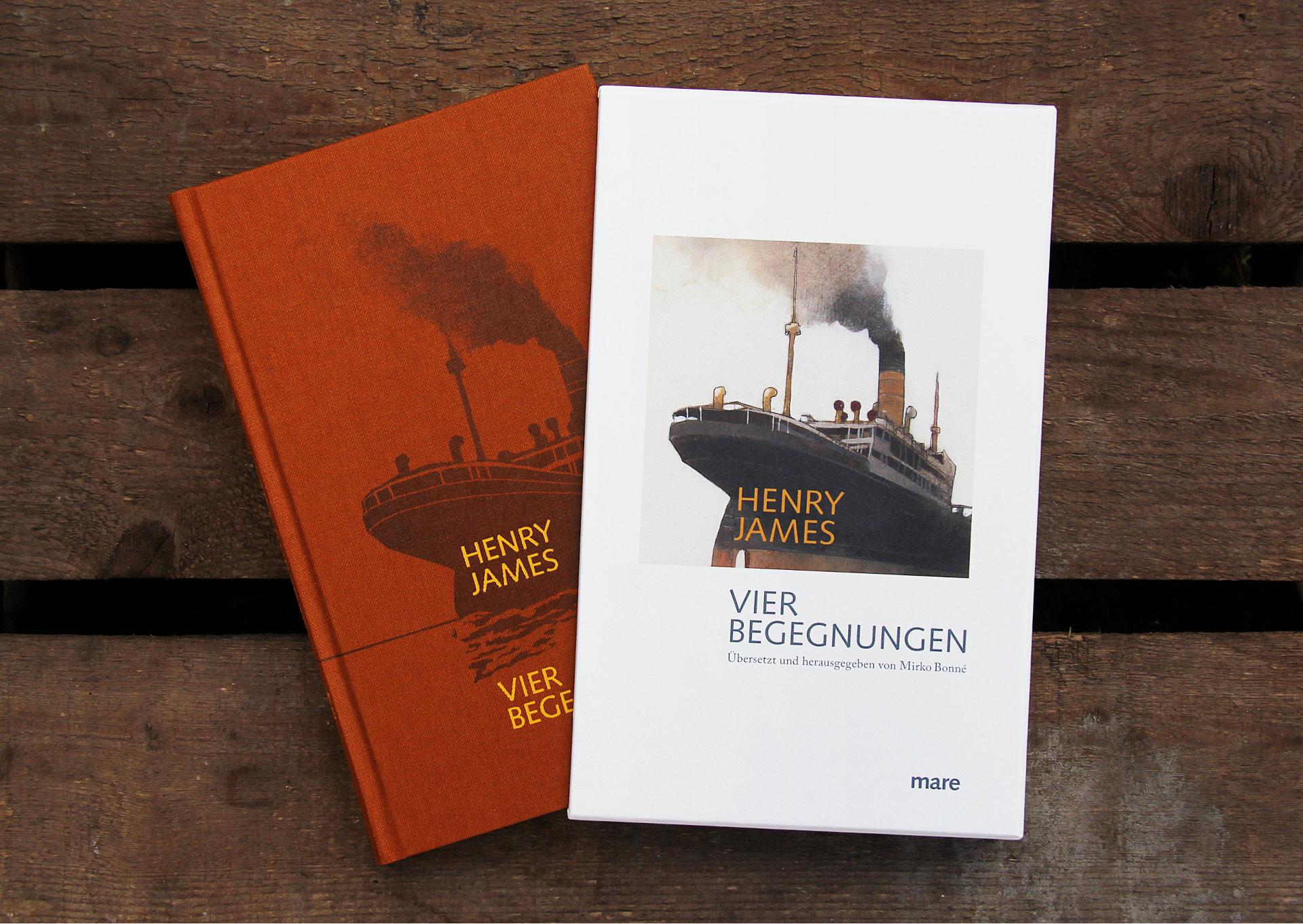
Henry James in my much-loved Mare Classics series was, of course, a must-buy for me, and naturally, there’s also a review here on Lesestunden. Over the past few years, I’ve repeatedly read books by Henry James, and each time he has quickly managed to win me over with his characters. Mirko Bonné has compiled and newly translated four stories. What awaits the reader here — refined tales in Henry James’s familiar quality or plain fare — is what I’ll talk about today.
I’ve already read several books by Henry James and have also blogged about him several times. Born in New York in 1843, he grew up in a wealthy family and was fascinated by literature and the classics from an early age. He studied in New York, but also in London, Paris, Bologna, Bonn, and Geneva, and settled in England in 1875, where he became a British citizen in 1915. A central element in all of Henry James’s works is the comparison between the New World — rising, modern America — and the Old World — traditional, slow-moving Europe. His characters and plots are usually situated between these two opposing forces, and in his works, he observes individuals and the societies they inhabit through the lens of these contrasting worldviews. That is very much the case in these four stories as well.
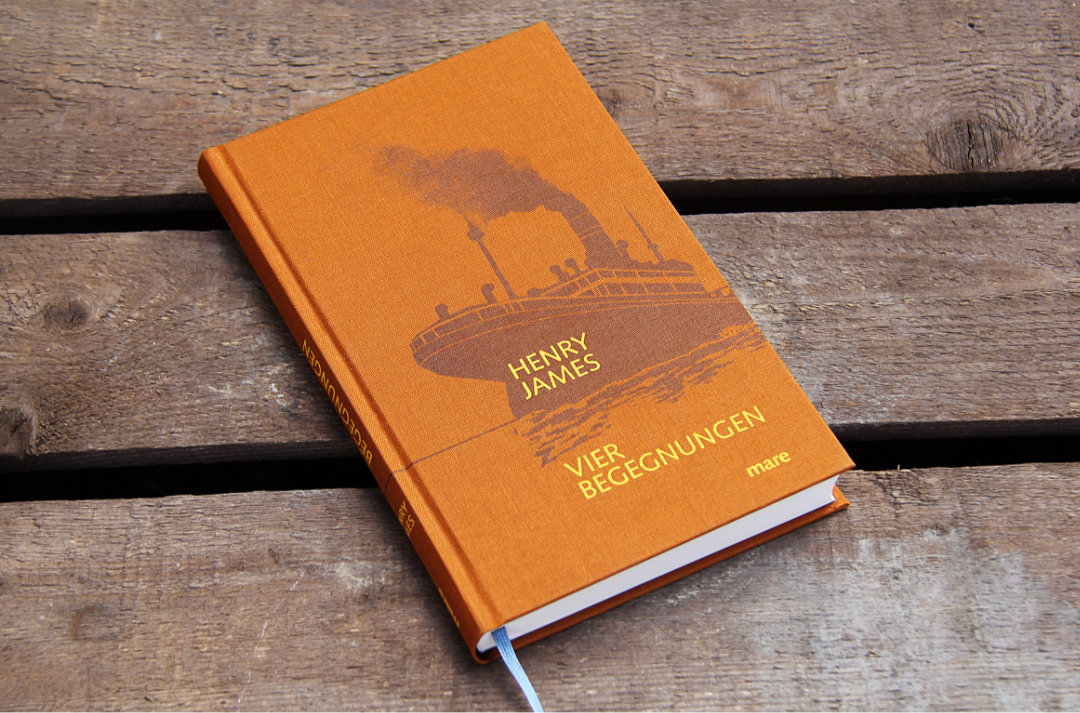
This edition is excellent and well thought out. It contains four stories arranged in chronological order of publication, which also fit together very well thematically.
A Tragedy of Error was published in 1864 and marked Henry James’s literary debut. The husband of the protagonist, Hortense Bernier, announces that after a long stay abroad, he will return to Le Havre. She is far from delighted, for her affair with a vicomte is widely known, and she fears exposure. Following her subsequent actions is highly engaging, and this first story captured my interest very quickly. It develops at a pleasant pace and is nicely pointed, novella-like in form. Stylistically and in terms of plot, however, it doesn’t yet deliver the full measure of Henry James.
The second story, Four Meetings, appeared in 1877 and is, in terms of structure, quite successful. A narrator tells of a young woman he first meets in America who longs to travel through Europe. Each chapter recounts one of four encounters he has with her. The way he characterizes her from a somewhat observational perspective is superbly executed. That’s exactly what James is known for — it’s delightful to read. Yet the true motives of the protagonist are never fully revealed, only hinted at. This allows for a broad range of interpretation, which works wonderfully in some places but felt a bit too open-ended in others.
The next story, The Point of View, consists of several letters and was published in 1882. The letters have different authors and recipients, with the first letter providing insight into the individual characters and their relationships. This story appealed to me the least. Here, Henry James elaborates extensively on how the characters perceive the Old and New Worlds — what they appreciate or find irritating about America or Europe and their inhabitants. James’s subtle perception of cultural differences and human peculiarities is excellently drawn here, but the story lacks a stronger narrative framework to truly captivate the reader. It all feels a bit loose and at times reads more like a short essay, albeit from a very subjective perspective.
The final story, Pandora, published in 1884, is a true masterpiece. Here, Henry James delivers the full program, and the other stories feel like stepping stones toward this one. A young German embassy secretary travels by steamer to America to represent the German Empire in Washington. During the voyage, he meets the young Pandora, an American who is returning home with her family after a trip to Europe. Between the conservative, straightforward German nobleman and the emancipated young woman, the first contact occurs, leading to an increasingly fascinating development. Bit by bit, James characterizes Pandora as well as the German diplomat, vividly portraying their differing personalities and the cultural contrasts between democratic America and monarchical Europe. James’s style remains even, calm, and often explanatory in tone. He depicts dialogue, thoughts, appearances, and settings in a relaxed, matter-of-fact way that nevertheless builds tension and draws the reader into the story. The driving force here is Pandora herself — her motives, intentions, and actions. The naïve and somewhat clumsy count is of little help to the reader, as he continually stumbles over the puzzling traits of Americans. My only regret was that the story was so short — it could easily have gone on longer. The dialogues alone are fantastic.
As always, it’s fitting that this book was published by Mare Verlag. Ocean liners are a wonderful backdrop for these stories, representing both modern luxury and a certain nostalgia. The characters are literally between worlds — carrying their impressions with them but always looking ahead to their destination. This sense of being in transit, of fleeting acquaintances, of waiting together to arrive, and of expectations toward America or Europe are elements James uses skillfully in his storytelling. Even if the sea itself isn’t the central theme, as in other titles from the series, it suits the atmosphere perfectly, and the Atlantic remains ever-present — either as a setting or as the separating element between two worlds.

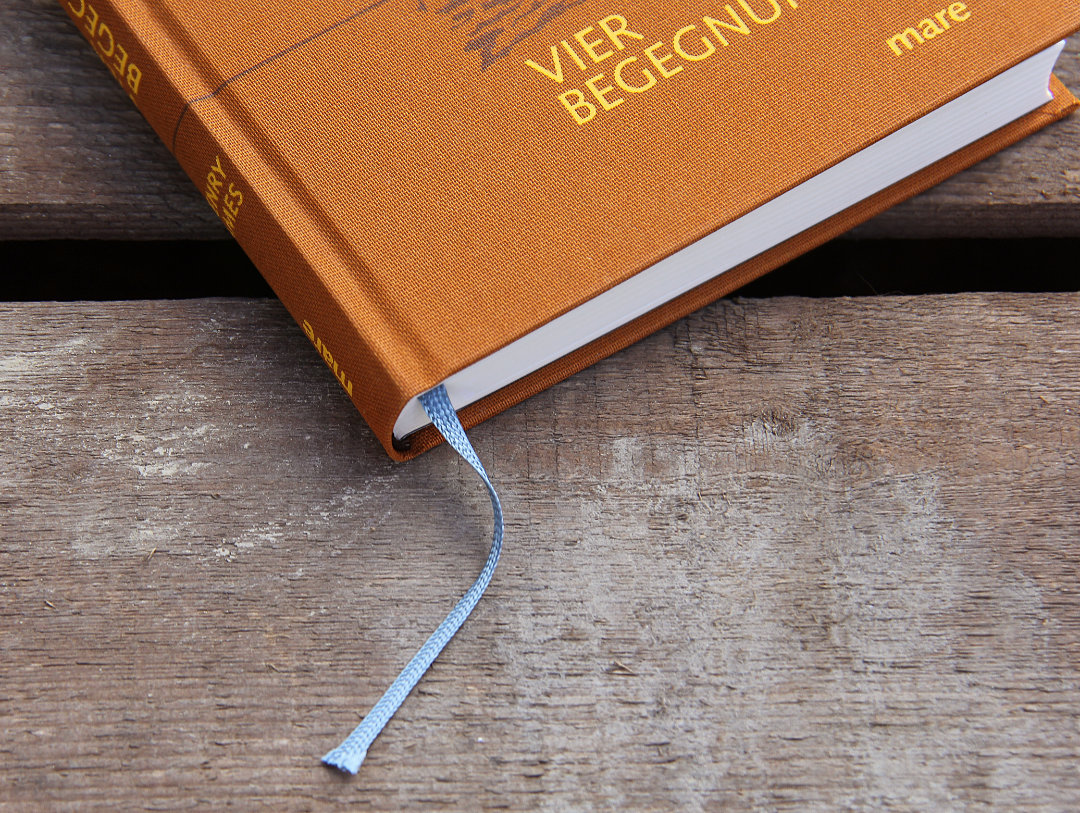
The edition itself, like the other books in the series, is of consistently high quality. Thread binding, remarkably smooth paper, a color-coordinated ribbon bookmark, and, of course, another beautiful cloth cover are all included. The ocean liner on the cover looks wonderful, and with the brown tones reminiscent of a travel trunk — evoking a touch of nostalgia — the book appears elegant and refined. For me, it’s clear that this one will join the others on my shelf and remain there permanently.
I also found the afterword pleasant. It provides background on Henry James’s life and interprets the stories — all within a balanced scope. The notes are particularly helpful, as James frequently uses French words and expressions.
Conclusion: From Henry James’s debut to a masterpiece by a mature writer: in the book Vier Begegnungen, readers encounter one of the great authors in his full range. At the heart of these stories lies, as so often with Henry James, the contrast between the old Europe and the rising, modern America. With great narrative skill, he depicts diverse characters, leads readers deep into their thoughts, and succeeds in embedding their nature and actions within their cultural context. The fourth story, Pandora, particularly impressed me. The edition is, as always, beautifully designed and includes all the bibliophilic extras I could wish for. For those who want to get to know Henry James, this book is a fine recommendation, as the stories are quintessentially him. Fans of Henry James will also be fully rewarded. I think most readers will find themselves reflected here in one way or another.
Book information: Vier Begegnungen • Henry James • Mare Verlag • 256 pages • ISBN 9783866482715
Hallo,
eine sehr schöne Ausgabe! Klassiker lese ich immer lieber in der Originalsprache (wenn ich diese beherrsche), aber bei einer so hochwertigen Edition könnte ich schwach werden…
Ich muss zugeben: von Henry James habe ich bisher nur “What Maisie knew” und “The Turn of the Screw” gelesen, aber ich möchte auf jeden Fall noch weitere seiner Werke lesen. Die in “Vier Begegnungen” enthaltenen Erzählungen klingen nach einer interessanten Auswahl, die einen guten Querschnitt bietet.
Obwohl ich auf anderen Blogs immer gerne Rezensionen zu Klassikern lese, schreibe ich solche viel zu selten. Ich habe mir schon länger vorgenommen, einige der Klassiker, die hier stehen, noch einmal zu lesen und dann zu besprechen – andererseits fühle ich mich da oft befangen, weil über diese Bücher schon so viel gesagt und geschrieben wurde.
LG,
Mikka
Lieber Mikka,
mit “Vier Begegnungen” machst du da gar nichts falsch. Das ist ein schöner Mix in einer sehr schmucken Ausgabe. Von Henry James werde ich auch noch mehr Bücher lesen. Er hat einfach einen schönen und unaufgeregten Stil. “Washington Square” kann ich dir noch sehr empfehlen, das hat mir auch sehr gut gefallen.
Lass dich nicht davon abhalten auch Klassiker zu rezensieren. Es geht ja nicht darum einen neuen oder inhaltlich komplett vollständigen Beitrag zu schreiben, sondern einfach nur die eigenen Gedanken zu einem Buch zu teilen. Und auch Leselust auf Klassiker zu wecken. Das sieht doch jeder ein wenig anders und das ist auch immer das Interessante.
Liebe Grüße
Tobi