
Der schwarze Handschuh • Vladimir Odoevskij
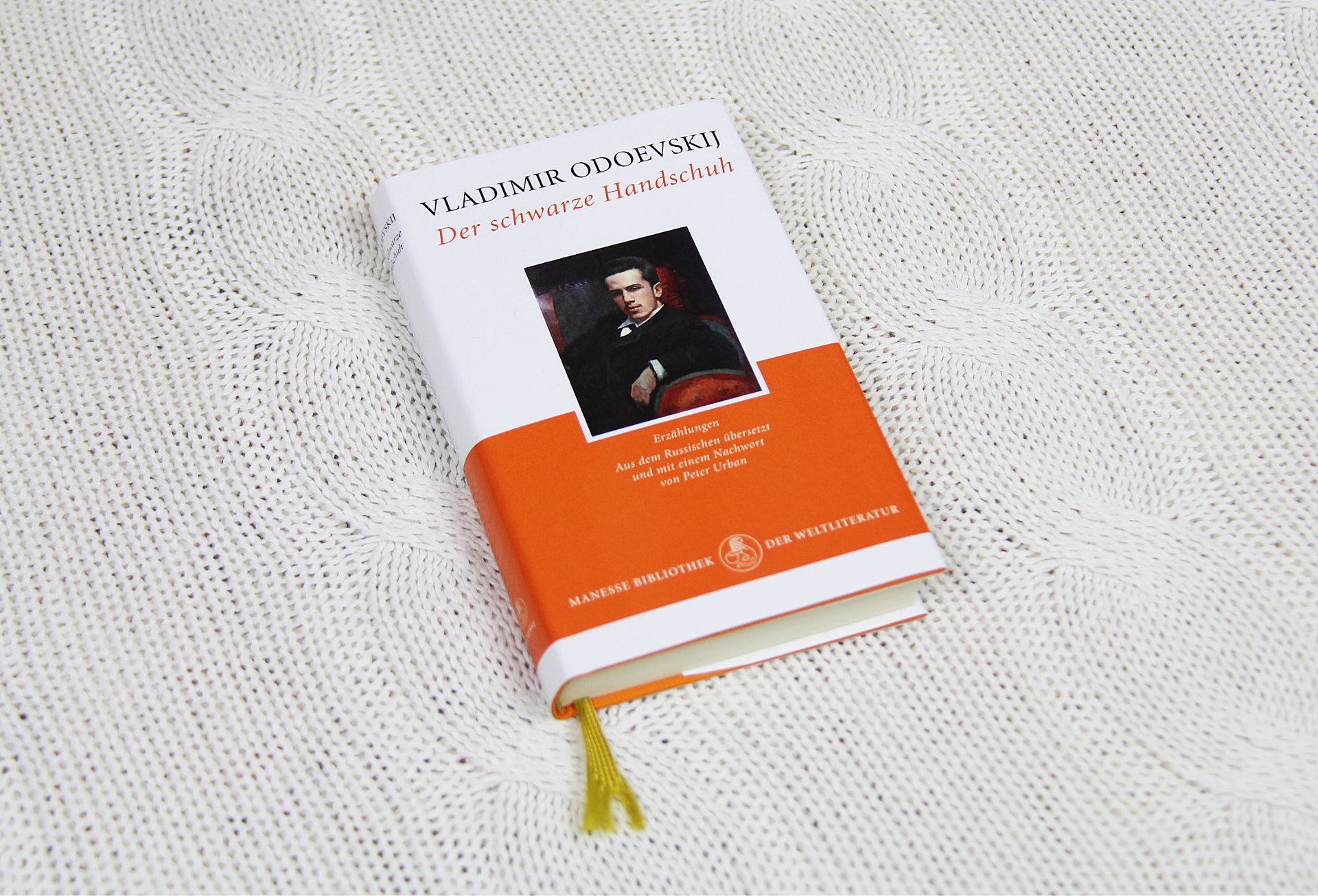
At the moment, I’m still deep in my “Manesse Russian phase,” immersing myself in the novels of the great Russian authors. I’ve now reached the first half of the 19th century—a period in which Russian prose truly began to flourish and lay the groundwork for novels like Anna Karenina. It was a time when writers such as Pushkin, Turgenev, and Chekhov shaped modern Russian literature. Vladimir Odoevsky is one of the lesser-known figures of this era, which made me all the more curious about this book that Manesse Verlag added to its program a few years ago.
At first, I thought this was a novel, but to my surprise, it turned out to be a collection of stories. Clearly, I only skimmed the back cover—classic me—since blurbs for classics often contain unpleasant spoilers. Still, I love Manesse’s editions of master novellas, so I was actually quite pleased to find a handful of shorter tales inside.

Overall, the reading experience was mixed. The first and title story, The Black Glove, wasn’t bad, but it didn’t really captivate me either. The plots of these short novellas are often well-crafted and pointed, but the conclusions weren’t always impactful enough. The same goes for the four other stories. The Ghost is a Gothic tale, though I found its twist rather weak. Consequences of a Satirical Article pokes fun at the intellectual upper class. Tale of a Dead Body, Unknown to Whom It Belonged paints a fine picture of a petty, corrupt provincial official but felt too bizarre in its central element. Similarly, The Sylphide—a strange story with supernatural elements—could almost have come from E.T.A. Hoffmann, though it felt a bit too fanciful for my taste.
The last two and longest stories, however, I really enjoyed. They’re titled Princess Mimi and Princess Zizi—odd-sounding names at first, but both are fascinating, well-constructed social tales set in the upper aristocracy of Moscow and St. Petersburg. Each follows the fate of a princess and explores how society unfairly judges, how gossip and malice drive conversation in salons, and how compassion is lost in the process. I devoured both of these stories—they’re written in the tradition of the great social novels of the time.
Vladimir Odoevsky (1803–1869) was born into high nobility and knew the intricacies of upper-class life intimately—he belonged to that very world himself. His stories take aim at the aristocracy with sharp cynicism and moral critique, exposing its superficial, gossip-driven culture. In noble circles, French was almost exclusively spoken at the time—so much so that many could barely speak Russian, which is rather absurd. Odoevsky condemns this tendency and repeatedly questions how much of the “Russian spirit” is lost when everyone favors a foreign tongue. Beyond that, his stories also dwell on common human flaws and the intellectuals who, smug in their elitism, mindlessly imitate French culture without reflection.
Odoevsky was highly educated—a writer, composer, and well-connected member of Russia’s early literary scene. He was acquainted with Gogol, Turgenev, Chekhov, as well as Tolstoy and Dostoevsky. So he certainly kept good company, and his influence on these major figures shouldn’t be underestimated.
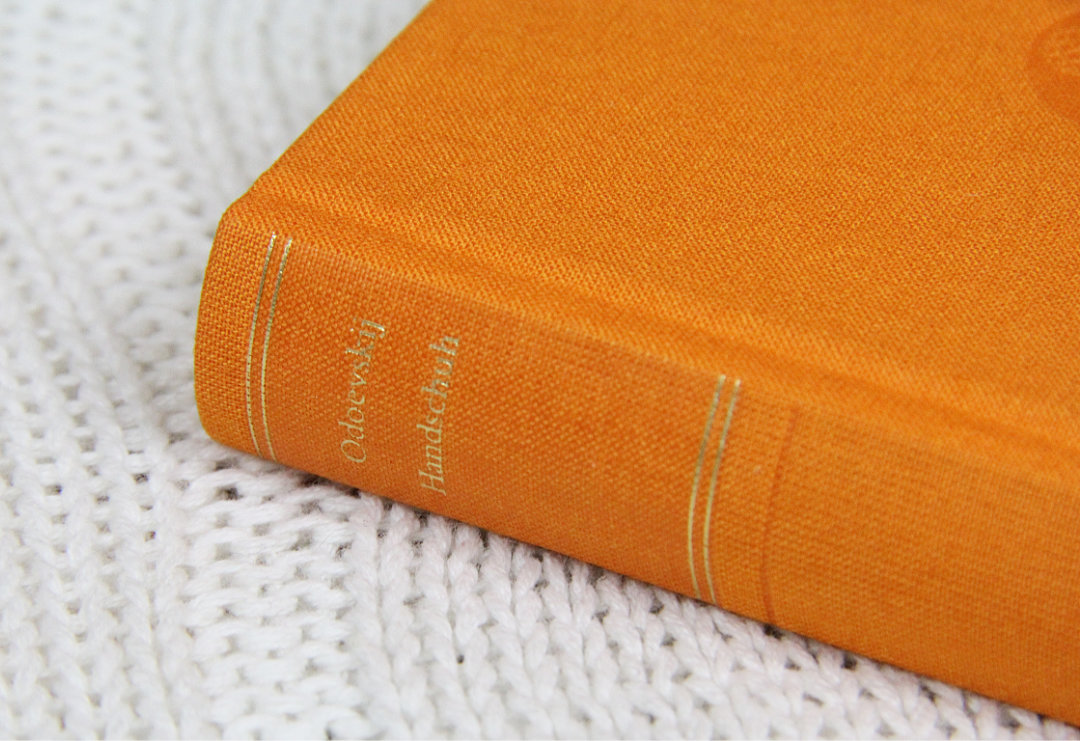
Conclusion: I put this book down with mixed feelings. On one hand, the socially observant and psychologically nuanced stories Princess Mimi and Princess Zizi were excellent—engaging, elegant, and insightful. The other stories, however, didn’t resonate as much with me, and the prose didn’t quite carry me into its rhythm. Still, the Manesse edition itself is—as always—wonderful, complete with all the features I’ve come to love: the beautiful orange linen binding is especially striking. All in all, this is a book that entertained me but isn’t one I’d consider essential reading.
Book information: Der schwarze Handschuh • Vladimir Odoevsky • Manesse Verlag • 379 pages • ISBN 9783717522461