
Split Tooth • Tanya Tagaq
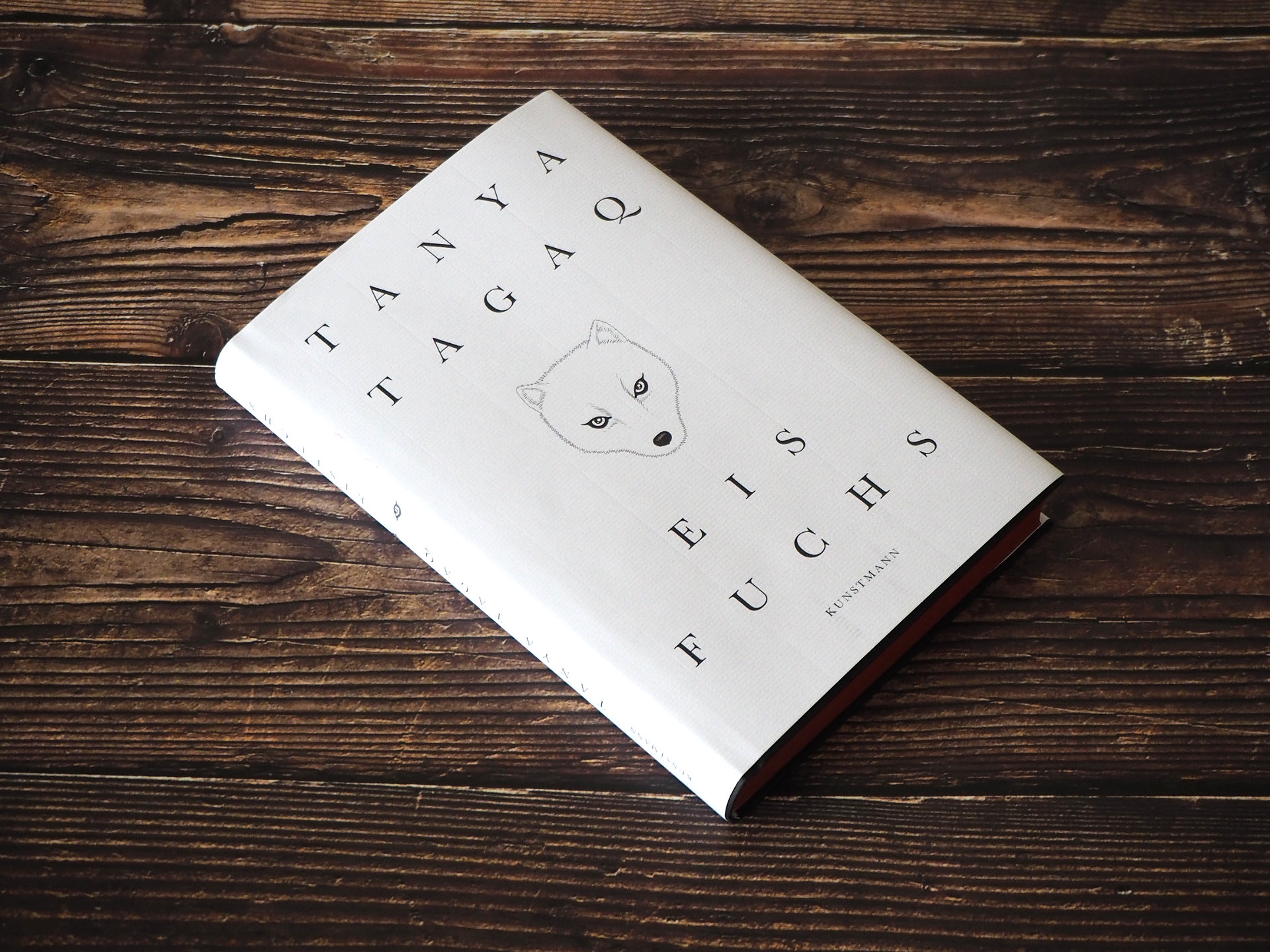
In recent weeks I’ve been sticking to tried-and-true literary terrain and haven’t experimented much. So Split Tooth by Tanya Tagaq was a welcome change, and I was delighted by the unexpected mail bringing this book. I probably never would have picked it up myself, and I love it when chance tosses unexpected reading my way. Split Tooth sounded promising from the blurb: the story is set in Nunavut, a region in northern Canada, homeland of the Inuit. I love the far north, the Scandinavian countries, and the Arctic. A setting like that is, of course, very promising. That chance shouldn’t always be trusted, however — you’ll see in this post.
In the book, Tagaq tells the story of a girl growing up by the icy sea in a small town. It follows her childhood and youth in the 1970s and ’80s, far up in the bitter cold, always framed by depictions of nature and the young protagonist’s impressions, with descriptions of life in this harsh and lonely place.
Split Tooth is the first book from Kunstmann Verlag that I’ve read, and in terms of presentation I’d file it under contemporary literature: a protagonist laden with problems and negative thoughts, an inhospitable setting, a generally oppressive mood. That impression was quickly confirmed while reading. Tagaq portrays a bleak society; the parents scarcely take care of their children and seem to indulge daily in excessive drinking. For the most part it is icy and dark, save for a few summer months. The protagonist goes her own way, hangs out with rough teenagers, and the reader gets a handful of anecdotes typical of adolescence. In keeping with current trends in contemporary fiction, the young girls are, of course, subjected to continual sexual harassment. Sexuality in general is a major theme — partly arising from the protagonist’s coming of age, but frequently pushed to extremes, as when she has sexual contact with a dream-fox. The whole village and its figures feel very archaic, and you sense a strong connection to the nature myths that shape Inuit culture.
The book itself consists of several interwoven elements. There are episodic narratives from the girl’s life, covering daily routines and emotional states. Then there are recurring dream sequences in which the nameless heroine has visions that often feel spiritual and usually relate to nature and the frozen north. And there are passages (poems?) that read more like a stream of consciousness, lyrical in tone, presenting emotionally tinged impressions from the girl’s inner world. The language throughout is simple; the sentences are short; the scenes are plain and succinct.
Neither the content nor the style won me over. The mood is consistently negative; the nature descriptions are rather meager, not poetic at all; and the spiritual excursions feel confused and largely meaningless. I would call the girl’s life disturbing, but not significant. Throughout I kept asking myself why the author wrote this book at all. She repeatedly sprinkles in general philosophical notions, tries to abstract a bit, but those insights didn’t resonate with me either.
From the middle of the book onward, the spiritually inflected passages increase sharply. The protagonist suddenly travels around with her spirit, culminating in a very bizarre scene. At that point, the book completely lost me — from there on it’s just increasingly outlandish nonsense. It’s a strange, half-baked mix of spiritual elements, the nature-bound, highly archaic culture and mindset of the Inuit, and numerous pseudo-philosophical, muddled statements. You can interpret it as you like; for my part, I find no deeper meaning or literary value here. The interspersed “poems” presumably aim to evoke the protagonist’s feelings and thoughts in the reader, akin to stream of consciousness — but it doesn’t really work, because the sentences are often incomplete, incoherent, aimless, tossed-off and disconnected. For me, the intended effect missed the mark.
Tanya Tagaq herself is from Cambridge Bay and has presumably worked numerous childhood and teenage memories into this book. Split Tooth is her first work of fiction; otherwise she’s a composer and vocalist. The videos of her songs you can find on YouTube speak for themselves — nothing about this surprises me anymore. It’s a completely different world. I’ve always found Björk a bit eccentric, but Tagaq takes it several notches further.
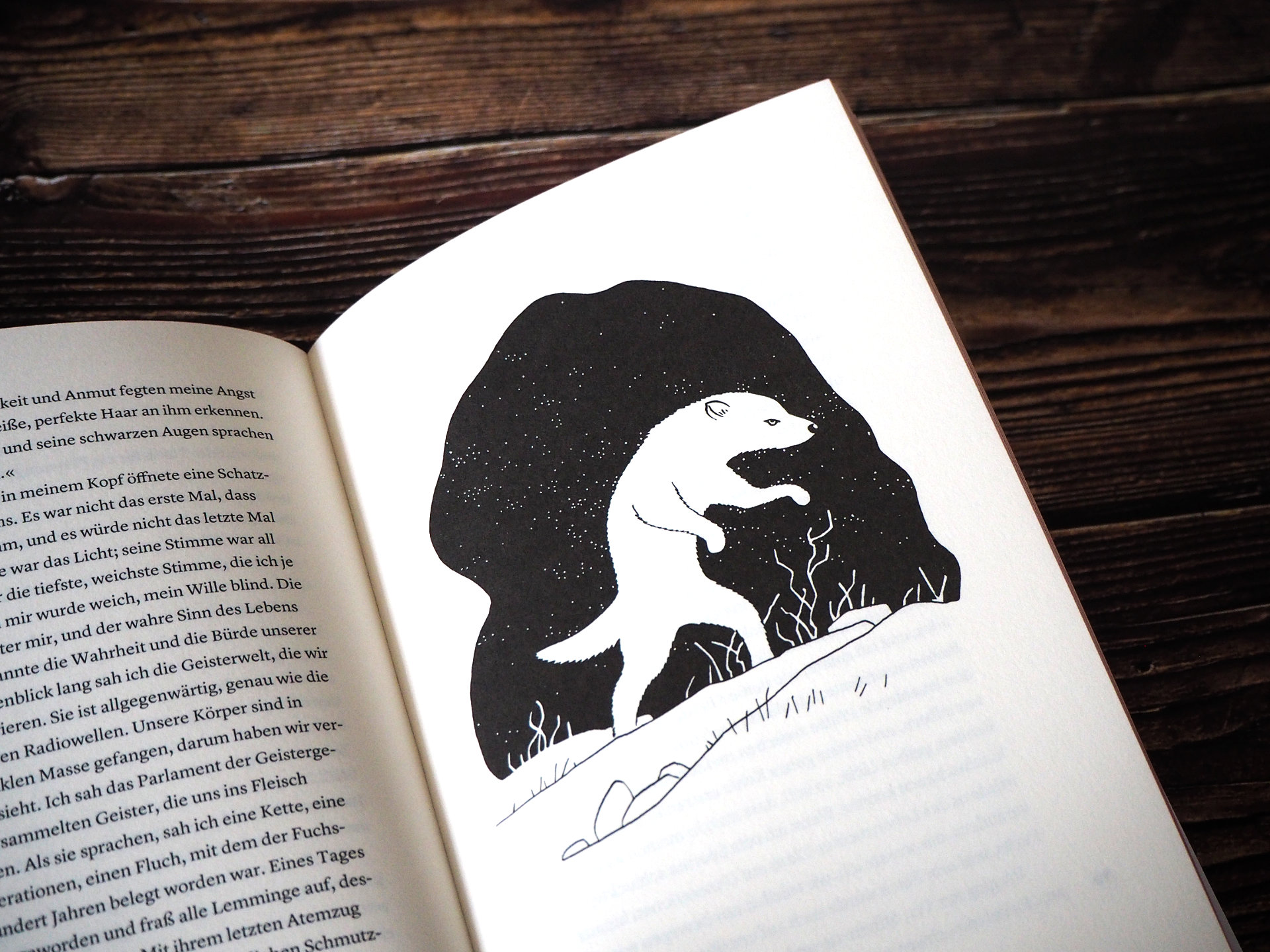
The physical book is fairly ordinary: standard perfect binding, no ribbon marker. The white cover suits it well. There are also some illustrations by Jaime Hernandez, which I didn’t care for at all — very stark and plain. That fits the content, perhaps, but the depicted scenes aren’t especially beautiful or worth looking at. They certainly don’t enhance an already limited reading pleasure.
Conclusion: I definitely cannot recommend Split Tooth and would advise everyone to give it a miss. Its baseline mood is very negative; the story struck me as bizarre and pointless; the prose is utterly unspectacular; and it lacks any real substance or thematic through-line. The Arctic atmosphere is only faintly conveyed; the characters all seem odd and unlikeable; the society depicted is repellent, as are the anecdotal scenes that often dissolve into utterly confused spiritual episodes, thereby losing all connection to reality. The philosophical assertions likewise feel muddled and unfocused, and together with the lyrical elements they seem plucked from thin air, without deeper meaning. The book leaves me very disappointed, and it certainly won’t be getting a place on my shelf.
Book information: Split Tooth • Tanya Tagaq • Antje Kunstmann Verlag • 200 pages • ISBN 9783956143533
Magischer Realismus ist manchmal schwer zu verstehen, wenn man die Kulturen nicht kennt. Wir Europäer sind dann schnell überfordert. Trotz der schlechten Kritik bin ich dankbar für den Tipp, ich hab´s mir mal auf den Merkzettel gelegt.