The Serpent Charmer • Louis Rousselet
Two weeks ago, I read Jules Verne’s Journey to the Center of the Earth, a book that had been waiting quite some time to be picked up. It turned out to be such a delightful and entertaining read that I immediately started searching for more old adventure novels. They’re simply wonderful — every one of them worth reading. Usually, I tend to go for new and elegant editions, but when it comes to adventure classics, it’s the truly old books that are the most charming. They radiate simplicity, nostalgia, and the allure of a time when such books could still mean the world. Perhaps I’m exaggerating, but there’s something deeply atmospheric about holding one of them in your hands. I first came across The Serpent Charmer last year, since I’m always browsing for beautiful books, and this one immediately catches the eye with its design. Unfortunately, at the time, I couldn’t find a copy whose price matched its condition, so I passed on it. But in the wake of my recent Jules Verne shopping spree, I stumbled upon it again and managed to get a very well-preserved edition for a great price. Reading it — and admiring its exquisite design — was such a pleasure that I simply had to write about it. For me, this book is the absolute favorite of the year, and I don’t want to miss the chance to share this bibliophile gem with you.
The story is set in India during the period of British colonization. Robert and Bertha are the teenage children of a wealthy owner of a small indigo factory. A rebellion breaks out, led by former Indian rulers, and a deposed prince who has long plotted revenge begins a revolution against British rule. Of course, the uprising starts right at Robert’s father’s factory. Robert witnesses his father being struck down and his sister Bertha being kidnapped. Miraculously, he survives and vows to rescue his sister. Thus begins an adventure that takes him across India, facing countless dangers along the way.
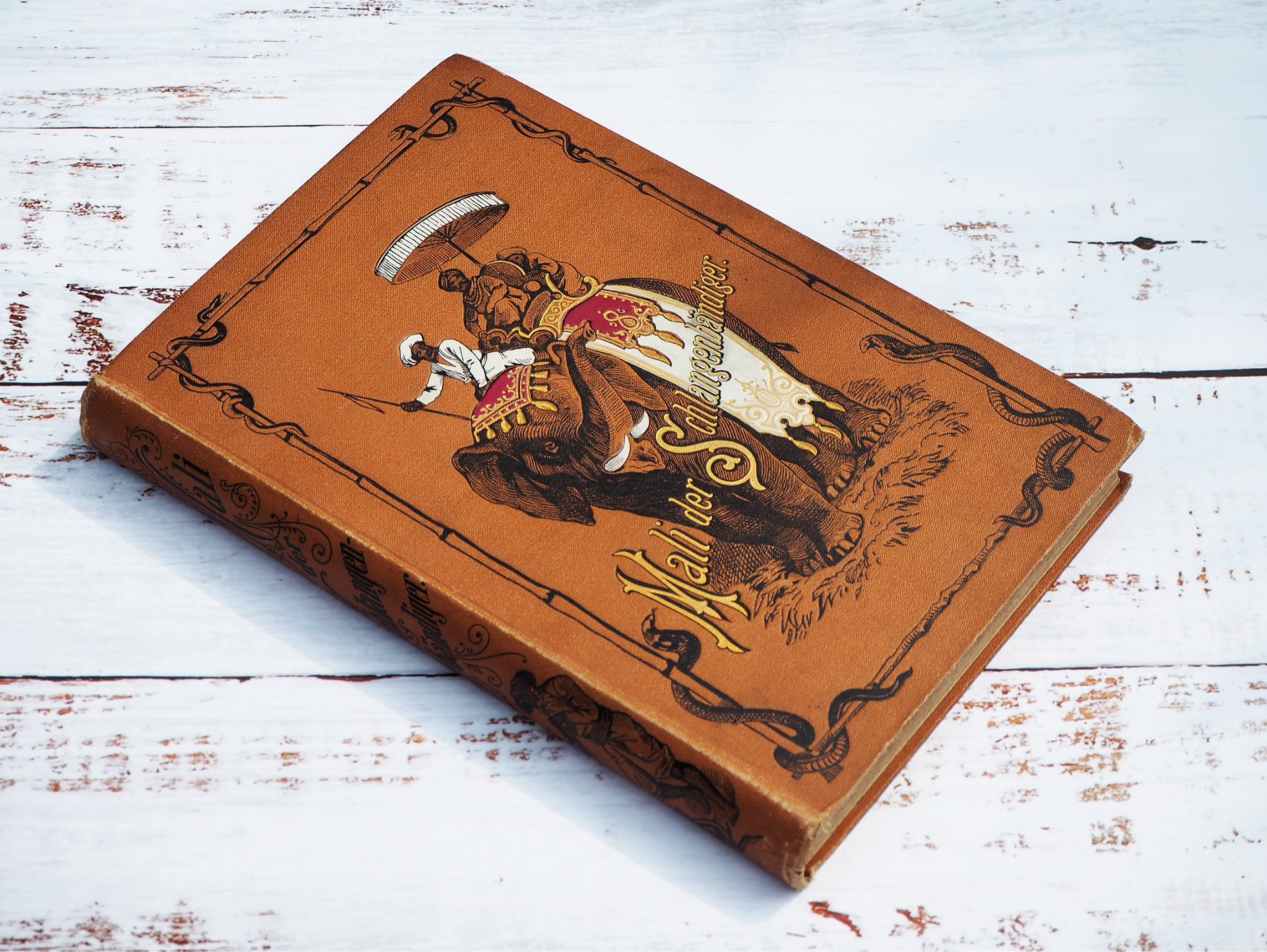
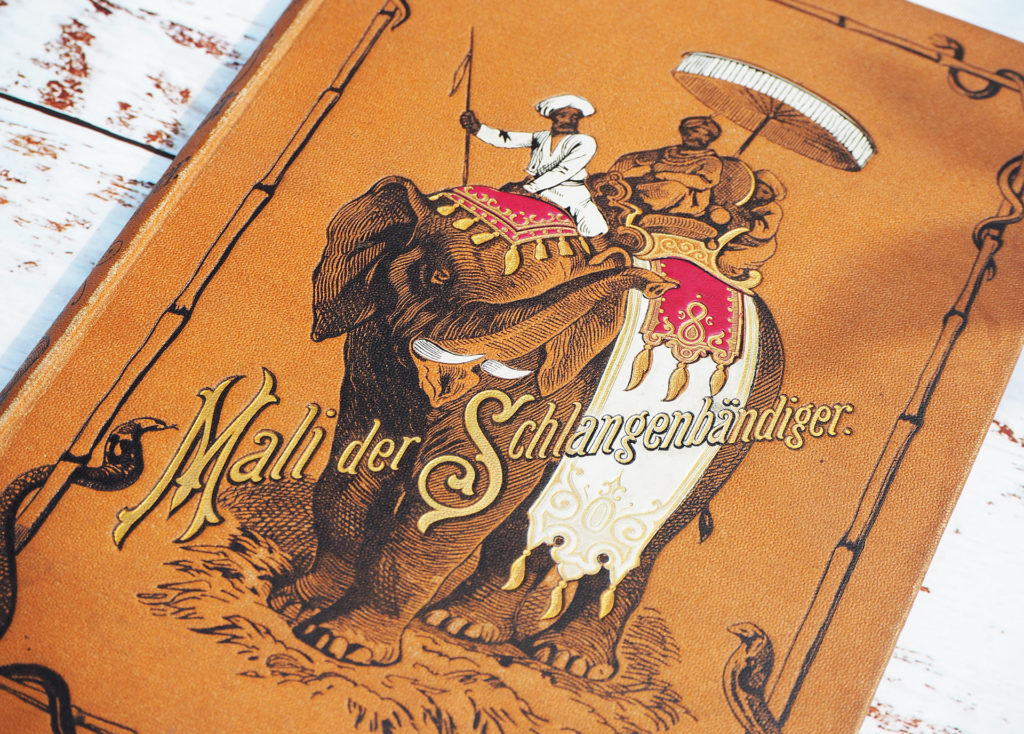
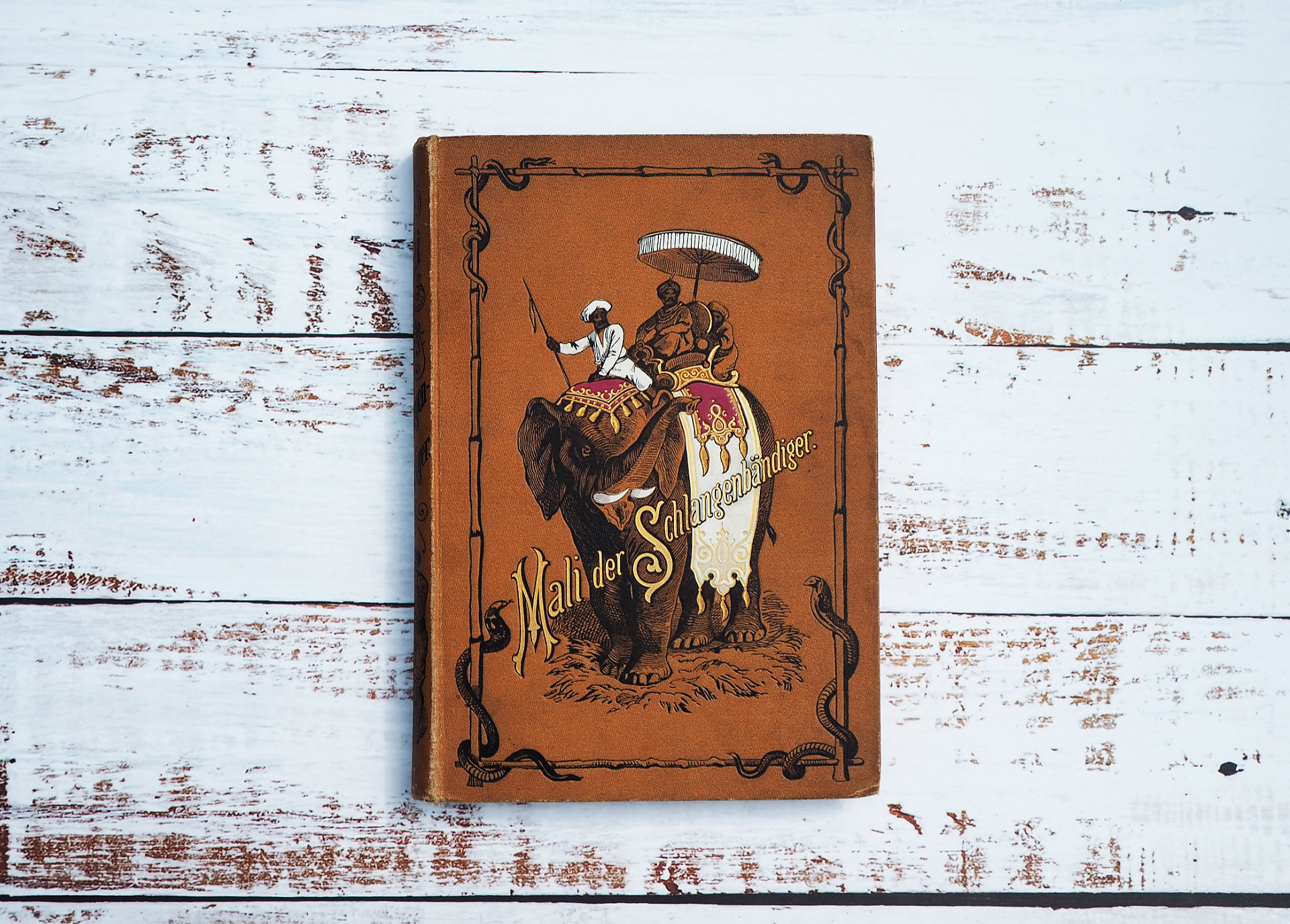
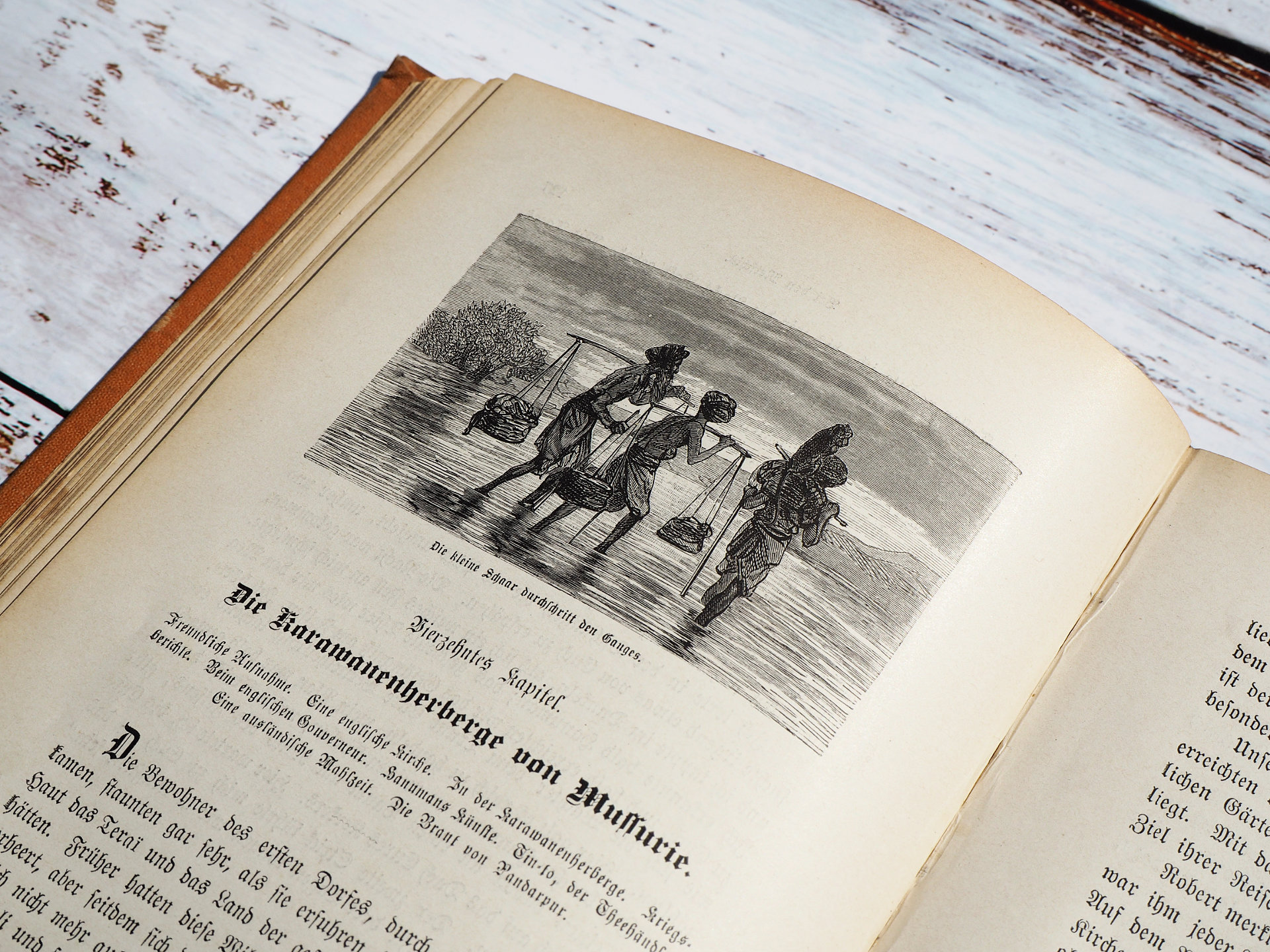
What fascinates me so much about this book is the overall package. It radiates the atmosphere of colonial India in every fiber. The book is richly illustrated, with drawings by Adriene Marie, which emphasize that stereotypical image even further. The beautiful brown cover with its large illustration of the prince on his majestic elephant, the elegant lettering on the spine featuring the faint outline of Mali, the yellowed pages, and the old Gothic typeface — all of it creates a wonderfully evocative mood. And everything that the design evokes can also be found in the story itself. Together with the protagonists, the reader traverses the Indian jungle, discovers abandoned and overgrown temples teeming with monkeys, enters splendid Indian palaces and witnesses traditional festivities, visits Hindu temples with Robert, and encounters all the settings that perfectly match the image one might have of India in that era.
The language of Rousselet — or rather the translation by L. Mannheim — is charmingly old-fashioned and at times antiquated. Yet Rousselet never digresses; with just a few sentences, he describes the fauna, flora, and landscapes in vivid detail, creating an immersive atmosphere. Not once did I find the book boring. Rousselet also includes a few unexpected twists that make for consistently entertaining reading. Well, what can I say — it’s a book by a 19th-century French author, and they simply knew their craft. The story is coherent and well-balanced; everything just fits perfectly together.

Louis Rousselet was born in France in 1845 and lived until 1929. He was not only a writer but also a passionate traveler, geographer, and photographer. In 1864, he set out for India, intending to stay for just a few months — but it turned into four years. He became especially known for his numerous photographs taken during his travels through India. He brought back and published over 600 photographs, which later served as references for many engravings. It’s therefore quite likely that the illustrations in this book are based on his photos. Mali, der Schlangenbändiger was probably his only adventure novel. However, he also wrote a book about his journey through India, which became a considerable success — L’Inde des Rajahs (India and Its Native Princes in English).

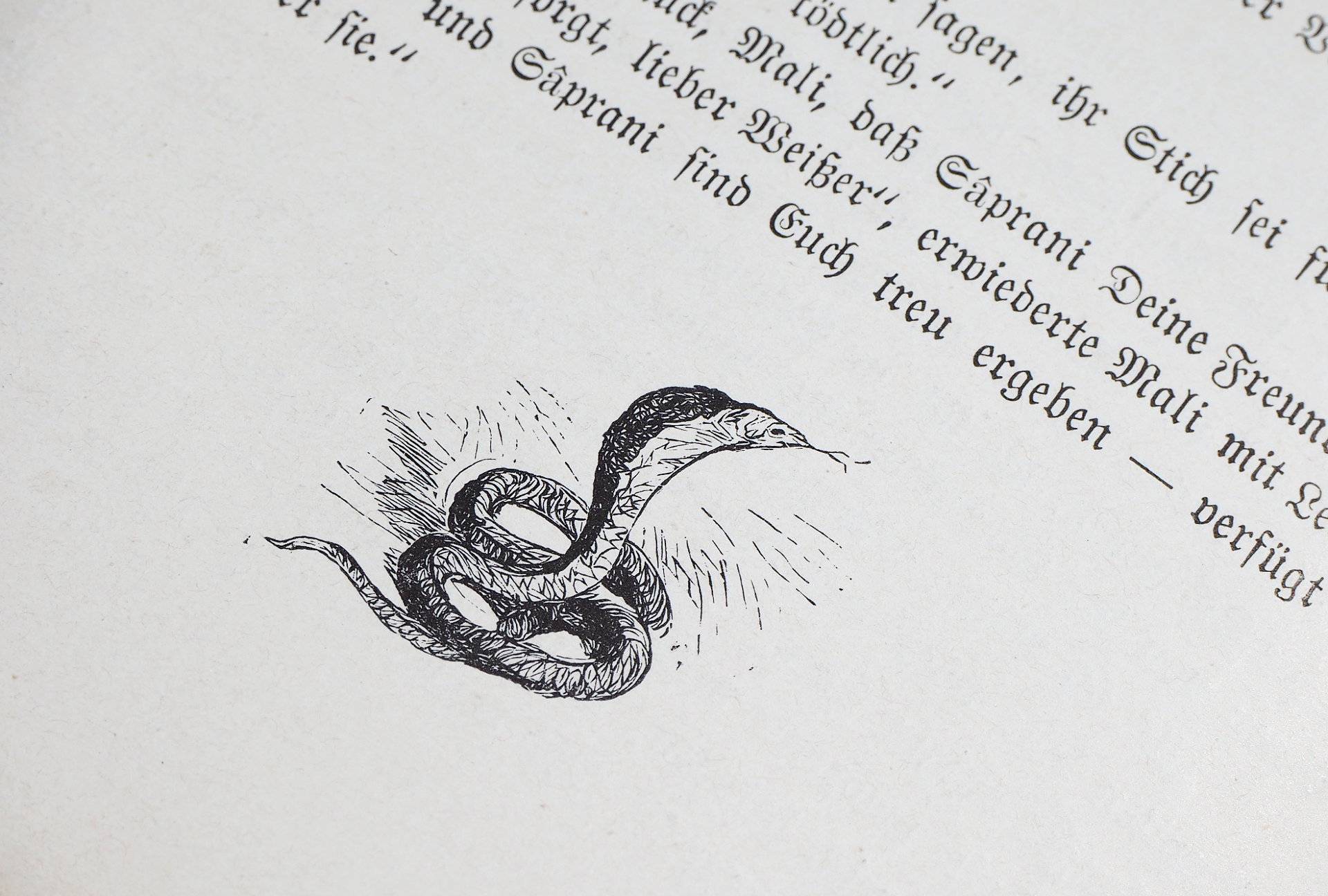
The Serpent Charmer was published in 1884, and my copy is from the second edition, which appeared about four years later. The book is simply stunning — a splendid specimen, just as one would wish. The cover feels substantial, and with its detailed illustration, elegant golden lettering, rich brown tone, and intricate embellishments, it’s a feast for the eyes. Holding it in your hands, you can feel the unique atmosphere it exudes as a whole. The book contains 16 large-format plates and over 50 illustrations in total. Each chapter begins with an illustration and ends with a small vignette. The binding is made with long staples that still hold well, making this nearly 150-year-old book remarkably pleasant to read. Altogether, it’s an impressive work — you really can’t complain. It’s built to last, and quality like this is rarely found these days.
Conclusion: This old adventure novel set in colonial India is simply wonderful. With its high-quality, bibliophile edition, richly atmospheric story, numerous illustrations, and engaging plot, the book was a true delight to read. Everything about it works beautifully — it’s a classic adventure novel that I can recommend to anyone. If you want to get your hands on a well-preserved copy of this fine book, you’ll need a bit of patience, as it’s not very common. A magnificent work like this truly deserves a faithful new edition, just as it was in the 19th century. A beautiful book that ranks among the most splendid in my collection — and it will never leave my shelf again.
Book information: Mali, der Schlangenbändiger • Louis Rousselet • Ferdinand Hirt & Sohn • 215 pages • 2nd edition, ca. 1888