
The Rider on the White Horse • Theodor Storm
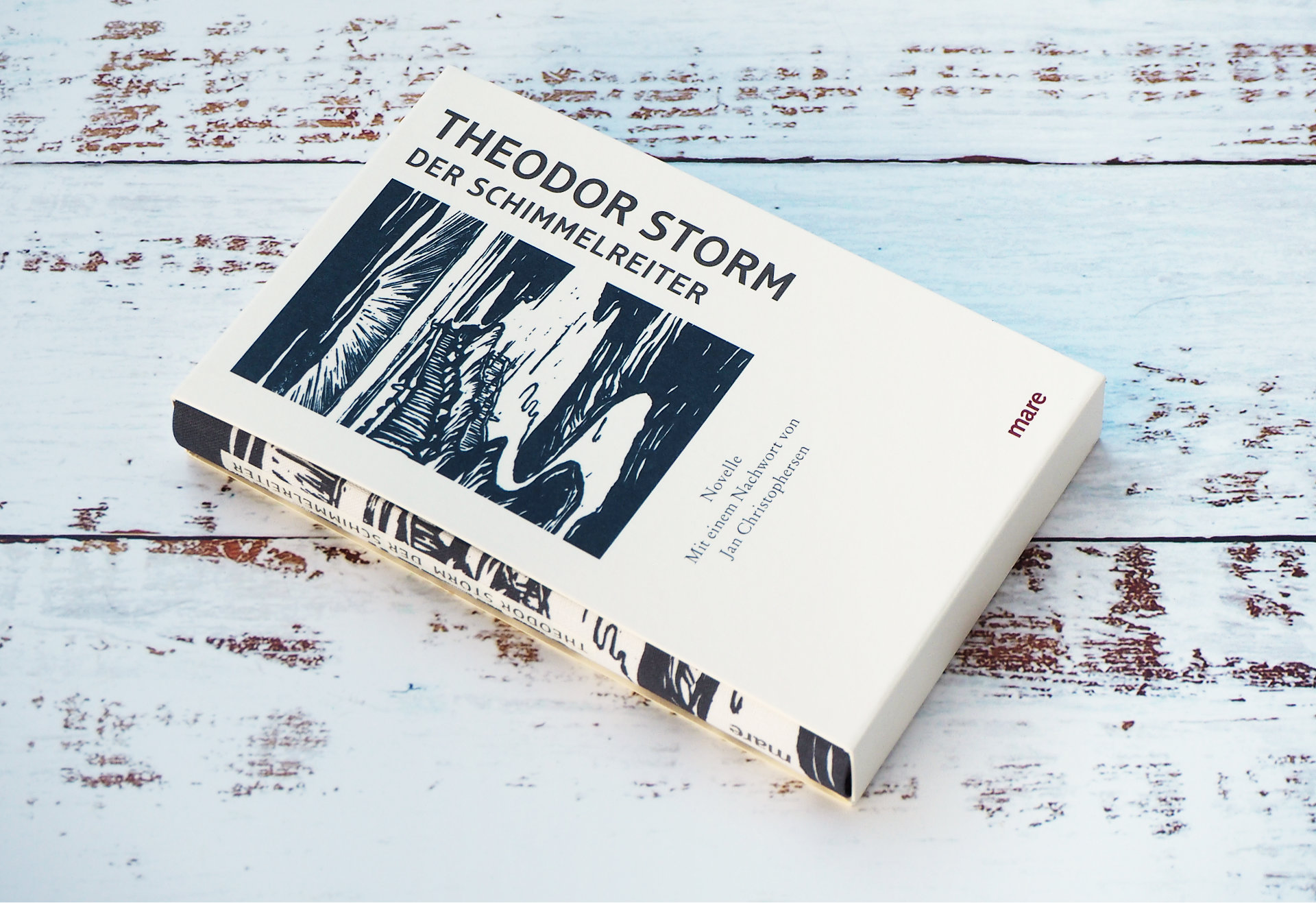
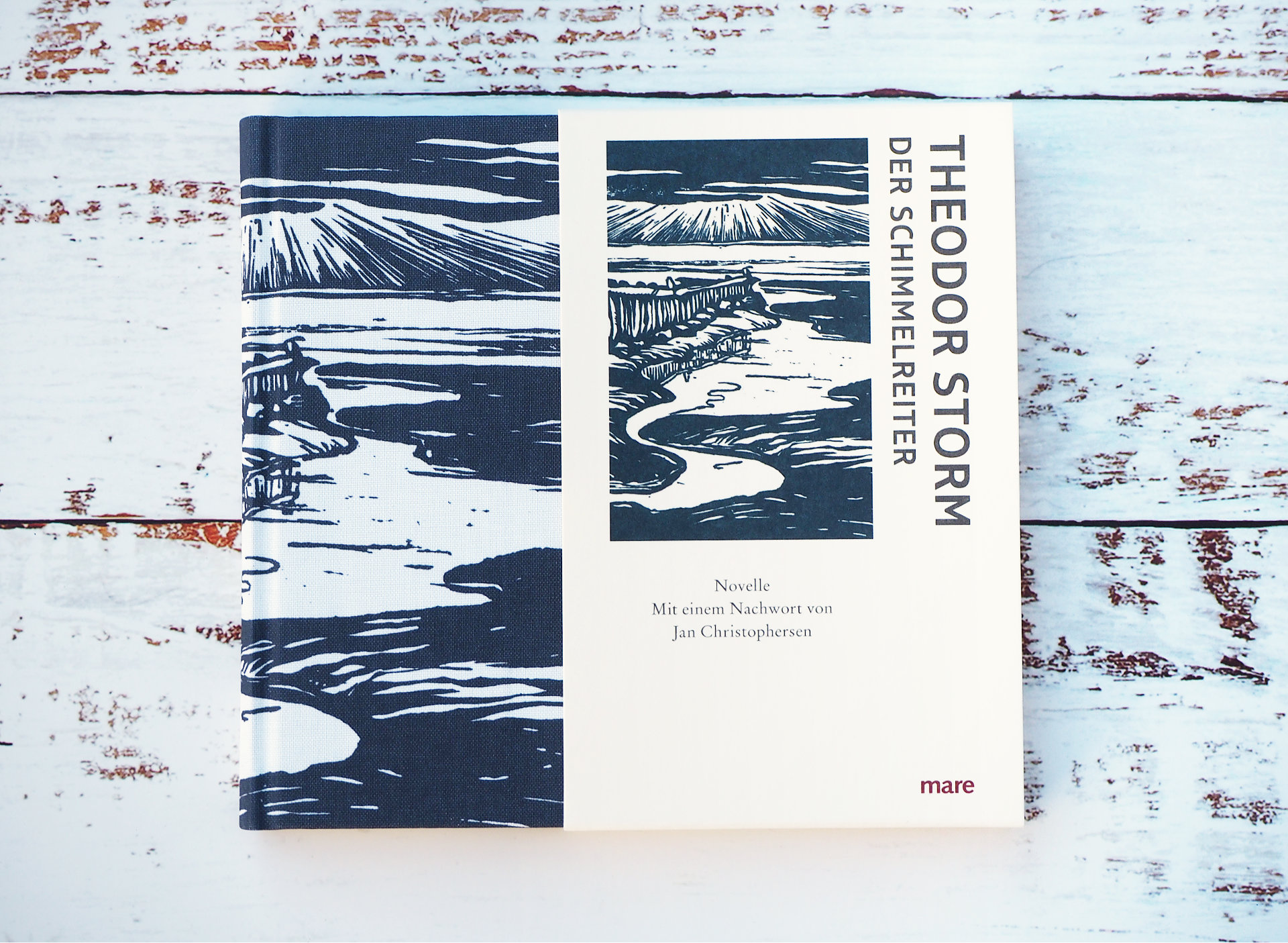
Attentive readers of my blog might be surprised: The Rider on the White Horse is actually the first book I’ve reviewed twice on Lesestunden. The reason is simple—I couldn’t resist this beautiful edition from mare Verlag and just had to show it to you. So I picked up this novella again, which I first read five years ago. Back then, I chose the simple little booklet from Hamburger Lesehefte Verlag, but this new edition is the complete opposite—a gorgeous, linen-bound, and truly bibliophilic volume.
Theodor Storm’s novella is a classic school reading text, and for many probably carries some negative associations. I was never forced to read it in school, but I can imagine how much could be interpreted and over-analyzed in the characters and the plot. Fortunately, I don’t have to do that, so I was able to read it again in total relaxation.
The story follows Hauke Haien, who grows up in the marshes of the North Sea coast and rises from a simple farmhand to the position of dike master. His talent for mathematics shows early on, and as a rational-minded man he lives within a deeply traditional, rural society. On the North Sea coast—right by the Wadden Sea—superstition reigns and the mindset is that of simple farmers. Hauke’s life is closely bound to the nature of this beautiful coastal region, and his fate is determined by his life’s work: building a new dike to reclaim more land from the sea.
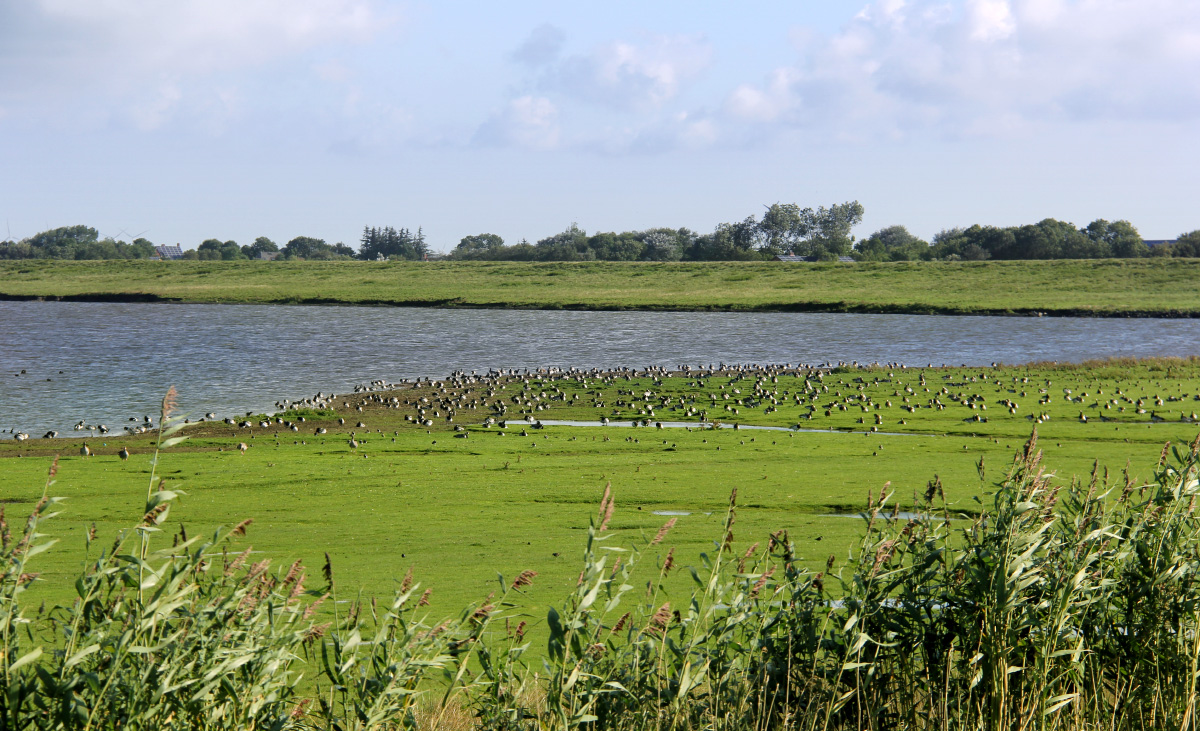
The landscape is still vivid in my memory from our North Sea vacation years ago. We walked along the Hauke-Haien-Koog back then, though the novella’s setting is said to be a little closer and farther north of Husum, in the Hattstedtermarsch. The story is deeply intertwined with the nature of the North Sea, filled with descriptions of the sea, the marshlands, the cozy little cottages with their warm rooms, the birds, and the ever-present influence of the sea. The story’s connection to this landscape fits perfectly into mare Verlag’s publishing ethos.
“[…] the wind had died down; in graceful flight, gulls and avocets glided back and forth over land and water; from Jevershallig came the thousandfold cackling of the brent geese, still content to stay along the North Sea coast today; and from the white morning mists covering the wide marsh there gradually rose a golden autumn day, illuminating the new work of human hands.” (p. 176)
What I particularly enjoy is the archaic-sounding language, which beautifully reflects the old-fashioned character of the people from this region. The appendix includes a glossary explaining words such as Koog, Fenne, or Priel, adding even more authenticity to the reading experience. The result is a vivid picture of this harsh environment, where people built their own habitat with dikes—land shaped by the sea, which in turn shaped the lives of simple farmers.
The book also contains some eerie elements that stem from the strong superstitions of the coastal villagers. The story begins with the mysterious rider on the white horse, and an unnamed narrator hears the tale of this ghostly figure in a warm, cozy tavern. The novella isn’t exactly suspense-packed, but it held my attention. It’s certainly entertaining and, despite the somewhat old-fashioned language, it reads smoothly and effortlessly.
In terms of content, this novella is truly a timeless classic, as the themes Storm presents are still relevant today. Hauke’s struggles with society, as well as the conflict between humans and nature, are central elements here. And if one believes the good Mr. Lesch, things aren’t looking great for the North Sea region either, thanks to climate change. I can understand why this book is so popular as school reading material. There’s plenty to analyze in the individual characters—they certainly have depth.
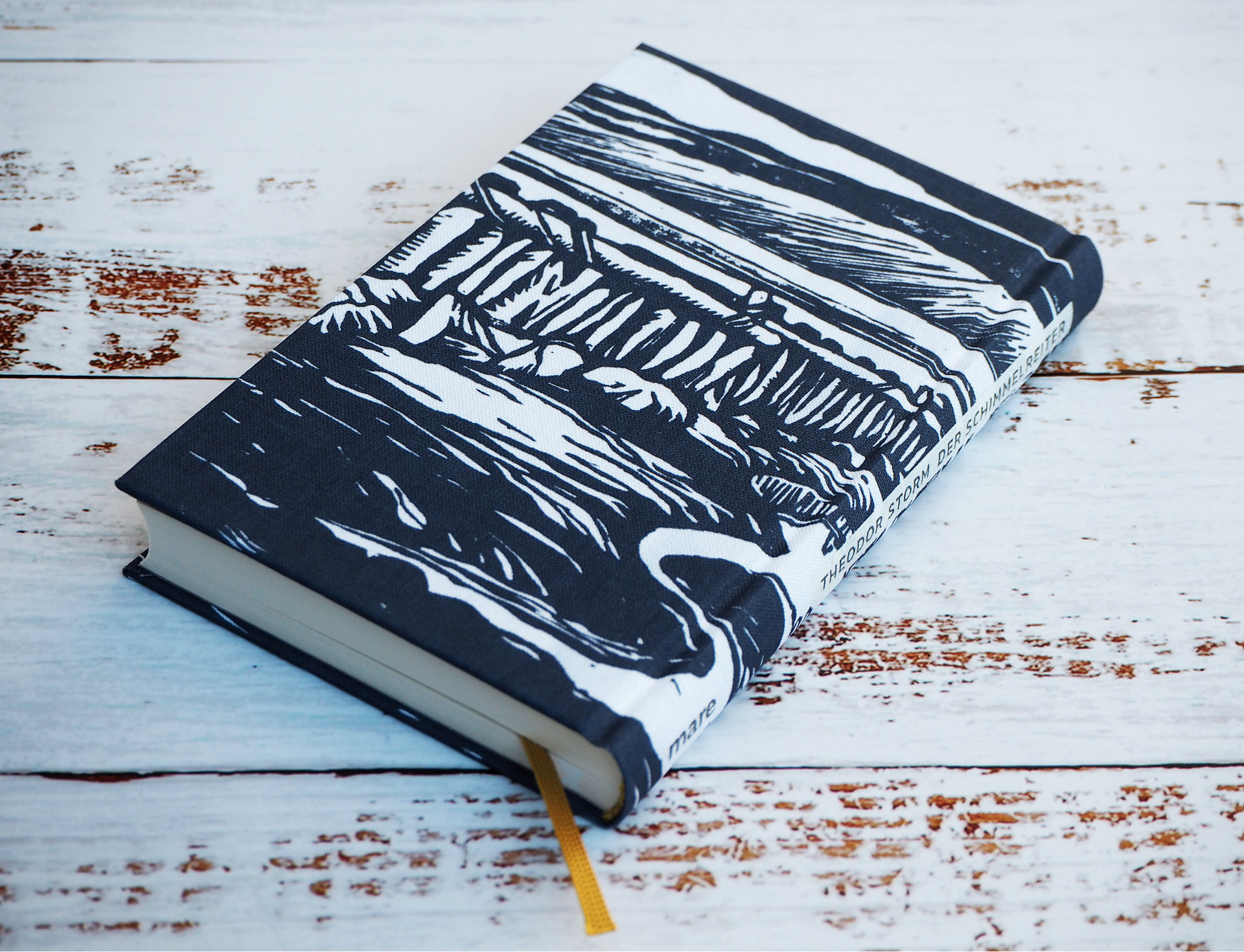
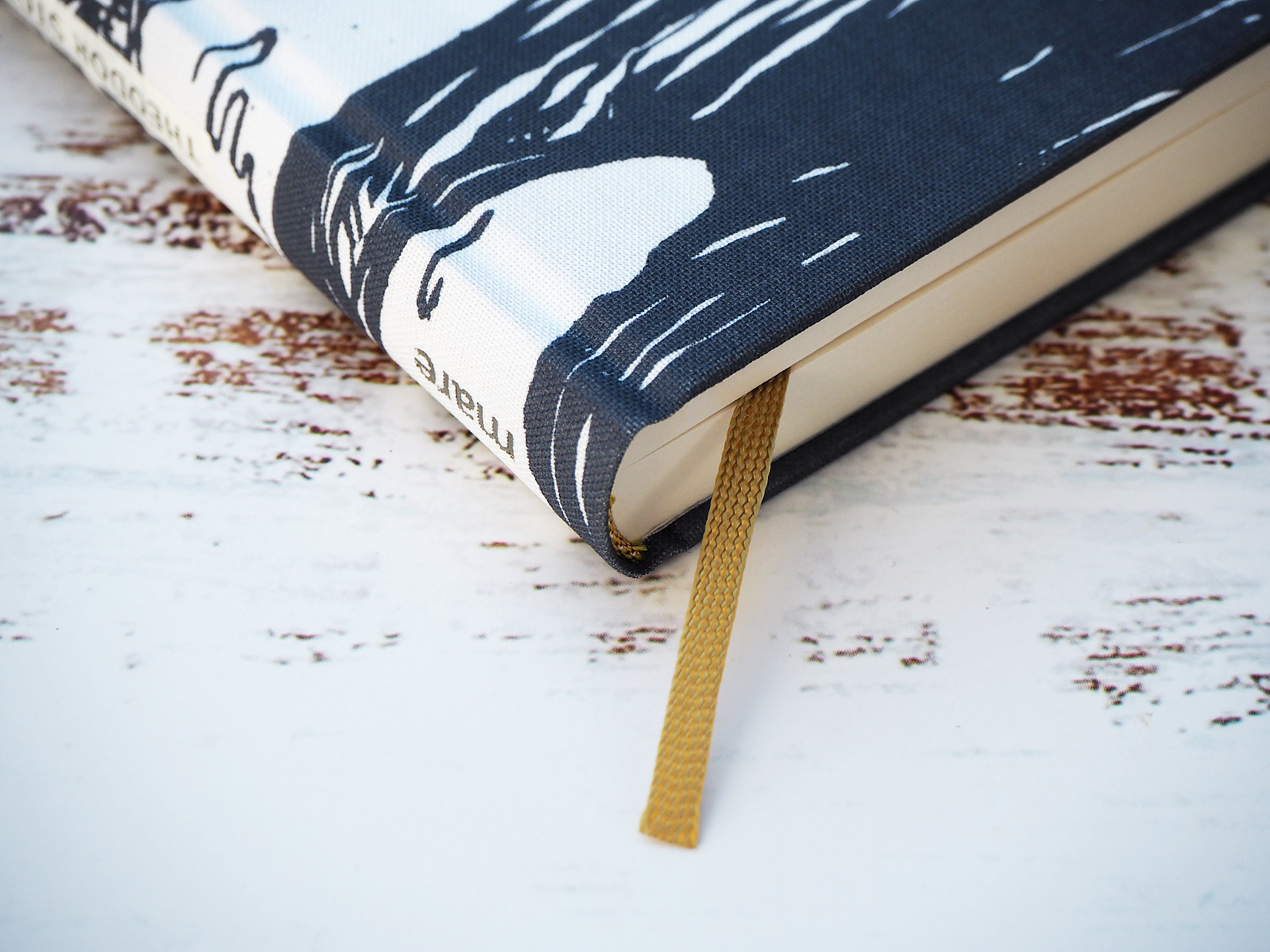
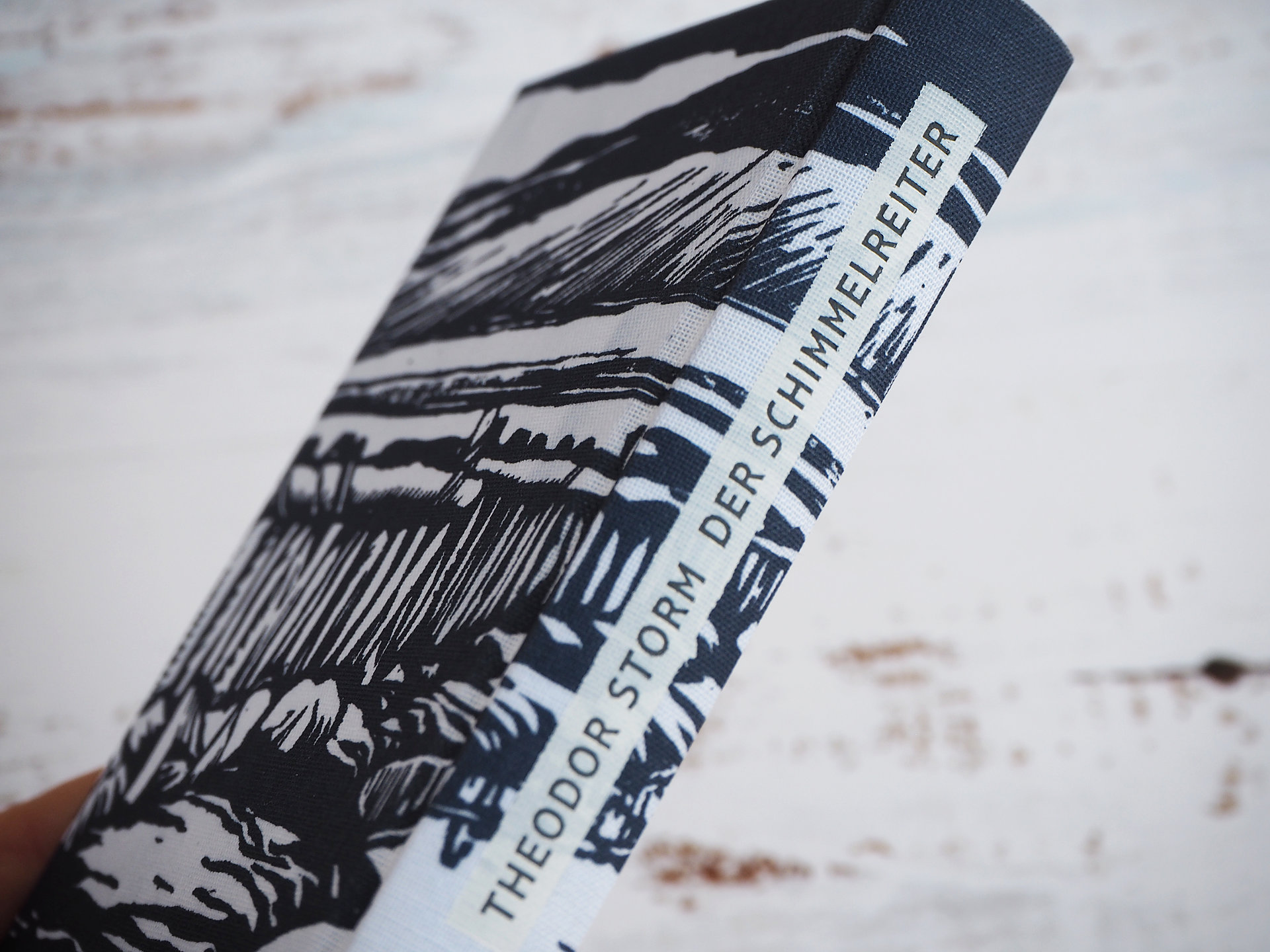
I much prefer the little volume from mare Verlag to the booklet from Hamburger Lesehefte. The latter has its own charm, of course, but the new packaging really elevates the reading experience. The book comes in a small slipcase, has a ribbon bookmark, and features a beautifully printed linen cover. That elegant cover alone won me over—it perfectly captures what the book is: a beautiful story filled with the spirit of the sea. As with other mare editions, the paper feels wonderful, and combined with the typography, this is probably the most beautiful edition of The Rider on the White Horse you can find. I also found Jan Christophersen’s afterword very informative and well done.
Theodor Storm was born in Husum in 1817 and grew up there, so he knew the region and the setting of The Rider on the White Horse intimately. The novella was published in 1888 and is part of his late work. It’s said that he once read a similar story many years earlier in one of his great-grandmother’s magazines. Other sources tell that he heard similar tales from the sister of his nanny, who would often tell him stories in the cozy warmth of the family home.
Conclusion: This new edition of The Rider on the White Horse is beautifully done from start to finish. I really like the printed linen binding, the design is high-quality and bibliophilic, and the novella itself is well worth rereading. Theodor Storm captures the sea and the North Sea landscape atmospherically and paints an authentic picture of the simple people living there. The age-old conflict between man and nature is wrapped into a lovely and entertaining story. Perfect for a relaxed evening of reading—or, thanks to its beautiful presentation, an excellent gift.
Book information: The Rider on the White Horse • Theodor Storm • mare Verlag • 256 pages • ISBN 9783866486416
Ich gehöre zu denen, die dieses Buch in der Schule gelesen haben. Wir haben sogar den Spielfilm gesehen, der damals (1978) gerade herausgekommen war.
Ich kann mich weder an das Buch, noch an den Film besonders gut erinnern (außer, dass ein Amerikaner die Hauptrolle spielte, worüber sich hier alle furchtbar aufgeregt haben), aber ich bin in dieser Gegend aufgewachsen und besuchte die Theodor Storm Schule in Husum, also war es nur natürlich, dass das Buch im Unterricht gelesen wurde. Gewundert hat mich, dass es vor ca 15 Jahren selbst in Hessen Pflichtlektüre am Gymnasium war — mein Sohn konnte damals so gar nichts damit anfangen. Vielleicht sollte ich ihm diese Mare Ausgabe schenken, wer weiß, mittlerweile hat er evtl einen anderen Zugang zu dem Buch.
Ich liebe den Schimmelreiter ebenfalls; so viele Themen, die da zusammenfallen, ob Inklusion, ob das Individuum im Konflikt/Zusammenarbeit mit der Gesellschaft! Tolles Buch…ganz oben in meinen Lieblingsbüchern…