
Russische Liebesgeschichten
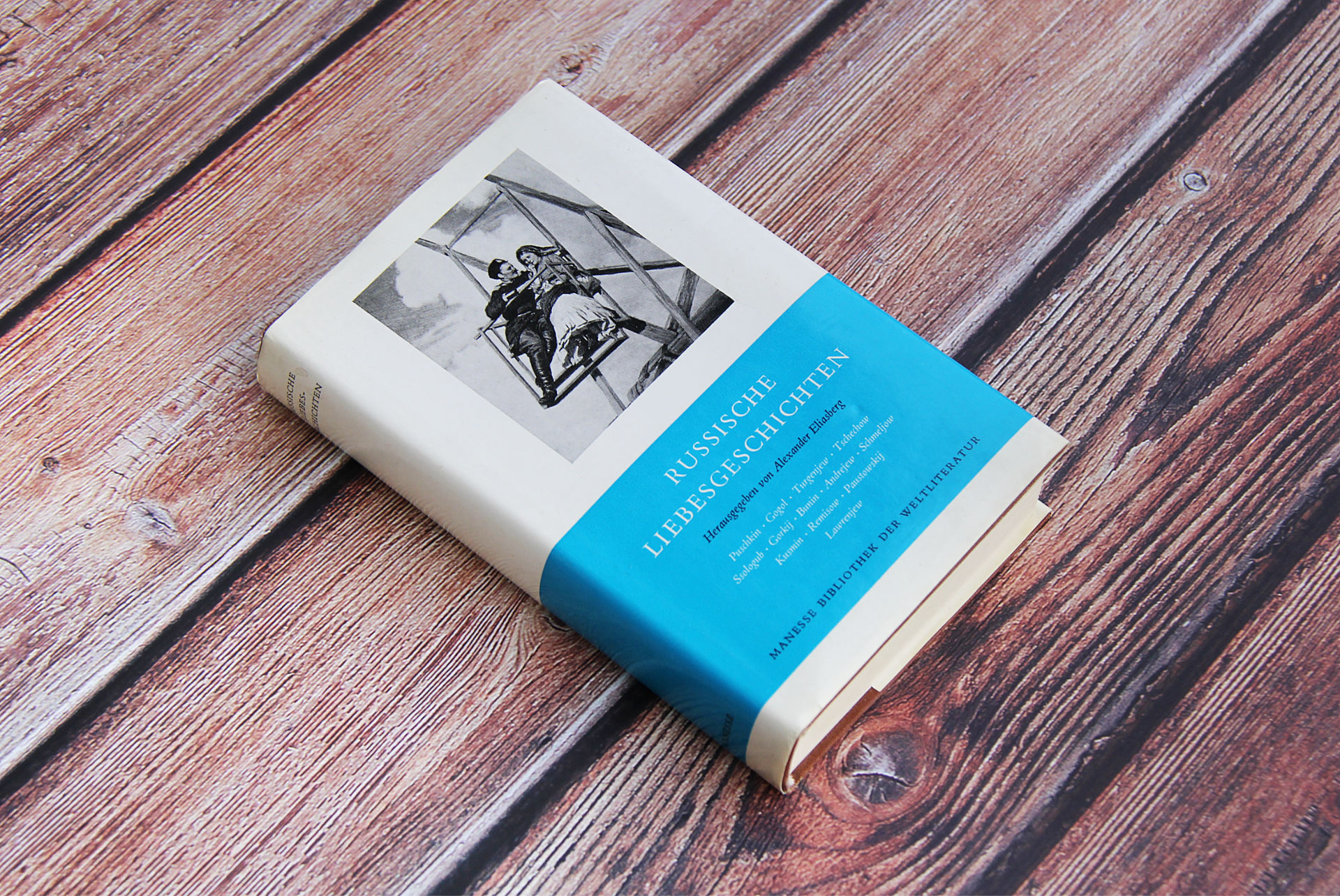
We started the New Year with a walk, taking our entire pack out for some fresh air. Along the way, we passed by a little public bookcase that, surprisingly, was still missing in my app. And there I actually found this lovely Manesse edition of Russian love stories. What a lucky find! Before I even realized what kind of little book I was holding, my subconscious had already slipped it into my pocket. The edition dates back to the 1960s and shows some wear, but overall it’s in very good condition—and with its content, it was the perfect way to start the new year.
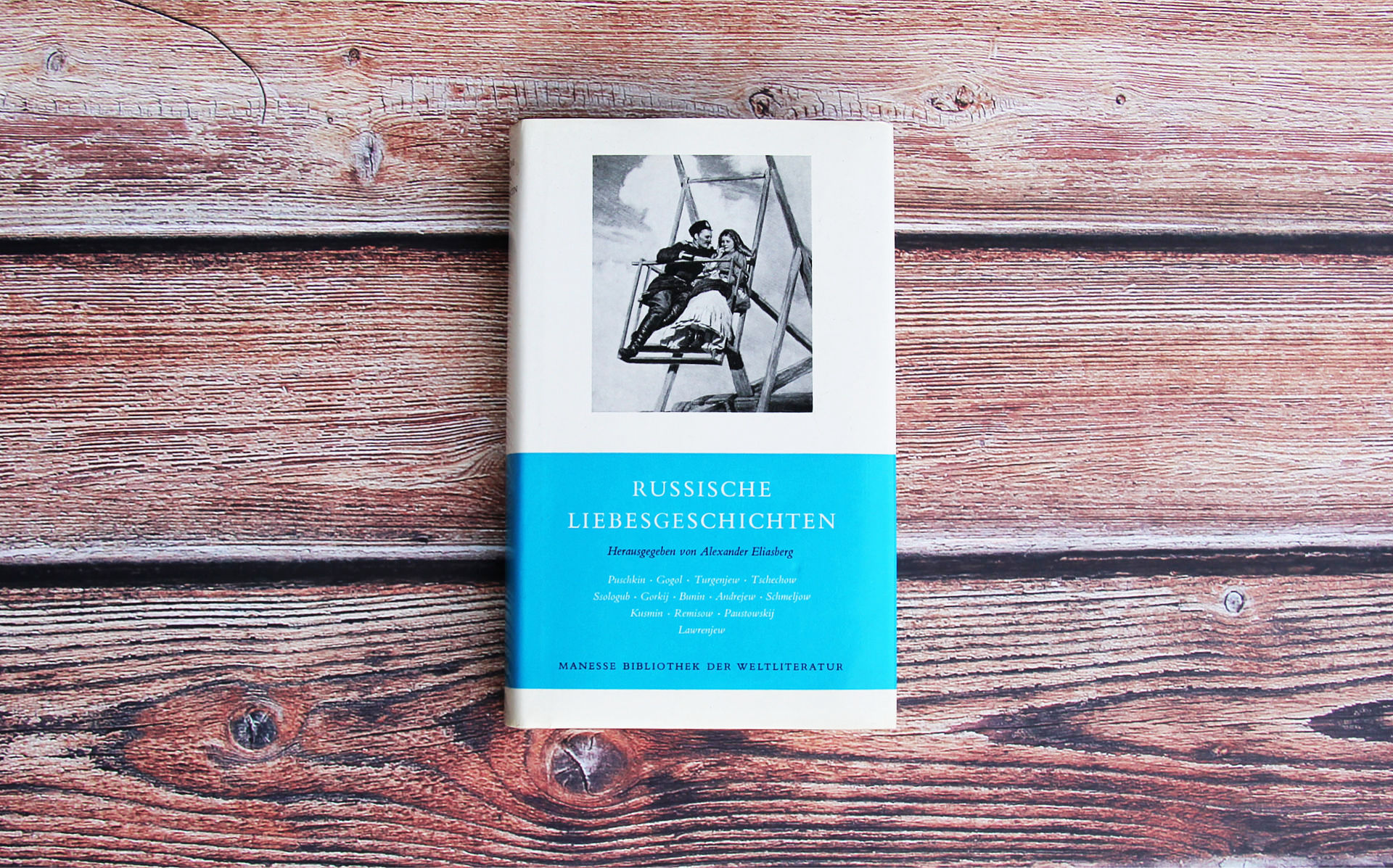
The book contains thirteen love stories by renowned authors such as Pushkin, Gogol, Turgenev, and Chekhov, as well as by writers previously unknown to me, like Bunin, Lavrenyov, and Gorky. The collection was edited by Alexander Eliasberg. The titles sounded promising, and indeed, I began reading it right away and finished it within just a few days.
I don’t know why, but thematically this book fit my mood perfectly. The first stories are by the well-known authors, and I was already familiar with The Blizzard from my Pushkin collection Master Tales. It’s an excellent opening story—cleverly constructed with a delightful twist at the end that’s simply a pleasure to read. Gogol, as usual, paints vivid portraits of his characters with all their peculiarities in the rural setting of Russia. Turgenev’s Klara Milich is thought-provoking and wonderfully imaginative. Overall, the range of love stories is quite broad—from the back-and-forth of falling in love and the first spark of passion, to brief snapshots like in Once in Autumn, to quirky tales such as The Mournful Bride, and even dark reflections like The Abyss. What all of them have in common is their unconventional and unpredictable course. Every story captivated me, and I couldn’t put the book down until I had finished one story—only to find myself immediately wanting to start the next. Reading it felt like a process of discovery, and my curiosity drove me through it so quickly. Each story was engaging, and I constantly wondered where it would lead. Even when the endings weren’t always strong punchlines, I still found every single story worthwhile and well-crafted.
The stories are arranged chronologically: Pushkin’s The Blizzard was published in 1831, and the final story, Lavrenyov’s The Forty-First, in 1924. The book offers a wide stylistic and thematic spectrum. At the end, there’s a biographical section on each author, which I found fascinating and always read before each story. This makes the book ideal for discovering new authors. Although I enjoyed all of the short stories, there are only a few authors from whom I would like to read more. The Abyss by Leonid Andreyev, for example, fits perfectly into the collection and fascinated me deeply, though it’s quite dark—reading a longer work of that kind would probably pull me down a bit. Natalie by Ivan Bunin, on the other hand, absolutely thrilled me; I definitely want to read more of his work, since his style follows the tradition of the Realists, which is exactly what I love to read. Pushkin, Gogol, Turgenev, and Chekhov are, of course, outstanding, and now I feel inspired to pick up more books by all four again.

From a linguistic standpoint, the reader gets solid, occasionally beautifully phrased prose throughout—pleasantly readable stories that can be enjoyed easily, even in the evening when one is tired. I noticed the main differences more in the tone and expression of each story, which are also well described for each author in the appendix. Overall, the book is stylistically cohesive, which is certainly due to the fact that most of the stories were translated by Eliasberg himself.
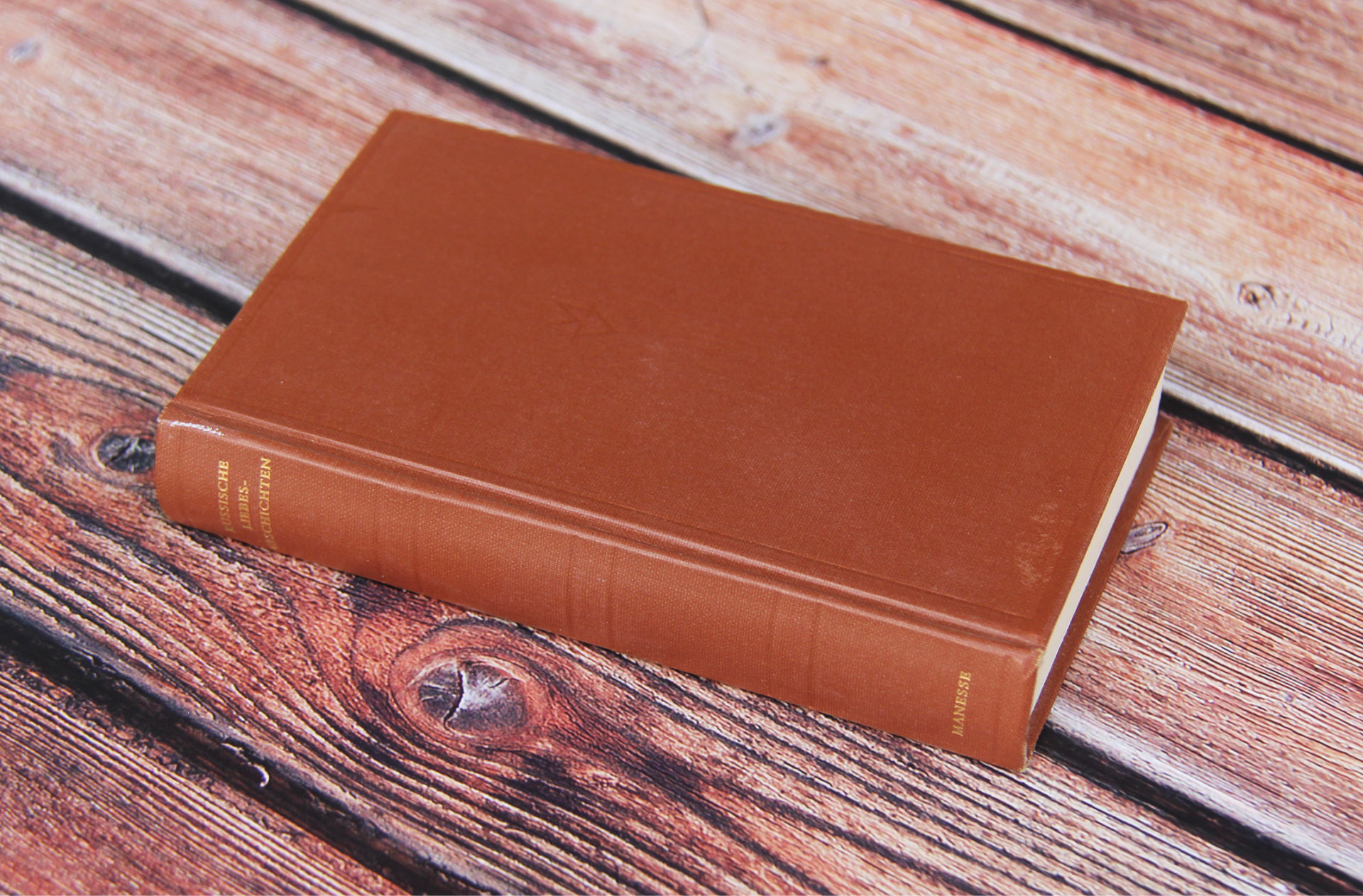
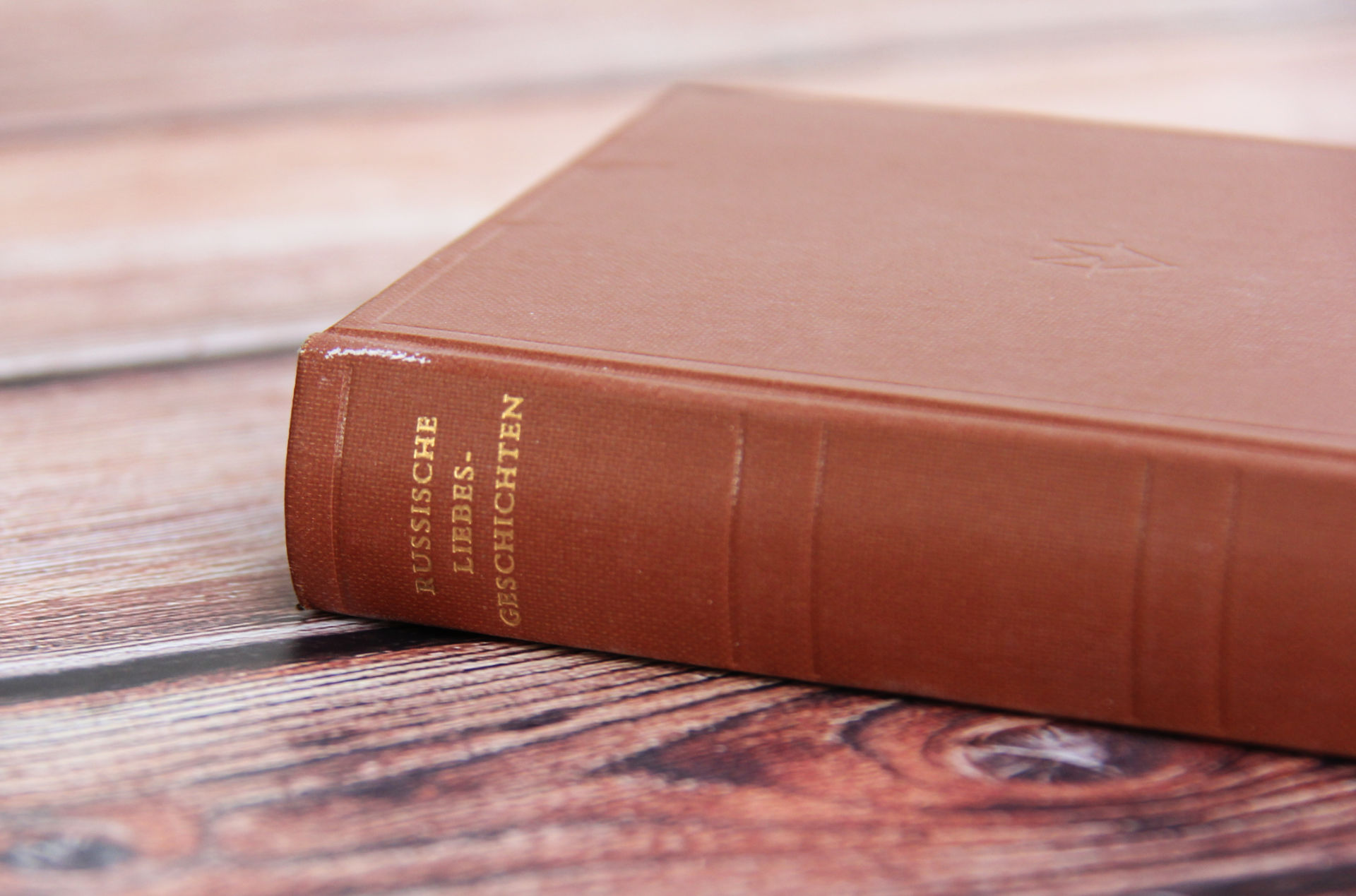
As for the edition itself, one can rightly call it high-quality. After all, this little volume is over sixty years old and still in excellent condition. The Manesse Library of World Literature is simply exquisite—you can tell immediately when you hold an older edition in your hands. The only thing missing is a ribbon bookmark, and the linen cover isn’t quite as finely textured or smooth as that of my newer editions. Though, to be fair, the very latest Manesse classics now only have cardboard covers again—so it’s all about catching them from the right era.
Conclusion: This little serendipitous find turned out to be a truly delightful and worthwhile read that I devoured eagerly. The Russian Love Stories are entertaining, unpredictable, and constantly sparked my curiosity for more. The book reads smoothly and pleasantly. The renowned authors, along with several previously unknown Russian storytellers, provide a colorful mix of very different tales. In my view, this book is a genuine hidden gem—especially since it can be found on Booklooker for just a few euros. The art lies in finding such old treasures, and I hope this review inspires some readers to enjoy a few lovely hours of reading. Even more than sixty years after its publication, I can highly recommend this book.
Book information: Russische Liebesgeschichten • Manesse Verlag • 552 pages • ISBN 3717513486
Toller Fund! Deshalb mag ich Deinen Leseblog so – weil er ganz unterschiedliche Genres und Ausgaben behandelt und eben auch mal Fundstücke. Sind die Geschichten von unterschiedlichen Autoren?
Liebe Grete,
vielen Dank für Deinen netten Kommentar! Die Geschichten sind von unterschiedlichen Autoren und keiner der Autoren kommt doppelt vor. Vom 19. bis Anfang des 20. Jahrhundert sind die Erscheinungsdaten der Erzählungen. Also eine gute Gelegenheit die verschiedenen russischen Autoren anzutesten.
Liebe Grüße
Tobi
Um deinen unerwarteten Fund beneide ich dich ein wenig. Aber viel Spaß mit dem Werk. :)
Schön, dass es hier Gleichgesinnte gibt, mit denen man/frau, v.a. Literaturfreundlinnen und Literaturfreunde sich auf Augenhöhe austauschen können.
“Natürlich, wenn wir die Liebe poetisieren, dann glauben wir immer, dass diejenigen, die wir lieben, Vorzüge besitzen, die sie oft gar nicht haben, nun, und das ist für uns dann die Quelle ständiger Irrtümer und ständigen Leidens.” (Anton Tschechow, “Ariadna”, Die Dame mit dem Hündchen. Erzählungen, Berlin 1979, S. 91).
Und bei allem bleibt für mich neben den “Weiße(n) Nächte(n)” von Fjodor Michailowitsch Dostojewski Tschingis Aitmatows “Djamilja” in unbedingt geteilter Einschätzung von Louis Aragon “…die schönste Liebesgeschichte der Welt”…
Und solche Bücher sind es dann auch, die Tschechows o.g., eher desillusionierendes Urteil ein wenig relativieren.
Ihnen allen in diesem Sinne viele solche relativierende Erfahrungen und ein wunderschönes Jahr 2022, voll von Zuversicht und Liebe!
… und allen, die, wie ich einen ebenso verlässlichen wie liebenswerten Ehepartner haben, mit dem man/frau durch “dick” und “dünn” gehen kann: Lassen Sie ihn nicht los und zeigen Sie ihm, was er/sie Ihnen bedeutet. Denn – hier noch ein literarisches – wenn auch nicht russisches Zitat: “Die Erfahrung lehrt uns, dass Liebe nicht darin besteht, dass man einander ansieht, sondern dass man gemeinsam in gleicher Richtung blickt.” Antoine Saint-Exupéry, Wind, Sand und Sterne, Berlin 1969, S. 218 :-)
Hallo Tobi,
beim Lesen Deiner Rezension, habe ich sofoft Lust bekommen dieses Buch zulesen. Es ist unglaublich schade, dass man es in der Form nicht mehr erwerben kann. Da bin ich schon ein bischen neidisch.
Bei uns im Dorf stellen die Leute oft Bücherkisten raus. Da habe ich auch schon einige Schätze entdeckt, aber so ein Volltreffer war noch nie dabei.
Ich bin überrascht. Ich erhielt das Taschenbuch “Russische Liebesgeschichten”,
Herausgegeben und übertragen von Johannes von Guenther, Originalausgabe
der Fischer Bücherei Juni 1964, im Dezember 1965 von einem Freund geschenkt.
(c) 1964 by Fischer Bücherei KG, Frankfurt am Main.
???