
Medusa and Perseus • André Breinbauer
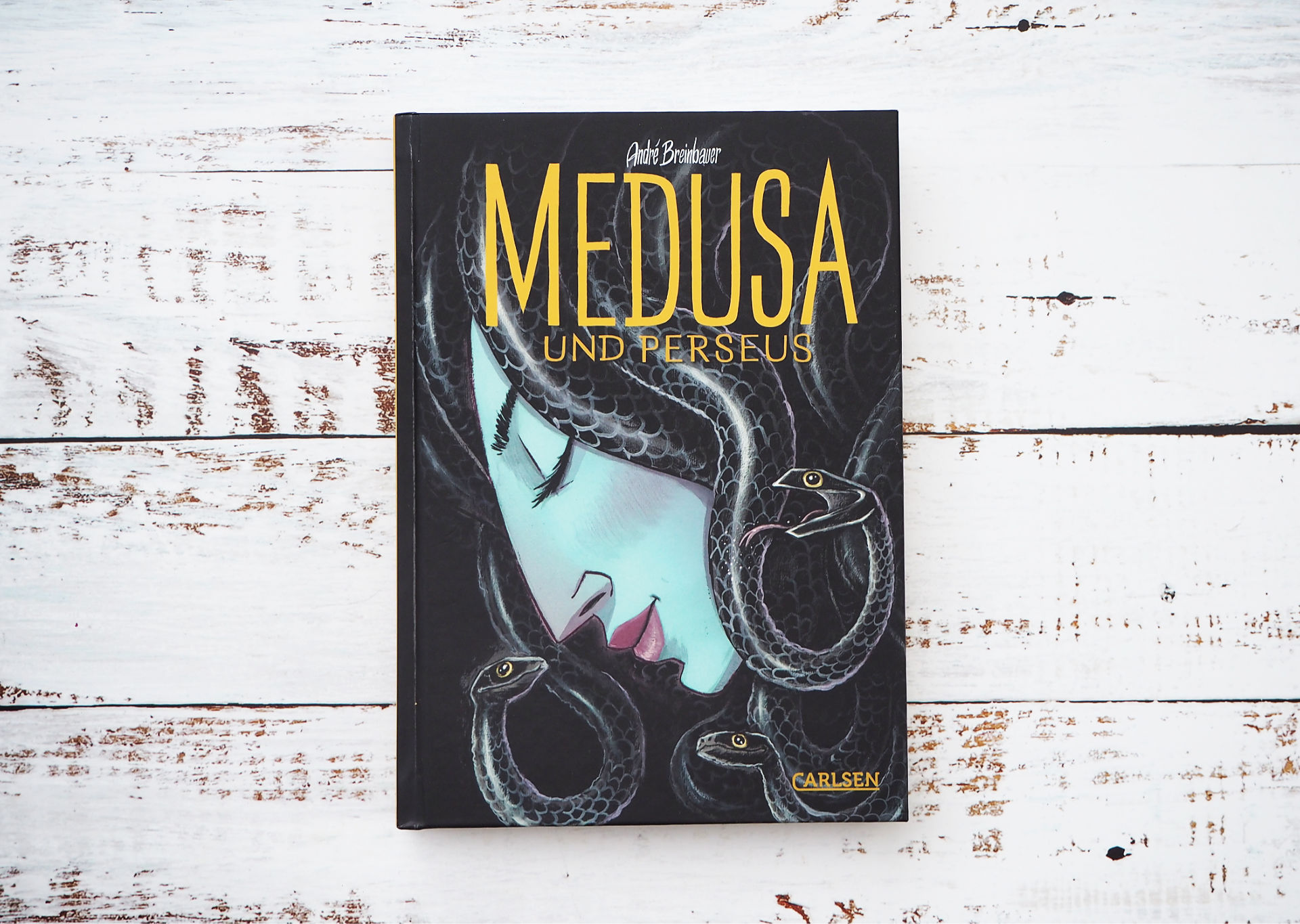
Quite unexpectedly, this beautiful graphic novel arrived at my doorstep a week ago. It had been quite some time since I last read a comic, so I was really delighted about this book. The subject is Medusa and Perseus, a tale from Greek mythology, which is newly retold in the debut work of illustrator André Breinbauer. Does the book live up to its promise? Find out in this post with many photos that give you an insight into the graphic novel.

The actual story can be summarized quickly: the beautiful Medusa is raped by Poseidon in Athena’s temple, and from this union Pegasus, a winged horse, was born. Athena was so enraged that she transformed Medusa into a monster with snakes for hair. One look from her was enough to turn people into stone. Perseus, the son of Zeus and Danaë, is forced by Polydectes to bring him Medusa’s head. Polydectes’ real intention, however, is to have Perseus killed so that he could have Danaë all to himself.
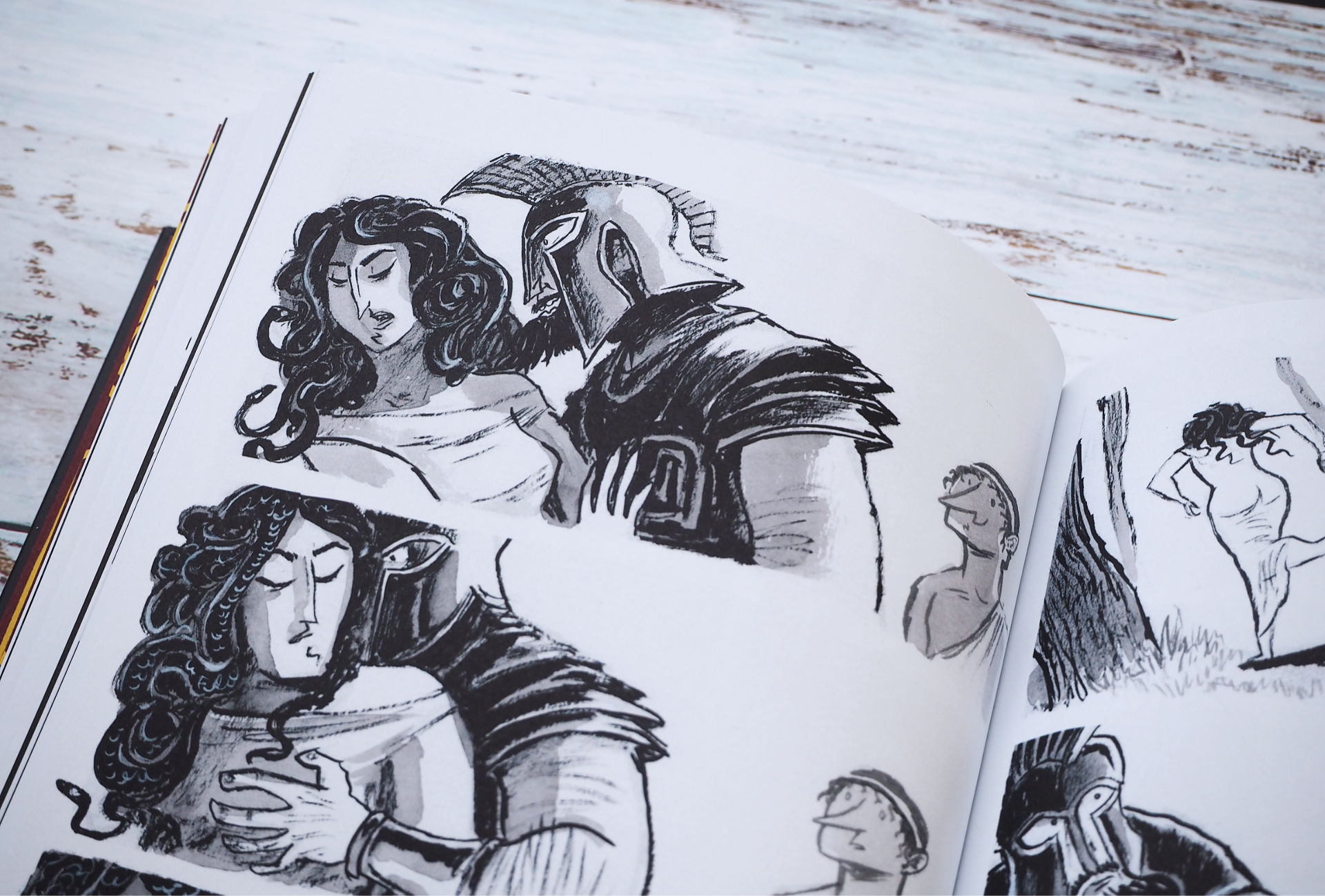
This is exactly the story André Breinbauer retells in this book, but he gives both Medusa and Perseus enough space to be portrayed as human. Medusa is not simply depicted as the ugly monster who is purely evil; rather, he draws her as a woman who became a victim of Poseidon’s assault and thus a victim of her fate. Perseus, too, only sets out on his journey to save his mother from Polydectes. From what I’ve read of the myth, Breinbauer’s interpretation still remains faithful to the essence of the original tale despite his personal creative approach.
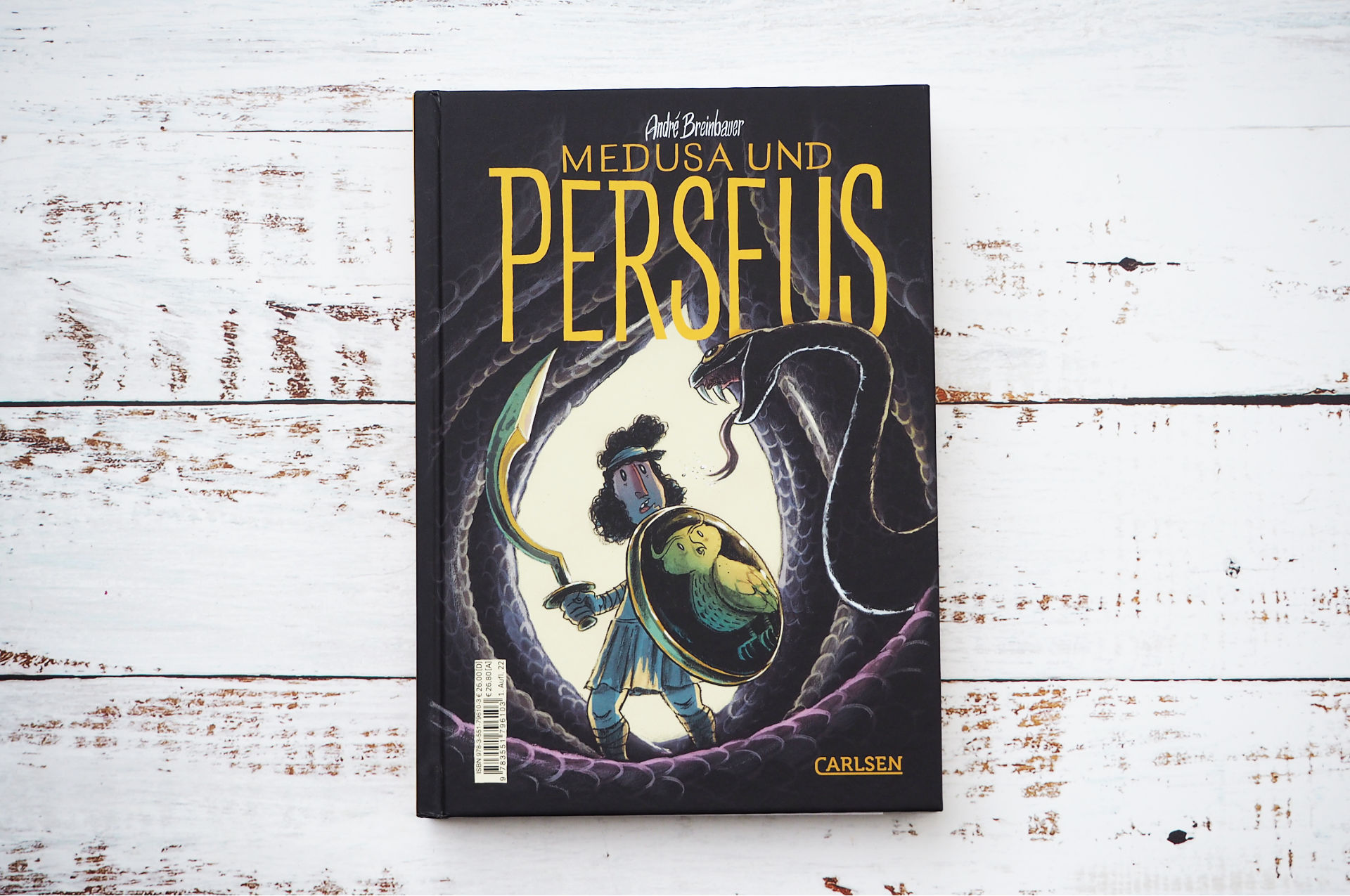
The story has two sides: one of Medusa and one of Perseus. And that’s what I really like about the book: it’s a flipbook. You read Medusa’s story from one side, and when you turn the book around, you can discover Perseus’s perspective. I think this creative idea is excellent and something I usually only know from children’s books.
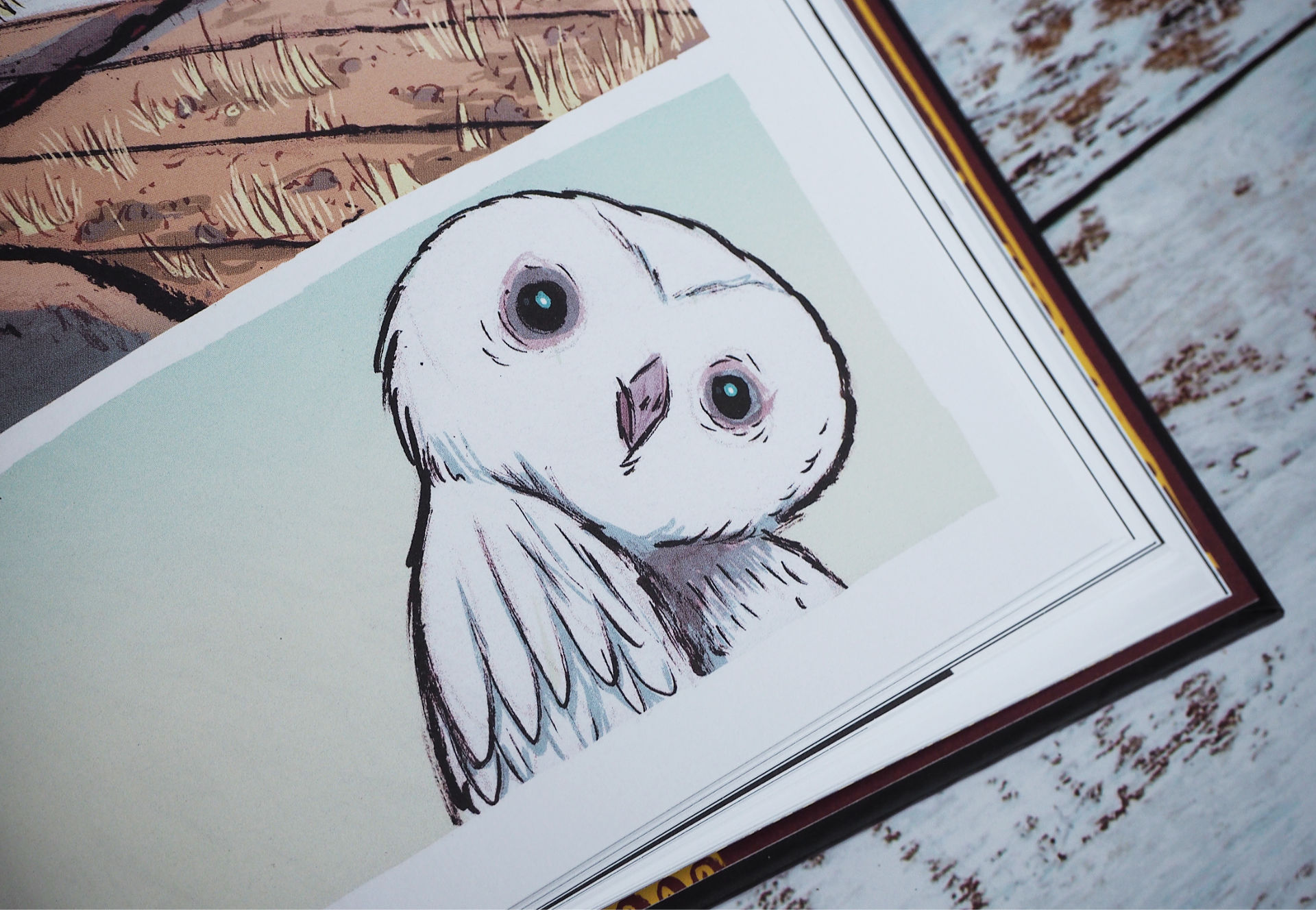
The art style is versatile and does an excellent job of conveying the emotions, thoughts, and actions of the characters. Often, the drawings appear very minimalistic, and when Medusa recalls her past, Breinbauer switches to a sketch-like black-and-white style. Many panels—some spanning entire pages or double spreads—are beautifully colored. While Medusa’s section contains noticeably less text, Perseus’s side is far more talkative. When Perseus recounts the story of his mother Danaë’s encounter with Zeus or her abduction, the style changes and strongly resembles ancient Greek wall paintings.
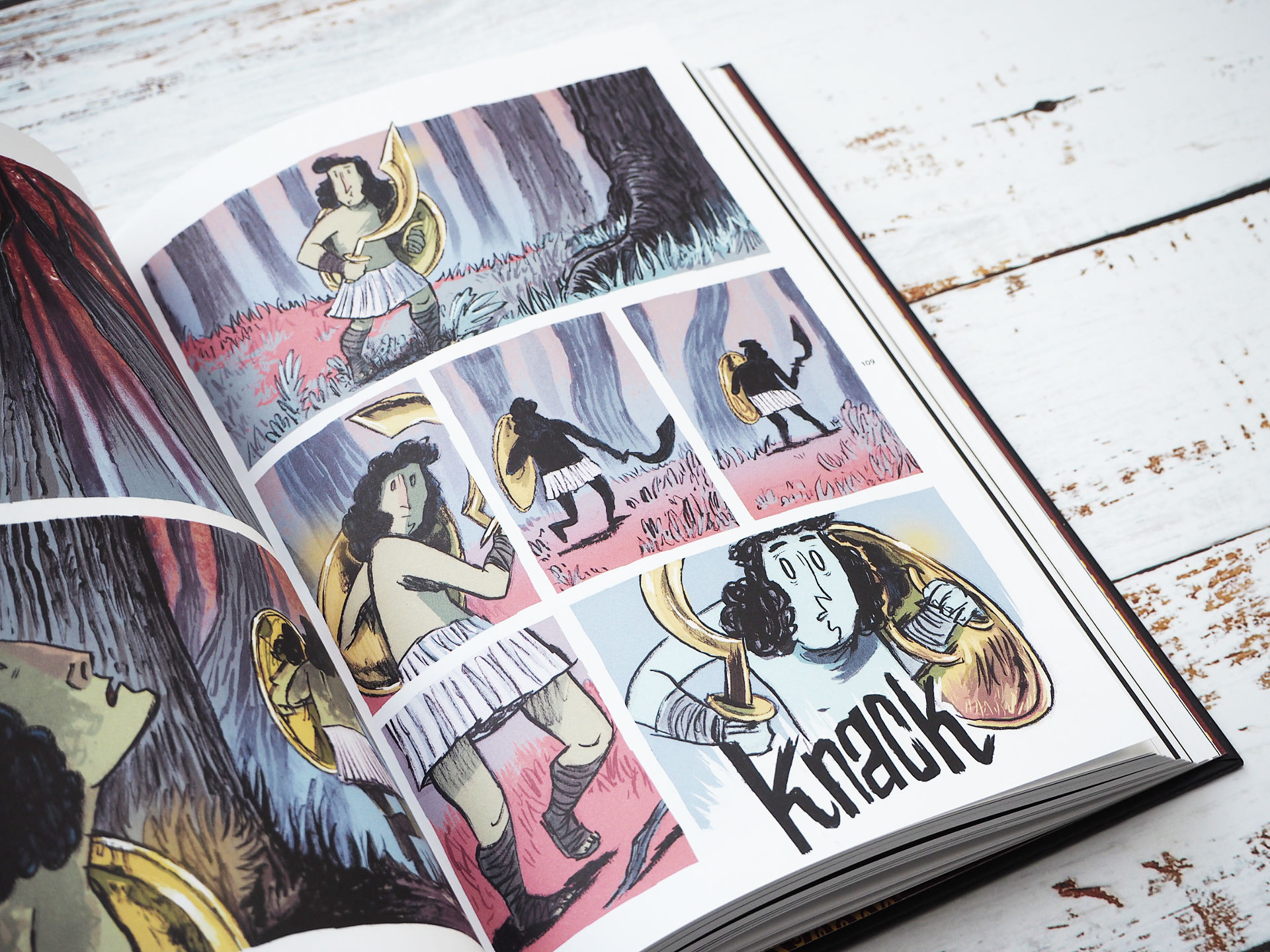
At times, I really liked the illustrations; other times, they felt too comic-like for a graphic novel. There’s always a humorous undertone, even in the dialogue, which feels very everyday. On one hand, some drawings convey a certain seriousness, especially when showing Medusa’s tragic fate. On the other hand, some scenes and expressions come across as comical. From my perspective, the book doesn’t quite manage to balance these two tones effectively.
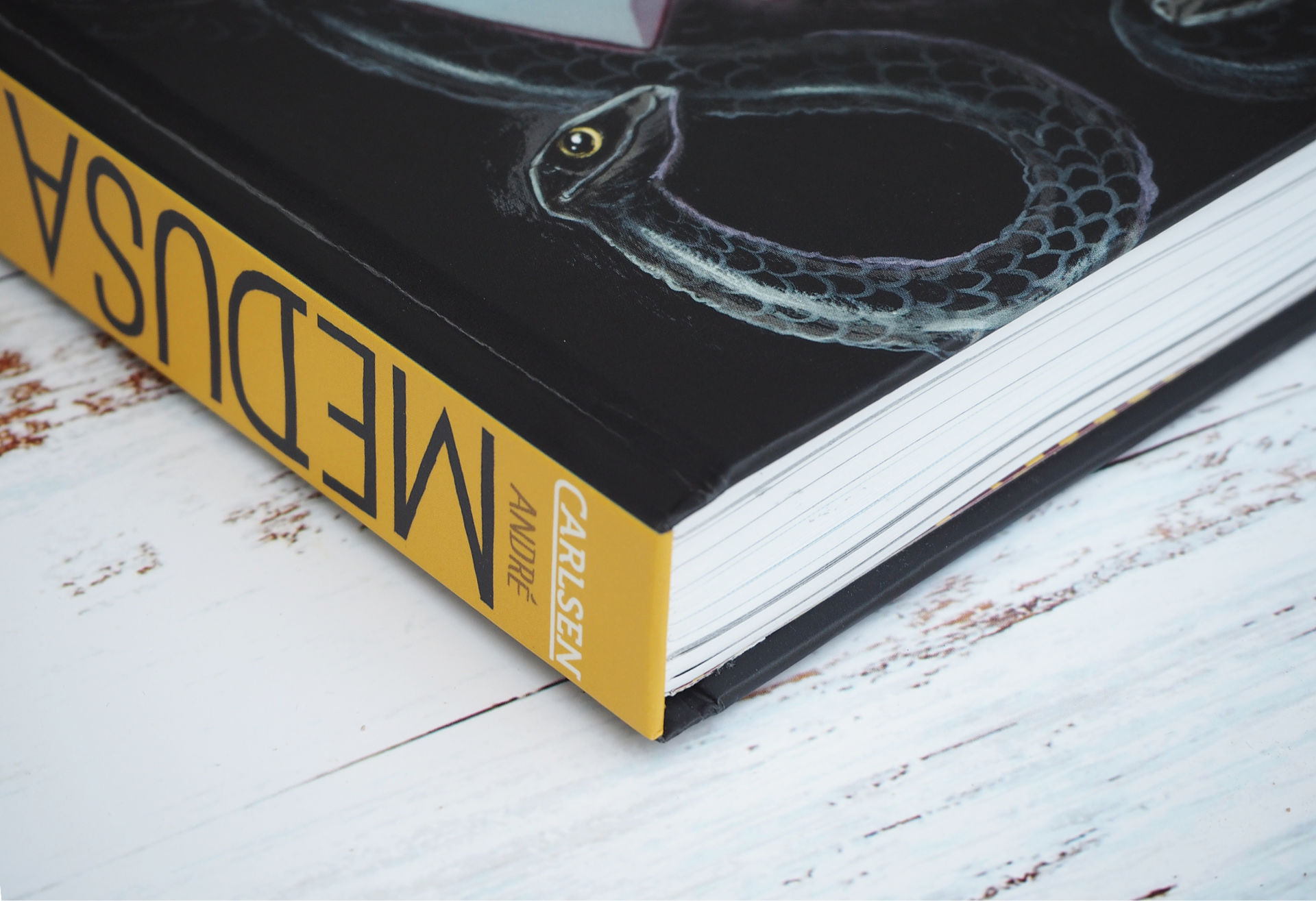
A second drawback is the length of the book. It’s quite thick, and you really get a lot of artwork here. However, I found myself reading rather quickly, as there isn’t that much happening in many of the panels—especially when Medusa recalls her memories. Overall, it’s surprisingly fast to read. So, you really have to enjoy the art style to want to revisit it. That’s also why my comic collection is rather small—I only pick a few carefully chosen ones, since space on my bookshelf at home is already quite limited.
André Breinbauer lives in Vienna, where he works as a freelance illustrator and comic artist. Originally born in Passau, he studied graphic design at the Academy of Fine Arts Nuremberg and now also teaches comic drawing courses at the Zeichenfabrik in Vienna. Looking at his illustrations, it quickly becomes clear that Breinbauer is experienced and skilled at giving expression to his drawings. He developed a fascination with Greek mythology in his childhood, which he has revisited in this graphic novel.
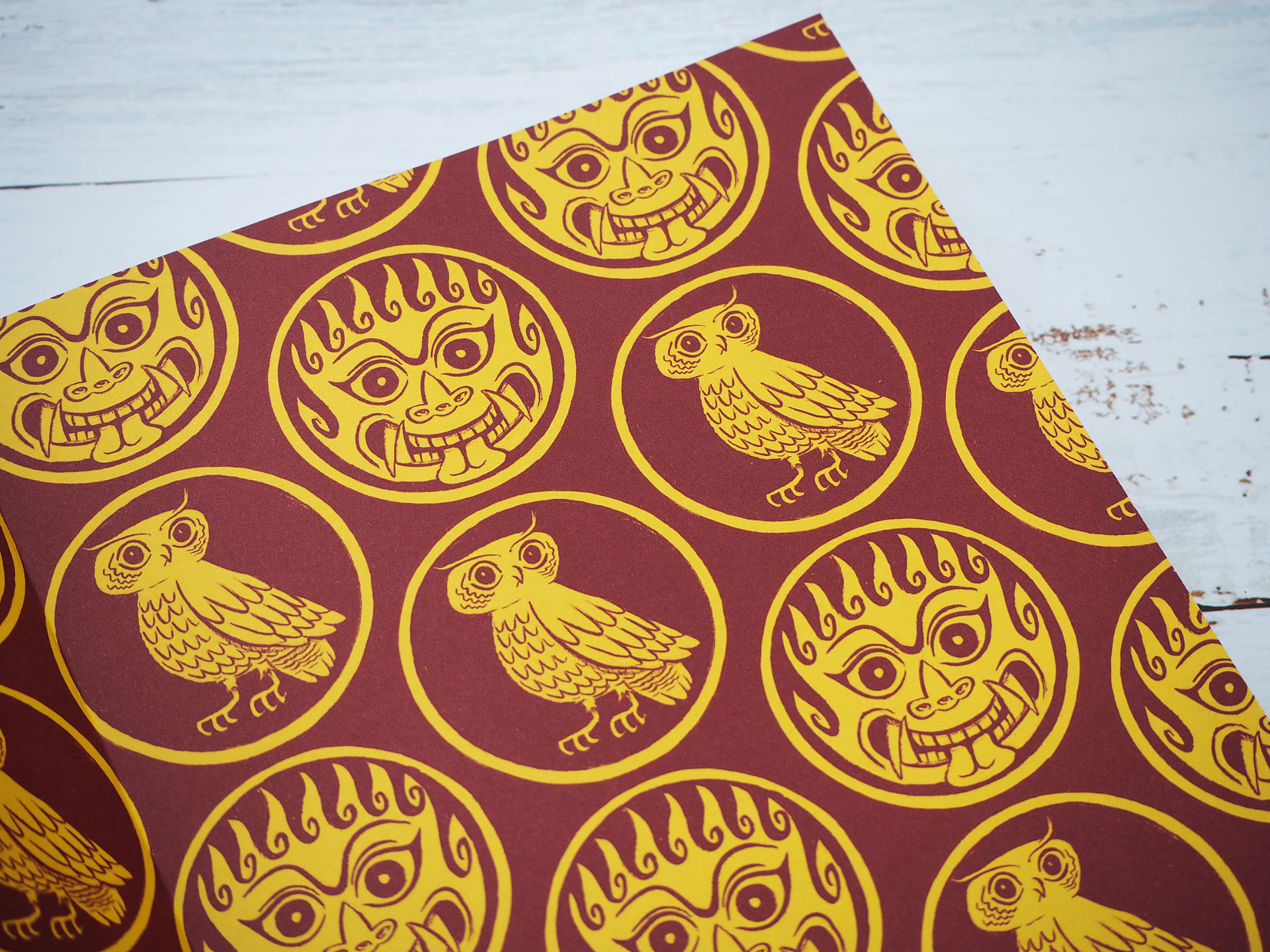
I really like the book’s design—it’s nicely bound, features thread stitching, and the paper feels pleasantly thick. The colors and print quality are excellent, and even the endpapers are beautifully designed. When it comes to craftsmanship, there’s nothing to complain about here—you can clearly see Carlsen Verlag’s experience and quality.
Conclusion: André Breinbauer’s debut Medusa and Perseus is a graphic novel that delivers a solid reinterpretation of the Greek myth of Medusa and Perseus, distinguished by its versatile and sketch-like art style. Some of the drawings I found truly beautiful, while others felt a bit too comic-like or rough for a graphic novel. Despite its size, the reading time is rather short. However, I find the concept of a flipbook that can be read from both sides particularly creative. Overall, it’s an entertaining read—it feels good to hold in your hands—and anyone who wants to dive into Greek mythology will find it a fitting choice. It only partially met my personal taste, though.
Book information: Medusa and Perseus • André Breinbauer • Carlsen Comic Verlag • 288 pages • ISBN 9783551796103
Danke, Tobi, immer wieder spannend, wie aktuell die griechische Mythologie doch sein kann. Ich setze dieses Buch einfach mal auf meine Wunschliste für meine Lieben, die immer wieder gerne und sensibel nach passenden Geschenken suchen.
Es erzählt ja offensichtlich die ganze, ungekürzte Medusa-Geschichte und darf
– vorbehaltlich einer eigenen Lektüre bzw. Ansicht ;-) – womöglich in eine feministisch-patriarchatskritische Interpretation griechisch-mythologischer Frauengestalten eingeordnet werden (?); ähnlich wie bspw. “Kassandra” von Christa Wolf.
Von dieser Erzählung liegt mir ein mir persönlich gewidmetes Exemplar des dtv vor, auf das ich besonders stolz bin.
Auch mit Blick auf die bzgl. der selbstverständlichsten Frauenrechte `gen Steinzeit gerichtete aktuelle Supreme-Court-Entscheidung in den USA oder auf chauvinistisch-maskulinistische Kriegstreiber wie Putin oder Erdogan (und im letzten Halbsatz bleibe ich, um nicht ausufern zu müssen, nur in den europäisch oder europanahen Grenzen) freut es doch immer wieder, solch progressive Literatur entdecken zu können.
“Mit meiner Stimme sprechen. Mehr, andres hab ich nicht gewollt.”
So lautet ein vor den Realitäten kapitulierendes, jedoch nicht ganz hoffnungsfreies, Kassandra zugeschriebenes Zitat; ein Resümee der Seherin, der niemand glaubte, die für ihre Autonomie kämpfte und für dieses Ziel sogar ihren Tod in Kauf nahm.
“Christa Wolf hat die Figur Kassandra lebendig phantasiert und sie aus dem Mythos in ein utopisches Einst als ihren Ort eingeschrieben – ein Einst, das die Vergangenheit und zugleich die Zukunft meint. Es war einst und wird einst sein eine Frau namens Kassandra, eine exemplarische Dissidentin, eine Frau am Schnittpunkt zwischen Patriarchat und Matriarchat, eine Frau, die für sich und ihresgleichen eine lebbare Alternative zum (männlichen) Gewalt- und Herrschaftsdenken sucht, eine Frau, die auf dem rechten Weg scheitert, aber dadurch ihn beglaubigt.” (profil, Wien, als Klappentext zu und zitiert nach: Christa Wolf, Kassandra, Deutscher Tachenbuch Verlag GmbH & Co. KG, 5. Aufl., München 1997)
Lesenswert hierzu auch ein Link zum BR Zündfunk, Laura Freisberg, Stand 08.04.2020: “Christa Wolfs ´Kassandra` ist eine Seelenverwandte für alle, die es sich gedanklich nicht zu bequem machen wollen.”
Danke, Tobi, Deine Literaturtipps regen eben zu einem solchen Blick über den komfortablen Tellerrand an.
Vielen Dank für den schönen Lesetipp! Deine Rezension hat mir wieder sehr gut gefallen – sehr gut lesbar und geschrieben und jederzeit nachvollziehbar. Vielen Dank!
Hallo Tobi, danke für den spannenden Einblick. Ich habe vor kurzem erst in LORE wieder von Medusa und Perseus gelesen und bin daher hier gleich hängengeblieben, um zu sehen, wie sie hier porträtiert werden. Mir persönlich wirken die Illustrationen etwas zu kindlich, da hätte ich mir “erwachsenere” Illustrationen gewünscht, aber gut, es ist halt auch in einem Kinder- und Jugendbuchverlag erschienen, also ist das sicherlich passend. Trotzdem hast du mich neugierig machen können.
Perseus ist ein sehr interessanter Heros in der griechischen Mythologie. Da denkt natürlich jeder zuerst an die Enthauptung der Medusa durch Perseus. Es gibt aber noch mehr interessante Geschichten im Zusammenhang mit Perseus, zum Beispiel tötete der das Meeresungeheuer Keto und rettete durch die Prinzessin Andromeda ->
https://www.mythologie-antike.com/t53-perseus-sohn-des-zeus-und-held-der-die-medusa-enthauptete