
My First Gamebook: Built with Artificial Intelligence
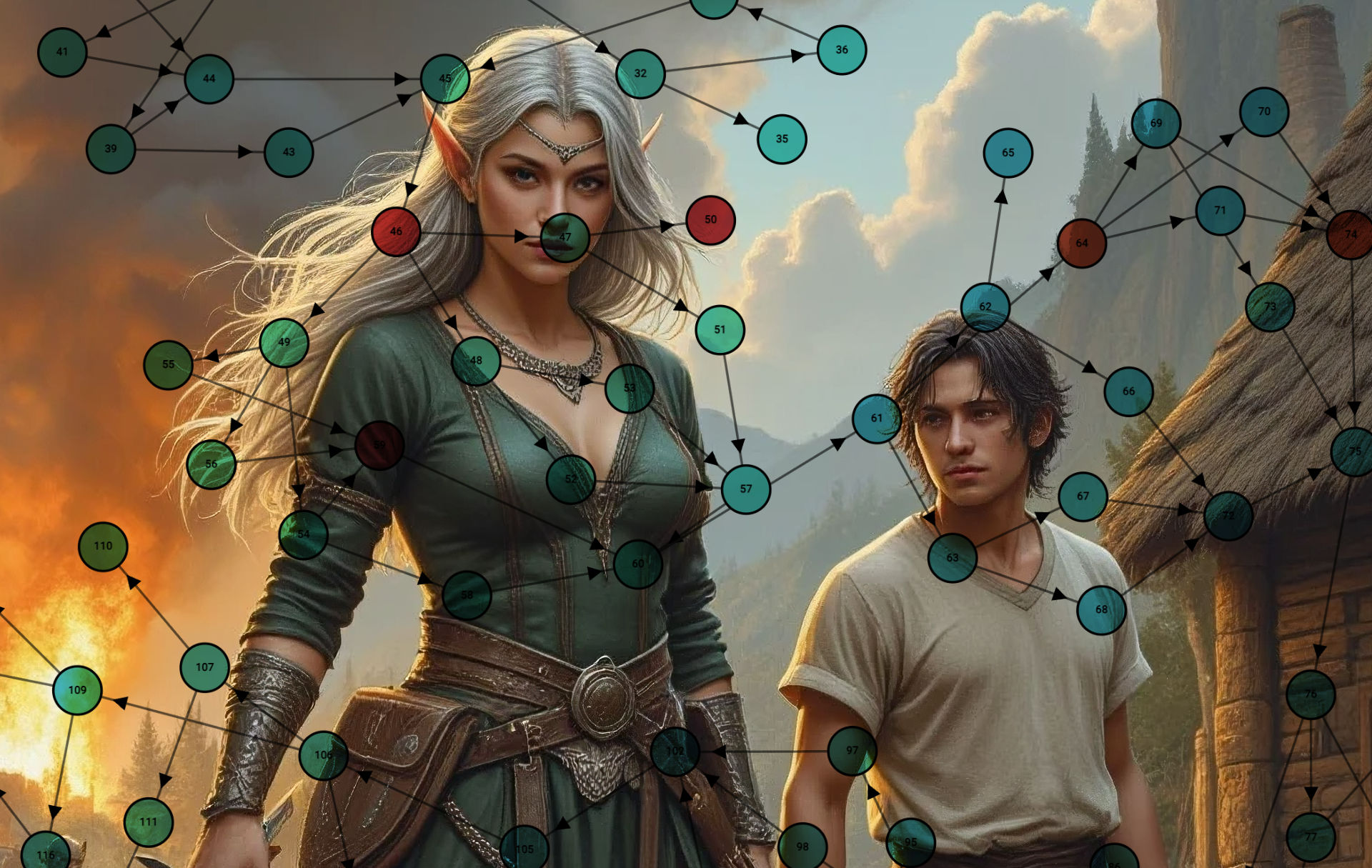
Years ago, I toyed with the idea of writing a gamebook. I loved and devoured those books in my youth. These days I rarely reach for that kind of book. Still, I find it fascinating what’s possible with the medium of the book. Back then, I considered writing my own software that would let me compose and manage very complex gamebooks. That would have meant a lot of effort, though, so I kept shelving the idea. Now we have artificial intelligence—very large language models—and AIs that generate illustrations. In short: I have all the tools so I don’t have to do the heavy lifting myself but can let an AI do it all. The temptation was simply too big, and I wrote software that automatically creates gamebooks for me. Read in this post how well that worked and check out the result yourself.
What are gamebooks?
In the 1980s there was a brief trend for gamebooks. These are books that aren’t read in a normal linear fashion but are divided into sections. The reader slips into the role of the protagonist, starts with the first section, and then has the chance to decide how the story should continue and what to do as the main character. In this way, everyone reads the book differently and experiences their very own adventure, usually with rules in play: fights are resolved with dice, items are collected, and notes are kept on an action sheet. Gamebooks are, as the name says, books you play, and they often come with a lovely fantasy setting. A nerdy affair—but I loved these books as a child and teenager, and as I notice these days, they’re still very entertaining and a pleasure to read. I’ve also introduced a few gamebooks here on Lesestunden. The publisher for gamebooks is Mantikore-Verlag, which also secured the rights for the German-language edition of the series Lone Wolf by Joe Dever.
Goals for my gamebook
I was curious whether generating a gamebook with artificial intelligence could be fully automated. I’m mainly interested in feasibility. Is it possible, and in what quality would such a generated book be? For my gamebook generation software I set the following requirements:
- Everything should run completely automatically. I want to specify a setting and the main character. I want to define the number of chapters and the number of sections per chapter. Everything else should be generated automatically: the title, the content, the structure. I don’t want to do any work there. A few inputs, one click, wait, and at the end the finished book should come out as a Word file.
- Besides the text I obviously want nice illustrations. Those, too, should be generated automatically by AI. The cover should of course also be generated by an AI.
- It should have the style of the books from the 80s. That means the illustrations should be kept in a simple black-and-white style. The cover should show the main characters in heroic poses—a bit over the top, the way it often was 30 years ago. Think of the covers of the first rulebooks for The Dark Eye editions.
- My software should have a nice interface so I can watch the book being generated and always have full insight into the gamebook. A graph should visualize the structure, and dialogs should guide me comfortably through the generation process. No crusty command-line stuff or unit-test prototypes.
So, a proper list and maximal requirements. Here’s a screenshot of the final application.
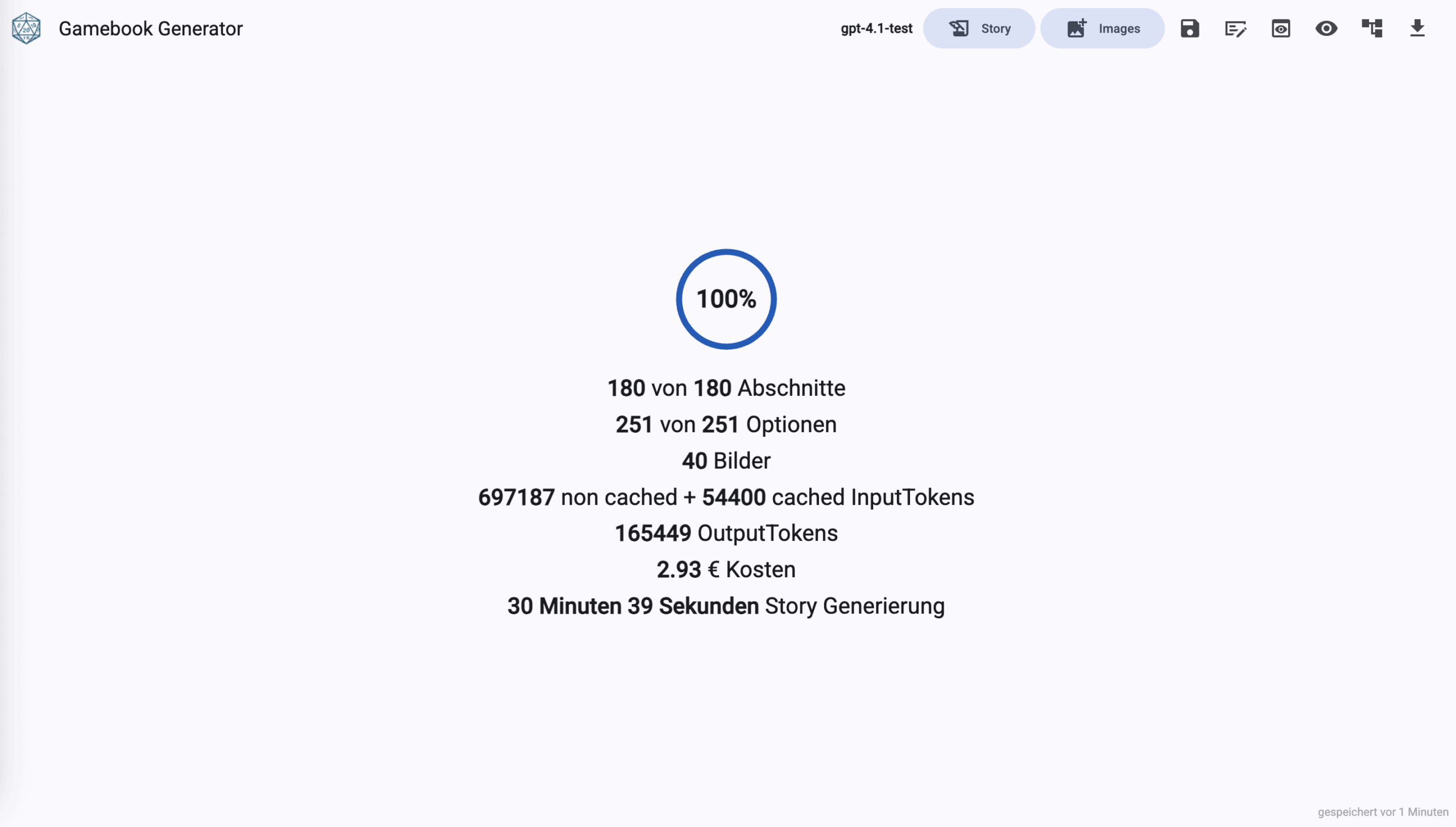
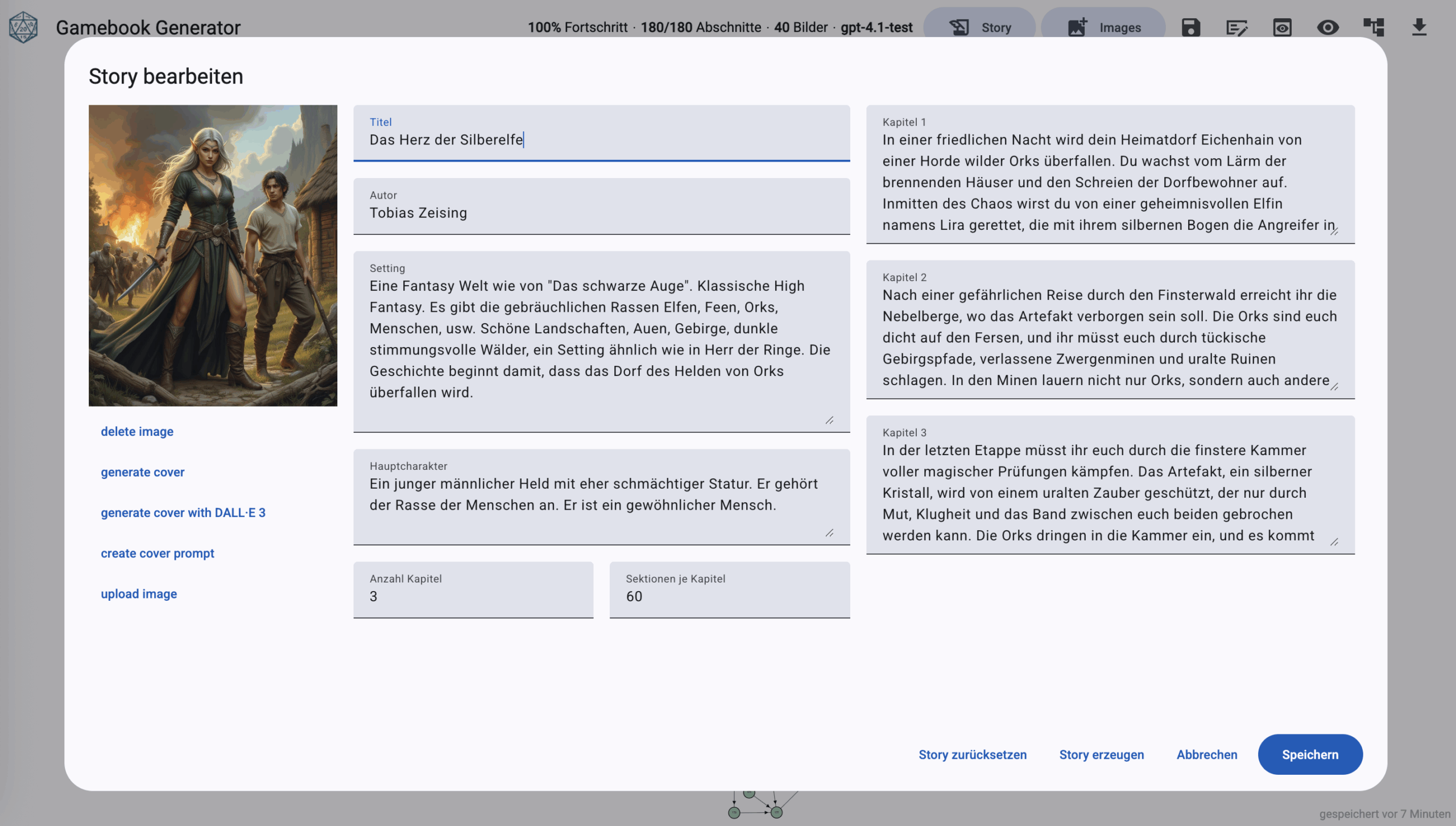
In individual screens you can edit all details. The following image shows the dialog for defining the story. You fill in the setting and main character manually; one click on “Generate story” then creates the title and the content for the chapters.
Technical foundation
Since OpenAI made ChatGPT widely accessible two and a half years ago, many billions of dollars—and with that, developer hours—have flowed into implementing and researching artificial intelligence. And you can really feel that when you dive into the topic. GPT is now at version 5, Google has caught up with Gemini, Facebook also offers its own model, there are several AIs for image generation, and the Chinese are in the game with DeepSeek, a not-so-bad budget variant. There are also numerous models you can run on a laptop at home, provided it has a bit of power. And it’s very easy to use these models as cloud services. There are several platforms that provide a unified interface for accessing language models. For a software developer, that’s extremely convenient.
I primarily experimented with GPT 4.1. I quickly discarded the models that run locally on one’s own machine. One variant of DeepSeek runs quite well and even offers reasoning (it “thinks” before it answers), but the results were far too poor. The performance of a language model heavily depends on the number of parameters used, and the more you have, the more memory and compute you need. If you pick models that are too large, you’ll crash your own system—something that happened to me quite often. It was also really slow, so I quickly moved to cloud services. OpenRouter or CometAPI offer unified access to various models, and I ended up using the latter. For an experienced software developer, the integration is pretty simple (it’s a straightforward REST API).
I implemented my software as an Angular application. For saving the book and for accessing CometAPI I used a very small PHP script that simply proxied requests, running in a Docker container. So everything stayed nice and lean.
My decision to use Angular also had a very pragmatic reason: it’s widespread. That means the language models know it very well. I also used AI extensively to develop my software. Large parts of the code were written by language models. If you rely blindly on AI, you’re soon stranded—you do have to step in yourself again and again, especially to keep the architecture lean and maintainable. But user interfaces with Angular and Material are very familiar to all language models and save a lot of implementation effort. I also tried all kinds of services and pretty much exhausted every free quota I could get: starting with GitHub Copilot, then of course the Gemini CLI, Cursor AI (which works well but is quite expensive), I tested Kilo Code (which sounds good at first because you only pay for the compute you use for the language model, but it gets super expensive because it adds up), copy–paste into Microsoft Copilot and Google Gemini also works quite well, and I had lots of discussions with Copilot and Gemini about how to solve things and which models are suitable. I gave Copilot examples of my prompt and asked how to optimize it. Then I had Copilot generate a good sample prompt and had Gemini optimize it. I then built that into my application. Gemini implemented the D3.js graph visualization for me. The export to Word (docx) was done with GitHub Copilot, while the Gemini CLI then placed the cover inside it.
Challenges
My first attempt was to leave everything to the AI. So I started with a request to come up with a story for a gamebook. That worked without any issues. I then sent that plot along with each request to generate a new section. I simply stuffed all previously generated sections into the prompt each time. I’d call that the simplest “sledgehammer” method of implementation—which is also maximally expensive, since the entire book is sent in the prompt every time. My expectations were low, and of course it didn’t work. A language model simply can’t manage structures and certainly not a gamebook with several hundred options. The decision tree generated by the AI kept branching further and further without ever reaching an end.
So I reversed the order and first created the structure for the gamebook. It’s a directed graph without backward connections (I always hated it in gamebooks when you got stuck in a loop), with a few nodes that don’t continue (sections where the player dies or the story ends prematurely and the reader “loses”), that branches but still retains a certain linear structure. Here is an image of the result (corners marked in red have an illustration).
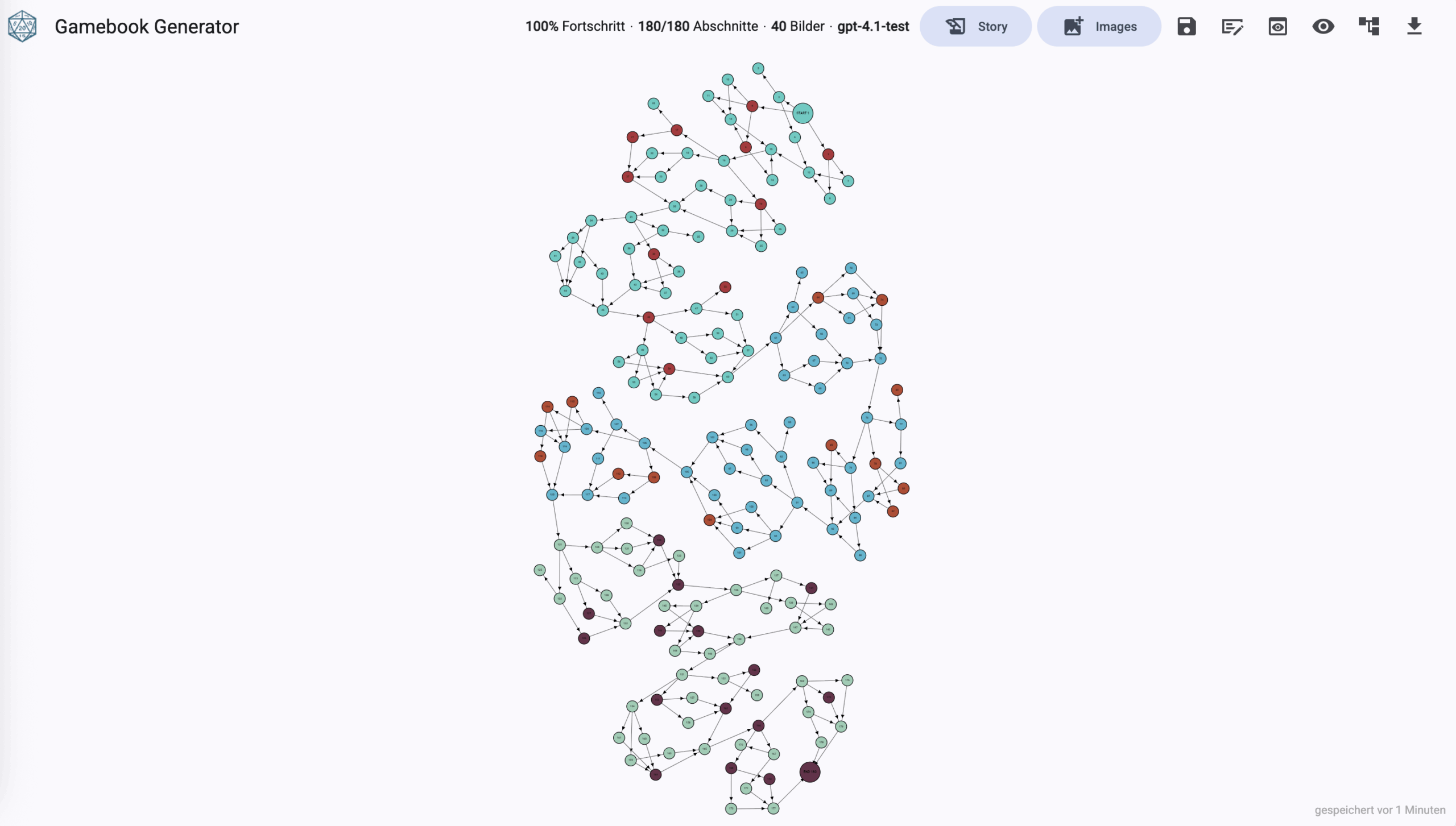
This directed graph, whose vertices are the sections of the gamebook, is then filled with life piece by piece. Each vertex is visited once (when all its predecessors have been generated). A prompt is created for it, and the AI is to write that section. It should also produce the possible options, with the number dictated by the graph. It also gets the different backstories (histories) passed in, although I only go back two steps here and, for each path at the second level, pass in just a single predecessor.
However, this approach has a problem: if there are many options and one option leads to a section that is also reachable from another branch, those two partial branches can differ so much that you can no longer merge them. Then the section makes sense for one branch but not for the other. Not even the best language model can solve that because, for example, a character might exist in one branch but not in the other. What are you supposed to do then? Even a human couldn’t reconcile that anymore. So I changed the process to also go backward again. The section is created (as well as the AI can manage). Then the AI looks at all the preceding sections and optimizes them again so that the newly generated section makes sense. That solution only helped to a limited extent. Sometimes the branches were so different that the AI failed even with this approach.
I then came up with a different graph structure: a fixed structure that is assembled repeatedly and optimized for a gamebook. When reading the book, you wouldn’t perceive this fixed structure because the options are shuffled. It’s also complex enough to provide sufficient freedom of choice, while being optimized to bring the story into a consistent form. Even then, though, I still had ill-fitting jumps in the story that shouldn’t occur. Especially in the last chapter, the story also loses a lot of structure and no longer follows a straight plot.
On top of that, the AI invents various supporting characters. These supporting characters are introduced, but the context only goes back two levels; otherwise the number of possibilities becomes too large. This leads to supporting characters changing. Mirja suddenly turns from a thief into a warrior and then disappears entirely. Fennik turns from a gnome into a dwarf, and later even loses his name and is just “the dwarf.” You could probably solve this by having the AI generate supporting characters and keep them in a roster, passing them back into the prompt each time. Or by trying to include more of the different backstories.
What I describe above I tried with GPT 4.1, and the results were actually quite good. Using an identical foundation, I tried the same with DeepSeek V3 (versions from March 2025 and August 2025). It didn’t work there at all. Even simple connections from one section to the next didn’t fit together. The language model lumped the chapter content and individual sections together and didn’t differentiate. Sometimes the options were just complete nonsense. Gemini 2.5 Pro also performed surprisingly poorly, which really surprised me. I didn’t try much more, as GPT 4.1 is considered one of the heavyweights in the language-model market. Claude would have been interesting as well, since it’s said to be very good at writing, but it’s also one of the more expensive models.
Illustrations
Of course I wanted nice illustrations in the style of gamebooks. After all, the eye reads too. For that I installed Automatic1111 with Stable Diffusion locally. It’s an AI for generating images. It also exposes an interface, which I then used for image generation. It took me some time to find the optimal prompt for exactly the style I wanted. Thanks to Copilot and Gemini I found it. I implemented it so that GPT 4.1 generates the prompt for Stable Diffusion—that is, one AI generates the request for the other AI.
There are numerous models for Stable Diffusion, and it took me a while to find a good one here. The Stable Diffusion 3.5 model didn’t run well on my machine anymore—my compute power just wasn’t enough. The images I generated online with it also didn’t convince me. The popular Flux1.dev by Black Forest Labs isn’t compatible with Automatic1111 and didn’t yield good results for this simple drawing style either (it’s optimized for the opposite). In the end I used Juggernaut XL, which has the classic weaknesses: hands aren’t generated cleanly, there are odd artifacts, and the motifs are often skewed or completely off. But you can also get very nice illustrations if you try often enough. Here’s an example of a successful illustration.
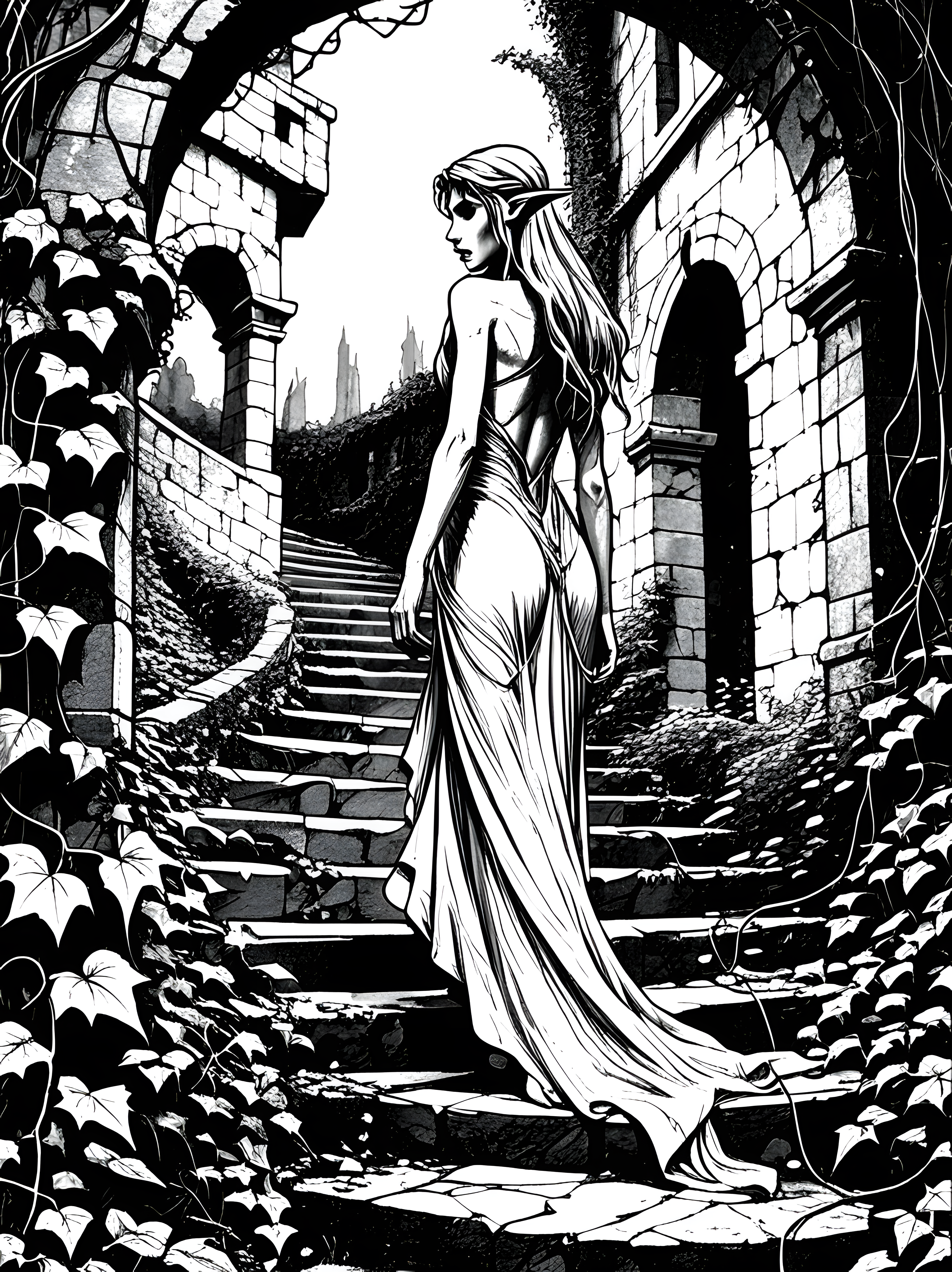
Overall, though, you have to say that AI illustrations almost never depict exactly the subject you want. It’s like telling a stubborn but very talented child what motif you want drawn—and you get something that’s kind of right and kind of not. You can minimize this by making multiple attempts, but the images are seldom truly on point. Here I had to deviate strongly from my premise that everything should run automatically. You have to look at the images and check whether the AI didn’t deliver complete garbage or something looks bizarre. I’d say most of the time went in here: filtering out the unsuitable images, generating a new batch, then reviewing and culling again. In the end I was really satisfied with only a few illustrations.
The most beautiful images are generated by OpenAI’s DALL·E 3—at least for my specific case, i.e., simple black-and-white drawings. But those cost 5 cents per image, which isn’t exactly cheap. In addition, DALL·E 3 has trouble with portrait orientation and very often produces images with the wrong orientation or borders. You can compensate a bit with the prompt, but it still leads to unnecessary generations. And even with DALL·E 3 you often get images that don’t really fit the scene. So I used Stable Diffusion exclusively and passed on DALL·E 3.
AI-generated images generally have rather low resolution and aren’t suitable for print. You have to upscale them first, which is also possible with AI. Automatic1111 already ships with several models for this that you can conveniently use via the interface. After generating the illustrations, I upscaled them again.
Costs
Another topic is cost. If you get a flat-rate ChatGPT subscription or use the free Microsoft Copilot, it’s actually quite inexpensive. But the costly training of the models and the compute to run them need to be paid for somehow. If you use the programming APIs, you’ll be charged based on usage. And that’s not exactly cheap. It adds up quickly—after all, I feed a lot of prose into the AI for the gamebook and get long texts back. Billing is by tokens (usually about three characters per token).
For a book with 180 sections, you end up with just under 800,000 tokens. Most are input tokens (a bit cheaper), about 10% are cached tokens (significantly cheaper), but even so, with GPT 4.1 it comes to about €2.50 per generated book. If you want to create images with DALL·E 3—which I didn’t do—and include around 30 illustrations plus a cover, that’s at least another €1.55.
That said, 180 sections isn’t that much. I’d say they have more text than is typical in gamebooks, and my sample book comes to about 200 pages without illustrations (assuming 1,800 characters per page) plus 30 pages with illustrations, so 230 pages. About half a gamebook.
When it comes to cost, you have to differentiate. From a reader’s perspective it’s probably a middling deal. You can get used gamebooks for just a few euros, lovingly written. From a publisher’s or author’s perspective, it’s a bargain. Even if you have to revise the book more thoroughly, you save many, many hours of work this way, which significantly increases the margin.
Generating a gamebook with 180 sections took 30 minutes—the back-and-forth between my software and the AI. Creating the images takes considerably more time in total, since a single image with upscaling takes about 2.5 minutes on my machine. I had multiple images generated, deleted the unsuitable ones, generated more, until I had about 30 images. All told, the machine worked for several hours. Of course, runtime isn’t a problem—the program just chugs along in the background and doesn’t load the computer too much.
Possible extensions
There are numerous ways to optimize. What I implemented is only the beginning. You could introduce combat relatively easily since it’s isolated within a section. The AI could decide on its own whether there’s a fight and how strong an enemy is. That would be a simple extension.
Items that can be found and later used could be implemented via a list. The AI can decide what exactly an item is and when it can be found and used. That should work quite well—similar to supporting characters, which you could maintain as a roster and repeatedly pass into the prompt.
Random decisions with dice would be just as easy to implement. The AI decides the options itself. Puzzles, however, are a different story. I think that’s harder—especially if the answer to the puzzle is the section number.
From my perspective, all of these extensions are feasible without major problems. But then again, maybe not—AI behavior is often unpredictable. At least these elements wouldn’t be very complex to implement.
Result and conclusion
What can be generated with artificial intelligence is truly impressive. Generating a gamebook already works quite well. But there are also some problems: jumps in the story; characters that aren’t consistent or suddenly disappear; ill-fitting transitions when different branches converge; and by the end the story loses itself and only vaguely follows a plot. As in other areas, the AI simply makes mistakes. Writing a gamebook is a very hard task because of the many possibilities and branches. It’s not a linear, normal book where an AI with a huge context window can just keep appending words according to its system. Merging several different branches in a sensible way, outputting them in a structured manner, and telling a consistent story across many plotlines requires a deep understanding of the content.
Of course I could have invested many more hours in the project, refining prompts and algorithms. But that would have been too much work to go even deeper. I already experimented a lot, and each further attempt to improve the course of the story would have required significantly more development work. It’s not a business model either, so it didn’t make sense for me to dive deeper—even if it’s an interesting and tempting problem. It’s fun to experiment and probe AI’s limits, but there’s still plenty of room for improvement that I haven’t tapped.
The quality of the text, however, is very good. The sections are excitingly written, fast-paced, and atmospheric. The characters are also nicely fleshed out. Yes, they aren’t complex figures; it’s not comparable to a sophisticated story or even the coherent, many-part world that Joe Dever created. But it can definitely keep up with simpler gamebooks for children. It reads well and is entertaining.
If you wanted to turn it into a complete book, you’d definitely have to step in again: optimize the layout, fix branches that don’t quite fit, revise and tighten the story, rework supporting characters, review the illustrations and possibly recreate them, and polish everything in detail. For my book project I also accepted illustrations that didn’t fully match the scene—leeway you couldn’t allow yourself in a publication.
Getting a finished book at the click of a mouse—I still consider that unrealistic at the moment. Intensive manual post-processing is always necessary. But if you consider how much the workload for an author of such a gamebook is reduced, and how much content you already get, that’s already a very big part of the way. It must also be said that this is a very simple gamebook; if you really want something ambitious, you won’t get far with AI alone. You certainly won’t get a fully automated Rider of the Black Sun. But the generated book can be the foundation. The result matches my expectations and my experience from many other areas where AI is used: it makes authors faster and significantly simplifies the writing process. You get a template here, a well-developed framework that could probably be expanded into a complete gamebook with a fraction of the effort. The result is certainly not error-free, and the generated book is far from finished.
What did I learn from this little project? The requirement that everything must happen fully automatically is too strict. AI can’t (yet) do that. A far more sensible solution is not a generator that does everything automatically, but a tool that supports the gamebook author with AI functionality. That could look like this: the author has the graph view and, based on that, has an AI generate a new section for an option. You get the text and options, and there’s an input field to have the AI further refine the section with your own prompt. Or you take over parts of the writing yourself to rein in the story—and with it the AI. You review the generated options and adjust them if necessary. In this way, the AI writes the story, but not fully automatically—rather, under the author’s supervision and with immediate review. If you can also influence the options section by section, you can define the graph and its branches yourself. This way you can flesh out a much more complex story while always keeping an overview of the gamebook—and still get most of the work done for you. In addition, I would maintain tables for items and characters that are automatically extended when the AI or the author introduces a new character or item. You can’t avoid manual effort, so you need to keep it as low as possible while fully leveraging AI’s power.
The book for download
I generated a classic fantasy story as a gamebook—just like the solo adventures from the 80s and 90s for The Dark Eye. A simple plot: the protagonist is young and inexperienced, gets swept up in a maelstrom of events, and has to save the world. The classic hero’s journey, with elves, orcs, fairies, and a well-worn fantasy setting. For me it was obvious to try it with such a setting—it’s very common and classic.
I didn’t further process the gamebook. The cover, the illustrations, the text—nothing was adjusted. The content is exactly as generated by AI. I deliberately didn’t change anything so everyone can form their own opinion. I only converted the docx file to a PDF; otherwise the file would have been too large.
Have you, as an author, already worked with artificial intelligence? What are your experiences? Is it devil’s work to you or already an everyday tool? Books and stories by AI—would you want to read something like that? Share your thoughts and experiences; I’m very interested.
Danke für den Download – der Artikel an sich ist auch hervorragend. Ich bin Nicht-Programmierer, habe aber gerade einen mächtigen Python-Dateirenamer ganz mit Hilfe freier KI-Tools erstellt – eigentlich erschreckend, wie einfach das auch für ‘Fachfremde’ inzwischen ist. Mein nächstes Projet ist das zeilenweise Parallelstellen von fremdsprachigen Romanen à la Doppeltext, ev. kennst du die Bücher ja.
Fand “früher” solche Lese-Abenteuer-Bücher auch sehr interessant – man muss sich ja auch vor Augen führen dass es damals keine Computer gab und das schon etwas Besonderes war. Sind ja quasi ‘Textadventures’ avant la lettre.
Spontan hätte ich zwei Vorschläge, die vermutlich sehr schnell umsetzbar wären: Die (Word-Standard-)Schriftart würde ich dem Sujet anpassen, außerdem dürfte es kein Problem sein, die Kapitelnummern automatisch in PDF-Sprungmarken zu konvertieren – dann könnte man das ganz gut auf dem Tablet lesen. Am PC macht das weniger Spaß finde ich…
Lieber Marcel,
ja, das ist echt faszinierend, wie gut die KI code erzeugen kann. Ich nutze das ganz intensiv, wobei man für größere Software und dann auch ein gut wartbares Softwareprojekt doch noch sehr stark eingreifen muss. Da würde die KI schnell in den Wald kommen. Für kleinere Skripte geht das immer hervorragend. Auch Shellskripte erzeugt die KI perfekt.
Die Word Datei hatte korrekte Sprungmarken, die sind beim Export zum PDF irgendwie verloren gegangen. Aber die erzeugte Geschichte in diesem Beitrag soll auch kein fertiges lesbares Buch sein. Da müsste man noch einiges an Nacharbeit investieren, um das rund zu bekommen. Ich vermute also, dass sich das nicht viele durchlesen werden.
Ich finde das auch genial, dass man dazu keinen Computer braucht, keinerlei Elektronik und trotzdem ist es ein interaktives Spiel. Gerade der digital Detox der darin steckt ist einfach wunderbar.
Liebe Grüße
Tobi
Guten Morgen Tobi,
ich bin absouter Laie auf diesem Gebiet und dennoch oder vielleicht auch gerade deswegen habe ich diesen Beitrag mit großem Interesse gelesen.
Ich fand sowohl Deine Überlegungen als auch das Ergebnis äußerst spannend. Heruntergeladen habe ich es mir noch nicht.
Insgesamt habe ich ein wenig “alte” Erfahrung, was Spielbücher angeht. Ich habe früher immer mal DSA gelesen. War aber nie ein leidenschaftlicher Fan (ich bin wohl einfach zu oft gestorben).
Schönen Sonntag, Dir!
Liebe Barbara,
vielen Dank für Dein positives Feedback. Ich finde das Thema super spannend und ich glaube viele Leute probieren schon intensiv KI für alle möglichen Bereiche zu nutzen, aber man bekommt es nicht mit. Daher ist es glaube ich ein schönes Thema für den Blog, weil hier doch einige Leser unterwegs sind, die selbst nicht im IT Bereich arbeiten.
Ja, da gab es echt einige nervige Bücher, wo man sehr oft gestorben ist. Oder immer im Kreis gelaufen ist. Da waren schon frustrierende Gamebooks dabei.
Liebe Grüße
Tobi
Hi Tobi!
Vielen Dank dass du uns so einen ausführlichen Einblick in dein Projekt beschert hast! Ich bin ja absolut kein Fan von KI in diesem Bereich – auch wenn ich weiß, dass so vieles schon mit KI geregelt und vereinfacht wird, gehört sie für mich nicht in den Bereich: Geschichten schreiben, Bilder zeichnen etc. zumindest nicht für den Verkaufszweck.
Ich bin dennoch gespannt wie sich das alles weiterentwickeln wird und inwieweit es sich durchsetzt.
Deine Idee jedenfalls ist sehr interessant und ich danke dir auch für die Möglichkeit, das Spielbuch anzuschauen und zu lesen! Ich mag solche Bücher ja sehr und werde, wenn ich mal etwas mehr Zeit und Ruhe habe, dort reinschauen. Bin sehr gespannt!
Liebste Grüße, Aleshanee
Liebe Aleshanee,
vielen Dank für Deinen Kommentar. Ich denke, mit KI muss man differenzieren. Es gibt einfach Bereiche, wo das schon sinnvoll ist. Primär auch, um Autoren und Verlage zu entlasten. Man schreibt ja nun auch am PC und nicht mit Hand, oder man nutzt die automatische Rechtschreibkorrektur und ähnlich ist KI ein neues Werkzeug. Ein Buch komplett automatisch von KI erstellen lassen? Das würde ich auch nicht lesen wollen. Zumindest nicht mit dem jetzigen Entwicklungsstand von KI. Und wenn ich mir anschaue, welche Feinheiten in Büchern zwischen den Zeilen stecken, dann kann ich mir einfach nicht vorstellen, dass sich das einmal künstlich erzeugen lässt. Gestern habe ich eine Novelle von Emile Zola gelesen und was da zwischen den Zeilen mitschwingt, das ist einfach faszinierend. Wenn ich allerdings das Radio im Auto anmache und höre, was da so an Musik läuft: Ja, ganz ehrlich, das kann eine KI genauso gut produzieren. Immer der gleiche Aufguss in leicht variierter Form. Da würde ich vermutlich gar nicht merken, wenn plötzlich etwas KI generiertes läuft.
Ich liebe die Idee von Abenteuerspielbüchern auch in Zeiten von Computerspielen, wirklich starken Gaming Konsolen, von aufwendig gemachten Brettspielen noch immer. Sie sind so schön einfach und schlicht, kommen ohne technischen Schnickschnack daher und sind trotzdem einfach wunderbare Abenteuer.
Schreibe gerne über Deine Eindrücke, wenn Du reingelesen hast. Ich bin sehr interessiert.
Liebe Grüße
Tobi
Das hast du super erklärt :)
Ich stehe dem Thema KI skeptisch gegenüber, wie allen technischen Neuerungen, weil einfach vieles damit gemacht wird, was mir nicht gefällt (also nicht nur KI sondern ansonsten halt leider auch) Aber natürlich gibt es auch immer etwas gutes, was man damit anfangen kann.
Ich hab deinen Beitrag heute wieder gerne in meiner Stöberrunde dabei :)
Hi Tobi,
spitzenmässige Idee :-D – ich hab diese Art Bücher auch geliebt, hab mir Deines natürlich gleich mal gezogen. Wäre natürlich auch an der Software interessiert, obwohl mir personlich ja was auf .NET Basis vorschweben würde … evtl. sogar als Desktop-Applikation :-P
LG
Lieber Harald,
also wenn Du willst, kann ich Dir gerne Zugriff auf den Sourcecode auf github geben. Es ist komplett mit Angular geschrieben, aber eigentlich schön schlank und übersichtlich. Mittlerweile habe ich es nochmal umgebaut und habe jetzt den teilautomatischen Modus. Ich habe schon angefangen ein Spielbuch zu schreiben. Aber nun ist es auch deutlich aufwendiger. Es ist aber nun eine Kombination aus KI und redigieren. Dafür ist dann das Endergebnis gleich ein richtiges Spielbuch. Und vom Aufwand ist es immernoch deutlich geringer als wenn man selbst ein komplettes Spielbuch schreiben würde. Wenn ich mein Buch fertig habe, dann veröffentliche ich es auf BoD. Mal sehen, wie erfolgreich es dann ist. ;)
Ich hab mir auch schon überlegt es als Desktop Anwendung zu bauen. Mit ElectronJS würde das ja ziemlich einfach gehen. Allerdings wäre das schon nochmal Aufwand und ich glaube, dass es hier kaum Nutzer geben würde. Das ist ja schon sehr speziell.
Liebe Grüße
Tobi