
mare is now a cooperative

Anyone browsing through this blog will quickly notice that I present numerous books published by the mareverlag. I love these beautiful, high‑quality classics, and these days it’s rare to find books produced with such care. The mareverlag has remained true to this standard for many years, and as a result, I now have a lovely collection on my shelves. I haven’t missed a single volume from the classics series. Naturally, I follow very closely what’s happening at mare. All the more surprised I was when I read that the publisher is to become a cooperative. What does that mean for the future of mare? Is it the beginning of the end or the start of a success story? Read my assessment here.
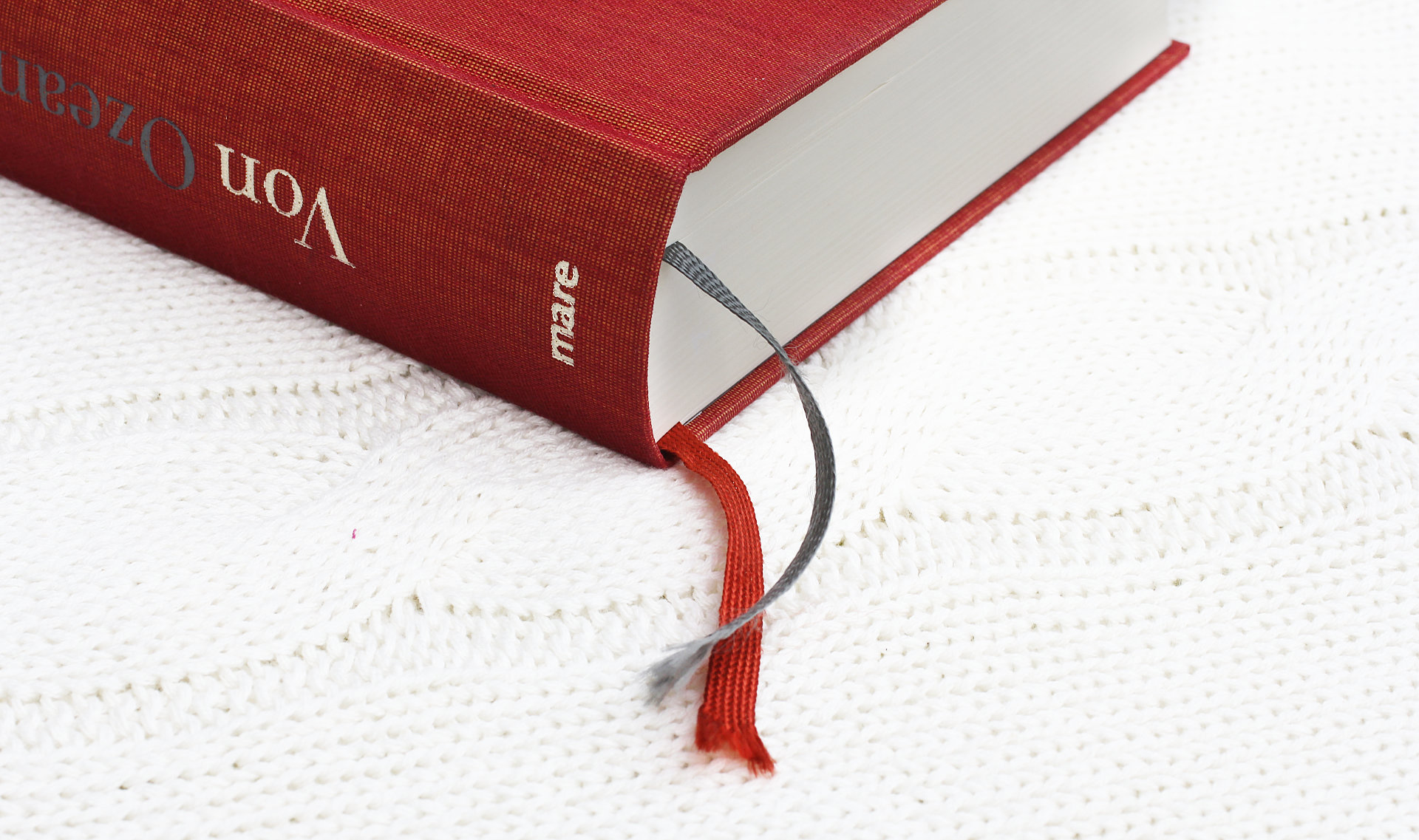
The mareverlag was founded in the mid‑1990s by marine biologist Nikolaus Gelpke. Since the early 2000s, the publisher has released books in addition to its magazines. In 2010, the mare classics series was launched, and since then new, beautifully produced editions have appeared regularly. For me, these are the highest‑quality and best classic editions available in the German‑speaking world. With slipcases, cloth bindings, ribbon bookmarks, consistently fine paper, carefully chosen typography, and coordinated colors, these books are a delight for bibliophile avid readers. And of course, the content is equally rich: newly translated texts, often appearing in German for the first time. Sometimes true discoveries, sometimes wonderfully solid classics. A marvelous, wide‑ranging selection. The books always carry the sea within them, along with a wonderfully maritime atmosphere.
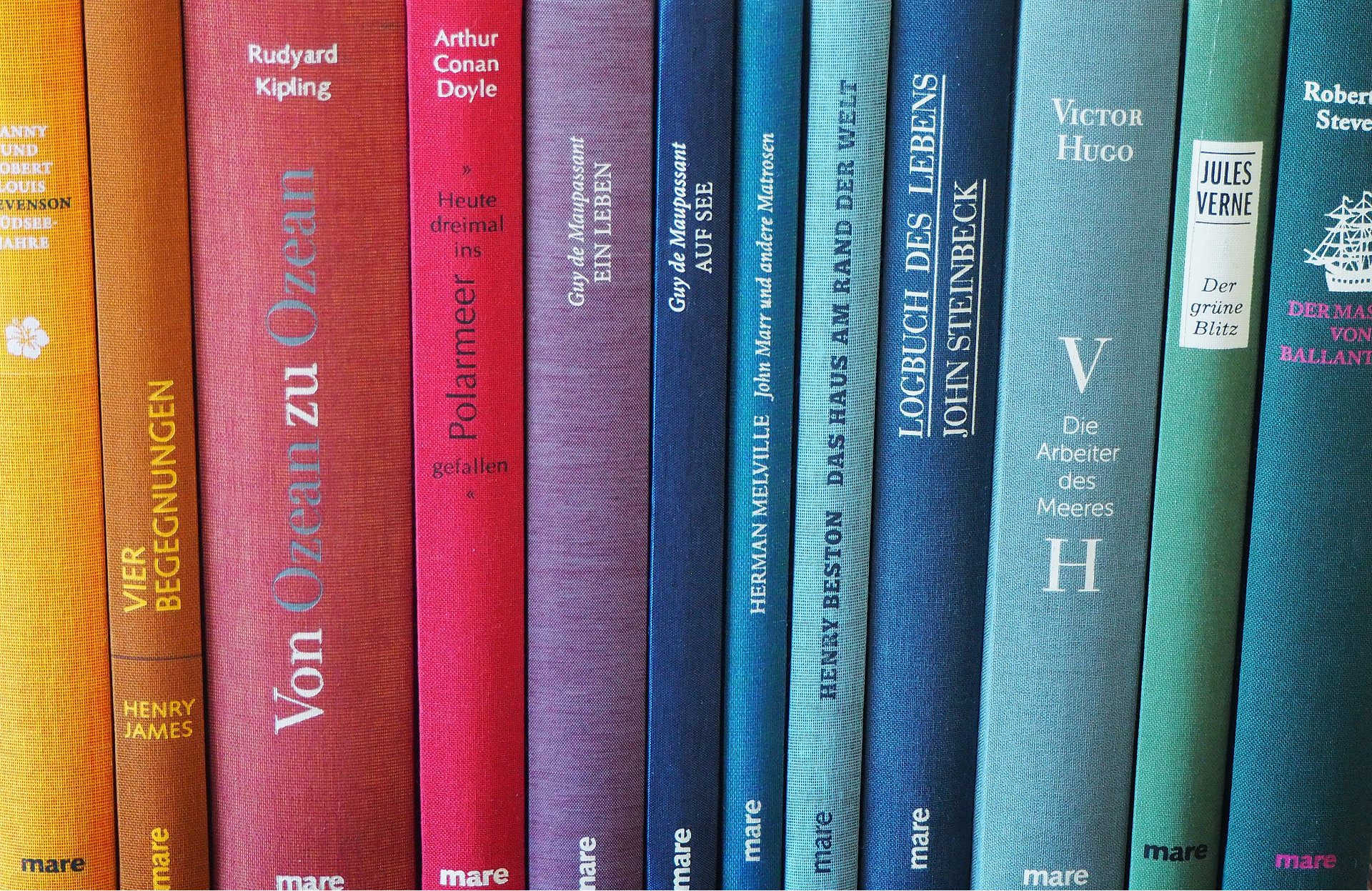
The two seasonal program previews are a must for me every year. The mareverlag is usually rather late with its previews, but I always wait eagerly for the new classic. (A small tip: if you search on Amazon in the Classics category for upcoming German hardcovers, you’ll often find the mare classics listed a little earlier, before the official preview appears.)
Besides the classics, the mareverlag also publishes other very popular books, often seen on Instagram and belonging to contemporary literature. I also love the beautiful books about adventures in the polar regions or nonfiction titles such as the wonderful Atlas of Remote Islands or No Man’s Land.
The exciting question for me is what the transformation from a privately run company into a cooperative means for the publisher. The book division will be headed by Judith Weber, which strongly suggests that the established and proven strategy will continue. Judith has been working at the publisher since 2008, so it’s unlikely that anything major will change — a good sign in my view. Nikolaus Gelpke is not withdrawing completely either; he will continue to contribute as a regular member. The magazine division will also remain in familiar waters with long‑standing staff. All in all, very good signs that not much will change and that mare will continue to publish good and beautiful books.
The second question I asked myself concerns economic development. And let’s be honest: the book market is currently in massive decline. From a purely economic perspective, one might wish for tough capitalists to run the publisher — the kind who sit in big tech companies. But as an avid reader, that’s the last thing you’d want, because the wrecking ball would swing, and the classics would likely be the first casualties. So is the cooperative model a good strategy? The term “cooperative” alone sounds very much like socialism — in other words, economic destruction. One publisher that has taken this path is the Büchergilde Gutenberg, whose bibliophile books have a similar orientation. So how has the Büchergilde developed as a cooperative?
In 2014, the Büchergilde was transformed into a cooperative. Just like at mareverlag, one share costs 500 euros — enough to build a solid capital base, but low enough for private individuals to participate. How has the Büchergilde developed? Looking at the 2024 annual report, you can see that the Büchergilde cooperative has 1,965 members. At the end of 2020, the cooperative had around 1,400 members. So the growth is quite respectable.
Looking at the figures of the Büchergilde Gutenberg publishing house, it faces the usual difficulties of the book market. In 2024, there was a loss of 257,000 euros, in 2023 a loss of nearly 195,000 euros, and in 2022 a loss of about 98,000 euros. The shrinking book market and massive inflation are clearly taking their toll. The negative equity is also very concerning. Looking at the cooperative itself, however, it is highly stabilizing — it is the financial backbone and even generated a small surplus. Without the cooperative, the publisher would likely face massive problems. The number of members (i.e., customers) of the publishing house has been stable at around 60,000 for several years. But here too, there seems to have been a significant decline in the past: in 2021, the website still advertised 80,000 members.
Given the shrinking book market and the ongoing structural problems the publishing world faces in a stagnating economy, the transformation into a cooperative is likely an excellent choice. It is unlikely that the mareverlag’s target market will continue to grow. The average age of mare readers is given as 51. That seems very plausible to me. Looking at the demographic development in this country, the number of mare readers will likely shrink in the medium term. And the medium of the book itself is already struggling. I am certain that the new mare cooperative will be very successful in acquiring members. Since the readership is relatively affluent, I can easily imagine that more members will join and more shares will be issued than at the Büchergilde. With a solid capital base, the publisher’s stability is ensured — and I am quite confident that this is what will happen.

From my perspective, the shift toward a cooperative is a very positive sign and a very smart decision. Selling to one of the large centralized publishing groups would almost certainly have led to a significant streamlining of the publishing program — or at least to strong influence and restructuring of the portfolio. Continuing as a private company would also have been risky, because then everything depends on one person or eventually on their heirs. (If you want to know how risky that can be, I recommend reading Buddenbrooks.) A cooperative ensures that the business continues on stable footing. And Nikolaus Gelpke deserves great credit for not trying to extract as much capital as possible for himself. That is certainly not something to be taken for granted and shows the deep love he must feel for his life’s work — something you can see immediately in the books.
Also interesting in this context is the interview with Judith Weber on Deutschlandfunk. There she reveals that the cooperative gained 200 supporting members within the first week. The transition to a cooperative had been planned by Nikolaus Gelpke for some time, and I agree with her that it is very wise to carry out such a change from a position of stability rather than later from a precarious situation. It also seems that Nikolaus Gelpke wishes to withdraw from day‑to‑day operations. I also find Judith’s remark very striking that one must be willing to “afford” good journalism. That already hints at the realization within publishing houses of the profound transformation the book market is undergoing and how difficult the business has become.
I look very positively toward the future of the mareverlag. And I find this step wonderful, because it also gives me the opportunity to support my favorite publisher and, even if only in a very small way, to become a tiny part of this project. With that in mind, I look forward to many more beautiful books and a hopefully never‑ending stream of carefully selected, charming classics.
You can find further information about the mare cooperative here.
Hallo Tobi,
ich muss gestehen, dass ich mir noch nie näher Gedanken darüber gemacht habe, welchen Einfluss die Rechtsform auf einen Verlag hat. Deine Einordnung fand ich daher sehr spannend und aufschlussreich, gerade auch durch die einbezogenen Werte der Büchergilde.
Ich hoffe, es wird sich für den mare Verlag als gute Entscheidung erweisen. Die Klassiker und ihre hochwertige Gestaltung verdienen ihren dauerhaften Platz auf dem ansonsten so schnelllebigen Buchmarkt.
Viele Grüße
Kathrin
Liebe Kathrin,
in der Regel bekommt man da ja kaum etwas mit, was auch okay ist. Wenn man sich den Markt so anschaut, dann gibt es die großen Konzerne, unter deren Dach viele kleine Verlage vereint sind. Was schon oft auch ganz gut funktioniert. Die Andere Bibliothek beispielsweise gehört (ich glaube seit 2012) zur Aufbau Gruppe und das scheint da auch gut zu funktionieren und der Verlag veröffentlicht unverändert seine Bücher und ist auch seinem Stil treu geblieben. Wobei ich mich immer frage, wie so ein spezieller kleiner Verlag sich dann für einen größeren Verlagskonzern lohnen kann. Aber scheinbar geht das Konzept auf.
Ich bin gespannt, wie es sich mit der Genossenschaft entwickelt. Und ich hoffe der mare Verlag hört nie auf mit ihren schönen Klassikern. Ich liebe die Bücher einfach.
Liebe Grüße
Tobi
Hallo Tobi,
Genossenschaften sind viel älter als der erwähnte Sozialismus. Ihnen zugrunde liegen ein Solidaritätsprinzip, die Gemeinschaft der GenossInnen und gleichberechtigte Partizipation. Ich bin selbst überzeugte Büchergilde-Genossin und in einer weiteren Genossenschaft aktiv. Diese Form zieht sich durch alle Lebensbereiche und ich finde es großartig, wenn sich Menschen zusammentun und gemeinsam für eine “Sache” aktiv. Wahrscheinlich wird der mare Verlag nicht der letzte sein, der diese Form für sich wählt. Und du hast völlig recht, es ist eine wunderbare Möglichkeit, das zu fördern, was einem wichtig ist.
Liebe Vera,
ich finde das Prinzip von Genossenschaften auch sehr gut und bin selbst auch in mehr als einer als Genosse unterwegs. Kulturell und wirtschaftlich betrachtet ist das von Konzept einfach extrem gut. Ich habe mal gelesen, dass das in den USA noch ausgeprägter ist, als hierzulande. Dass der mare Verlag den Weg gewählt hat, ist aus meiner Sicht eine sehr gute und kluge Entscheidung.
Mein Seitenhieb auf den Sozialismus bezog sich weniger auf die Genossenschaft als Organisationsstruktur sondern auf derzeitige politische Trends, die ich sehr kritisch sehe, die aber an dieser Stelle kein Thema sein sollen.
Ich glaube aber auch, dass gerade so etwas wie schöne Klassiker, oder hochwertige Indieliteratur als Nischenthemen sich neue Wege suchen müssen, mit einem deutlich geschrumpften Zielmarkt wirtschaftlich umzugehen. Eine Genossenschaft ist da ein Weg und ich kann mir vorstellen, dass da auch noch andere folgen werden. Wie tragfähig das ist, wird sich zeigen.
Liebe Grüße und herzlichen Dank für Deinen Kommentar
Tobi