
My Most Beautiful Books • Feline von Koenigsliebchen
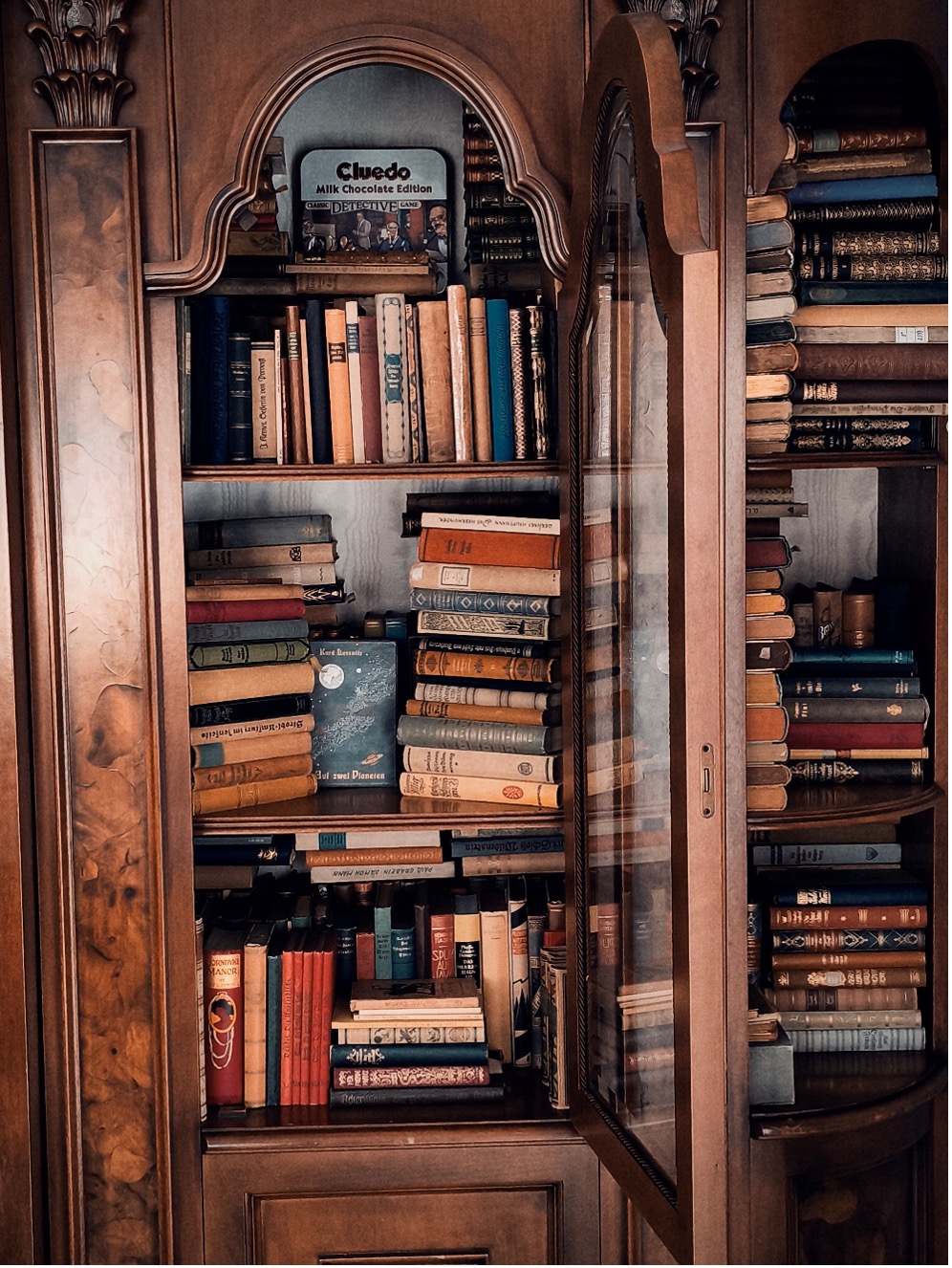
My last post in the series My Most Beautiful Books was quite a while ago now. I keep browsing for beautiful books, and along the way I stumbled upon Feline. On her Instagram account and blog, she regularly presents extraordinary books. Not current releases, though, but antiquarian books. She has focused on the literature of the 19th and early 20th centuries and has tracked down some truly beautiful books. I also find her focus on old books about occultism particularly exciting. It immediately made me wonder what a stroll through her small, fine library might bring to light, and it reminded me of this series. Feline was kind enough to say yes right away, and I’m very glad I was able to win her over for this post. But now I’ll hand the floor over to Feline.
First, I’d like to thank Tobi for inviting me to give you a little glimpse into my collection.
My name is Feline Flemming, I’m 29 years old and a collector of antiquarian books. Fantastic literature holds a special place in my collection. When Tobi asked me whether I’d like to show part of my collection on his blog, I honestly wasn’t quite sure at first which books to choose for it. Because this isn’t meant to be a presentation of my rarest or most beautiful books. Rather, I’d like to show you a few works that hold a special value for me. Not necessarily a material value, but a very personal one. Some of them have stayed with me because of their content, others came to me in unusual ways, or developed their own particular story over time. For this post, I’ve therefore limited myself to a small part of my collection and would like to give you an insight into my fantastic literature.
I’d like to start with the books without which this part of my collection probably wouldn’t exist in its current form at all: my encyclopedias and reference works on the fantastic. In them, I find writers and works that I then follow up on, and which find their way into my bookcase this way.
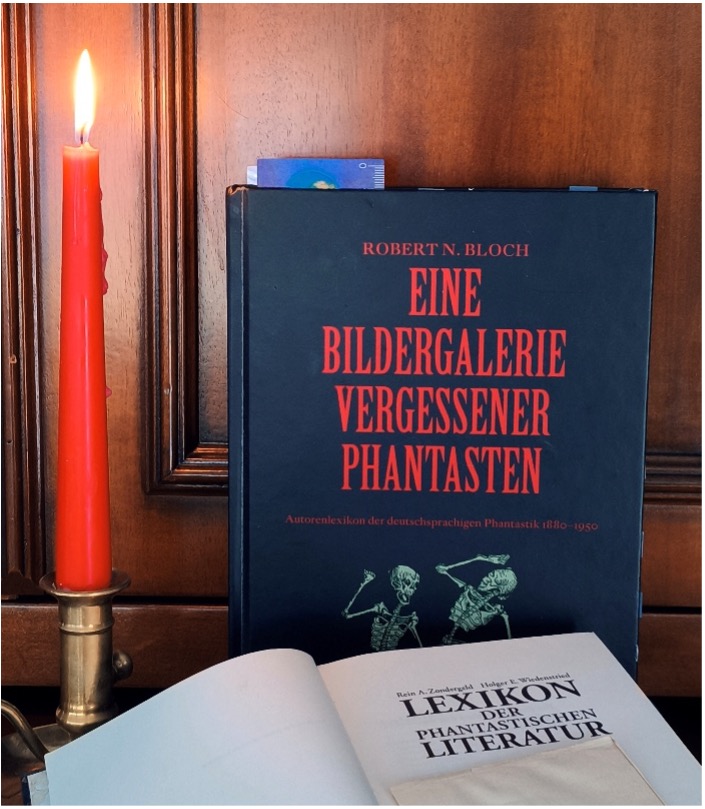
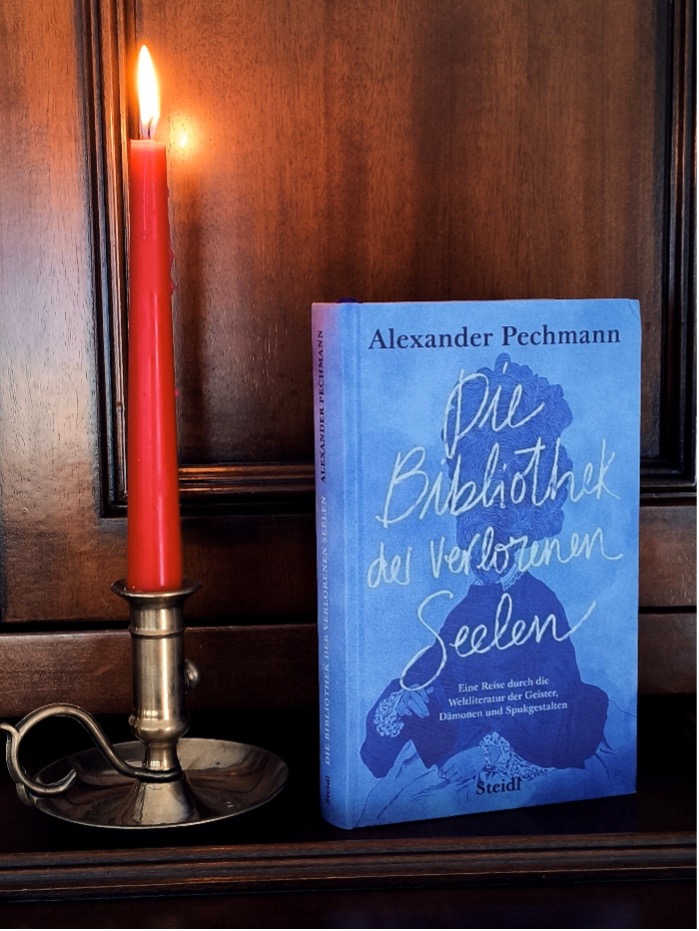
The Lexikon der phantastischen Literatur [Encyclopedia of Fantastic Literature] brings together above all international authors from this literary field. Eine Bildergalerie vergessener Phantasten [A Picture Gallery of Forgotten Fantasists], on the other hand, is devoted exclusively to German-language writers. Die Bibliothek der verlorenen Seelen [The Library of Lost Souls] was a gift from my mother and likewise contains numerous wonderful titles, including ghost stories and all manner of other works still waiting to be discovered.
Since I talk about the fantastic very often on my social media channels, I keep running into the assumption that this must mean fantasy. So I’d like to bring the term a little closer to you. Fantastic literature is far more than what we usually understand as fantasy today. Behind this term we encounter the spectral and ghostly, the occult and spiritualist, the uncanny and the inexplicable. Quite often, events remain ambiguous or carry philosophical and metaphorical undertones.
Although I keep claiming that this literature in particular holds my greatest interest, I surprisingly often catch myself thinking about historical works instead. Apparently I like them far more than I’d like to admit to myself. There’s Die Krönungsoper [The Coronation Opera] by Hans Watzlik, a writer who, incidentally, also has his place in fantastic literature, or Der Spieler [The Gambler] by Walter Friedemann. But now I’m already digressing.
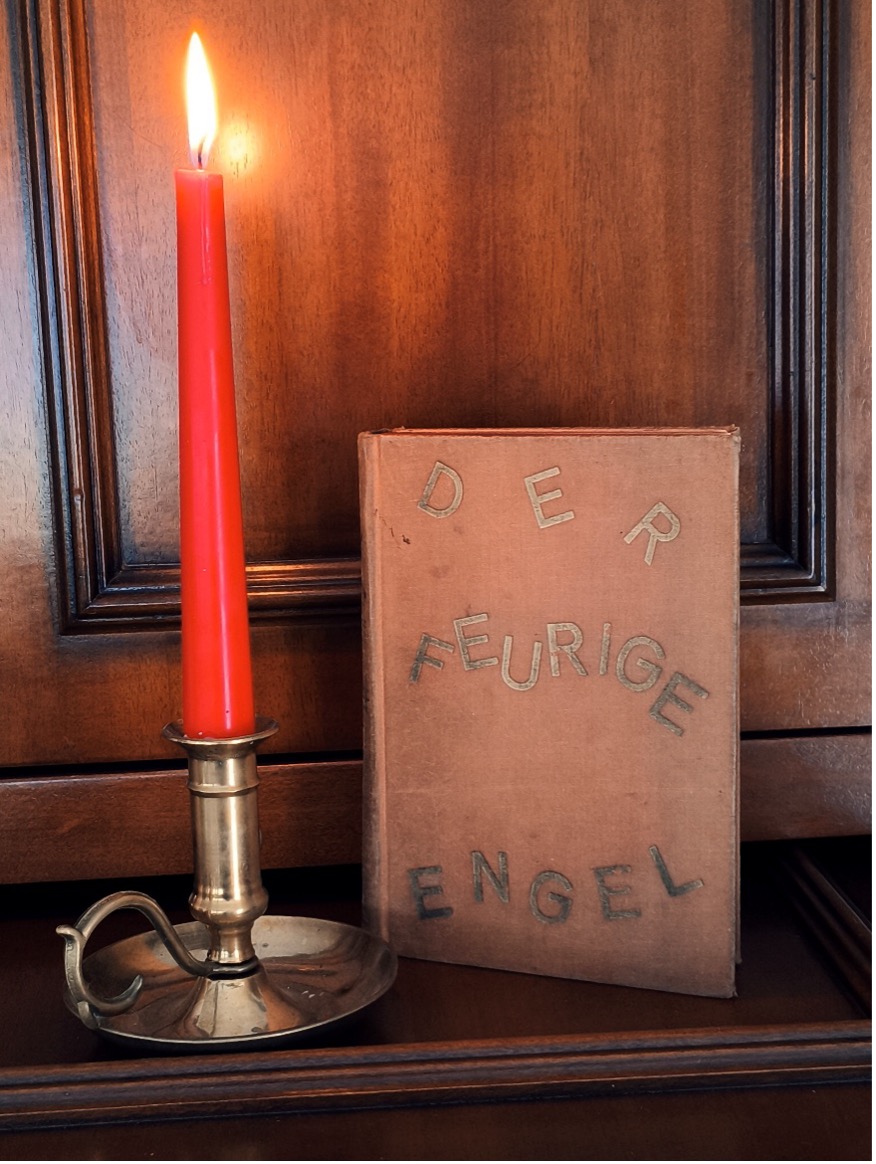
The Fiery Angel seems to me a fitting place to start. I’ll still hold back one of my most beautiful works until the very end, though, to satisfy the question I’m probably asked most often.
I find this volume highly interesting. What I especially like is that its binding looks rather plain, while its true inner content is likely to delight quite a few enthusiasts. It’s about alchemy, Kabbalah and astrology, about Agrippa von Nettesheim, Dr. Faust and the magic of the German Middle Ages in Trier.
Those words alone already contain everything an antiquarian text like this needs in order to sit mysteriously on a bookshelf. And since its content is meant to remain a little enigmatic here, let’s turn to the next work.
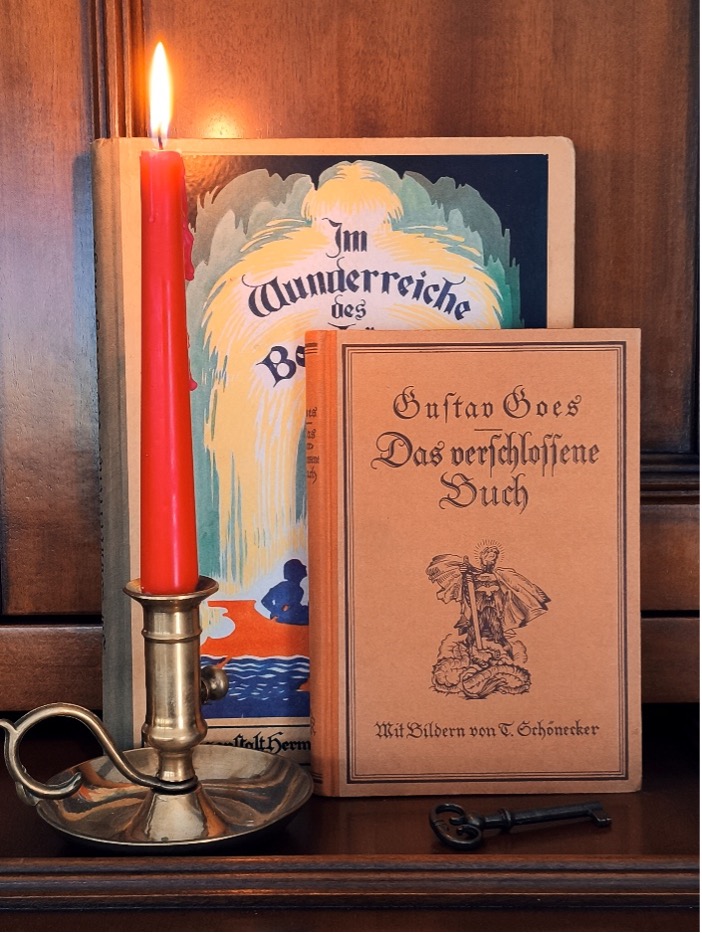
While researching another antiquarian work, I stumbled upon Gustav Goes’ Das verschlossene Buch [The Locked Book]. The story is said to have inspired Michael Ende’s The Neverending Story.
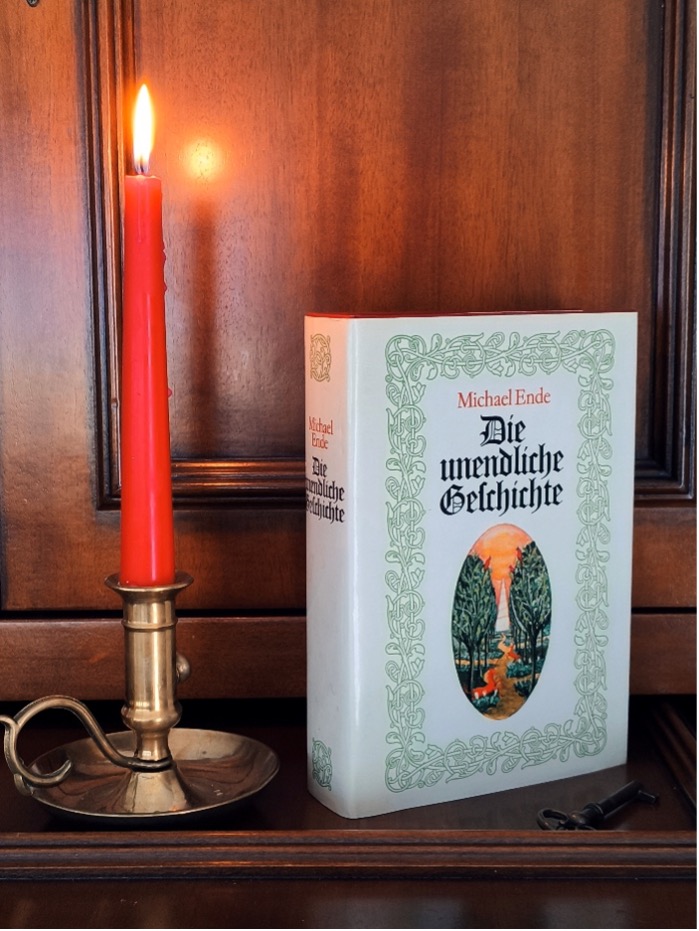
It tells the story of thirteen-year-old Johannes, who visits his grandfather at his apothecary. While his grandfather is away, the boy comes across a locked, peculiar book in the laboratory. When he finally manages to open it, he is drawn inside and from then on becomes part of the story himself.
Since The Neverending Story, and especially the film, are inseparable from my childhood, I wanted to bring back the memory of this earlier work, which might already be waiting longingly for its new owner on the shelf of the next dusty second-hand bookshop. And who knows, maybe one day you’ll become part of this story too.
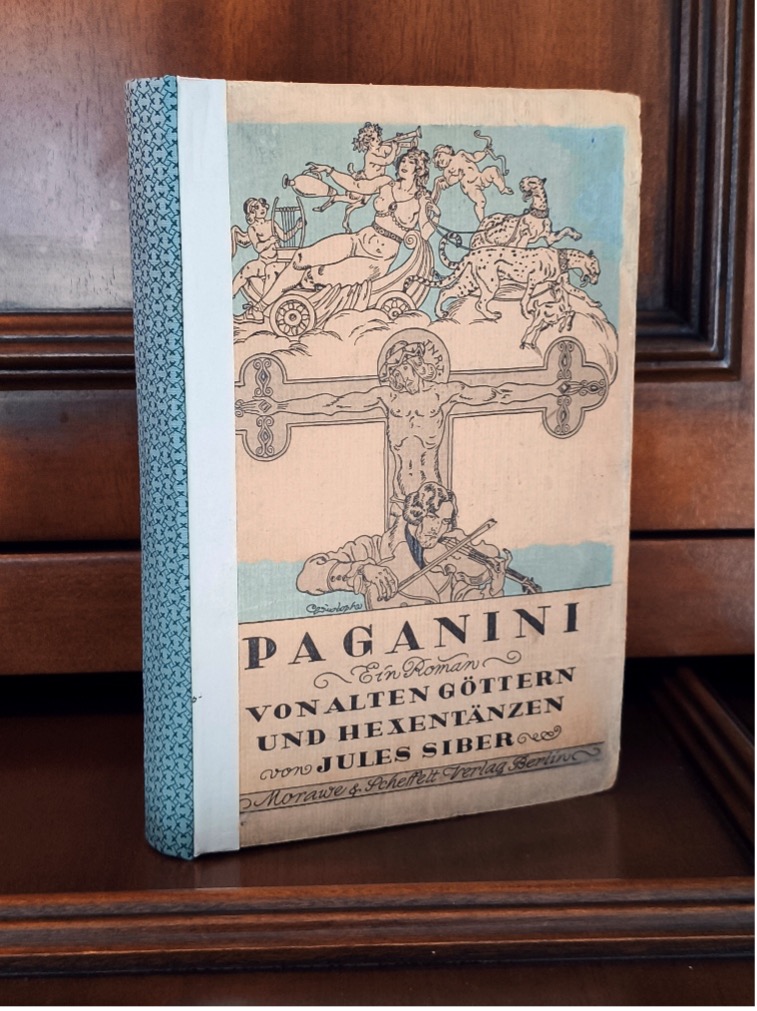
I found Paganini in a public book exchange cabinet. In this picture you can already see the book restored. I should probably mention that as well. If one of my antiquarian books needs repair, whether to the pages, the binding, or the spine, I take care of it myself and always try to bring my treasures back into good condition.
An immense wealth of legends surrounds the figure of Paganini. Even during his lifetime, rumors circulated that his seemingly impossible virtuosity could not be of natural origin. People said he had made a pact with the devil and sold his soul for his violin playing. Others believed he was possessed, or even that the devil himself was helping him play.
I had been searching for exactly this edition for weeks beforehand. Day after day I typed the title into Booklooker and eBay, always without success. Until, of all places, I found exactly this copy, one I hadn’t even dared hope to find in my wildest dreams, completely unexpectedly in a public book exchange cabinet.
I often get the feeling that antiquarian books find their way to me, rather than the other way around. An almost supernatural-seeming phenomenon keeps happening to me in this regard. I immerse myself intently in a particular subject, and the very next day I suddenly come across it in my reading. Or I randomly open some book to page 287 and discover, of all things, a name or a word that leads me to new information and down new paths. I’m almost tempted to call it occult. Supernatural, perhaps, sometimes even a little magical. Do you know experiences like this? Has something similar ever happened to you?
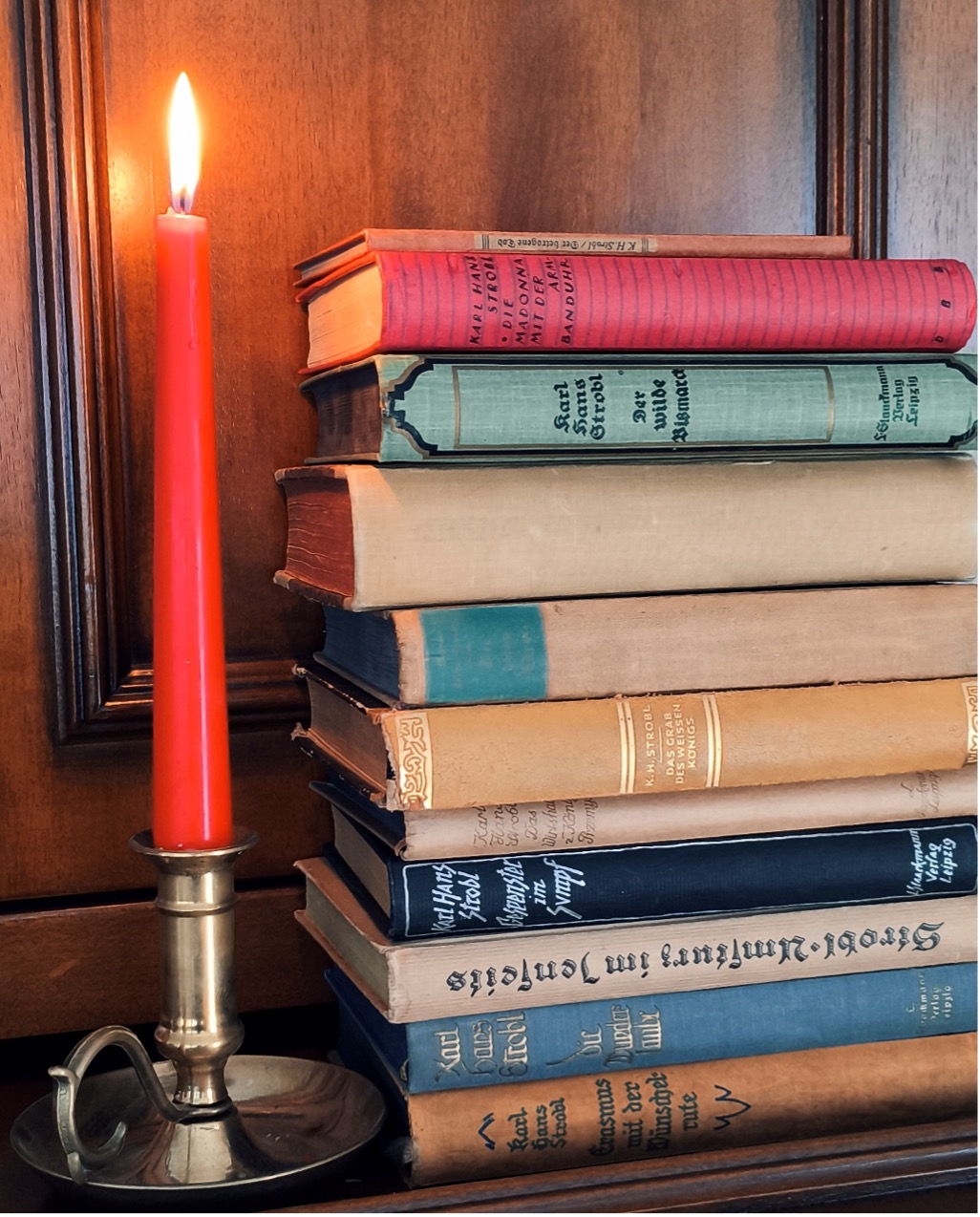
Alongside what I consider my quite remarkable collection of Rudolf Stratz and Rudolf Greinz, I also have a small collection of works by Karl Hans Strobl. Das Grab des weißen Königs [The Grave of the White King] is, as you can easily tell, not the most beautiful work among them. Even so, it’s a fascinating novel that managed to change my view of historical Mexico so profoundly that I devoted myself to it with the greatest enthusiasm. But rather than say anything more about the work here, I’d like to quote from my own past literary essay on it instead.
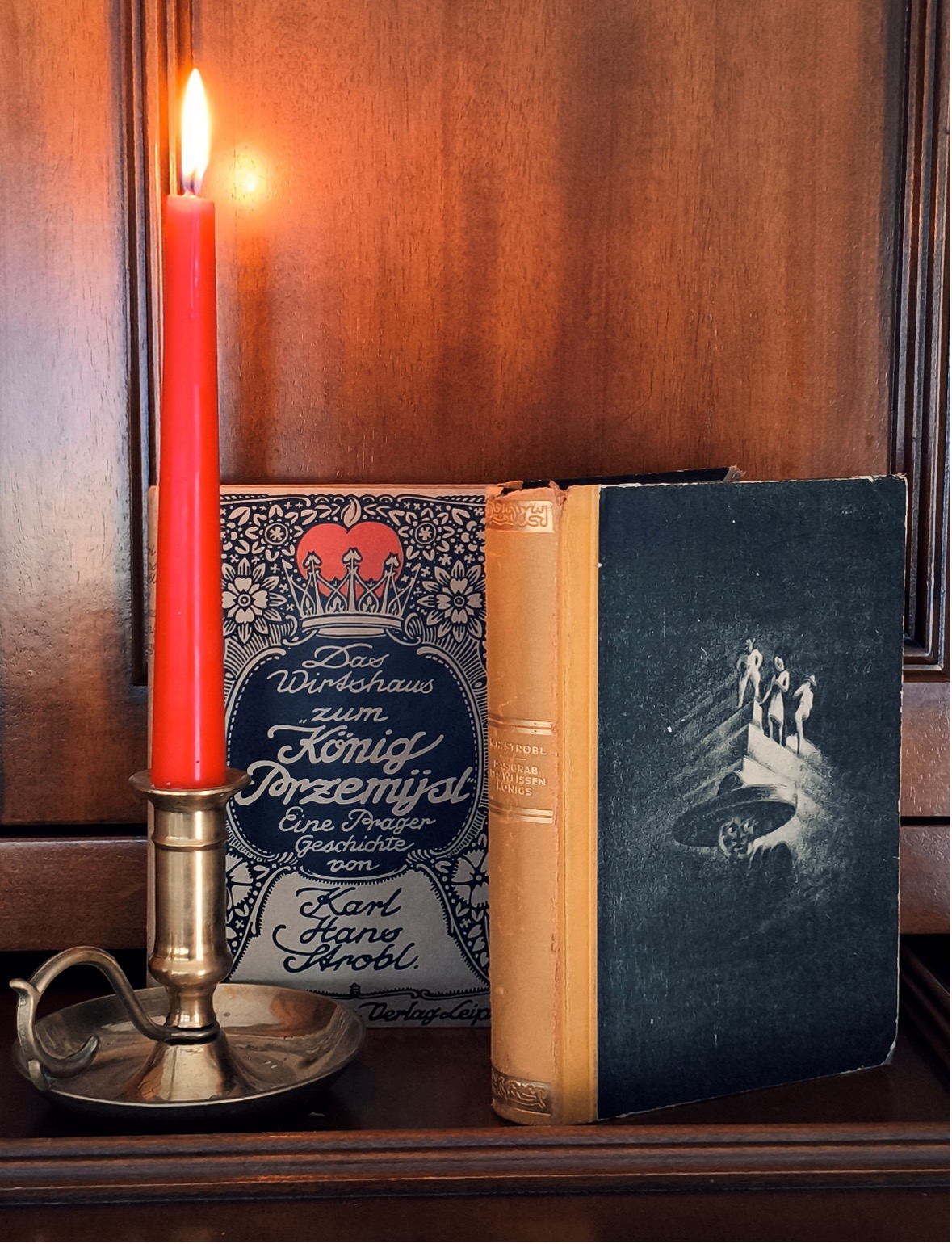
“A group of young scientists travels to Mexico to open the grave of a white king named Quetzalcoatl and to boldly prove that Aztec culture was of proto-European, indeed Aryan, origin. But even in this undertaking lies a quiet sacrilege, as though one were disturbing things better left resting in the darkness of past ages. Even the journey itself turns into a wild venture that imperceptibly transforms into a creeping nightmare. Uncanny occurrences, deceptive apparitions and a growing sense of unseen observation accompany the expedition. It is as though ancient curses weighed upon the path, as though some foreign power were testing and mocking the intruders. Even after the grave is found, this oppressive atmosphere does not lift; instead, it condenses into an ever-present threat. The political situation in Mitla makes the whole undertaking unpleasant and dangerous. Several times the archaeologists find themselves in mortal peril, from which only Richard Brög’s well-filled wallet manages to free them.
But gold cannot buy everything. It heals no wounds of the soul, banishes no ancient powers, and cannot hold back the looming disaster. At night, the man-eater prowls around the burial site, a being between man and myth, while the locals tremblingly speak their prayers and murmur old incantations, hoping the curse might pass them by.”
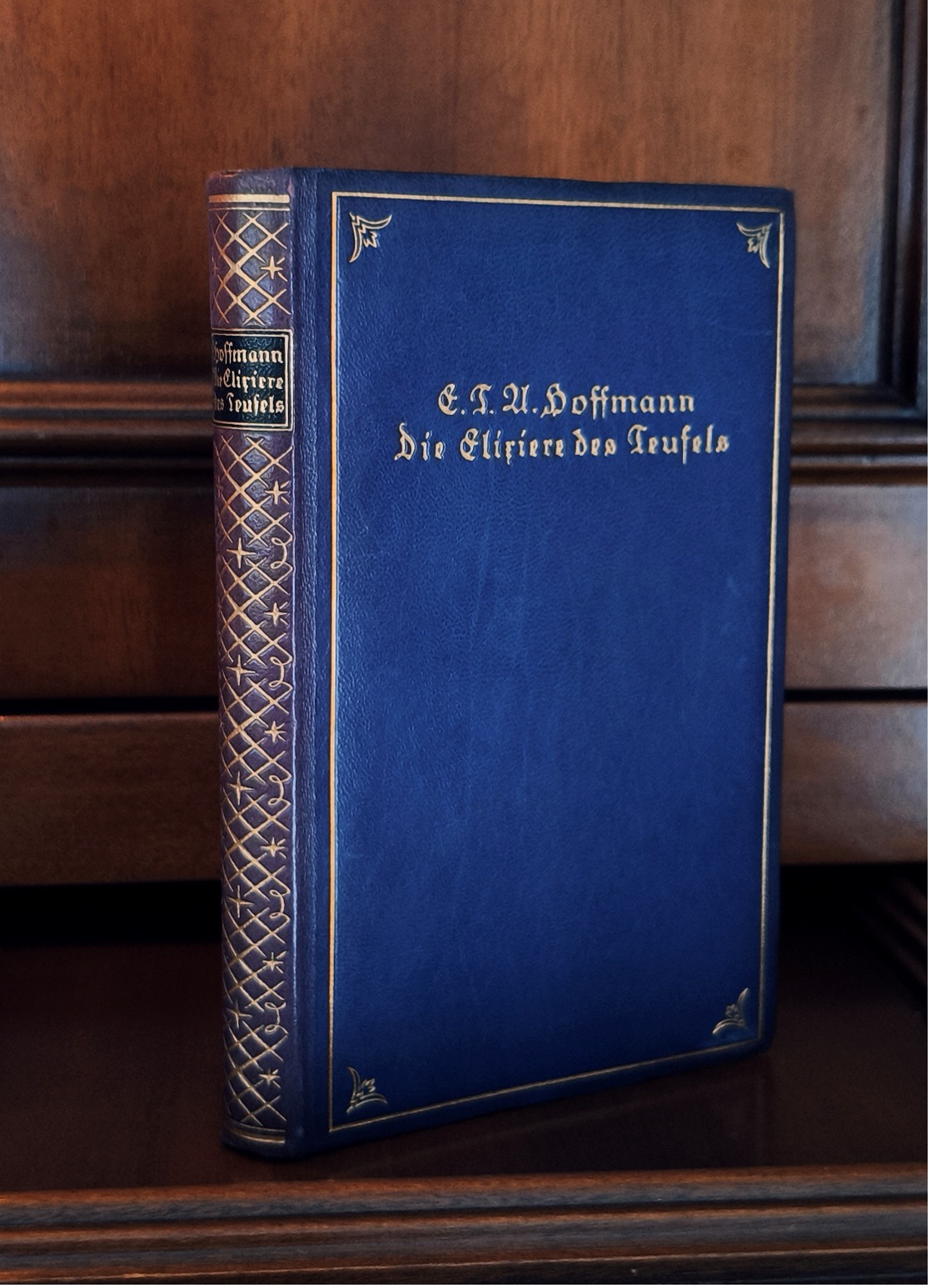
The Devil’s Elixirs is probably familiar to many of you as well. I traded in my old illustrated edition for this full-leather edition. Although the pages aren’t printed on thin India paper, they come surprisingly close to that fine quality.
I wish I could describe to you how wonderful this simple yet elaborately crafted little binding feels in your hands, and how beautifully the book sits in your hand while reading.

We’re slowly approaching the end now, but I still have a few more books to show you. This small collection is mainly about witches from German-speaking lands. You’re probably wondering what exactly this has to do with fantastic literature. Well, I’d love to tell you. Even though all but one of these works are historical in nature, every single story confronts the reader with German folk superstition and its deep-rooted presence. Depending on the work, this leads to quite a few supernatural occurrences, which I’m only too happy to read about. On top of that, I like bringing a theme together through the works of different authors, letting a small collection take shape within my larger collection.
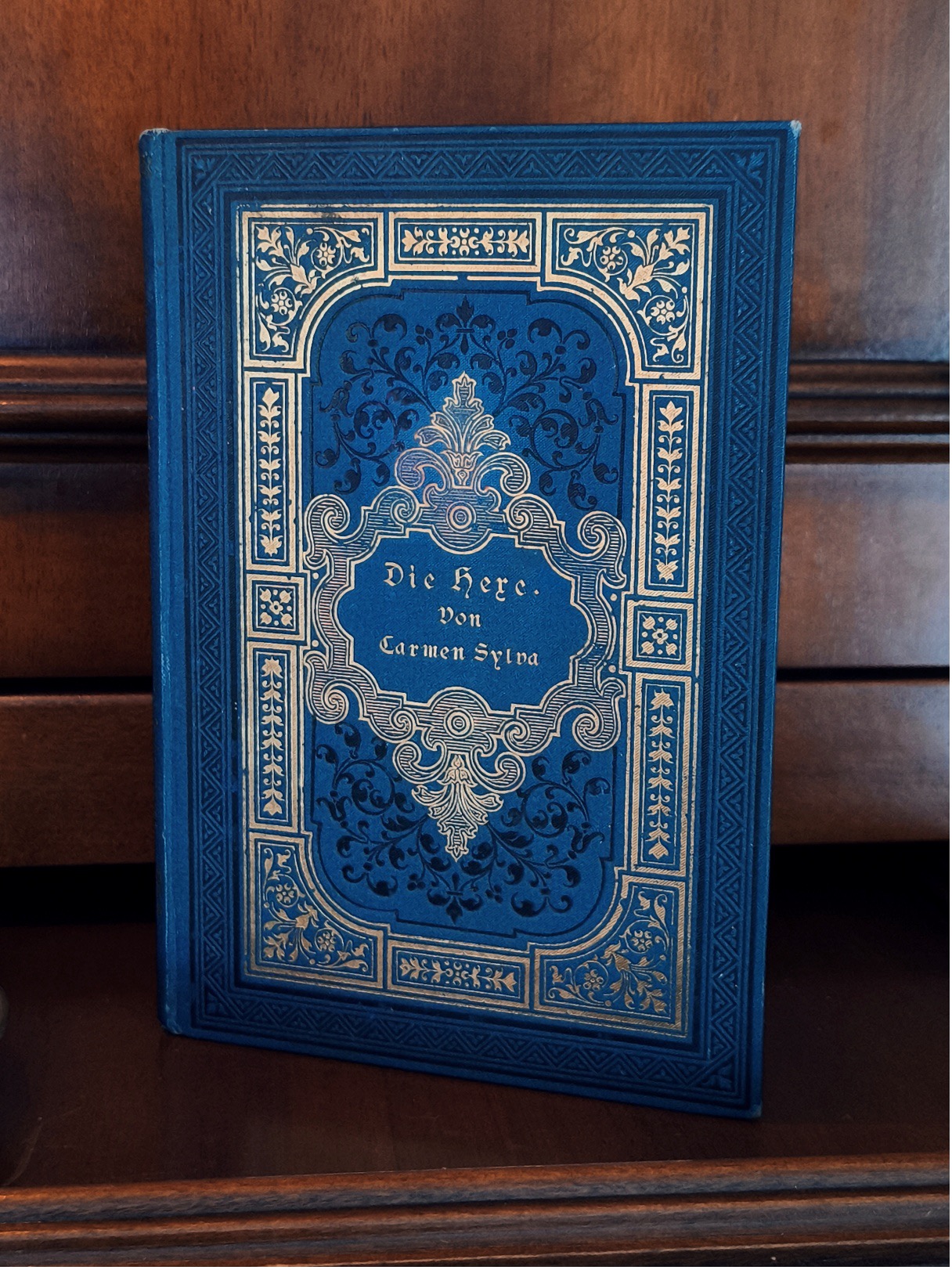
My newest work, which I found on Vinted, is called Die Hexe [The Witch] by Carmen Sylva, from 1882, and is written in verse. A handsome little work that, like so many books of this kind, keeps reminding me of the splendid things the antiquarian world has to offer.

To finish off, I’d like to show you the most beautiful book on this shelf. The colors, the texture and the imagery of this binding fill me with fresh delight every single time my eyes fall on this book. But see for yourselves.

Aphrodite by Ernst Eckstein, from around 1886. A historical novel that has stood in my display cabinet ever since the day I began collecting.
I hope you, and especially Tobi, enjoyed this little glimpse into my antiquarian world. If you’d like to keep following along with me and my antiquarian world a bit further, you can find me on Instagram, YouTube and WordPress under the name “Koenigsliebchen”.
On Instagram, I’m gradually opening the doors to my library and, from now on, will be showing you one of my books every day. On YouTube you can listen to selected works and stories from antiquarian literature, while my blog is entirely devoted to the thoughts that arise between the pages. There I write my literary essays and short stories, and record what stays with me long after I’ve closed a book.
Perhaps I’ll meet you there again, and together we can lose ourselves a little among yellowed pages, old stories, and all the peculiar treasures still waiting to be discovered.
Lieber Tobi,
wie schön, dass es wieder einen Beitrag dieser Reihe gibt! Ich liebe es, dadurch zwischen den Bücherregalen anderer hindurchzuspazieren. Spannend ist auch immer, dass alle das Thema ganz individuell aufgreifen und damit zeigen, wie vielfältig die Literatur ist.
Für mich waren dieses Mal viele neue Titel dabei, denen ich mich noch näher widmen werde. Vielen Dank an dich, Feline, für diese Geheimtipps!
Viele Grüße
Kathrin