
A Life • Guy de Maupassant
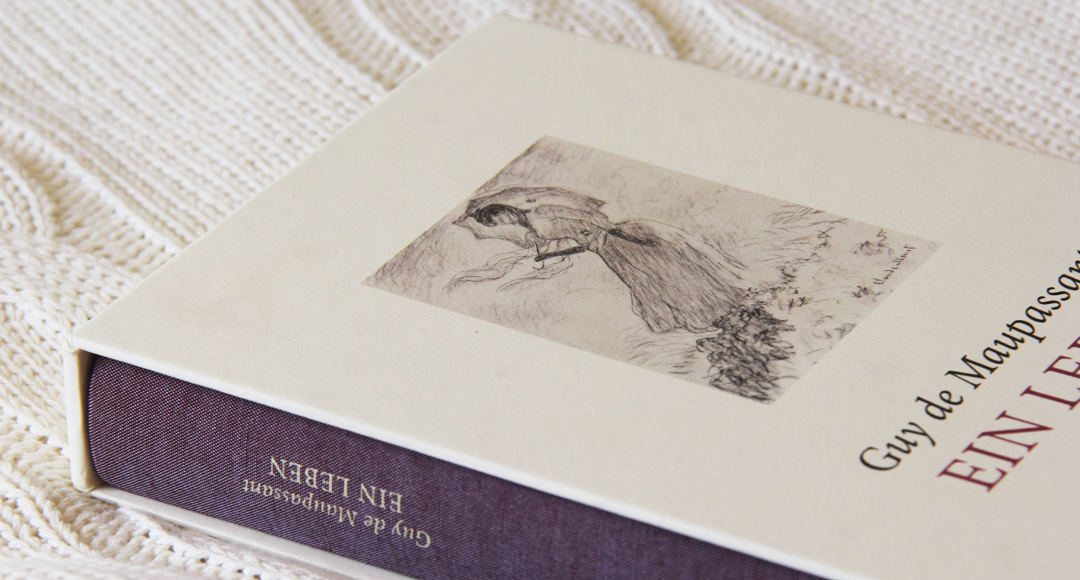
A French author from the 19th century, and from the circle of Flaubert and Zola — honestly, how could one possibly go wrong? Add to that a book presented in such an elegant edition, and I think it’s already becoming clear from these opening words that I’m absolutely thrilled by A Life. The subject matter immediately appealed to me because it once again tells the story of a woman’s fate, which fascinates me in its own particular way when viewed in the social context of the time. Such stories offer a glimpse into what moves all people alike, what they long for, and they reveal how the many facets of personality can shape a life.
Jeanne is a naïve young woman, and Maupassant attributes this to a form of education deliberately enforced by her father — an upbringing that confined her behind the high walls of a convent school to shield her from all the evils of the world. The entire book becomes, in essence, a steady process of awakening for the young wife, who gradually realizes that the idyllic life her parents had wrapped her in is not as spotless as she once believed. Maupassant beautifully depicts her evolving thoughts — how her perception of people changes, and how her abstract notions slowly align with reality. The process of adaptation that Jeanne undergoes is fascinating to observe — how she settles into this reality, perceives it, and reacts to it.
So everyone was mean, deceitful, and false. Tears came to her eyes. At times, one mourns one’s illusions as deeply as one mourns the dead. (p. 187)
The question of why this book was published by Mare Verlag becomes clear right from the start. Nature — and above all the sea — plays a central role in this novel. Les Peuples (from the Norman word “peuple,” meaning poplar) is a beautiful estate, a small château situated directly on the coast of the breathtakingly lovely Normandy. The nature-loving Jeanne finds here a rural paradise she had always dreamed of. Maupassant, in the naturalist tradition, describes it with exquisite language and great devotion, so vividly that I could easily picture the setting and the recurring beautiful scenes. At the same time, nature continually affects the inhabitants of Les Peuples — Jeanne experiences exuberant summers as well as bleak, wintry, gray days. This interplay between nature and character drives the narrative and reminded me strongly of Wuthering Heights, though the parallels are less pronounced here, and Maupassant walks far more measured paths. The following passage is from a particularly intense scene. Before and after it, the actions of a character are described — and in between, Maupassant inserts such lines, using impressions of nature to mirror the emotions and thoughts of his characters.
The restless sea rolled its waves forward; thick, deep-black clouds rushed by with insane speed, sweeping across the sky, followed by others, and each poured a wild downpour upon the coast. The wind whistled, howled, shaved the grass, flattened the young crops, and drove before it, as if they were flakes of foam, large white birds, carrying them far inland. (p. 232)
What fascinates me most about this book is its realism. The life it portrays — that of a woman in that era — was not at all uncommon, and the social framework it subtly criticizes was a genuine reality of the time. Maupassant’s great achievement lies in the way he builds the entire narrative upon Jeanne’s personality. It is her nature, her temperament, and her character traits that make the story believable and resonate through each event. To compose a novel so completely around the essence of a character is a remarkable art.
This edition also includes a very interesting appendix that offers readers fascinating insights. There are annotations for several passages, providing connections to Flaubert’s Madame Bovary. Flaubert, Maupassant’s mentor until his death, advised and influenced him in many ways. However, I must say that while reading, I never once thought of Madame Bovary and could find no significant parallels between the two stories — a point also noted in the afterword.
In addition to the notes, the appendix contains an earlier version of a scene that appears only briefly in the final text — a more detailed account of a ship’s christening, which I personally wouldn’t have included. In fact, Maupassant’s early drafts were much longer and included more characters. He eventually condensed everything, which was an excellent decision; the book thus feels cohesive, never tedious or drawn-out.
Three letters are also included, exchanged between Maupassant, Léonie Brainne, and Flaubert. The afterword explains why: both Flaubert and Brainne influenced and shaped Maupassant’s literary development, even though he ultimately went his own way.
A chronology outlines Maupassant’s life, and an afterword by Julian Barnes provides further insights into the novel. In my experience, an afterword to a classic is either complete nonsense or extremely engaging and illuminating — this one belongs to the latter category. A Life was Maupassant’s first novel, and the lives of his parents partially served as inspiration for it.
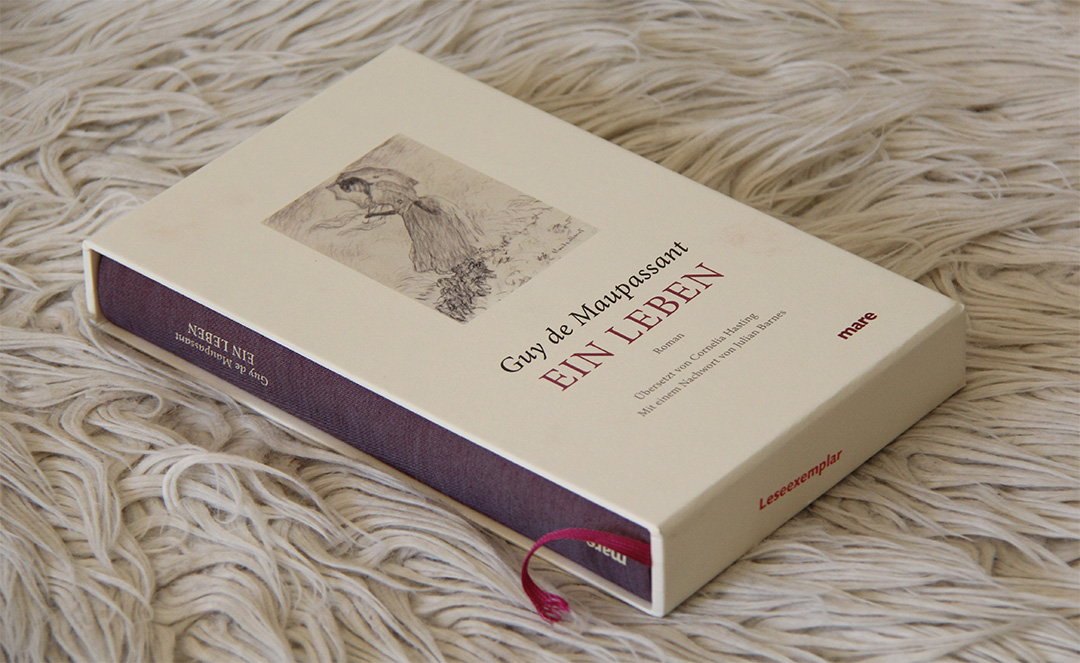
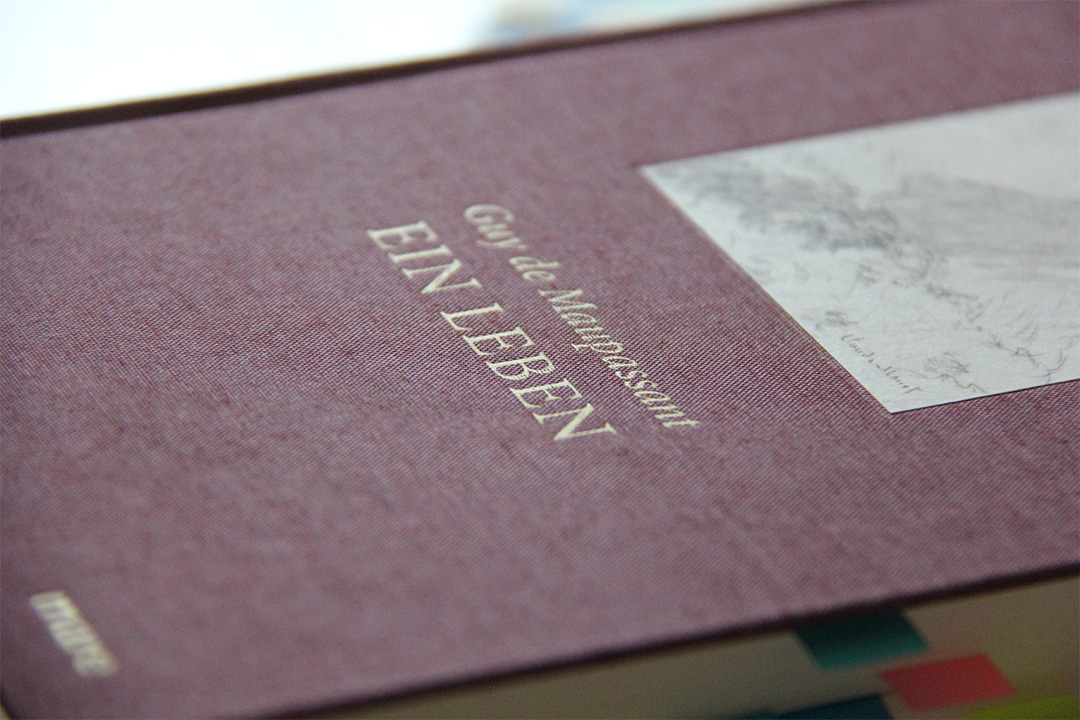
This edition was published by Mare Verlag and comes as a hardcover volume in a slipcase. As with all books in this series, I’m absolutely delighted by it — it feels premium, with a beautifully shimmering cover that catches the light. If you already own an older edition and love this novel as I do after reading it, the purchase is well worth it.
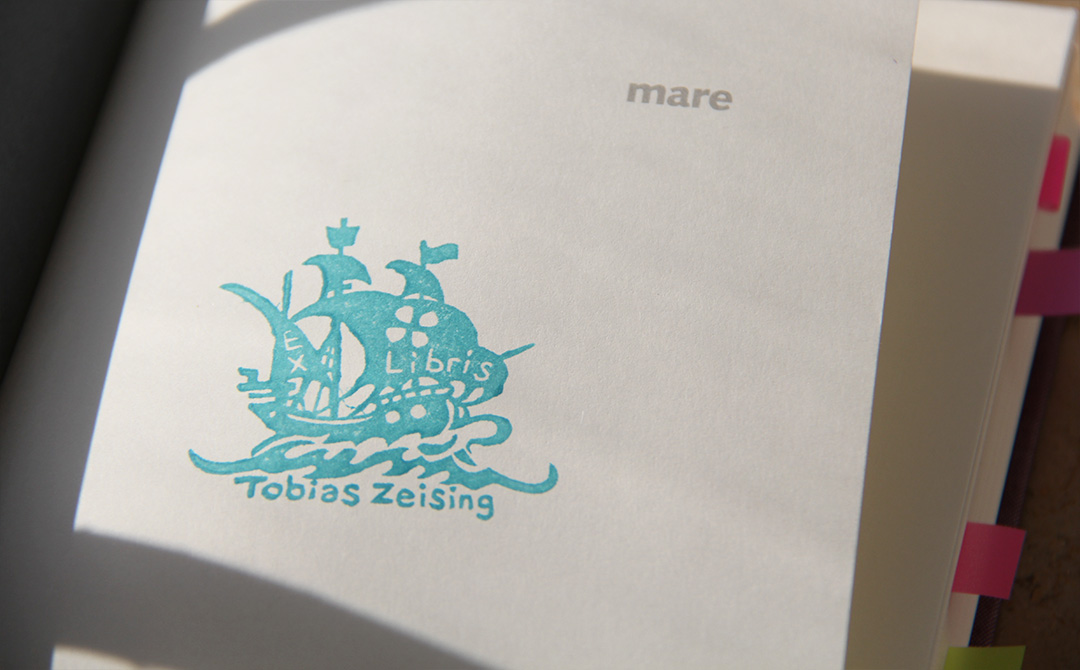
Conclusion: Maupassant is a masterful author who portrays characters with such complexity and realism that I would place him alongside Tolstoy, Flaubert, and Dumas. A Life is a beautifully cohesive story, and it is captivating to follow Jeanne’s life and fate — while immersing oneself in her world, the nature, and the sea surrounding Les Peuples, a magnificent château in Normandy. A book I can wholeheartedly recommend in this edition, and one that deserves an Ex Libris stamp (reserved only for the very best books I will never part with).
Book information: A Life • Guy de Maupassant • Mare Verlag • 384 pages • ISBN 9783866481947
Ich habe das Buch vor ca. 30 Jahren (mehrmals)gelesen und es ist mir immer noch bis ins kleinste Detail gegenwärtig. Ich fand Jeannes Entwicklung auch sehr spannend und gut nachvollziehbar. Auch Deine Freude über das wunderschöne Exemplar aus dem Mare-Verlag kann ich nachempfinden, das ist ein Buch für`s ganze Leben, was garantiert nicht aussortiert wird. Und Dein Exlibris erinnert mich sehr an die meines Vaters, der die noch selber im Linolschnitt hergestellt hat. Ist das ein Stempel?
Liebe Devona,
ich glaube ich hätte das Buch nie gefunden, wenn das der Mare Verlag nicht in der Form neu aufgelegt hätte. Dadurch dass bei allen Büchern aus der Klassiker Reihe vom Mare Verlag die Natur und das Meer so schön dargestellt werden, aber auch von dem Inhalt her ist das Buch für mich ein absolutes Muss gewesen. Aber das spricht ja für das Buch, wenn du dich nach so langer Zeit noch gut an die Geschichte erinnern kannst. Maupassant schreibt aber auch echt besonders gut.
Das ist ein Stempel, auch ein individuell mit Hand erstellter. Darüber hab ich schon gebloggt.
Liebe Grüße
Tobi