
The Rider on the White Horse • Theodor Storm
For those who love books, they tend to follow you wherever you go and whatever you think about. That’s exactly what happened to me a few days ago as I stood on a dike, looking out across the beautiful Wadden Sea and feeling the cool but pleasant North Sea breeze on my face—metaphorically speaking, it was The Rider on the White Horse that was following me. If you’re traveling in that region, you can’t escape Theodor Storm—especially when you’re walking along the very stretch of coast where his novella The Rider on the White Horse is set.
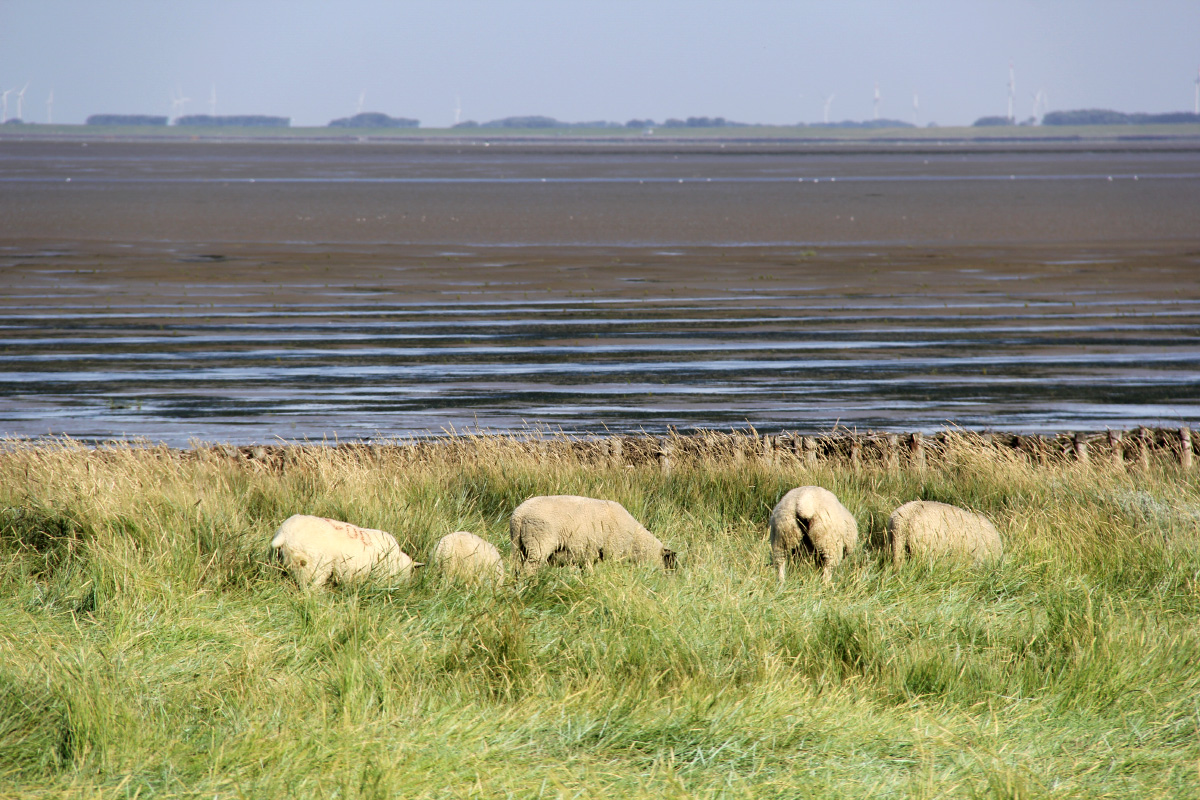
The story tells of Hauke Haien, a dike master and his fate, which is tightly bound to the harsh landscape of the North Sea coast. Again and again, people here have managed to wrest a bit of land from the sea, building dikes over the centuries and draining new pastures and farmland. In local terms, such reclaimed land is called a “Koog.” Even today, agriculture is still widespread there, and along the flat coastline you’ll find numerous farms with vast fields. These Koogs are protected by dikes, and these days the danger of a breach during a storm surge is not nearly as great as it once was.
Theodor Storm gives us a wonderful glimpse into the culture and life of the time, when both farming and people’s thoughts and actions were shaped by nature, the tides, and the sea. We follow Hauke’s life—from farmhand to dike master—and it’s easy to immerse oneself in his world of thought. It reminded me a bit of August Strindberg’s tales of life among the skerries. Authentic and richly atmospheric, Storm portrays his characters realistically, with flaws and rough edges. None of the figures were particularly sympathetic to me, and I didn’t really connect with Hauke. The rough nature of the people and the era comes through too strongly, so one feels more like a quiet observer than a participant.
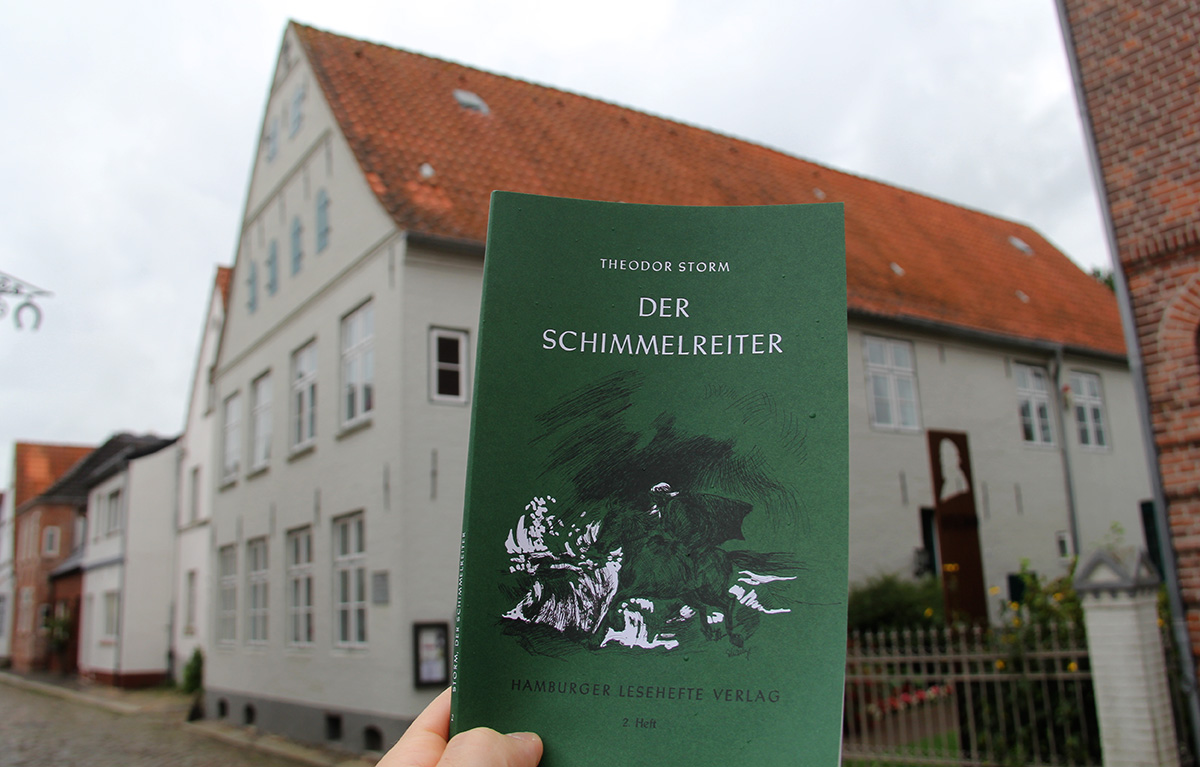
This short novella was inspired by the legends of Storm’s homeland, which he often drew upon. He was born and lived in Husum, just a few kilometers from the area where the events of The Rider on the White Horse take place. I actually bought my copy of the book during a visit to Husum—in a small, cozy antiquarian bookshop directly across from the Theodor Storm House, just a few minutes’ walk from his birthplace. He lived there from 1866 to 1880, and today it’s a museum dedicated to the poet.
I usually appreciate the Fischer Classics editions, and The Rider on the White Horse is available in that series too. Still, I went for a slim volume from the Hamburger Lesehefte Verlag. I liked its old-fashioned look and the worn cover—like a little school booklet from the 1950s. Yet it’s actually a new book, even though I found it in that charming antiquarian shop. It’s a recent print, but it fit perfectly with the setting—and at €1.60, it’s probably the cheapest book I bought this year.
I found the story itself entertaining, though it didn’t blow me away. As mentioned above, Storm portrays the setting beautifully, and of course, if you’re in the region, reading it is even more enjoyable. But the characters and plot aren’t particularly inventive or sophisticated. It’s simply a pleasant, short read with a few lovely descriptions of the Wadden Sea—not something that will stay with me intensely, but that’s fine. I certainly don’t regret reading The Rider on the White Horse.
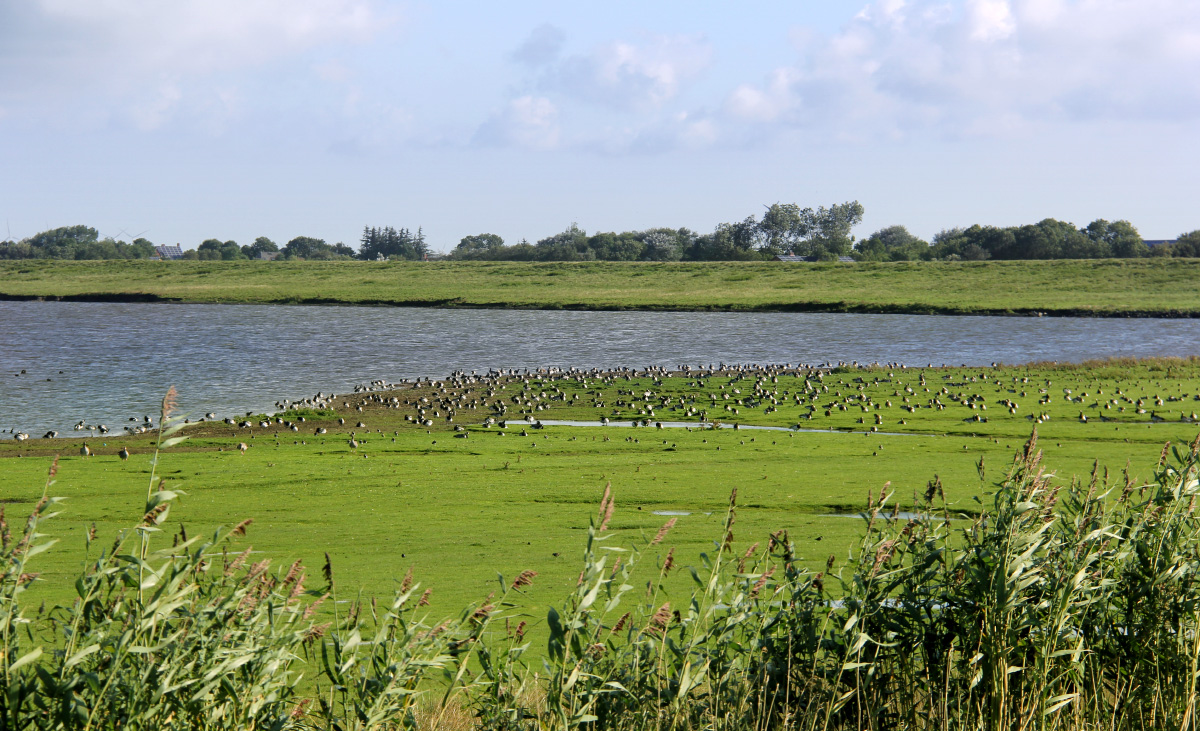
I did, however, find it quite delightful to stand at the Hauke-Haien-Koog, which actually exists. It’s a Koog created between 1958 and 1959 and named in honor of Storm’s famous story. Like several other Koogs, it lies within a nature reserve and serves as a breeding ground for numerous greylag geese. There’s certainly no eerie rider on a white horse roaming there—at least not at midday when I’m out on the dike with my camera.
Conclusion: The Rider on the White Horse is a brief but atmospheric novella that beautifully revives a legend about a mysterious dike master and the striking natural landscape of the Wadden Sea coast. Without much embellishment, it portrays the culture and people of the 18th century, immersing readers in a foreign, harsh, and beautiful world shaped by the sea and the tides. Not a masterpiece, but not dull either—just a legend told the way a grandmother might recount it over a cup of Pharisäer. And that’s exactly what Storm probably intended.
Book information: The Rider on the White Horse • Theodor Storm • Hamburger Lesehefte Verlag • 112 pages • ISBN 9783872910011
Hey, du warst in meiner Heimatstadt! :)
Huhu Tine,
Husum ist echt schön und überhaupt die ganze Ecke. Deinem Beitrag über die Urlaubswoche an der Nordsee entnehme ich aber, dass du gerade woanders in Deutschland unterwegs bist?
Liebe Grüße
Tobi
Genau, Studium, Referendariat und nun die Arbeit haben mich von der Nordsee weggeholt, so dass ich mittlerweile in Ostwestfalen-Lippe wohne. Die Leute hier sind aber immerhin von der Mentalität den Nordfriesen nicht unähnlich. :)
Liebe Grüße zurück :)
Das deckt sich mit meinen Erinnerungen an Storm. Wiewohl ich den Schimmelreiter in der Schule lesen musste und das zu damaligen Zeiten noch die angenehmste Schullektüre war, sind mir von Storm (den ich komplett mit Anfang 20 gelesen und schwerst geliebt habe) ganz andere Novellen vordergründig präsent. Ich hab nicht wirklich mehr eine Ahnung vom “Schimmelreiter” (ich mühe mich schon eine Viertekstunde, aber da ist nix), während ich “Immensee” , “Der Spiegel des Cyprianus”, “Die Regentrude” oder “Viola tricolor” und viele andere noch direkt nacherzählen könnte…Zeit, mal wieder die Storm-Bände heraus zu kramen. Danke für die Anregung.
Liebe Devona,
“Der Schimmelreiter” ist halt so das bekannteste Buch und meistens starte ich bei einem Autor von Klassiker auch immer mit dem populärsten Werk. Storm wäre bei mir erstmal nicht mehr auf der Liste, aber vielleicht werde ich bei leerem SuB mal zu einer anderen Novelle von ihm greifen. Schön kurz sind sie ja ;)
Liebe Grüße
Tobi
“Der Schimmelreiter” war Schullektüre bei mir…vor über 30 Jahren – und damals mochte ich es nicht besonders ;-)
LG Heike
Liebe Heike,
das kann ich durchaus nachvollziehen. Wenn ich mir vorstelle jetzt diese Geschichte zu zerpflücken und jedes Detail durchzulutschen, wie es immer im Deutschunterricht der Fall war, würde es mir auch übel aufstoßen. Natürlich kann man viel aus den Charakteren herausinterpretieren, aber so spannend wie eine Anna Karenina oder Madame Bovary sind sie sicherlich nicht.
Liebe Grüße
Tobi
Irgendwie ergeht es mir so ein bisschen wie den anderen hier. Ich habe das Buch vor X-Jahren gelesen, aber eigentlich weiß ich nichts mehr über den Inhalt. Aber ich weiß, das ich keine Lust habe, es nochmal zu lesen. ;)
Liebe Hermia,
das kann ich schon nachvollziehen. Also nochmal würde ich das Buch wohl auch nicht lesen. Und wenn man sowas als Schullektüre aufgezwungen bekommt, so wie das bei vielen der Fall ist, dann sowieso nicht ;)
Liebe Grüße
Tobi