
The Cruise of the Snark • Jack London
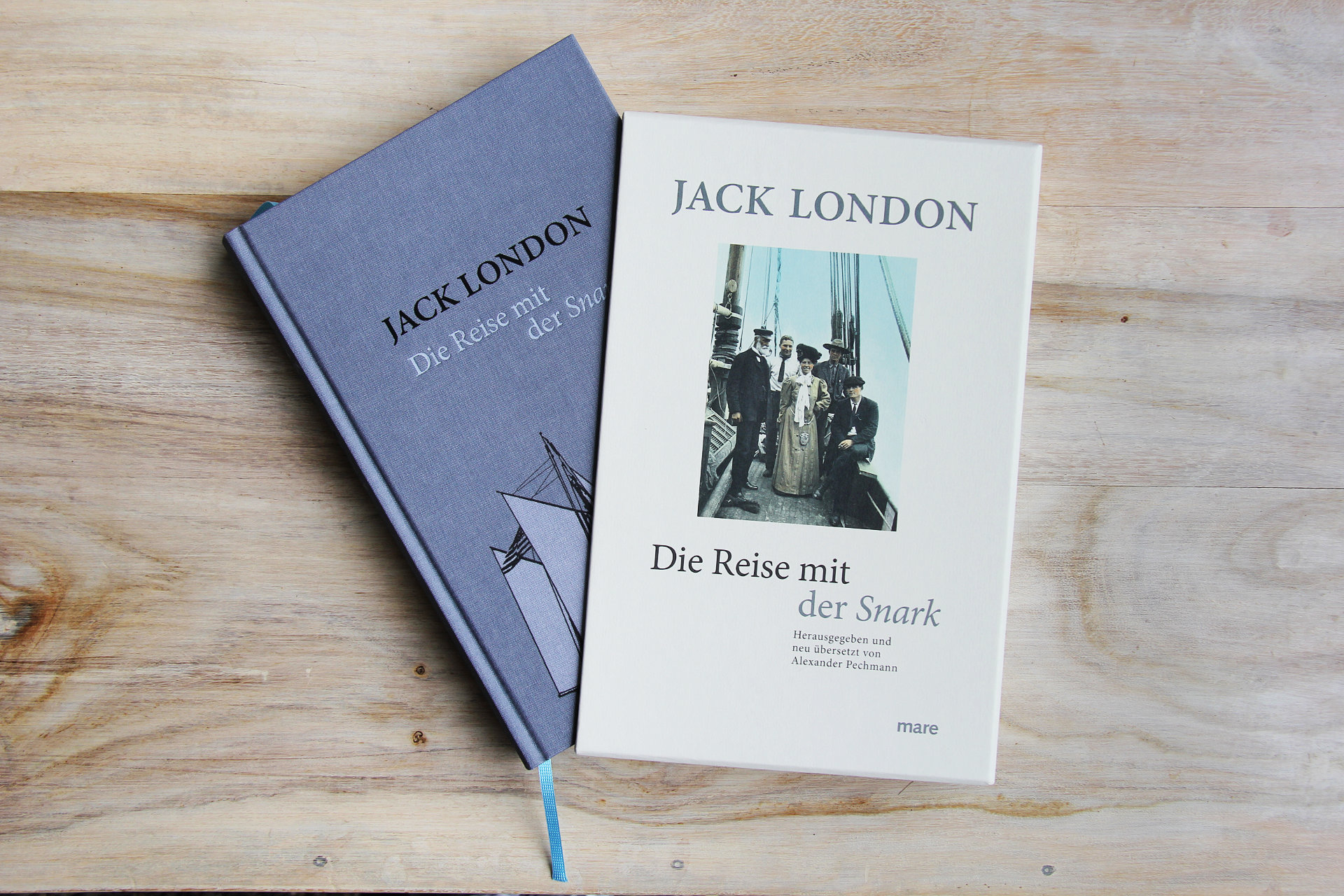
I love the Classics series from mare Verlag and by now I have all of the books on my shelf. Naturally, I absolutely had to have the newest volume as well: The Cruise of the Snark by Jack London. In this series, lesser-known texts by great authors of world literature are newly translated and reissued as beautifully designed clothbound books with high-quality sewn bindings and fine paper. The contents range from travelogues and personal diaries to short stories and novels, but the sea is always present—sometimes casting a wide shadow, sometimes a lighter one—over these very worthwhile texts. My favorites in the series are the two books by Maupassant, but Dangerous Work: Diary of an Arctic Adventure by Arthur Conan Doyle has also stayed with me.
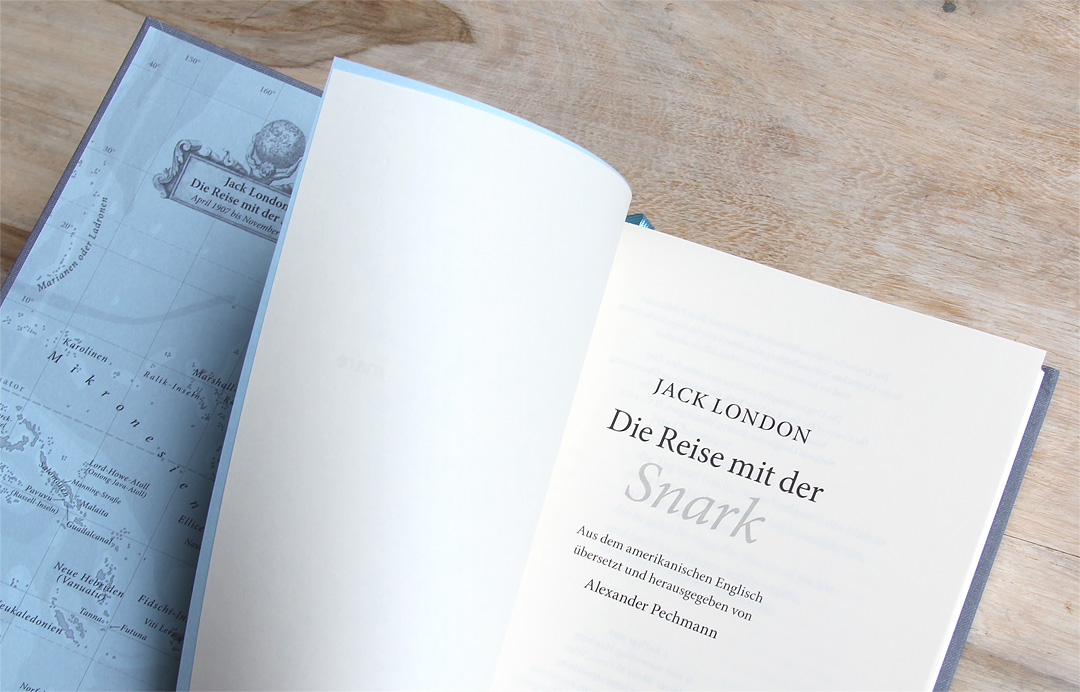
The Cruise of the Snark recounts a nearly two-year voyage in the South Seas that Jack London undertook together with his second wife, Charmian. The book begins with Jack and his wife hatching the plan to sail around the world in a small boat. It’s a daring undertaking that shows just how adventurous Jack London—and Charmian—were. He then has a boat built entirely to his specifications: the Snark. He describes his wishes and, quite frankly, how the whole affair initially went badly off the rails. Reading it feels a bit like the status report of Berlin’s ill-fated BER airport—or like my first smartphone. I’m exaggerating, of course, because after numerous delays the Snark, not fully finished and with plenty of defects, finally put to sea for Hawaii in April 1907.
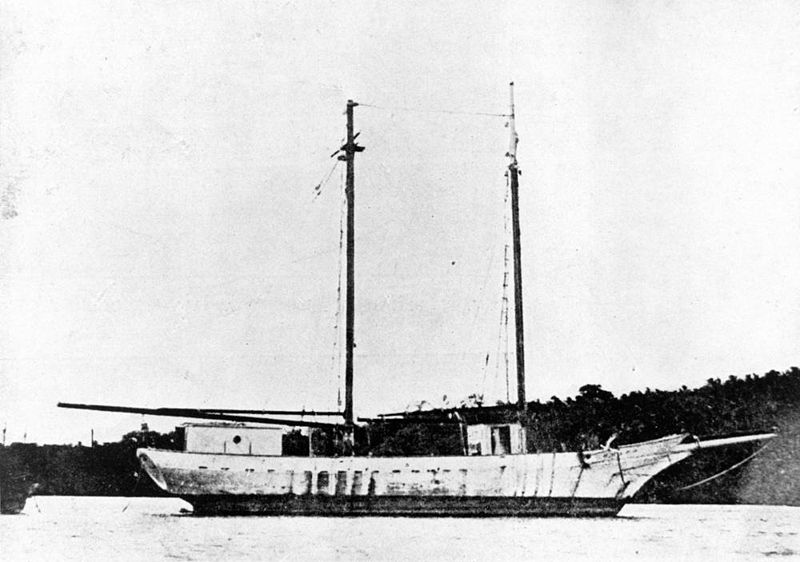
Originally he had calculated costs at seven thousand dollars, but ended up paying thirty thousand for a thoroughly defective vessel. By the time he set sail he was already well known and had achieved great fame with novels like The Call of the Wild. To finance the voyage he wrote aboard the Snark and, besides his travel pieces, was extremely productive during this period.
London then relates his journey in a very relaxed, highly readable style. It’s easy to sink into these accounts, and at times it feels as if a friend were casually telling you over dinner about his last vacation. Only that London, of course, was very much an adventurer, repeatedly risking his health. With plenty of self-irony, many personal impressions, and an easy touch, he writes about his boat, their time at sea, and the places they visited. The chapters vary widely, and the through-line is only moderately tight. At the beginning the route is fairly easy to follow; toward the end the book feels more episodic. That’s surely because the individual pieces first appeared in various newspapers and only in 1911 were collected in book form in New York under the title The Cruise of the Snark.
He offers fascinating insights into how he learned to navigate a ship and shares some of the outlandish letters from applicants who wanted to join the crew on the mere 14-meter-long boat. He then describes places such as the leper colony on Molokai in Hawaii, their excursion to the volcano Haleakala on the island of Maui, and their shore leaves on Tahiti and encounters with the local inhabitants. At times the scenes really do feel like pages torn from a vacation brochure—exactly what one imagines the South Seas to be.
“Half a mile out, where the reef lies, the white-crested breakers suddenly heave skyward from the tranquil turquoise and roll toward the shore. One after another they come thundering in, a mile long, with foaming crests—the white battalions of the ocean’s endless army. And you sit and listen to the unceasing rumble and watch the never-ending triumphal procession and feel tiny and fragile before this immense force that expresses itself in wildness, spray, and roar.” (p. 78)
There are also chapters on how London learned to surf; on Bêche-de-Mer, a simplified trade language that developed among different indigenous groups; and on the many illnesses that afflicted London and his crew. Some of it reads very adventurously, some of it is merely interesting, but I never found the book truly gripping in the way one might expect from a travel narrative.
The plan had originally been to circumnavigate the globe, but because of numerous illnesses that never came to pass; in 1908, after just under two years, London had to abandon the circumnavigation. Money also ran out, and after a period in Sydney to recover properly, he and his wife returned by steamer to San Francisco. They always cherished the adventure in the sometimes fateful years that followed and never regretted it.
The afterword here is very helpful and well done: translator and editor Alexander Pechmann provides an overview of the voyage, its various stops, and details that London doesn’t mention. For example, on the first passage in the half-broken Snark he regularly hit the ceiling and apparently indulged in alcohol more than once. A short essay titled “The Joy of Sport Sailing” describes London’s passion for sailing, recounting brief episodes from his time as a sailor. At just fifteen he bought a boat and puttered around the San Francisco Bay, and later he signed on before the mast. A second, autobiographical short story titled “The Dead Never Return” recounts an incident from that period. Both pieces, together barely fifteen pages, round out the book nicely and fit very well.

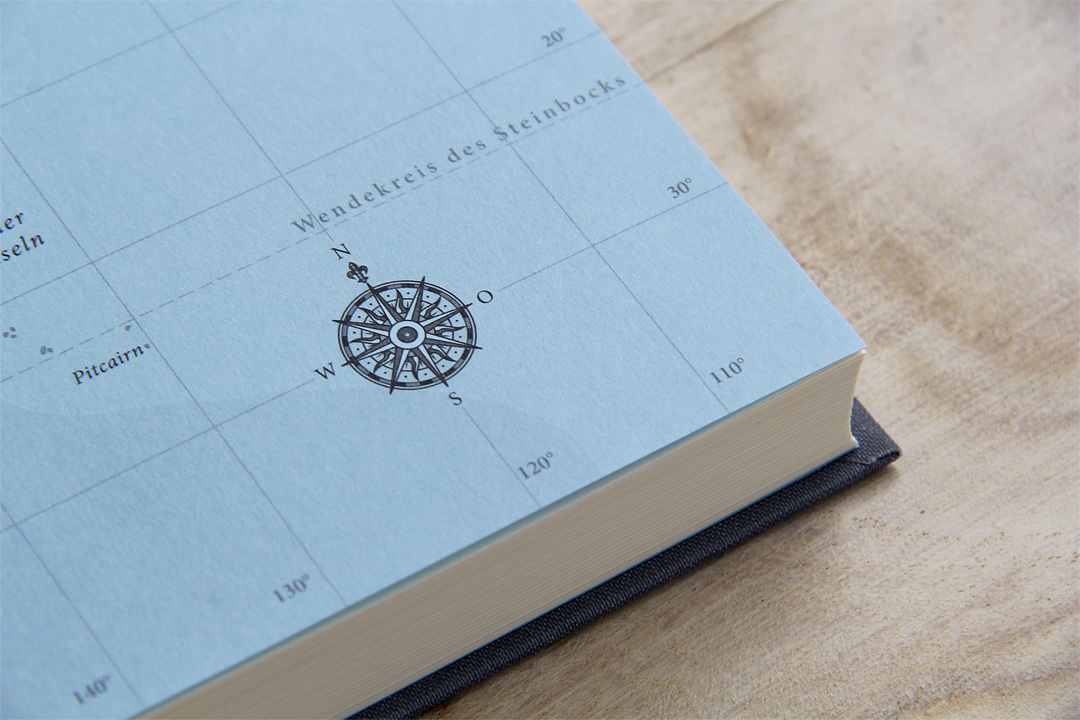
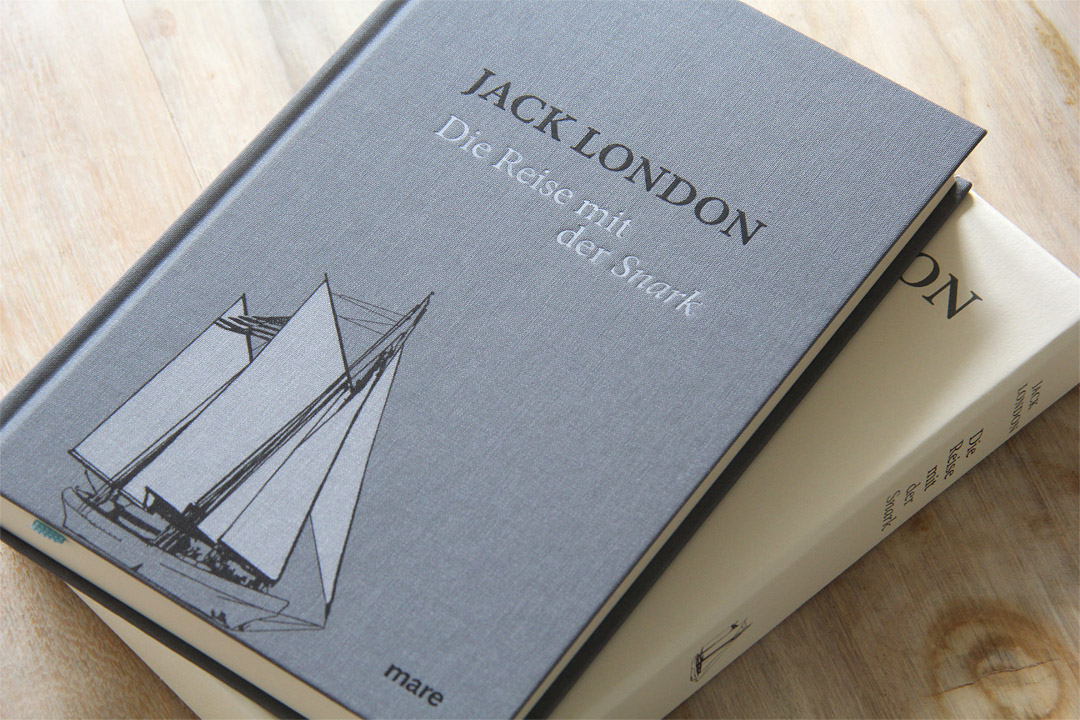
As for the production, the photos speak for themselves. As usual, you get a superbly made book: a handsome slipcase, smooth paper, proper cloth binding, and fine sewn signatures. The endpapers feature a beautifully designed map of the region London traveled. No one does this better than mare Verlag, and I’m desperately waiting for a second series showcasing the great blockbusters of world literature. Getting War and Peace or The Count of Monte Cristo in such a format would be a feast.
Conclusion: Once again, mare Verlag has managed to republish a forgotten travelogue in a very dashing form. The book fits the Classics series perfectly: it’s a readable, adventurous travel narrative that didn’t thrill me, but did entertain me very well. London vividly describes the various stages, individual episodes, and observations, offering a very good, often ironic picture of how he, his wife, and a small crew sailed through the South Seas on a half-finished and initially very shoddily built boat. London’s style is relaxed, pleasant to read, and at times very evocative—though in a few places he didn’t strike me as particularly sympathetic. The two short pieces in the appendix, the glossary of nautical terms, and Alexander Pechmann’s afterword round off the account and give an excellent overview of London’s voyage on the Snark. If you love the sea, find adventures on the high seas and in faraway lands fascinating, or if you enjoyed other books in this series—such as Dangerous Work: Diary of an Arctic Adventure by Arthur Conan Doyle—then I can only recommend this book. With it, mare Verlag continues my favorite series in the same high quality as ever.
Book information: The Cruise of the Snark • Jack London • mare Verlag • 352 pages • ISBN 9783866482449
Wie immer eine sehr schöne Rezension mit tollen Bildern. Und wie immer von einem Buch dass ich mir kaum leisten kann. ;)
Auch wenn es schön wäre: ich kann mir nicht vorstellen dass Mare die von dir genannte Bücher neu auflegen würde. Der Verlag hat sich ja dem Thema Meer verschrieben und die von dir erwähnten Klassiker haben ja damit nichts zu tun, dafür wäre dann eher Manesse “zuständig”. Wobei im direkten Vergleich Mare bei mir die Nase vorn hat, schon allein wegen der großformatigeren Bücher. Sobald mein Einkommen wieder besser ist werde ich mir die Mare Ausgaben auch gönnen, soviel ist sicher.
Hast du dir diese Reihe schon einmal angeschaut? http://www.kroener-verlag.de/erlesenes-lesen/
Ihren Preis haben die Bücher, das ist wahr und der mare Verlag richtet sich da eher an die Besserverdiener. Wobei ich diese Ausrichtung durchaus verstehen kann. Manche der Klassiker gibt es gebraucht recht günstig, andere wiederum gar nicht. Ein paar Schnäppchen hab ich da schon gemacht.
Auf der einen Seite finde ich die Fokussierung auf das Thema Meer eine echt gute Idee. Allerdings macht der Verlag einfach richtig schöne Bücher und da wärs gar nicht schlecht, wenn die einen Ableger oder so machen würden. Manesse ist auch echt nicht schlecht, aber an die Qualität der Mare Bücher kommen die nicht ganz ran. Wobei man bei Manesse auch echt nicht meckern kann. Von denen habe ich auch noch eine ganze Menge auf meiner Wunschliste und schon einiges im Regal stehen.
Die Reihe vom Kroener Verlag hab ich mir mal angesehen, aber da lockt kein Titel so richtig und es lässt sich nicht erahnen, wie die Bücher aussehen. Hast du da genauere Einblicke?
Liebe Grüße
Tobi
Ja, ich habe die zwei Heine Bände. Man merkt dass hier Leute mit Herzblut am Werk sind. Schöner Leineneinband, Lesebändchen, Abbildungen und Hintergrundinformationen zu Autor und Werk. An die Mare Ausgaben kommen sie nicht heran aber dafür kosten sie ja auch nur halb so viel. Der Verlag ist ja auch relativ klein. Und ja, die Auswahl ist auch eher konservativ geraten und beschränkt sich auf deutschsprachige Autoren.
Hallo Tobi,
sehr schön rezensiert. Ich könnte jeden Tag Stunden damit verbringen über Jack London und seine Abenteuer zu lesen, liebe seine Bücher total! Und deine Fotos sind auch sehr schön, sag mal welche Kamera hast du? Meine ist schon etwas älter und eher für Landschaften gedacht als für Portaits, also sind die Fotos manchmal unscharf :( Aber für Landschaftsphotographie ist sie dafür ausgezeichnet und war auf meinen Reisen stets ein treuer und zuverlässiger Begleiter.
Schade, dass dir Jack London s Buch nicht so gefallen hat, hast du denn auch andere Bücher von ihm gelesen? LG
Liebe Tinka,
vielen Dank für dein Lob! Ich habe die Canon EOS 60D mit dem Canon EF-S 18-200mm. Ich hab zwar auch ein Macro Objektiv, aber meistens ist mir das Getausche zu umständlich und dann benutze ich doch nur mein Universal Objektiv. Das ist aber echt gut und leistet auch für Landschaftsaufnahmen gute Dienste. Allerdings ist sie nicht gerade handlich. Aber eine kleinere Kamera geht einfach nicht, ich brauch da einfach eine gescheite DSLR, sonst kommt da kein Vergnügen auf ;) Was für eine Kamera benutzt du denn?
Schlecht fand ich sein Buch gewiss nicht. Drei Sterne sind bei mir Bücher, die ich gerne gelesen habe, die mich aber nicht völlig von den Socken gerissen haben. Also das Buch ist durchaus eine Empfehlung.
Liebe Grüße
Tobi
Ja, das kenn ich. Ich hab auch alle möglichen Objektive, aber meistens bin ich auch einfach zu faul oder es ist zu stressig das Objektiv zu wechseln und so fotografiere auch ich das Meiste mit Universal-Objektiv. Ich habe eine Canon Eos 500 d. Großteils bin ich auch sehr zufrieden mit dieser Kamera, aber wie gesagt Portraits sind nicht so ihre Stärke :) Okey. Ich hatte irgendwie heraus gelesen, dass es dir nicht besonders gefallen hat, aber gut. Oft ist es auch gar nicht so einfach, über ein Buch zu unterteilen, weil es vieles hat, das einem gefällt und vieles vermissen lässt. Und ja klar, dann gibt es diese Bücher, die einen von den Socken hauen, wie du so schön sagst :)
Einen schönen Sonntag!
Liebe Tinka,
die 500d hatte ich vorher, bei der ist aber der Spiegel dann immer hängen geblieben, wenn es ein bisschen höhere Luftfeuchtigkeit hatte (z.B. am Wasserfall). Also hab ich dann die nächst höhere Kategorie gewählt, weil die Kameras etwas wetterfester sind (d.h. mehr Isolierband im Gehäuse kleben haben ;)). Wobei das mit den Portraits eher an dem Objektiv liegt. Ich hab ein 50mm Macro von Sigma, das mit Cropfaktor 80mm sind und für Portraits ziemlich gute Arbeit leistet.
Liebe Grüße und auch Dir ein schönes Restwochenende
Tobi
Das Buch hatte ich schon länger im Auge und deine Rezension hier hat mich darin bestätigt, es mir auch zu holen, auch wenns nicht grade günstig war. Aber ich hatte unfassbares Glück und hab ein Mängelexemplar für 11€ gekriegt, bei dem der einzige Mangel ein winziger Fleck auf dem Schuber ist :)
Nur zum Lesen bin ich noch nicht gekommen, ich freu mich aber auf jeden Fall drauf.
Lieber Flo,
11€ ist echt ein guter Preis. Ein paar Ausgaben aus der Mare Reihe habe ich auch ziemlich günstig bekommen. Das ist echt manchmal Glück. Wobei sich bei den Klassikern auch der Neupreis lohnt. Aber man muss natürlich ein literarischer Genieser sein, der an wertiger Haptik seine Freude hat.
Ich wünsch dir viel Spaß mit dem Buch!!!
Liebe Grüße
Tobi