
Interview with Katharina Hesse
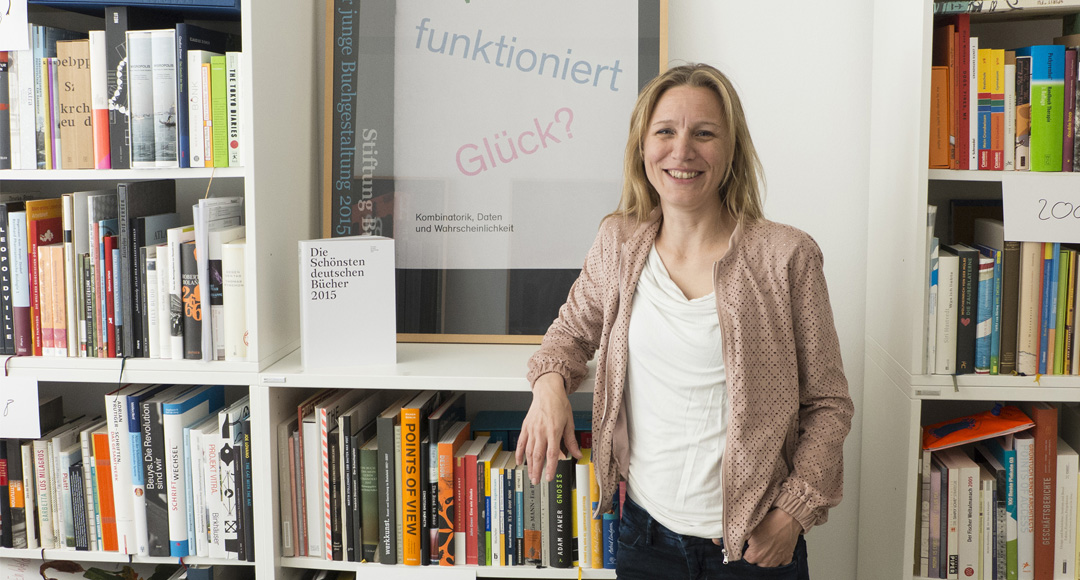
A beautifully crafted and well-designed book is something that makes my heart beat faster. That’s why I’m always on the lookout for beautiful and successful editions, and I’ve often written about them here on the blog. A highly recommended address for this is the Stiftung Buchkunst (Book Art Foundation), which annually awards the 25 most beautiful books – and has been doing so for over 50 years. Today, on May 30th, this year’s winners were announced. For me, that’s a great reason to take a look behind the scenes and conduct an interview with the managing director, Katharina Hesse.
Since 1966, the Stiftung Buchkunst has been awarding the most beautiful books of the year. The focus is on the regular trade book, not on any special or limited editions. The prize, endowed with 10,000 euros, is meant to encourage keeping an eye on cultivated book art. A wonderful goal, and something that, as a lover of beautiful books, I find often neglected. The foundation’s sponsors are the German Publishers and Booksellers Association, the German National Library, the City of Frankfurt am Main, and the City of Leipzig.
I’m very happy to have had the opportunity to speak with Katharina Hesse, the managing director of the Stiftung Buchkunst. It’s a great chance to gain insight into the foundation’s work, the world of book art, and to take an interesting look behind the scenes.
How did you come to book art, or how did beautiful books find their way to you? What role do the inner and outer values of books play for you?
I’ve worked with books my entire professional life. I started out as a bookseller, and even then, I was fascinated by the “beautiful” ones among them. In my final exam, during a simulated “sales conversation,” I spoke almost exclusively about production and design features. When the foundation was looking for a new managing director, it was absolutely clear to me: I wanted that job. Of course, content is important to me as a reader — I don’t want to read a book that doesn’t appeal to me. Even if it’s beautiful (though I’d probably still put it on my shelf). A good book — a novel I’m really looking forward to — that has poor typesetting or opens badly frustrates me; design flaws can really spoil the reading experience. No text, image, or content deserves that.
The Stiftung Buchkunst annually honors the most beautiful German books. What other roles does the foundation play?
The goal of the foundation is to preserve and promote the quality of the everyday book through various activities. Its main purpose is to support all efforts aimed at proper and artistic book design — as stated in the foundation’s charter. This is primarily done through three competitions: “The Most Beautiful German Books,” “Award for Young Book Design,” and the international competition “Best Book Design from All Over the World.” The competitions serve as a means to an end. Through numerous exhibitions, events, trade fairs, and lectures, the criteria of good and proper book design are demonstrated, explained, and hopefully brought closer to both the industry and the public.
Which books are considered for nomination? Are these exclusively submitted by publishers, or do staff members of the foundation also look for outstanding books? What criteria must a book meet to be eligible?
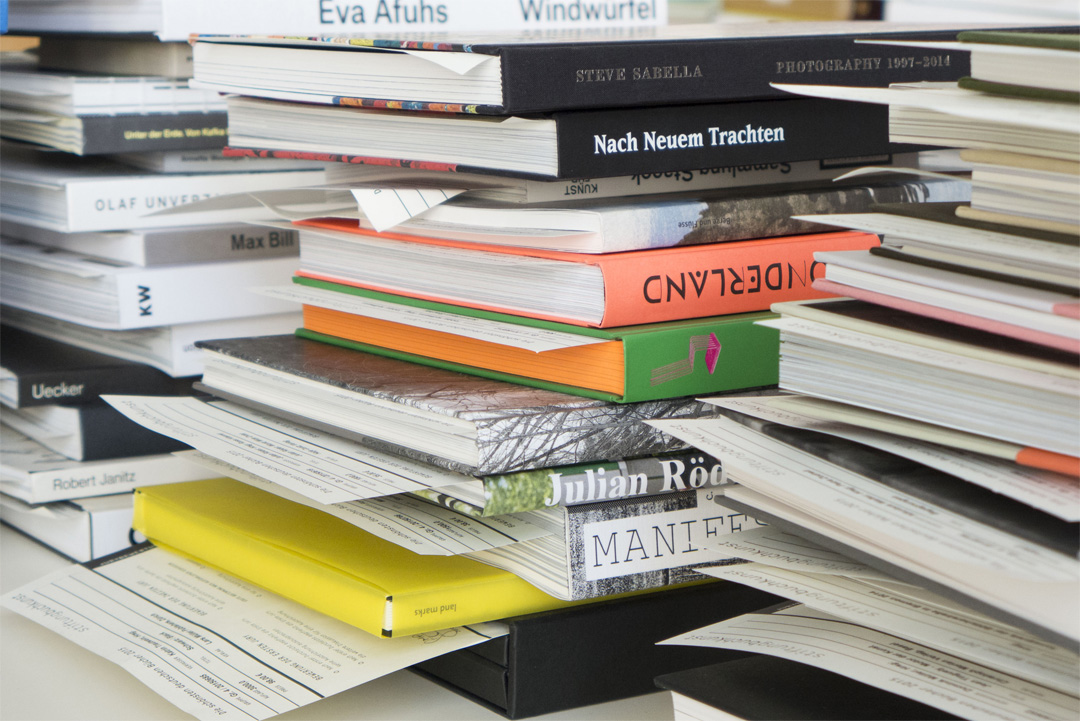
Primarily, books are submitted by publishers, designers, and printers. Any book published within the competition year, with a minimum print run of 500 copies and an ISBN — thus available to the public — can participate. Books from German-speaking countries outside Germany must have been produced in Germany. The foundation’s staff remain neutral throughout the jury process. We have no voting rights; the decision on who wins is made solely by the appointed jury — a group that changes annually and consists of book designers, production specialists, technicians, and booksellers. However, if a book catches our attention, we do contact the publisher to encourage participation. Booksellers are welcome to do the same.
(Note from Tobi: I’ve also contacted several publishers and recommended they participate in the competition. Some editions are simply wonderful and truly deserve recognition.)
According to what criteria and standards are the books evaluated? Is there a fixed catalog of evaluation criteria, or is it primarily up to the jury’s discretion?
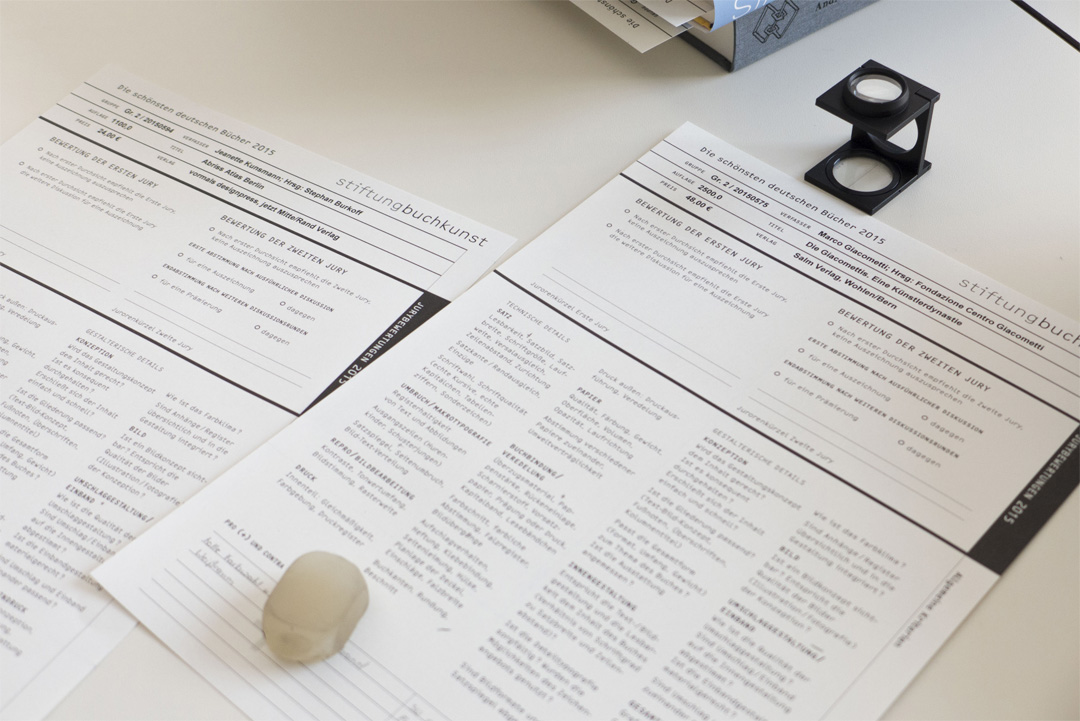
We have a very detailed evaluation form listing numerous criteria, divided into technical and design aspects. Each juror fills out a form, which already leads to some great written discussions before the verbal ones even begin. We aim to make the competition as objective and transparent as possible. For that reason, the forms are not only sent to the participants but also placed inside the publicly exhibited books at the Frankfurt Book Fair. This allows visitors to get an idea of what the jurors liked or didn’t like about a book, and why it was awarded — or why it ended up only on the longlist or shortlist.
The website mentions three juries. How are these juries composed, and how are their members selected?
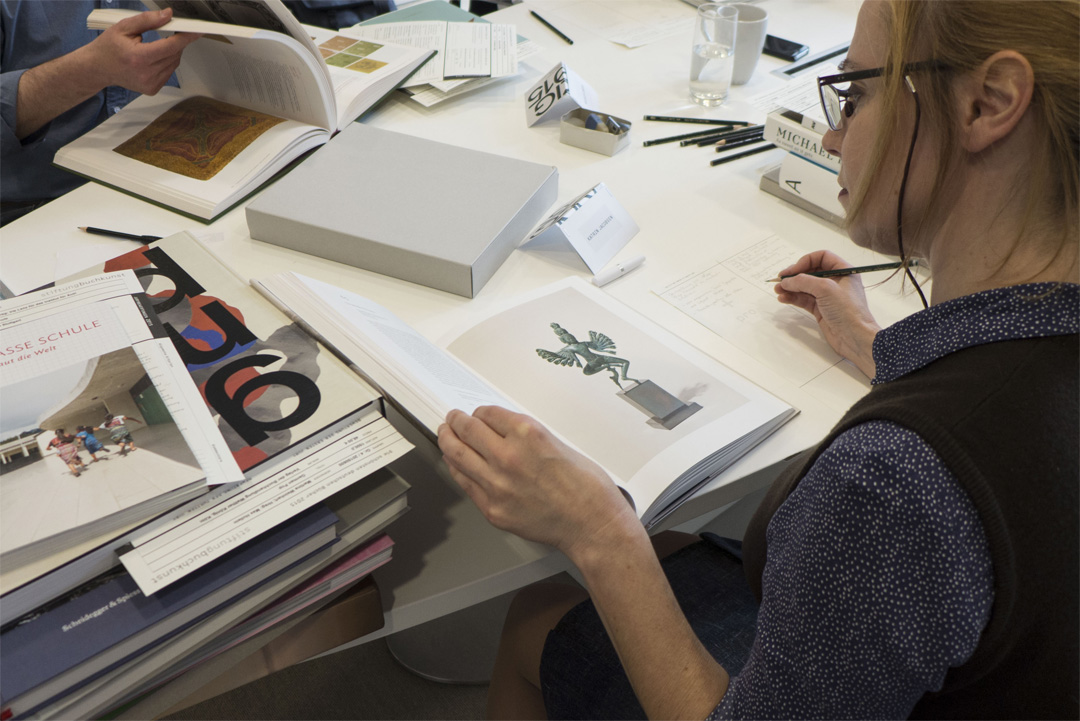
Approximately 800 books are submitted for the competition. The first jury, consisting of seven professionals (three designers, three production specialists from publishing houses, and one technician — printer or bookbinder), reviews all the books in groups over three days and selects about one-third — the longlist. Then, seven more professionals (three designers, three production specialists, and one bookseller) meet for four days, review everything again, and select five award-winning titles from each of the five categories. The third jury selects the “Prize of the Stiftung Buchkunst.” This panel consists of five people who work with books professionally, though not necessarily as producers. Often, a journalist is part of this jury. We choose the jurors based on several factors — of course, their professional background, but we also make sure that each jury is as diverse as possible. That means including representatives from large and small publishers, designers from various genres, and both mainstream and independent publishers.
The prize for the most beautiful book is endowed with 10,000 euros. Beyond that, what incentive is there to submit a book to the foundation?
Fame and honor. Joking aside — every participant receives valuable feedback from the jury sheets. The 25 award-winning books, in turn, are showcased at many venues — around 70 exhibitions in Germany and numerous international ones. These books can be discovered, admired for their beauty, and perhaps even bought and read.
Currently, there is a trend to reissue classics as new translations and stylish hardcover editions. How do you assess the market for beautiful books? Are more beautiful books being submitted, or is the number stable or even declining? Do you see a trend here?
My impression is that books have indeed become increasingly beautiful over the past three years — regardless of genre or publisher. You’re right: especially newly issued classics are being “beautified.” But even regular books are receiving more thoughtful design and production. Among all submissions this year, only a few failed to meet the standards, and many were of very high quality. Perhaps not “beautiful” enough to win, but definitely well and properly designed. Often, it’s small details that determine whether a book is deemed outstanding or not.
How do you assess the impact of eBooks on book art? Is the printed book dying out? Or does this digitalization present an opportunity for beautiful books, as printed editions might be chosen more consciously?
I believe a printed book stays in one’s memory more vividly. Every time I hold it, I register and store its appearance, weight, smell, the texture of its cover. And if that book makes it onto my bookshelf, I’ll probably remember it for years after reading — maybe not the exact content, but when I read it or what it made me feel. It’s different with digital books. When turning on the device, you always land right where you left off. The printed book certainly won’t die out. eBooks are still quite basic in terms of design. For plain text books, that’s usually sufficient. But when content gets more complex — with images, graphics, or special characters — it becomes trickier. Tablets handle that well, but standard e-readers don’t. The printed book is far stronger there, and likely will remain so for quite some time. That said, I feel that publishers are doing a lot to make even paperbacks — probably the segment most threatened by eBooks — more appealing, especially through higher-quality design and production.
Where can one find beautiful books? Are there (offline and online) insider tips for bibliophiles who love fine editions?
Actually, everywhere. Of course, in bookstores and online on special websites and blogs (like yours). And, of course, at our exhibitions.
As the managing director of the Stiftung Buchkunst, you’re right at the source of beautiful books. Which treasures have found their way into your own shelves? Which books should lovers of book art definitely bring home?
It’s like Christmas every year from January to March. Hundreds of beautiful books arrive at the foundation. I always try not to have personal favorites — it makes neutrality during the sessions much easier. Once they’re selected, though, I can appreciate almost all of them and would love to own them, too. My suggestion would be: buy the catalog of the 25 Most Beautiful Books — designed by a different designer each year, and always something special. Inside, you’ll find 25 wonderful inspirations for your bookshelf.
Thank you very much for the interview, and I wish the Stiftung Buchkunst and you, as managing director, continued success. You’ve already won me over as a loyal visitor — each year, I’ll browse through the most beautiful books. I’ve already discovered some truly beautiful editions that also impressed me with their content, and I’ll continue to feature such editions on lesestunden.de in the future.
Giveaway
To go along with this interview, there’s a small giveaway for all my readers. You can win last year’s catalog, “The Most Beautiful German Books.” Just leave a comment telling me which are the most beautiful books on your shelf. The giveaway ends on June 5th, so you’ve got this week to browse your bookshelf.
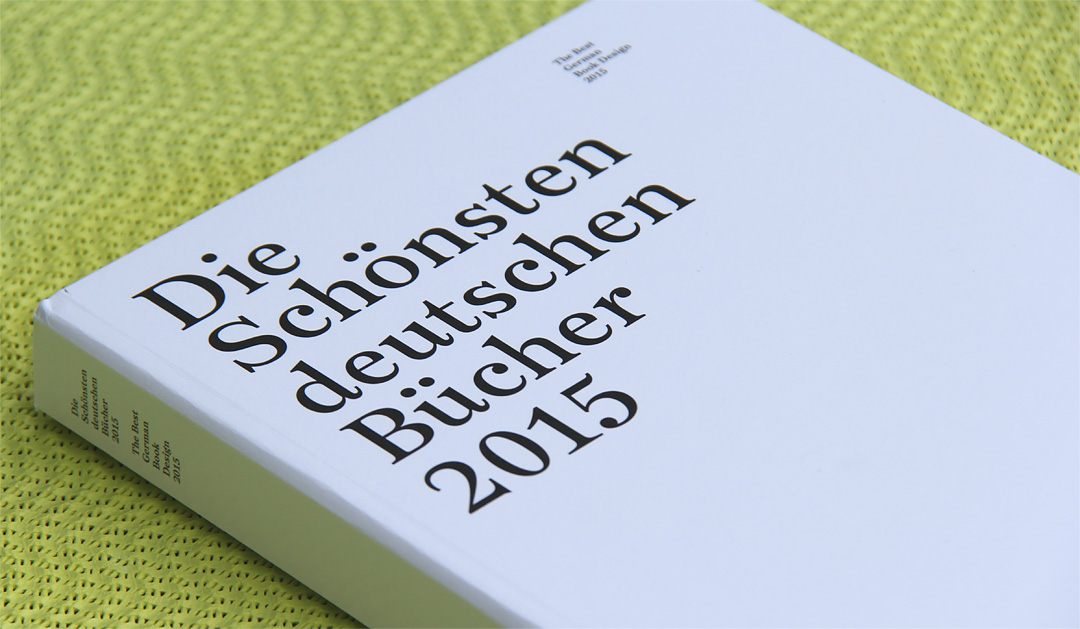
Now quickly head over to the Stiftung Buchkunst website to see this year’s award-winning books: www.stiftung-buchkunst.de
Copyright for the article image and jury photos: Nina Faulhaber
Hallo Tobi,
danke für dieses tolle Interview, was ja perfekt zu Deinem Blog passt. Sehr interessant, mal einen kleinen Blick hinter die Kulissen und die Auswahlkriterien zu werfen. Bei dem Gewinnspiel nehme ich natürlich gerne teil. Meine schönsten Bücher:
Edgar Allan Poe: Unheimliche Geschichten (illustriert von Benjamin Lacombe), Verlag: Jacoby & Stuart
Lewis Carroll: Alice im Wunderland / Alice hinter den Spiegeln (illustriert von Floor Rieder) Verlag: Gerstenberg
Jules Verne: 20.000 Meilen unter dem Meer , gebundene Ausgabe der Büchergilde Gutenberg, Illustrationen der Erstausgabe
J.J. Abrams / Doug Dorst: S. – Das Schiff des Theseus, Verlag Kiepenheuer & Witsch
Lew Tolstoi: Krieg und Frieden, Hanser Klassiker (stellvertretend für die ganze Reihe)
Reif Larsen: Die Karte meiner Träume, Fischer Verlag
Liebe Grüße
Thomas
Lieber Thomas,
eine sehr schöne Liste an Bücher hast du da. Die Ausgabe von Alice im Wunderland habe ich auch und auch hier schon rezensiert. Die ist schon sehr gelungen, das ist Buchkunst pur. Aber die wurde nun ja auch ausgezeichnet. Die Ausgabe von Jules Verne hast du glaub ich schon einmal erwähnt. Das ist die aus den 70er oder? Die würde mir schon auch in den Fingern jucken. Allerdings habe ich das Buch schon vom Fischer Verlag im Regal stehen.
Auf jeden Fall freut es mich, dass du auch etwas für schöne Bücher übrig hast und hier vorbei schaust.
Herzliche Grüße
Tobi
Im Regal hinter mir steht »Die Bienen« (Laline Paul) mit Ausstanzung und Prägung, Goldlack und Schutzumschlag – alles was das Herz begehrt! Und bisher – noch – ungelesen.
Liebe Kate,
“Die Bienen” wurde ja auch ausgezeichnet und machen einen sehr interessanten Eindruck. Aber so richtig zieht der Inhalt bei mir noch nicht. Aber das ist so ein potenzielles Buch, an dem ich im Buchladen nicht vorbei kommen würde.
Liebe Grüße
Tobi
Was für ein schönes Interview! Ich kenne die Stiftung erst seit Kurzem und bin ganz begeistert von ihrer Arbeit!
Meine schönsten Bücher im Buchregal:
– Oscar Wilde – Die Erzählungen und Märchen mit Zeichnungen von Heinrich Vogeler aus dem Jahr 2012
– Cervantes – Don Quichotte als Hardcover mit illustrierter Front und illustriertem Rücken sowie Goldbuchstaben
– Sophie Hannah – Das fremde Haus. Innen nichts Besonderes, aber äußerlich spannend mit transparentem bedrucktem Umschlag
– Thomas Mann – Die Buddenbrooks in gebundener Ausgabe in Altdeutsch aus dem Jahre 1930
Liebe Mandy,
die vier Ausgaben kenn ich alle nicht und danach werde ich wohl mal suchen. Die Buddenbrooks habe ich auch erst gesucht und dann keine schöne Ausgabe gefunden. Auf die von 1930 bin ich nicht gestoßen, aber das ist wahrscheinlich auch ein echter Exot und nicht so leicht zu bekommen.
Liebe Grüße
Tobi
Hallo Tobi
Ich besitze eine von meiner Frau wunderschöne gestaltete Reclam Ausgabe von Alice im Wunderland.
Liebe Rudi,
Alice im Wunderland habe ich in der schönen Ausgabe, illustriert von Floor Rieder (und auf lesestunden auch rezensiert). Die ist schon sehr genial und sticht so einige andere Ausgaben aus. Aber ich hab schon öfter sehr schöne Ausgaben von Alice im Wunderland gesehen. Irgendwie motiviert die Story sie in eine schöne Form zu packen.
Liebe Grüße
Tobi