
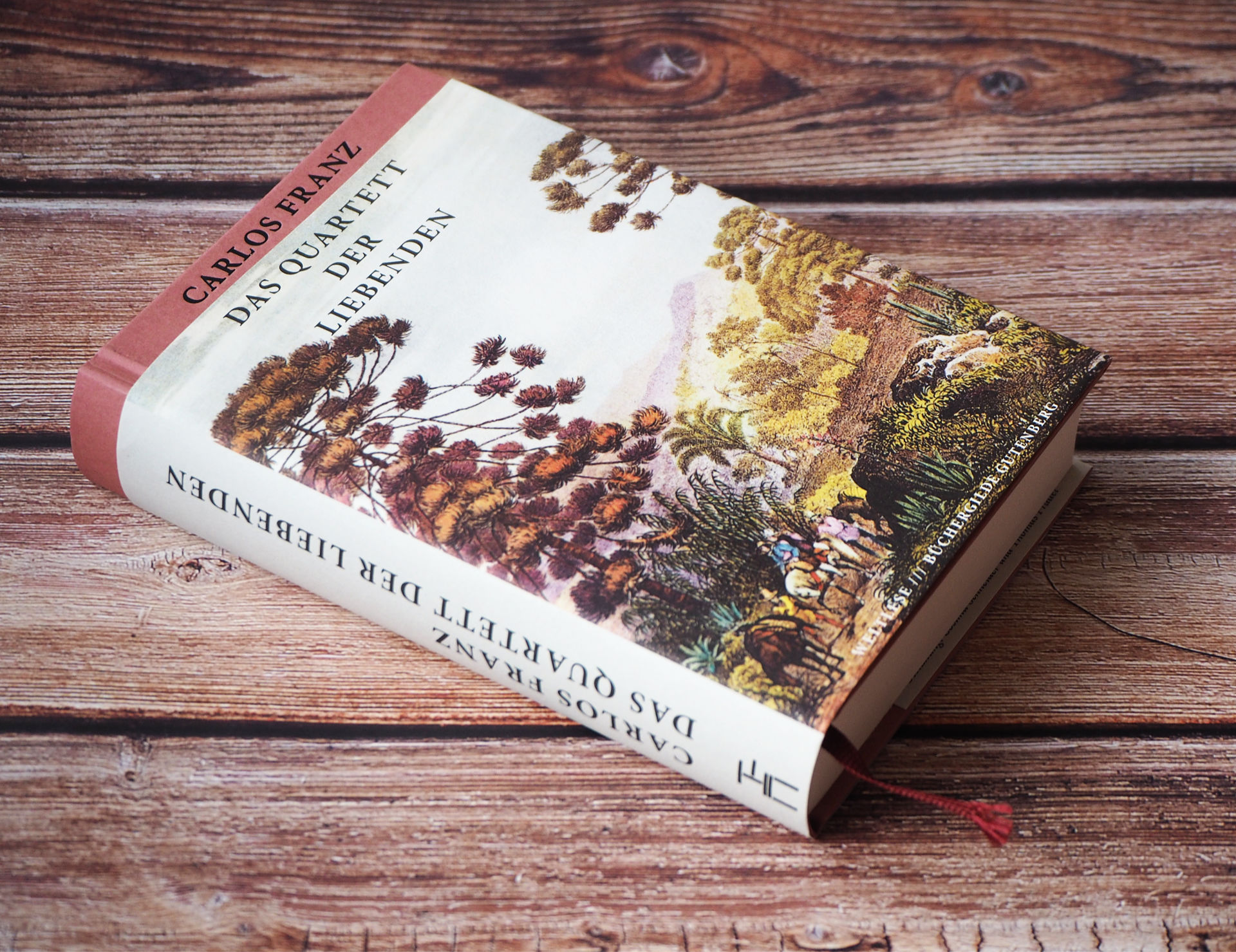
Das Quartett der Liebenden • Carlos Franz
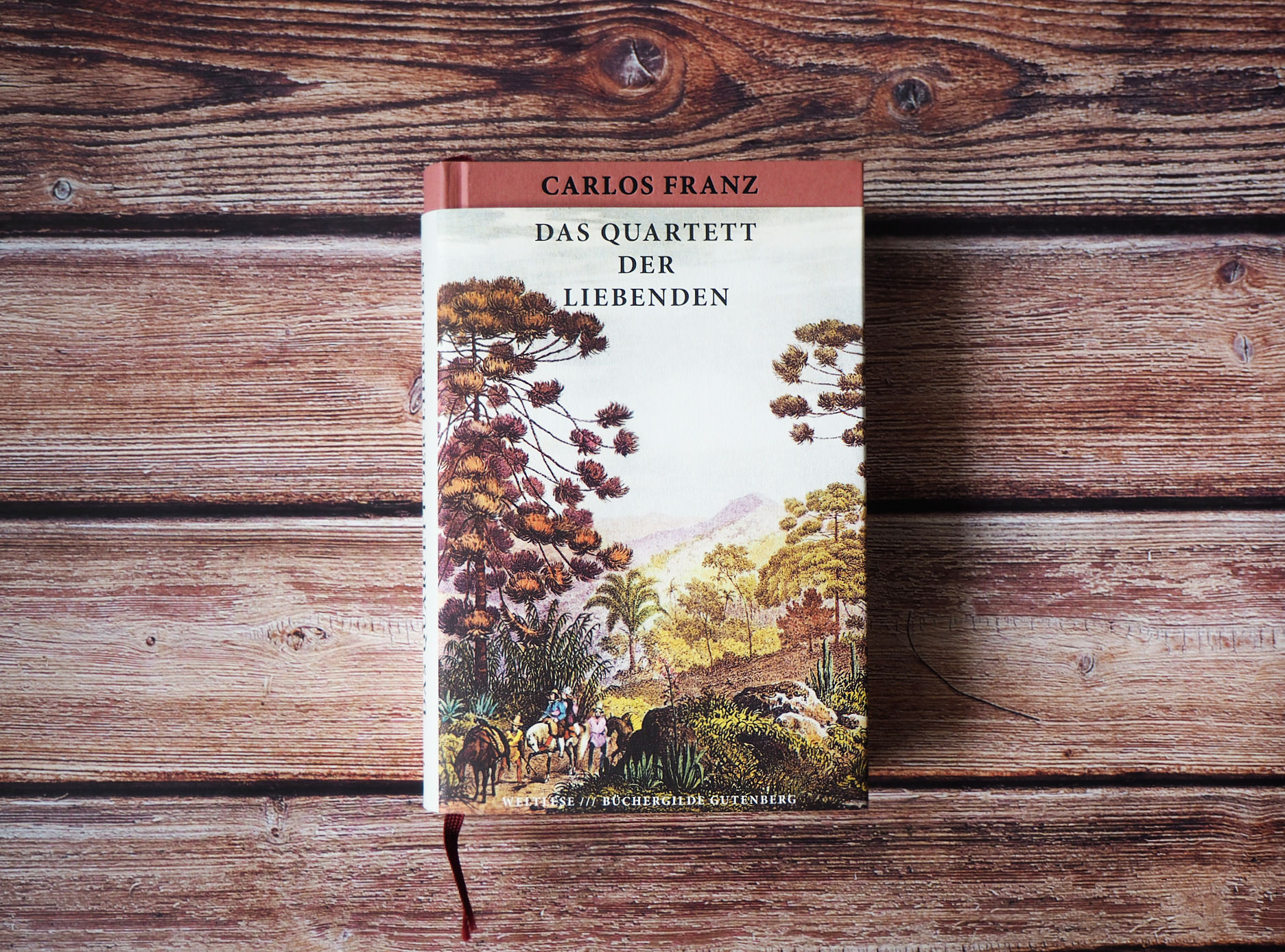
In recent weeks I’ve reached for a book only rarely. Life has its phases, and in the current one, music suits me more than the written word. Of course, it’s never entirely without literature, and lately I’ve been dipping in and out of Si te vieras con mis ojos (German edition: Das Quartett der Liebenden) by Carlos Franz. The long period of reading and the music I listened to while doing so made it a special and moving experience for me. As a whole, the novel is a pleasantly conventional yet unconventional book at the same time—one I’d like to introduce to you today.
The plot is quickly told. It follows the Augsburg painter Moritz Rugendas, who travels through South America in search of motifs and, along the way, enjoys a few love affairs. In Chile he meets the beautiful Carmen Arriagada and begins a liaison with her. Charles Darwin is also in Valparaíso at this time, and a classic love triangle ensues. The novel juxtaposes two very different men: the passionate painter who surrenders to feeling, and the sober, scientifically minded Darwin, who views love with a rational eye.
Carlos Franz’s style quickly cast a spell over me. I already found the narrative perspective inventive and effective. He writes in the second person (“you”), so the book reads as if the beautiful Carmen were recounting the story after the fact to her beloved painter Rugendas—which indeed is the case. As readers, we sense from the very first page that the events are already past; the novel carries the melancholy of beautiful days gone by. Beyond that, Franz offers an exceptionally sensitive glimpse into his protagonist’s inner life. It’s easy to experience love and events alongside Rugendas. Even though the plot itself isn’t extraordinary, this high emotional pitch kept me enthralled throughout.
The backdrop is gorgeous Latin America, with all its allure and unspoiled nature—already traveled in those days by Alexander von Humboldt. Rugendas was in fact briefly employed by him; the painter produced detailed illustrations of regions that Humboldt incorporated into his scientific works. The novel, however, begins precisely where Rugendas turns away from Humboldt and his demand for realism, in order to develop his own style. In any case, Carlos Franz brings this setting wonderfully to life. I very much enjoyed the woven-in descriptions of the beautiful landscape.
An ocher light flooded the vast expanse of the valley. The Río Aconcagua wound toward the Pacific, thick and reddish like a stream of lava. Meanwhile the sky slowly shifted into a dark indigo, streaked with copper and dotted with the first stars. (p. 370)
The central element is the love story between Rugendas and Carmen—and then Darwin, who, as the story progresses, becomes a lover of the beautiful South American woman as well. The conflict between sensual passion and the cool-headed scientist recurs again and again. I found Carmen particularly well portrayed, although Franz also depicts very intimate scenes. I was often torn about whether that degree of detail was necessary. Later on it became clear to me that this close focus is warranted: it renders the central conflict between the different men—and Rugendas’s passion—especially vivid. The German title “Das Quartett der Liebenden” (roughly “The Quartet of Lovers”) becomes clear by the end and strikes me as very apt.
I found the dialogues especially strong. Whether it’s the debate staged by Carmen that Darwin and Rugendas conduct before polite society, or the encounters between Rugendas and Carmen—the conversations gripped me because they are only partly predictable and reveal the characters’ distinct traits. Carmen’s reactions, in particular, are often unexpected. The scenes Rugendas lives through are beautifully rendered, easy to follow, and advance each figure convincingly. I believed Franz’s characters—their decisions and thoughts felt real to me. The ending is an exception; there you can sense again that it is, after all, a made-up story. But that’s forgivable—it makes the book feel rounded and gives it a gentle emotional coda that left me moved.
In his afterword, Carlos Franz notes that the story is purely fictional. The characters existed, and Moritz Rugendas did in fact have an affair with Carmen. He also painted her, though the portrait doesn’t match Franz’s description. In the novel she’s portrayed as stunning—of course, the historical context matters. I always imagined Balzac’s women as very attractive; but when you look at photographs and paintings from the time, you realize the beauty ideal was different.
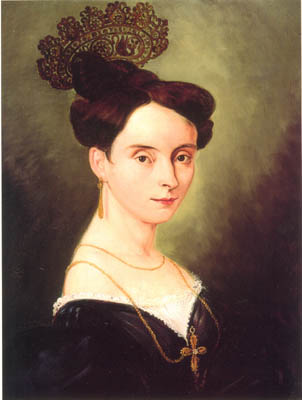
Rugendas’s trajectory in the novel also seems very close to reality. The details of his liaison with Carmen and the encounter with Darwin are, so to speak, fictional. Usually I’m not fond of novels that construct fiction around historical figures and blend fact with invention. But in this book the line is quite clear. The love affair between Rugendas and Carmen does have a real basis. After he left Chile, they maintained a lively correspondence for 16 years—love letters, in fact. These were published, and Carmen Arriagada is considered one of the first Chilean women writers; she was regarded as educated and politically well informed. Unfortunately, I haven’t found a German edition of the letters, which I would very much like to read.
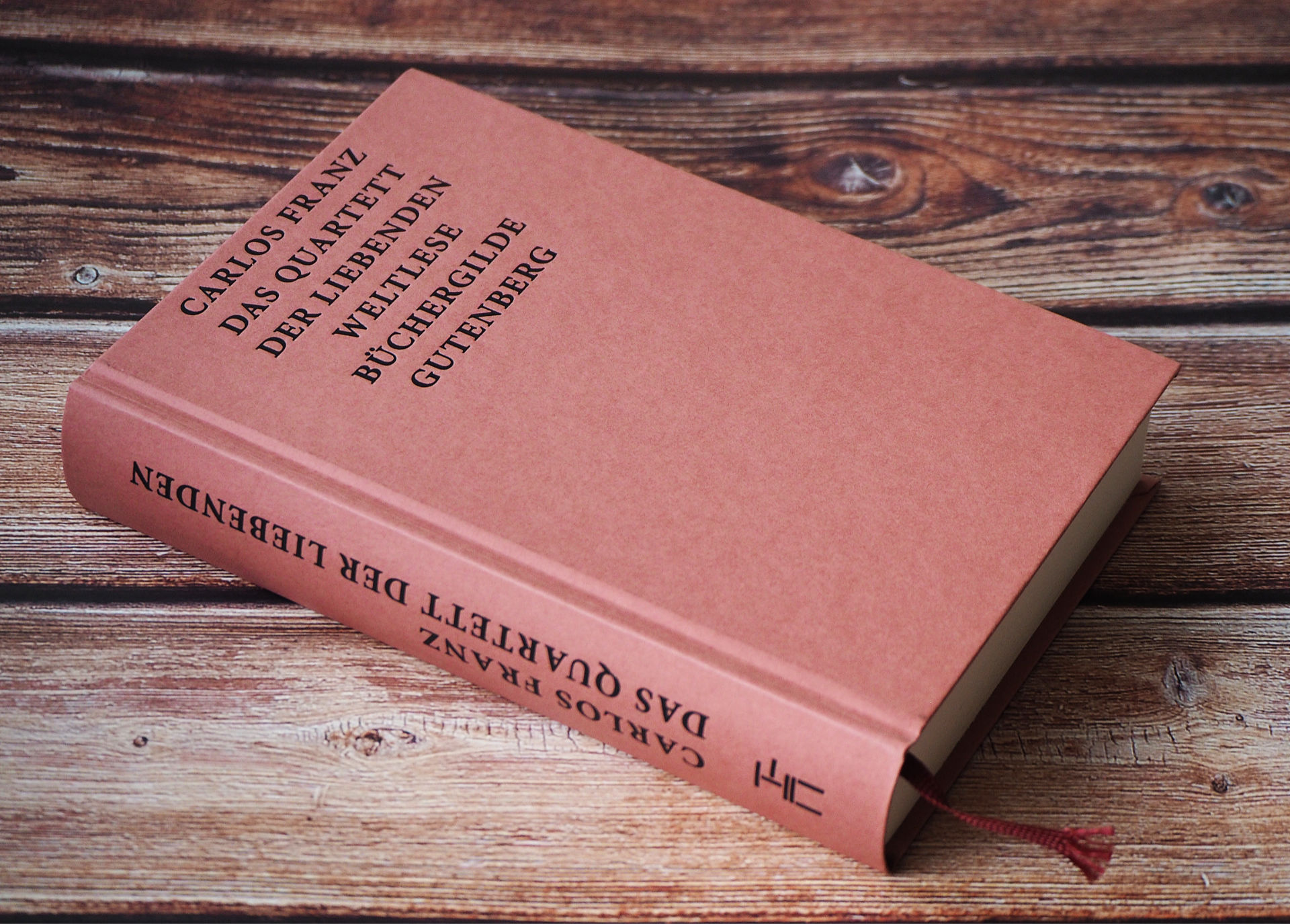
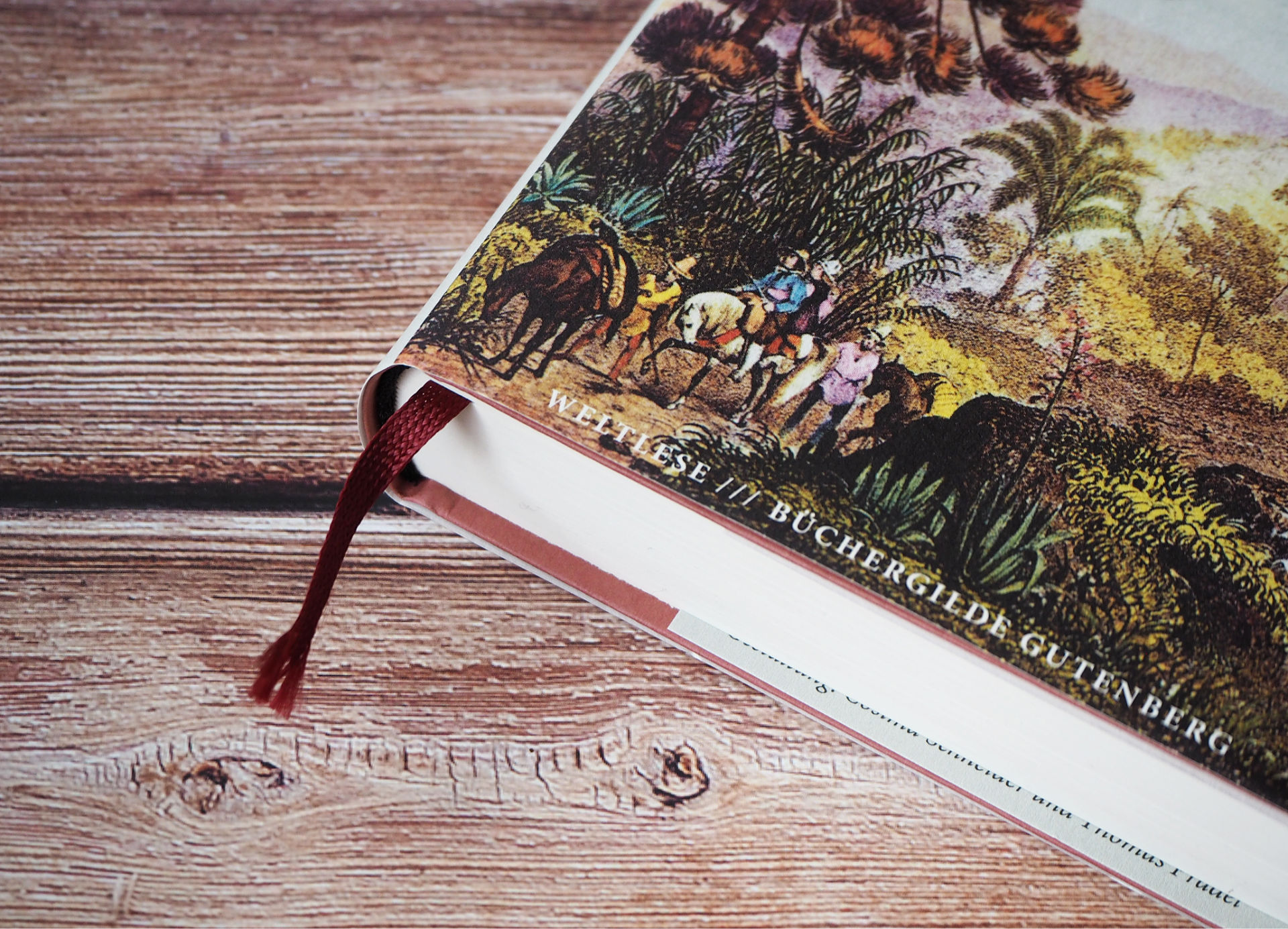
I find the Büchergilde edition very successful. It even has thread binding, and the book’s format feels great in the hand. I also find the slightly shorter dust jacket very pretty. I couldn’t determine whether the cover image was drawn by Rugendas, though it certainly looks like the drawings of his that I’ve found. Overall, it’s a beautifully designed little book that I loved holding.
Conclusion: Carlos Franz presents a very fine love story whose plot is not extraordinary, yet it is highly entertaining, features engaging dialogues, uses an unusual narrative perspective, and brings the protagonist’s passion to life against the gorgeous backdrop of primordial South America. The novel consistently entertained me and also convinced me with its presentation. A very beautiful and recommendable book.
Book information: Si te vieras con mis ojos (German edition: Das Quartett der Liebenden) • Carlos Franz • Büchergilde • 480 pages • ISBN 9783763271375
1 Comment