
Why everyone should read Gaito Gazdanov (with competition)
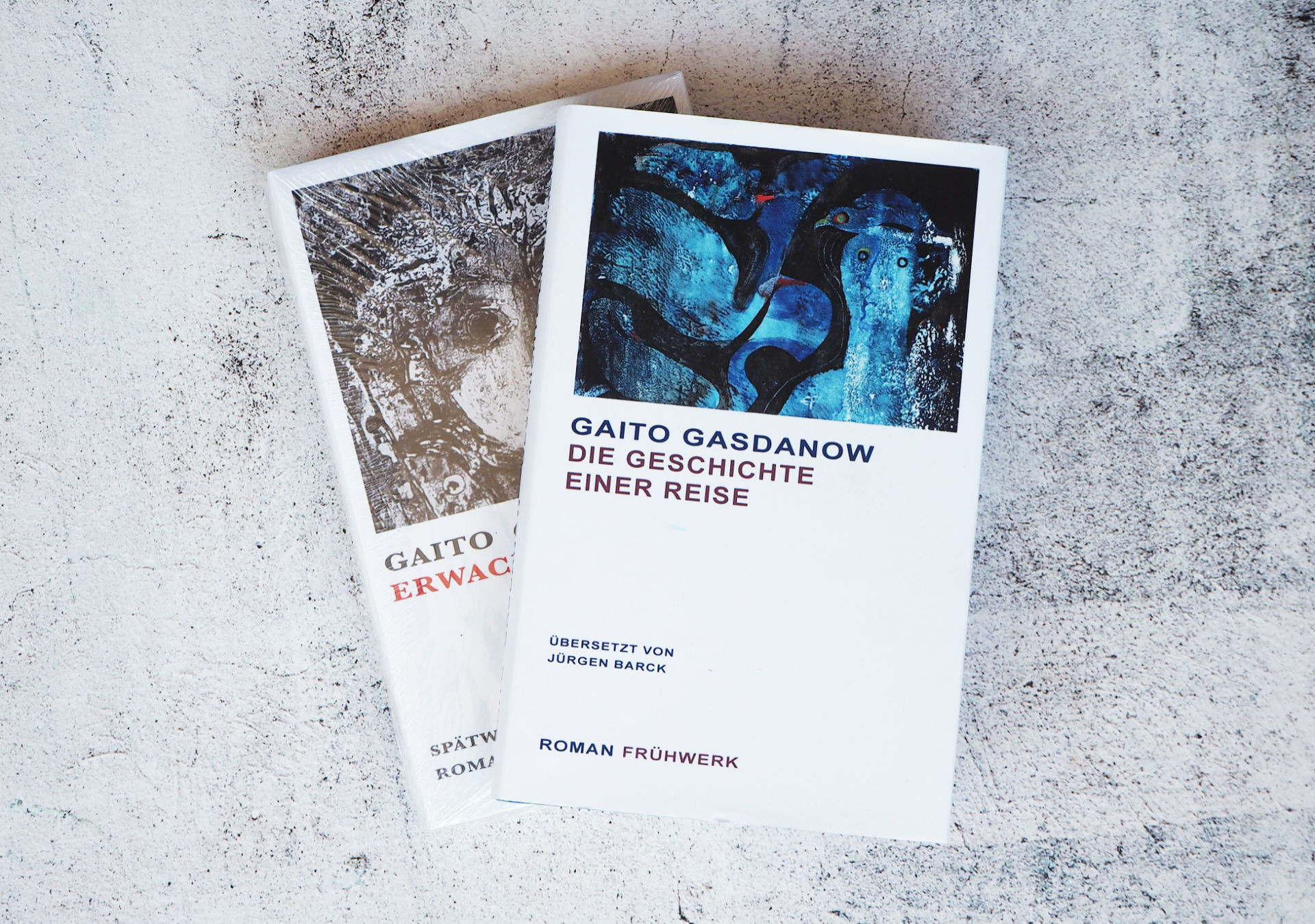
I have written many times on Lesestunden about the books of Gaito Gazdanov, and I would like to dedicate another post to him — to write about what his books mean to me. At the end, there’s also a giveaway, and your chances are good, since not that many readers will probably take part — and there are two wonderful books to win. Why it’s worth participating, and why Gazdanov’s books are something truly special: you’ll find out in this post.
I lived alone in Munich for several years, and during that time, I spent a lot of time by myself. I also read a lot back then, but I especially remember those hours I spent alone. Often accompanied by quiet, melancholic music, with the ability to enjoy melancholy and let my thoughts drift. It was a feeling of standing apart — away from the steady flow of life and society, which constantly pushes forward, and from which one can indeed withdraw, though not permanently — that would be wrong — but for a brief pause. Even today, I still have those moments, though they have become rarer. That part of me loves the books of Gaito Gazdanov, for that is precisely what defines his literature.
His characters — who are always, in some way, Gazdanov himself — stand beside life, lost and lonely, though they live in the midst of Paris, though they brush shoulders with the artistic world of the Montmartre during the exhilarating time of the Lost Generation, though they experience the nocturnal Paris in all its facets. In countless small details, Gazdanov observes the people of his time, characterizes them, and with a fine and subtle sensibility, he draws the reader into his world of thought. His writing always conveys a sense of being lost, of searching for answers to the questions life poses — the great ones and the small, questions about the meaning of existence, of love, and of deep emotions.
“But in every love there is also sadness […]. Sadness over the fulfillment and the approaching death of love, if it is happy, and sadness over its impossibility and the loss of what has never belonged to us, if love remains in vain.”
An Evening with Claire (p. 18)
When reading his books, one feels a flow, and Gazdanov’s language is extraordinarily fine and nuanced. The voice he evokes in me is unique, unmistakable — and this holds true no matter which translation one reads. After finishing one of his stories, I often feel as though I had just listened to music — as if a melody had flowed through me. It’s this musical quality in Gazdanov’s language that seems to resonate with my own way of thinking. When I leaf back through the book and read sentences in isolation, they are beautiful, but the music within them only reveals itself when one surrenders to the current of his prose.
“What actually drove these people in the lives they led? What were their wishes, hopes, and aspirations, and for what goal did each of them, obediently and patiently, do the same thing day after day? What lay behind it all, apart from the dark biological law to which they all submitted, without knowing it and without ever thinking about it? What had called them out of apocalyptic nothingness into life? The chance and perhaps momentary union of two human bodies one evening or night a few dozen years ago?”
The Return of the Buddha (p. 65)
Gazdanov asks the great questions — without, of course, offering any satisfying answers. Between the lines, one finds some of his conclusions, but for me, it has always been more important to read how a person asks these questions — about life, personal freedom, the meaning of love, and even cosmological things.
“If one were to exclude from life […] that meager enjoyment which purely physical sensations give us — warmth, food, bed, Lida, sleep — what then remains? The enthusiastic face of the Buddha? The ecstasy of Saint Jerome? The death of Michelangelo? For those who know the cold attraction of nothingness, what can this biological trembling of existence still mean?”
The Return of the Buddha (pp. 119f)
And time and again, he reveals his way of thinking — a subtle, empathetic, tactful, yet sensitive stream of thought, which resonates with something within me. This similarity I believe to find in his books — this strong closeness to my own way of thinking — exerts a special pull on me. Or perhaps it’s simply the beauty of his sentences, in which he interweaves impressions, blending sounds, scents, and visuals into harmony.
The blossoming youth of Victoria reminded Volodya of his school years, of Lady Hamilton, Dina, and long, romantic dreams — of a whole world: of music, of women, of slowly spreading blue waves of a distant, imaginary sea. (p. 122)
The Story of a Journey (p. 122)
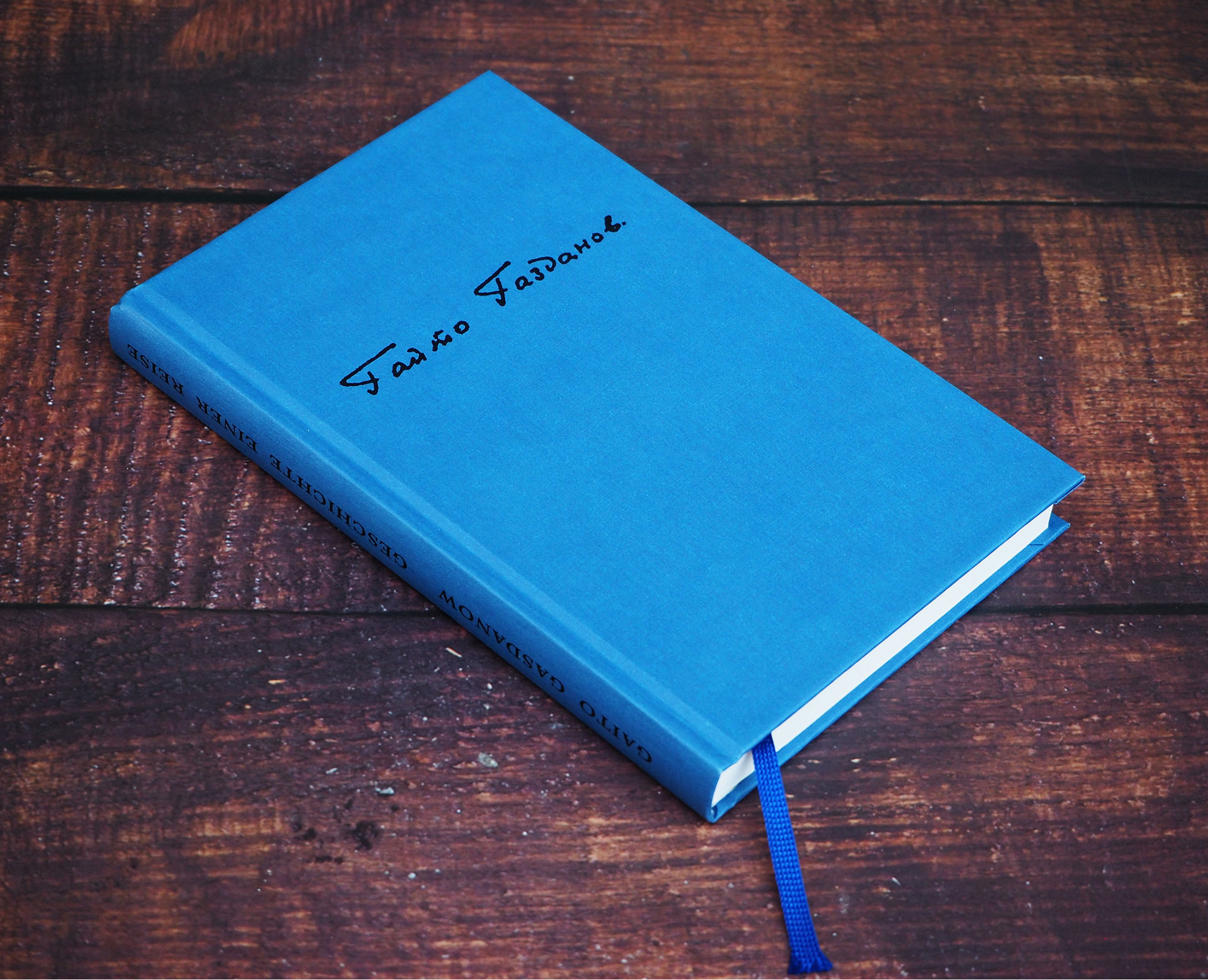
I have already presented several of his books on Lesestunden. You can find an overview here. One of his most beautiful works is The Phantom of Alexander Wolf, but in truth, every one of his books is worth reading. His well-known works were published by Hanser Verlag. In recent years, however, previously untranslated books have also appeared in German. These include The Pilgrims and Awakening — his late works — while the recently published The Story of a Journey offers the German readership a novel more akin to his early period. What’s fascinating about these new releases: no publishing house stands behind them, but rather the translator Jürgen Barck, who has been translating and publishing these works with great care and at a professional publishing level entirely on his own. For me, this is a wonderful gift, because I still vividly remember how, after reading The Return of the Buddha, I desperately searched for more of his books and found none. What a joy it is, then, to hold a previously unread book of his in my hands. And as I know from firsthand information, there’s more to come — which makes me very happy indeed.
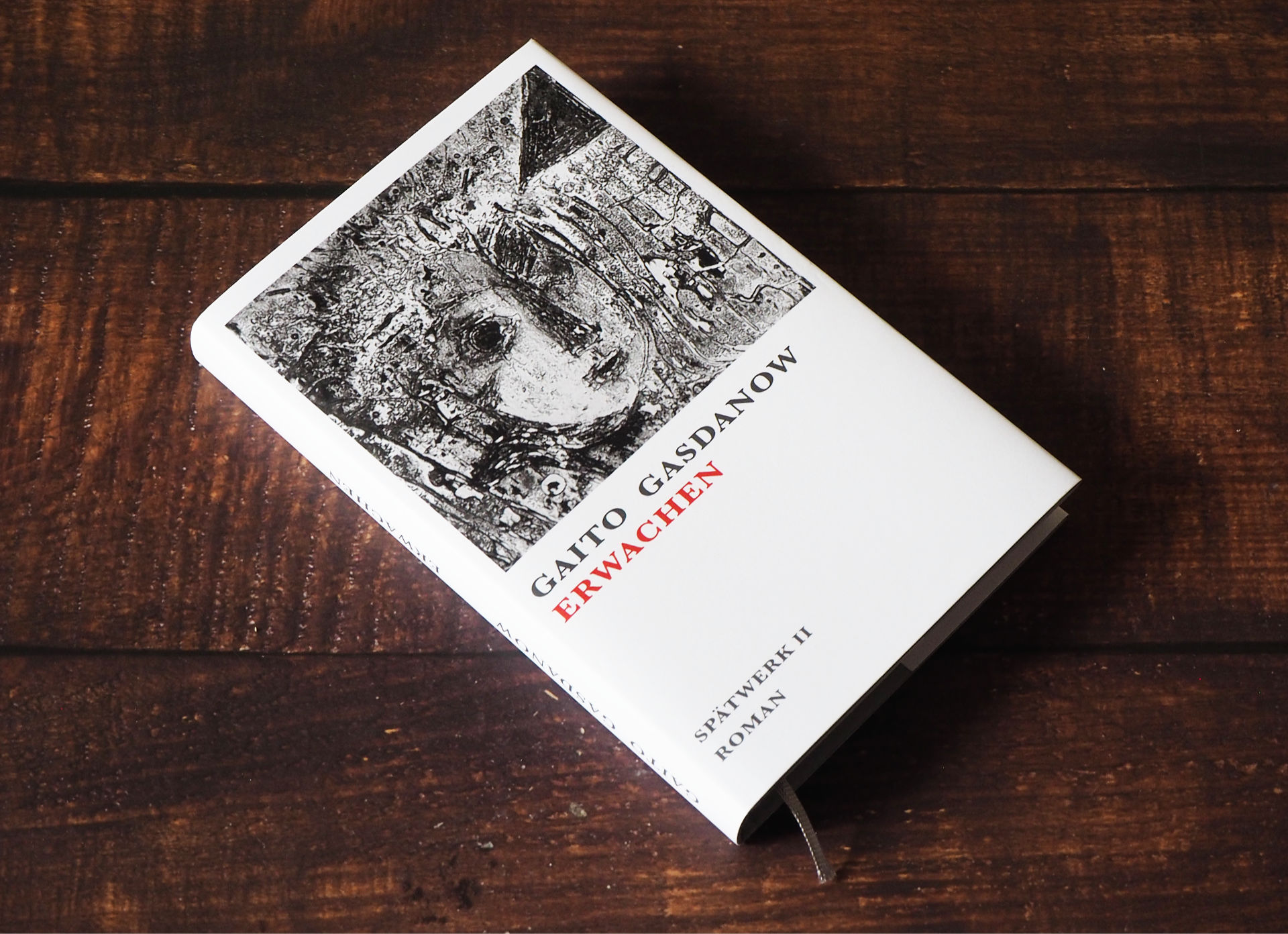
The translator mentioned above, Jürgen Barck, has also kindly provided me with two books, which I would now like to give away in a raffle. You have two weeks (until August 14) to comment on this post (anything at all — just a thought or a brief note is enough), and you’ll automatically be entered into the giveaway. You can win Awakening and The Story of a Journey. There will be two winners, each receiving one of the books. Both are truly wonderful works that I’ve already featured on Lesestunden. I would be delighted if these books find their way to fellow lovers of literature who can surrender themselves to the beauty of these texts as I have.
In that spirit: read and enjoy Gazdanov.
Giveaway Results
For the drawing, I simply took two twenty-sided dice and — tadaaa — here’s what I rolled:
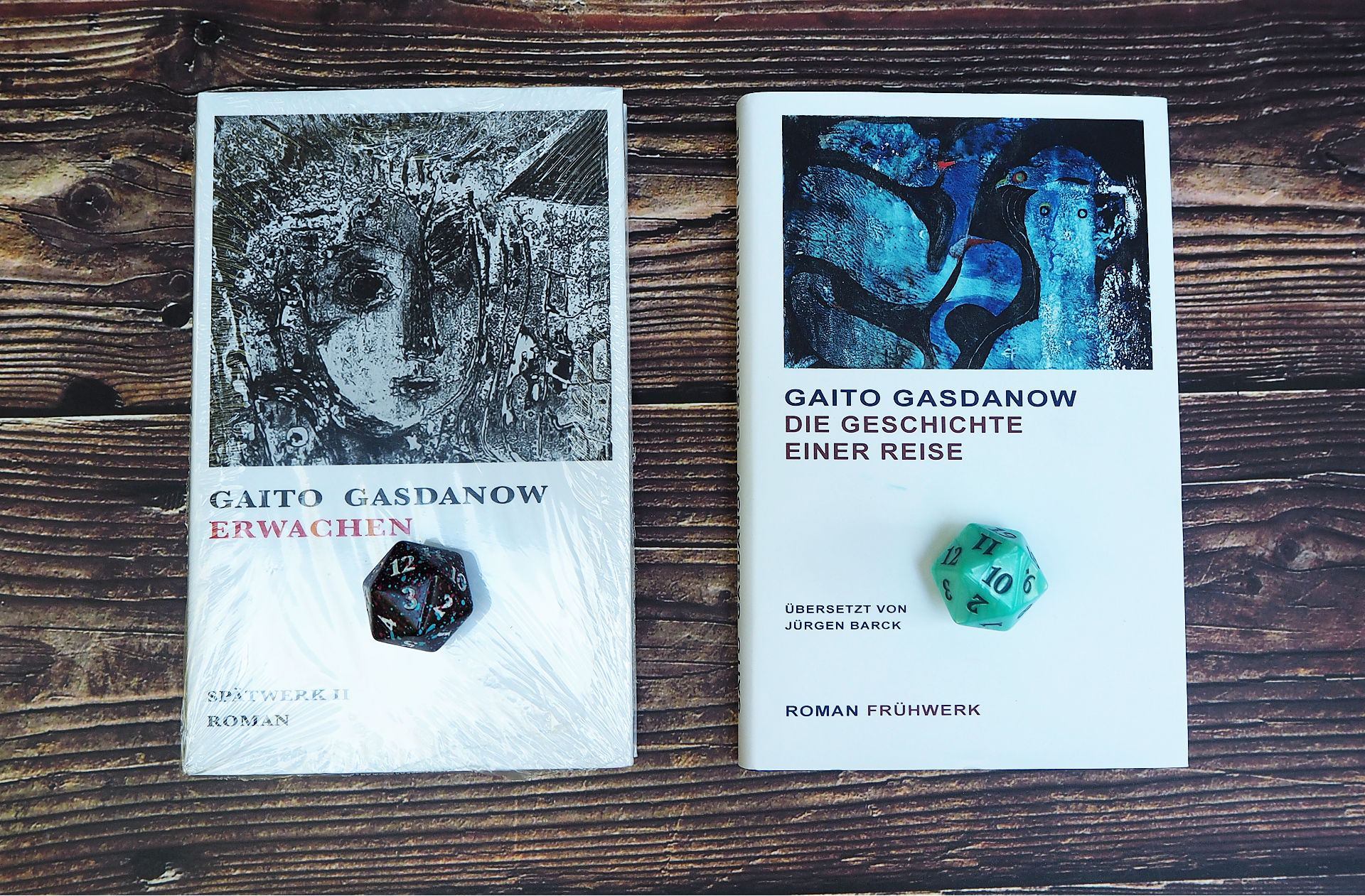
The winners are:
- Comment 3 by Roswitha — Awakening
- Comment 10 by Lucien — The Story of a Journey
Congratulations! Luck was on your side, and I’ll contact you shortly regarding shipping. Many thanks to everyone who took part — I hope you’ll keep reading Lesestunden, and don’t be too disappointed if you didn’t win.
Eine Rezession, die echt neugierig macht! Ich hoffe zu gewinnen, sonst muss ich kaufen! 😂
Gerne würde ich mit einem der von Gaito Gasdanow verfassten Werken bedacht werden, um in die Gedankenwelt des Ausnahmeautors einzutauchen und mich seinen schwermütigen und tiefgründigen Lebens- & Sinnesfragen zu stellen.
Ein Schrifsteller den ich noch nicht kenne.
Ich liebe Bücher mit schöner Sprache.
Diese Rezension ist sehr schön, und macht Lust auf mehr.
Ich kenne einige Bücher von Gasdanow und verstehe und teile Deine Bewunderung für diesen Autor. Es ist ein ganz eigener Sound, der in seinen Büchern mitschwingt. Gerne würde ich noch mehr von ihm lesen und freue mich deshalb über das Gewinnspiel.
Ein wunderbarer Beitrag!
Ich freue mich immer wieder neue Klassiker zu entdecken – Und auch über weitere Werke von Gasdanow würde ich mich sehr freuen!
Dir weiterhin gute Lesestunden!
Das hat mich wirklich neugierig gemacht auf den Autor Gasdanow. Ich möchte wirklich gern mal etwas von ihm lesen!
lesestunden.de schätze ich sehr, weil Deine Kommentare mir bei der Auswahl meiner eigenenen Leseprojekte gute Impulse geben. Herzlichen Dank für Deine Arbeit.
Ich würde gerne Die Geschichte einer Reise lesen!!! :)
Wow, Erwachen klingt mega spannend und würde sich gut in meinem Bücherregal machen … :)
Ich kenne den Autor nicht. Aber nach den Erfahrungen mit bisherigen Leseempfehlungen hier kann ich gar nicht daran zweifeln, dass er mir gefallen würde.
Hallo Tobias,
du machst mich – auch mit den ausgewählten Zitaten – nun wirklich neugierig auf den Autor. Und Gewinnspiele sind ja immer eine schöne Idee :-)
Und auch wenn ein anderes Buch von ihm noch ungelesen im Regal steht, würde ich mich sehr über das Buch „Erwachen“ freuen.
Dir und euch eine schöne Sommerzeit.
Ich lese immer wieder auf deinem Blog und hole mir Lese-Empfehlungen.
Deswegen – und vor allem wegen deiner Lobeshymnen auf Gasdanow – würde ich gerne auch am Gewinnspiel teilnehmen. :-)
Weiter so!! :-)
Das liest sich ganz wunderbar – ich bin neugierig geworden und bewerbe mich gerne.
An Gasdanow fasziniert mich, dass er scheinbar während des Schreibens in einem laufenden Prozess nachdachte und fühlte, dass er mit seinen Büchern keine fertigen Weisheiten, keine Dogmen, kein Prophetentum keine zigfach gefeilten Formulierungen anbietet, sondern dass er seine Leserinnen und Leser mitdenken, mitfühlen, seine Gedanken auf eine mystische Art und Weise mit entwickeln lässt.
Beim Lesen fühlt man sich – ebenso wie bei meinem Favoriten Franz Kafka – dauernd mit einbezogen.
Man fühlt sich gefragt, gleichsam in einen Dialog verwickelt und dabei auf Augenhöhe respektiert. Und genau das ist es, was Weltliteratur für mich ausmacht.
In meiner eben beendeten Urlaubswoche habe ich zwei hierfür repräsentative Zitate im “Alexander Wolf” gefunden, über die ich immer wieder nachdenken muss. (Im ersten ist dabei die weibliche Form mit der männlichen durchaus austauschbar ;-) )
“Ich wusste zwar aufgrund wiederholter Erfahrung, dass Charme oder Anziehungskraft einer Frau nur so lange auf mich wirkten, als in ihr etwas Unbekanntes blieb, ein unerforschter Raum, der mir die Möglichkeit – oder die Illusion – bot, stets von neuem ihr Bild zu erschaffen und sie mir vorzustellen, wie ich sie gerne gesehen hätte, und wahrscheinlich nicht, wie sie in Wirklichkeit war. Es ging nicht so weit, dass ich Lügen und Hirngespinste einer offensichtlichen Wahrheit vorgezogen hätte, aber besonders tief gehendes Wissen barg zweifellos eine Gefahr in sich, dazu mochte man genauso wenig zurückkehren wie zu einem gelesenen und verstandenen Buch. Zugleich war der Wunsch nach Wissen vom Gefühl stets untrennbar, keine Argumente konnten das ändern.” (Gaito Gasdanow, Das Phantom des Alexander Wolf, übersetzt von Rosemarie Tietze, dtv, München 2017, 3. Aufl., S, 103 f.)
“Ja, und dann diese tröstliche Philosophie: dass wir jeden Tag durch kosmische Katastrophen gingen, doch das Unglück sei, dass die kosmischen Katastrophen uns gleichgültig ließen, während die geringste Veränderung in unserem eigenen, so unbedeutenden Leben Schmerz und Bedauern hervorrufe, und daran lasse sich überhaupt nichts ändern.” (Gaito Gasdanow, a.a.O., S. 144)
In beiden Zitaten wird unsere Bequemlichkeit widergespiegelt, unser Unwillen, nein, nicht einmal unsere Unfähigkeit (!), über unseren eigenen komfortablen Tellerrand hinauszusehen. Denn nur ein solcher Blick ließe uns die eigene Verantwortung erkennen, die Verantwortung für all jenes, was im persönlichen Umgang mit unseren Mitmenschen (Zitat 1) und in unserer Sicht auf das Weltgeschehen (Zitat 2) schief läuft. Wir wollen schlichtweg vieles nicht sehen, wollen die Menschen nicht so wahrhaben, wie sie uns nicht gefallen würden, wollen Geschichte nicht reflektieren, wenn sie unsere eigene Vergangenheit betrifft und wollen Gegenwart dann nicht realisieren, wenn wir erkennen müssten, dass unser Leid und unser Schmerz relativ ist und wir eigentlich durch unsere Lebensweise viel größeres Leid, viel größeren Schmerz zumindest mit verursachen.
Ein Krieg berührt uns erst, wenn er nahe an Europa stattfindet und wenn er für uns z.B. eine Heizkostenumlage mit sich bringt.
Unsere eigenen massiven Waffenexporte hinterfragen wir hierbei nicht.
Den Klimawandel verurteilen wir ebenso wortreich und gerne, ohne etwa gleichzeitig zu erwähnen, dass es bei unserem Verbrauch der natürlichen Ressourcen die Erde gleich dreimal geben müsste.
Aber, um mit Fontane (bzw. dem Vater seiner Effi Briest) zu sprechen, all das ist “ein weites Feld” ….
Mangels treffenderer eigener Worte hier diejenigen eines anderen Schriftstellers:
“Man spricht viel von Aufklärung und wünscht mehr Licht… was hilft aber alles Licht, wenn die Leute entweder keine Augen haben oder die, die sie haben, sie vorsätzlich verschließen?” (Georg Christoph Lichtenberg, Aphorismen, Essays, Briefe, Leipzig 1970, 1, S. 215)
Über Frankreich lese ich immer gern…