
Gentleman Overboard • Herbert Clyde Lewis
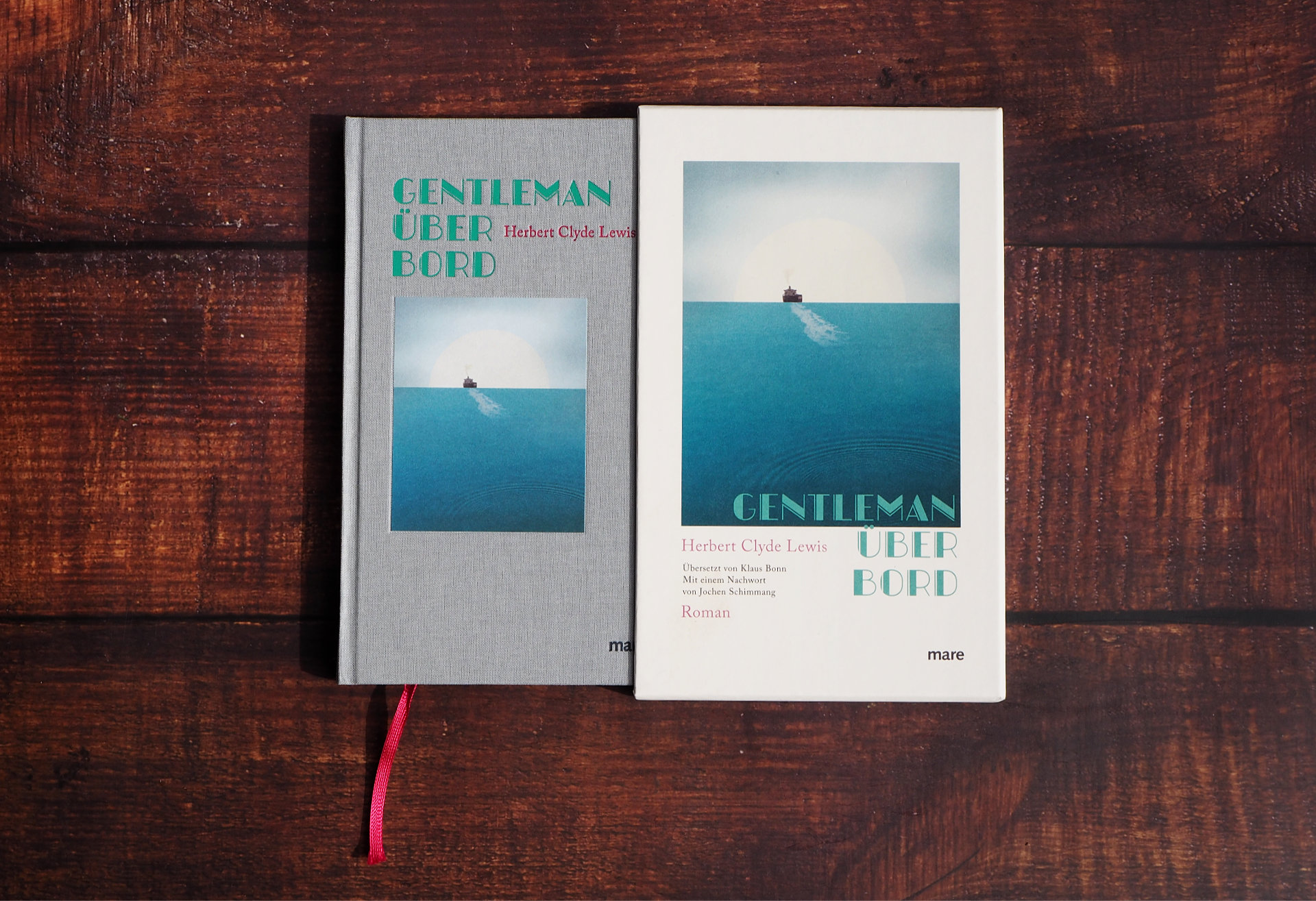
A New York businessman accidentally falls off a ship into the Pacific Ocean, unnoticed. The ship sails on, leaving him behind in the vast expanse of the sea. Completely alone and surrounded by the infinite ocean — what thoughts go through a man’s mind in such a situation? What happens within him, what crosses his mind? The new mare classic Gentlemen Overboard takes this story as its theme. A gripping masterpiece — or does the book fall short of the expectations raised by its blurb? Let’s find out.
When it comes to the mare classics, I now pick up every book from this wonderful series without hesitation. Over the years, I’ve read every novel and have never been disappointed. Sometimes readers discover lesser-known works by famous authors, but time and again, mare Verlag also highlights little-known texts by completely unfamiliar writers. Gentlemen Overboard is such a book — first published in 1937 and never before translated into German.
With the mare classics, I know that they are not just simple classics — the sea is always part of them. And it appears in all its multifaceted diversity, expressed in ever-changing ways, yet always capturing those characteristic nuances that belong uniquely to the ocean. That’s truly remarkable, especially considering how consistently this has worked across so many books over so many years. This book is no exception: when you read it, you can feel the sea between the lines — and in this novel, of course, often right at the surface.
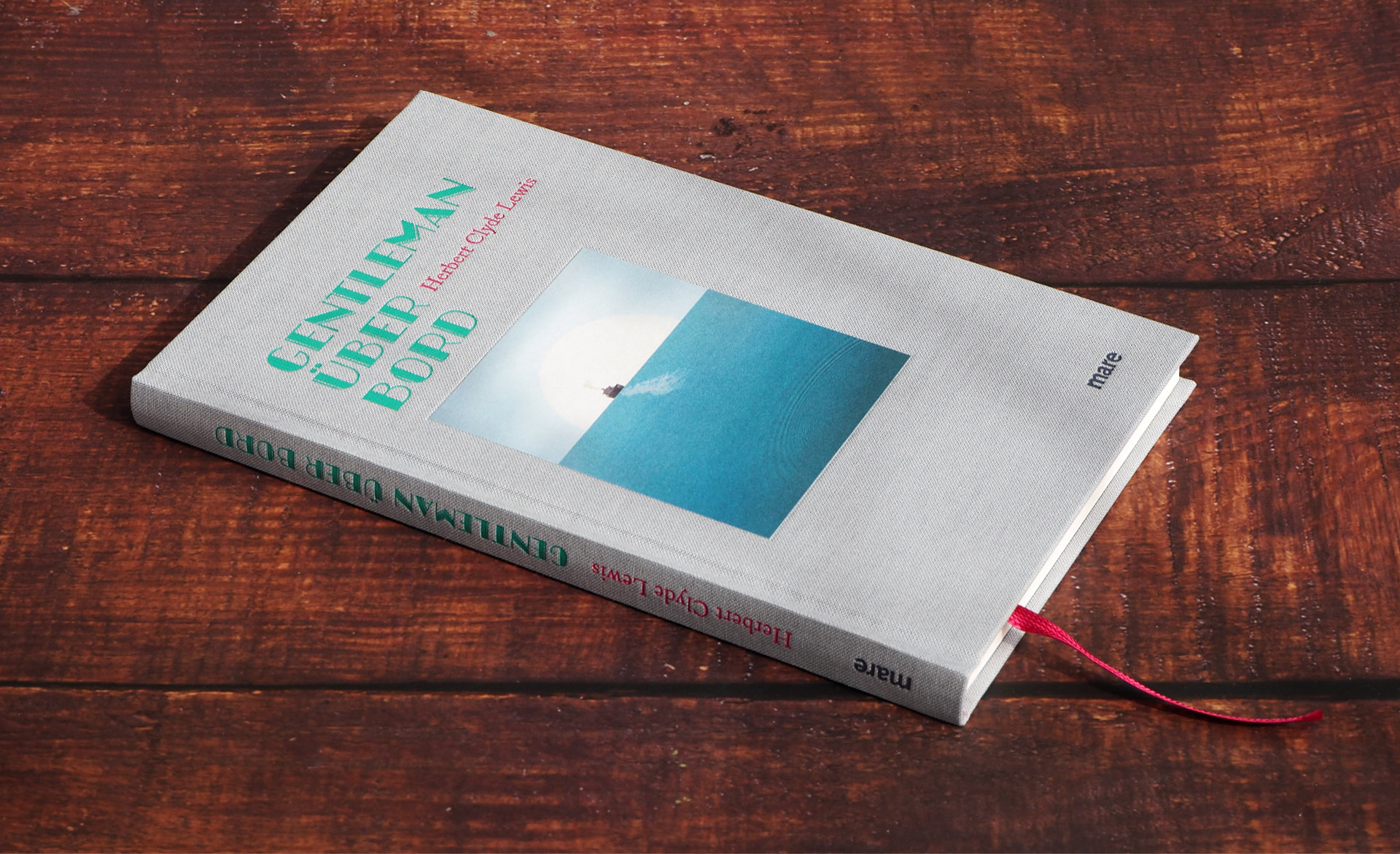
When I first received the book and held it in my hands, I was a little disappointed by its appearance. It does, of course, have the usual high-quality production — thread binding, linen cover, slipcase, and careful design. Yet, in terms of color scheme and its very simple, Art Deco–inspired style, I would place it visually toward the back of the series, compared to the other beautiful volumes. I was also disappointed by its length: the actual story spans only 153 pages, which, with the additional blank pages between chapters, feels even shorter.

When I picked up the book, I wasn’t really in the mood to read and did so halfheartedly that evening — just intending to glance at a few pages before going to bed. But I didn’t put it down again. I was quickly so captivated by the story that I absolutely had to find out how it ended. That kind of effect rarely happens to me — and almost never with such short works.
Lewis writes in clear, often concise sentences that faithfully convey the situation and the thoughts of his protagonist, Standish. It’s therefore easy for the reader to slip into the story and follow what Standish experiences, feels, and thinks as he floats in the open sea. Lewis’s short novel is characterized by extensive use of free indirect discourse, and together with brief, precise sentences that could easily stem from everyday thought, everything the protagonist experiences feels entirely believable. At the same time, a certain irony recurs throughout, and Standish’s character remains deeply rooted in his sociocultural background, which creates a sense of distance for the reader. The result is a balanced emotional response — neither too empathetic nor indifferent. On one hand, we are horrified, can vividly imagine the situation, and wonder what it must feel like to be alone in the middle of the ocean, filled with both hope and hopelessness. On the other hand, Standish is not a character one grows particularly fond of.

The entire novel takes place at sea, depicting how Standish spends his hours there. Through flashbacks and brief episodes, the reader learns what happened in the past — what Standish’s life and circumstances were and are like, what kind of man he is — and also gets a glimpse of what happens aboard the ship from which he fell. In doing so, Lewis paints an interesting portrait of American society in the 1930s. The protagonist is a businessman who, in his life, personality, and circumstances, is utterly ordinary — a dull, average, and insignificant man whose behavior and thinking are deeply shaped by the values of his time. I believe Lewis deliberately made him a stereotype of that era and social class. What’s fascinating and well executed is how this very type manifests in his thinking — and how clearly those thoughts and behaviors emerge even in a desperate life-or-death situation.
The ship’s crew — the captain, the first officer, and the few other passengers aboard the primarily cargo vessel — serve as a mirror of the society of the time. It’s evident that Lewis thought carefully about this and intentionally uses them to critique that society — for example, by placing the always-suited, uptight businessman opposite a simple farmer traveling the world, or introducing a hypocritical married couple. I also find the way Lewis arranges the circumstances very well done — even if it might appear contrived, it feels completely plausible. He describes the small coincidences that ultimately lead to the situation forming the novel’s central theme.
As a reader, one is captivated by the harrowing moments at sea, and the more one reads, the more one wants to know what will happen to Standish. You hope for him, yet you’re not too distraught at the thought that rescue might never come. From today’s perspective, the novel is even more intriguing because you inevitably compare yourself to Standish and wonder how you would react in his place.
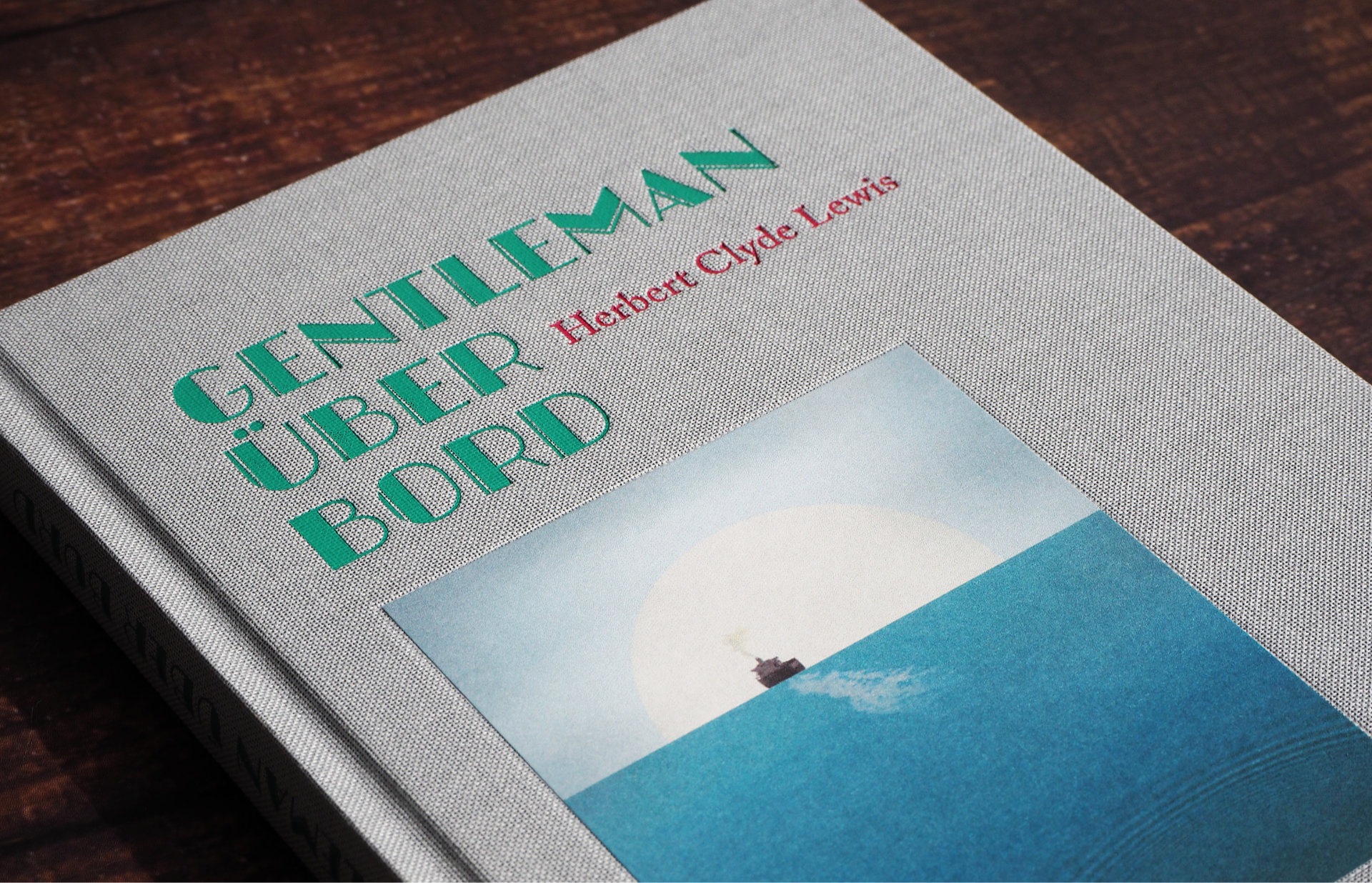
After finishing the book, I still consider it one of the less visually appealing volumes in the series — yet I’m once again amazed at how perfectly the book design reflects the story within. The gray of the cover evokes the image of the sea, flat and motionless, as I imagine it stretching endlessly before you — while Lewis describes the sea at sunrise on that fateful morning as “unusually stingy.” At the same time, that gray tone beautifully mirrors the colorless character of the protagonist. The image on the cover shows the ship, the Arabella, sailing toward the rising sun, away from Standish. The Art Deco style suits the New York businessman perfectly. The design captures the essence of the story brilliantly.
Herbert Clyde Lewis was born in 1909 in New York, the son of Russian-Jewish immigrants, and seems to have led a rather restless life. He worked as a reporter and screenwriter, lived in Shanghai, and died at the age of just forty-one. Reportedly, he struggled with alcoholism, drug addiction, and chronic debt, as he lived beyond his means. The afterword once again offers fascinating background information about the author.
Conclusion: I found Gentlemen Overboard immensely gripping — I devoured it in a single evening and simply had to know what would happen to the protagonist. The way Lewis portrays the mind of a man confronted with the desperate situation of being lost alone at sea, and how he links that inner world to the cultural and social context, is truly masterful. Once again, the beautifully produced volume is perfectly in tune with its content — even if, with its gray tones, it’s not as visually appealing as others in the series. With its modest length, it can easily be read in one evening — a highly worthwhile read that portrays the sea from yet another unique perspective, reminding readers how small and lost a human being can be amid the vast indifference of nature.
Book information: Gentlemen Overboard • Herbert Clyde Lewis • mare Verlag • 176 pages • ISBN 9783866486966