
The Princess of Clèves • Madame de La Fayette
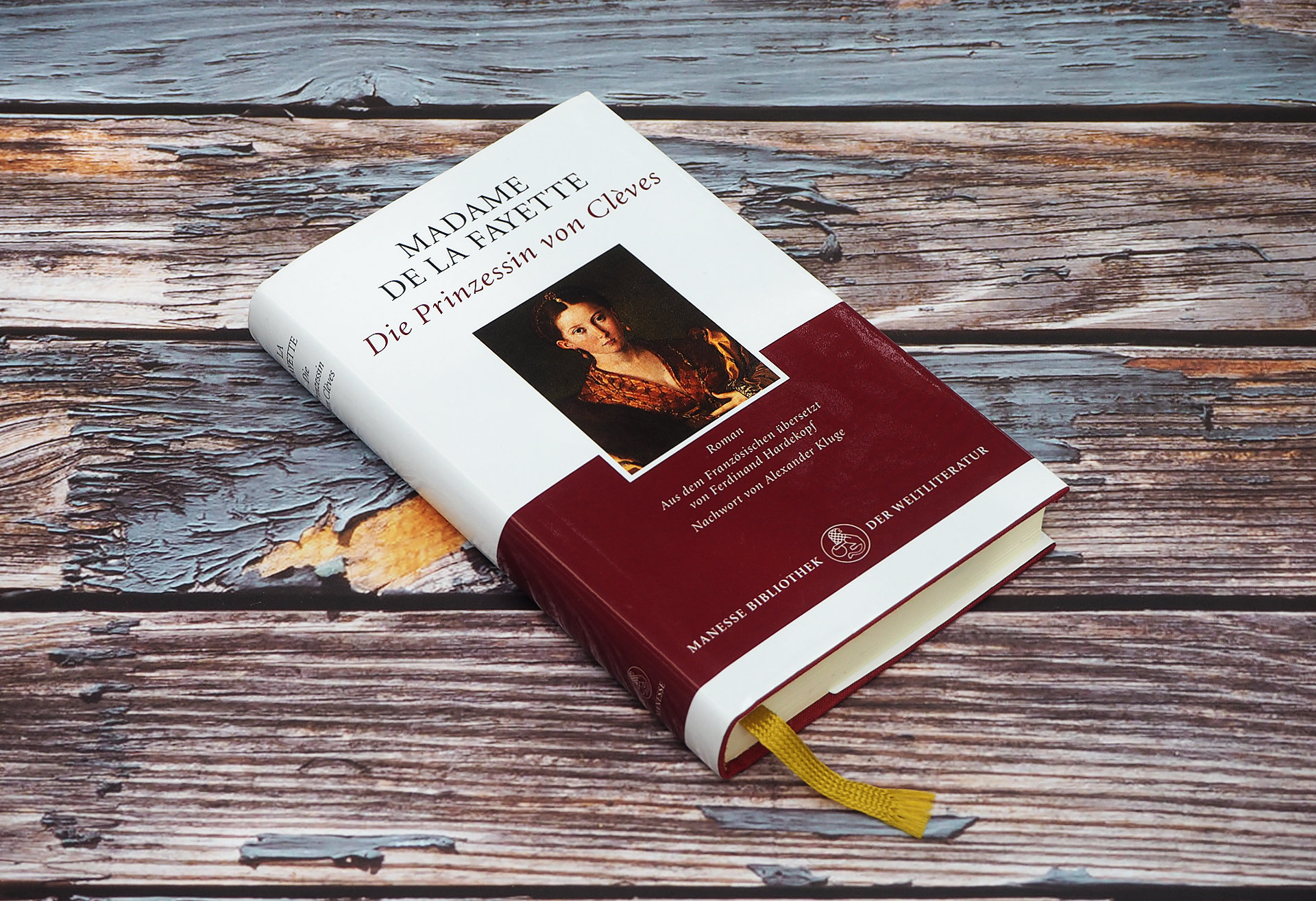
Some time ago, I tried to get a good book recommendation from ChatGPT (read about it here). After trying numerous questions, only one truly worthwhile suggestion emerged: The Princess of Cleves by Madame de La Fayette. However, this wasn’t really a new discovery — I had already come across the book several times in the Manesse Verlag catalog. So in a sense, ChatGPT merely re-advertised it, and I let myself be convinced to finally pick it up. What awaits readers in this hand-picked AI-picked novel? Let’s find out together.
The Princess of Cleves is set at the French court of Henry II, placing the story in the 16th century. It tells the tale of Mademoiselle de Chartres, who — as was customary at the time — is married off early by her mother, only to later fall in love with a duke. Her affection is reciprocated, and thus begins a struggle between reason and emotion.

As one might expect from a French author, I anticipated a great deal of passion and strong emotions — and I wasn’t disappointed. While the plot doesn’t move as swiftly as in other French novels, it’s quite remarkable when considered in the context of its time. The novel is set among aristocrats, and La Fayette begins by introducing the many noble characters. At first, this can feel a bit confusing, but it quickly becomes clear as the story unfolds. Readers get a vivid sense of how life at court worked and how the princess’s marriage came to be. The depiction of the heroine’s growing affection for the duke and their emotional turmoil is wonderfully written. La Fayette offers a keen psychological insight into the characters’ inner worlds — readers can deeply empathize with them, and their thoughts and actions are both believable and compelling.
What makes this book special is its time of origin. At first, I assumed it was written in the 19th century, but it was actually published in 1678. It first appeared anonymously, and there was much speculation about its authorship. The novel was a major success and sparked intense discussion. It is considered the first historical novel, one of the earliest psychological novels, and it had a profound influence on 18th- and 19th-century literature — inspiring works such as Manon Lescaut or Dangerous Liaisons. Even today, this story reads beautifully and hasn’t lost any of its charm.

Marie-Madeleine de La Fayette was born in 1634 in Paris and herself came from an aristocratic family. Her father granted her access to Paris’s intellectual circles and ensured she received an excellent education. Her life was quite eventful, and she later even gained access to the court of Louis XIV. By 1659, she was already active as a writer and had published several novellas. The Princess of Cleves is her most famous work and is now regarded as one of the finest pieces of literature from its era. I was particularly pleased to read something written by a woman, since the 17th century was, of course, heavily dominated by men.
For me, this novel doesn’t quite reach the heights of the great classics of the 19th century — but that’s understandable. When you read that even Stendhal was inspired by this book, it becomes clear that it paved the way for many of those later masterpieces. On the surface, it’s about the struggle between reason, virtue, and faith against the impulses of love. But considering the Age of Enlightenment during which it was written, it also explores a deeper theme: the pursuit of a life shaped by one’s own will — a life consciously formed and determined by the individual. According to the afterword by Alexander Kluge, this idea, fueled by the rise of the bourgeoisie, began to influence social classes beyond the nobility.
When you pick up this book and start reading, it doesn’t feel like you’re diving into a work that’s over three centuries old. That may also be due to Ferdinand Hardekopf’s 1957 translation. According to the editorial note, his translation — as was common at the time — took considerable liberties from the original, though this edition has been revised. In style and readability, it differs little from classics written one or two hundred years later. That in itself is remarkable and speaks volumes for the quality of this book.

I don’t have much to say about this particular edition. It’s part of the old Manesse Library of World Literature series, so it comes with the typical red cloth binding, sewn spine, ribbon marker — beautifully made, as always. The afterword by Alexander Kluge, however, was only moderately good. It offers some interesting reflections but is too vague and abstract, without providing enough insight into the author or the historical background of the novel.
Conclusion: A love story set at the French court of the 16th century, written in 1678 by a French aristocrat, published in the premium classics series of Manesse Verlag, and recommended to me by artificial intelligence. What could possibly go wrong? Nothing at all — the novel is wonderful, a joy to read, imbued with the spirit and passion characteristic of French authors through the centuries. Anyone wishing to immerse themselves in the old world of nobility, love affairs, intrigue, and beauty will adore this book. Even after 350 years, it remains an immensely worthwhile read. And in this Manesse edition, readers receive a finely crafted, elegant volume that is highly recommended in every respect.
Book information: The Princess of Cleves • Madame de La Fayette • Manesse Verlag • 365 pages • ISBN 9783717522249
Hallo Tobi,
das Buch klingt lesenswert.
Ich lese gerade Frauen und Töchter von Elizabeth Gaskell, was mir sehr gefällt.
Vielleicht ist das ja auch was für dich. :)
Liebe Grüße
Petra