
Washington Black • Esi Edugyan
Washington Black has been sitting on my shelf for quite some time. I found both the blurb and the book design very appealing, but I hesitated to pick it up for a long time because it deals with slavery and the inhumane conditions on a sugar plantation—a topic that sounds exhausting to read about. Moreover, the portrayal of great injustice often feels like a very primitive narrative device to move a story forward, and the danger that this book might fall into that trap seemed quite high. Combined with the fact that it’s an acclaimed bestseller and even recommended by Barack Obama—usually a sure sign for me to stay away—I was skeptical. But I decided to take the plunge, and that’s what I’d like to write about here.
Washington Black, a young enslaved boy of about ten years, works under harsh conditions on a sugar plantation on the island of Barbados. By chance, he becomes the servant of Christopher Wilde, the brother of the cruel plantation owner. Wilde is an inventor, and as the story unfolds, the two flee the island in an airship designed by Wilde. For Washington Black, it is both an escape from slavery and a search for his own identity.
First off, I should say that, of course, there are descriptions of the cruelties inflicted upon the enslaved, but they are not overly graphic—portrayed instead as part of the tragic everyday life. That doesn’t make them any less horrifying, but I appreciate that they are not used as a vehicle to create cheap suspense. Based on the blurb’s reference to Jules Verne, I had hoped it might be something like Five Weeks in a Balloon, since the airship is prominently mentioned in the summary. Unfortunately, that hope was disappointed. At times, the book does feel like an adventure novel—the protagonist travels the world—but these moments are repeatedly interrupted by long sections focusing instead on people and their relationships.
As expected, slavery—its moral depravity and, in places, its aftermath—is a central theme. This comes through in what the protagonist learns about his origins and past, what Wilde does to oppose slavery, and in the book’s central question: what Washington Black wants to make of his life. What freedom means to him, and what possibilities he has in a world just beginning to cast off slavery. There are some interesting reflections here, but in my view, they never go particularly deep. They remain focused on Washington Black as a concrete figure rather than taking a more abstract approach.
I really enjoyed the descriptions of the settings—Edugyan often finds beautiful and precise words to convey atmosphere and landscape. Or small details, such as when she describes Washington clutching an iron nail when he first meets Christopher Wilde. These passages often evoke vivid imagery that I found both well-crafted and emotionally effective.
In terms of pacing, the book is well executed. There’s always an element that keeps the story moving and the reader engaged. While it’s not particularly sophisticated and often felt somewhat contrived to me, these elements nonetheless carry the narrative and prevent it from becoming dull. It’s clear that Edugyan uses the stages of Washington’s life to raise and sometimes answer certain questions—and that structure works well, even if it’s heavily centered on the protagonist.
When it comes to the characters, I have mixed feelings. Some of Edugyan’s characterizations are excellent—Tanna, for example, or even Washington Black himself, who is a fairly nuanced personality. However, despite the first-person narration, I never really felt a strong emotional connection to him. Some of the other characters struck me as too stereotypical—Wilde, for instance, or later Tanna’s father. Every scientist in the book seems to be an eccentric, absent-minded inventor with a selfless, devoted assistant. It becomes repetitive and unrealistic. You can sense that these are constructed characters—something I often feel in more modern novels as opposed to classics.
While reading, I kept wondering what the book actually wants to be—what it aims to express. It’s not quite an adventure story, not quite a novel about slavery or the reckoning with its injustices. It’s not a novel about science and discovery, not a travelogue, not a character study or fictional biography. Somehow, it’s a mix of everything and nothing. It contains elements of all these genres, but in the end, it felt too directionless to me and didn’t do justice to any of them. Maybe that was intentional, but for me, the book ended up feeling neither one thing nor another.
The language is pleasant to read. Especially when describing the setting, Edugyan often delivers lovely sentences and turns of phrase. The first-person perspective fits well for a life story of this kind, though its emotional impact remains somewhat limited.

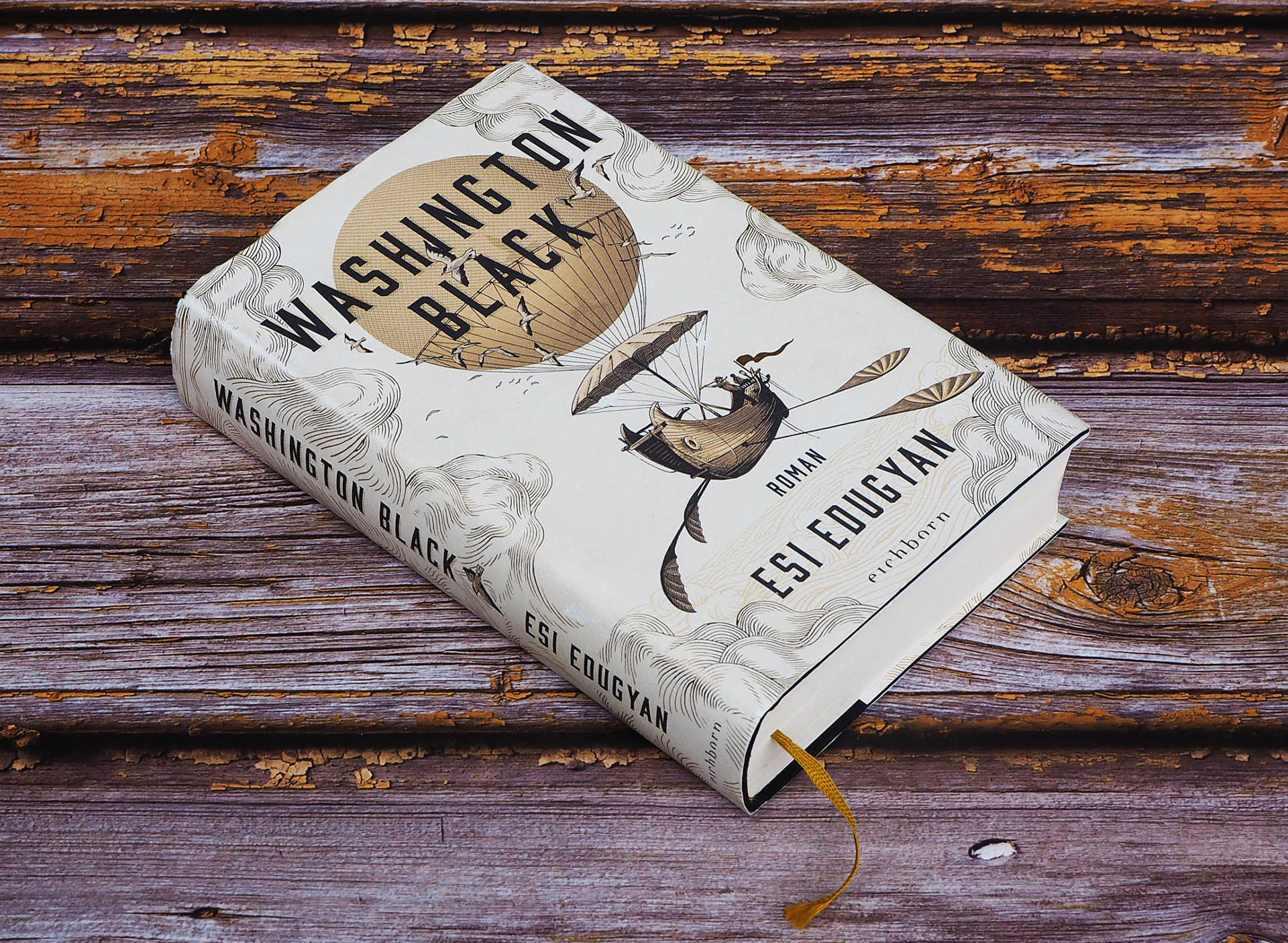
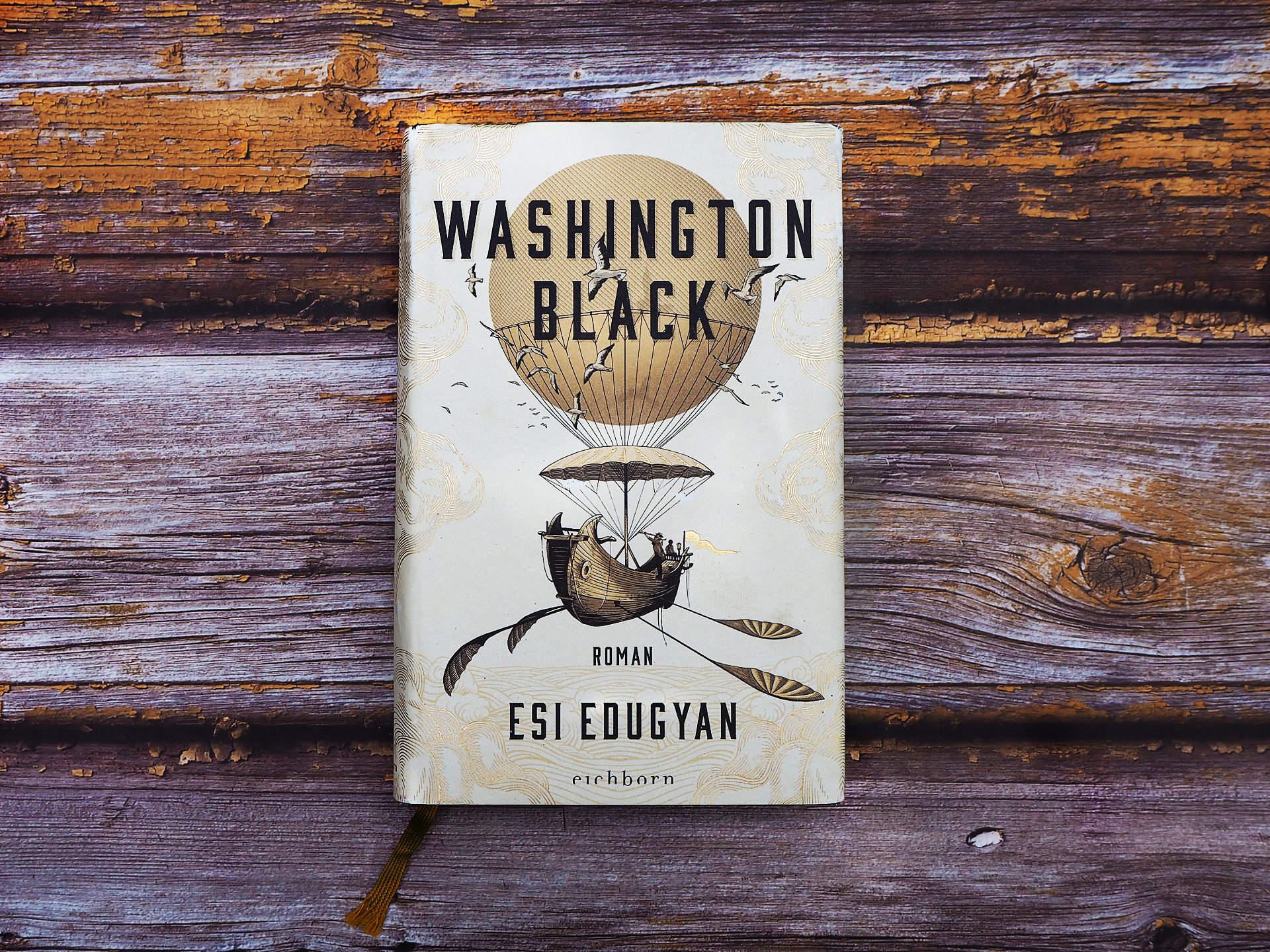
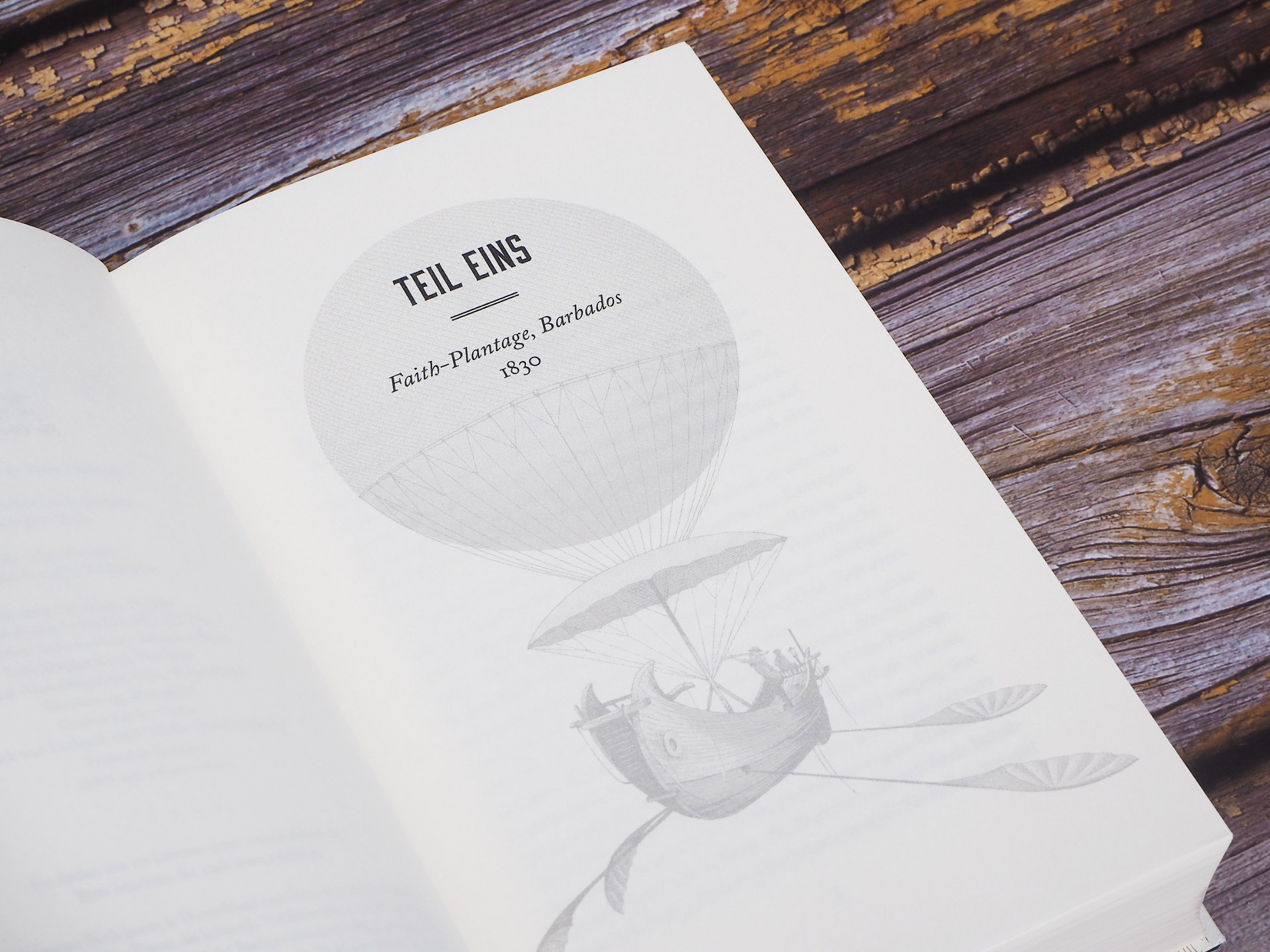
Visually, I find this edition very well done. The cover with its gold embellishments, the beautiful steampunk-style airship, and the color palette—it all looks magnificent. Combined with the illustrated endpapers depicting the island of Barbados overlooking the sea, it feels cohesive and aesthetically pleasing. There should be more books with such thoughtful design; Eichborn Verlag really did an excellent job here.
Conclusion: This much-praised book only moderately impressed me. The story is entertaining, the language flows nicely, and the design is gorgeous. However, the narrative lacks a clear direction. I had hoped for more of an adventure story, as the blurb suggested, but that’s not what this book is. It’s also not a true travelogue, and while slavery is a central element, it offers little that’s remarkable in that regard. The character development felt uneven to me—often too stereotypical or simply unengaging. The book is a pleasant read with entertainment value, but in my opinion, not a must-read. I’m still undecided whether to keep it or place it in the public book exchange shelf.
Book information: Washington Black • Esi Edugyan • Eichborn Verlag • 512 pages • ISBN 9783847906650
Es ist immer wieder ein Fest, bei Dir reinzuschauen. Und wenn ich meine Bücher nach Covern kaufen würde, würdest Du mich noch ärmer machen, als ich ohnehin schon bin.
Viel Freude beim Entdecken weiterer schöner Bücher.
Liebe Grüße,
Anne-Marit
Liebe Anne-Marit,
vielen Dank für Dein positives Feedback. Es gibt schon richtig schön gestaltete Bücher und ich bin da auch echt anfällig dafür, zu viele schöne Ausgaben zu kaufen. Obwohl, zu viele kann man da ja nicht haben ;)
Liebe Grüße
Tobi
Warum sollte man von einem Buch, dass Obama empfohlen hat, erst einmal “die Finger lassen”? Warum ist die Darstellung “großer Ungerechtigkeit” wie der Sklaverei ein “primitives Narrativ”?
Liebe Sandra,
das ist ein reiner Erfahrungswert. Bücher die groß angepriesen werden und besonders von Prominenten empfohlen werden, waren bei mir deutlich öfter ein Griff daneben, als beispielsweise Klassiker oder mit viel Zeit von mir entdeckte und eher unbekannte Bücher. Ähnlich geht es mir mit Spiegel Bestseller. Es gibt schon gute Bücher, die als Spiegel Bestseller geführt werden, das ist klar, aber die Trefferrate ist einfach deutlich geringer.
Ich empfinde es als ein sehr plumpes Stilmittel beim Leser Emotionen mit starker Ungerechtigkeit oder Grausamkeit zu wecken. Natürlich sehnt sich der Leser dann danach, dass diese Ungerechtigkeit wieder ausgeglichen wird wodurch es ein sehr einfaches Vehikel ist, um eine Geschichte spannend zu machen. Mir geht es bei Büchern gerade und die subtileren Gefühle und die Feinheiten zwischenmenschlicher Interaktion. Tatsächlich hat sich die Befürchtung bei diesem Buch aber nicht bestätigt. Es gibt schon grausame Darstellungen der Sklaverei, sie stellen aber einen Rahmen dar und sind eben nicht ein billiges Mittel, den Leser damit irgendwie zu fesseln.
Liebe Grüße
Tobi