
Classics by Women: Empowerment or Monetized Feminism?
Looking at new releases in the classics category, it is noticeable that some publishers are focusing more on books by women. On the one hand, that’s a good thing, because there are certainly numerous excellent classics by women waiting to be rediscovered. At the same time, there is a risk that books are being reissued precisely for that reason and thus only moderately readable works are being promoted. With this post I would like to share my experiences and thoughts on this topic with you.
Finding the right book is an art and supplying yourself with good literature is not easy. For years I have had my favorite publishers, whom I repeatedly search for good classics and whose new releases I examine very closely. It is noticeable that some publishers are increasingly relying on female authors.
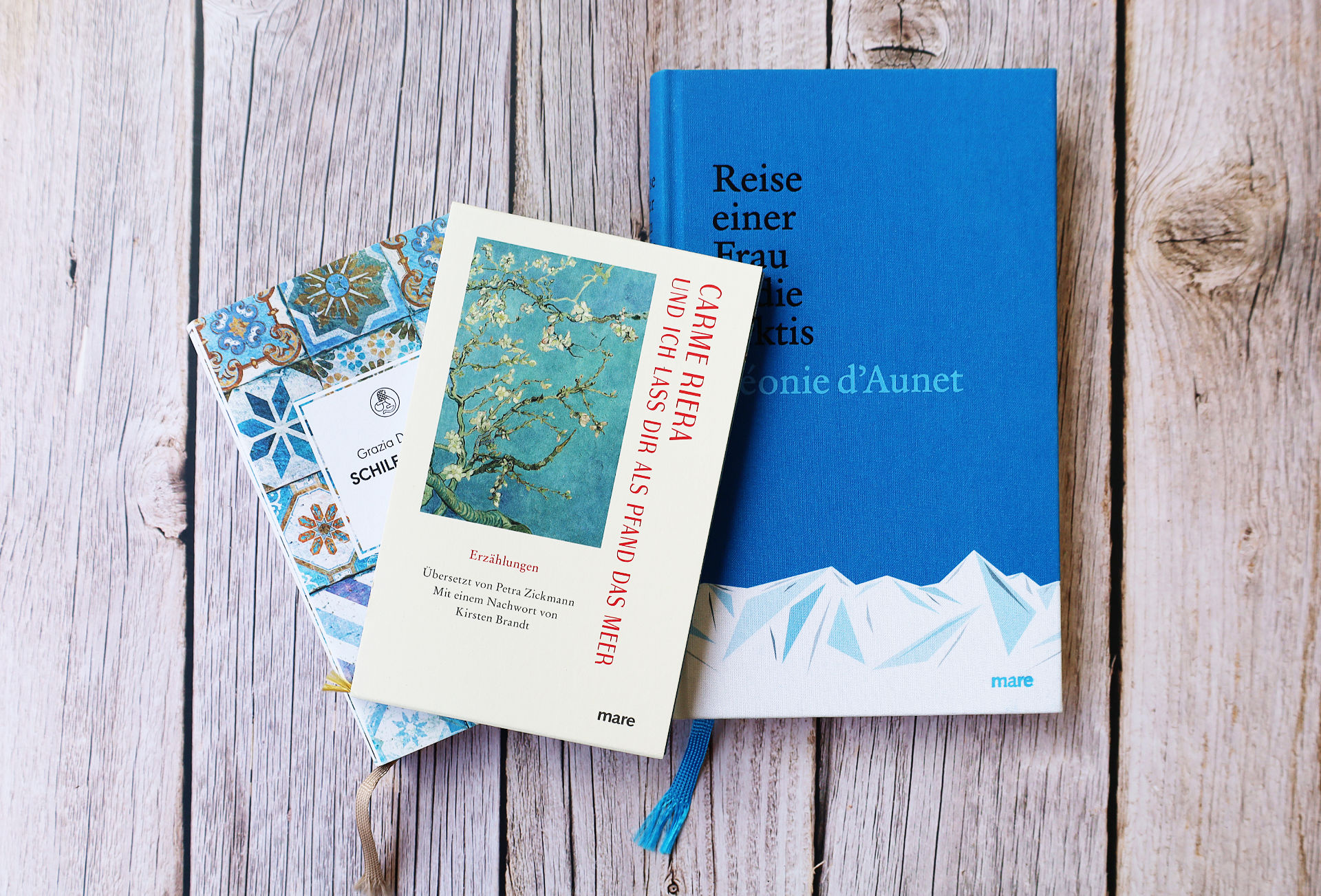
Manesse Verlag realigned its famous series “Manesse Bibliothek der Weltliteratur” in 2017. From 2022 onwards they have been placing a stronger emphasis on female authors and two thirds of the newly published books are by women. Mare Verlag also positioned four small booklets exclusively by women as female classics last year and for three years has been increasingly focusing on female authors for their classics series. Reclam Verlag has dedicated an entire program to classics by women with its “Reclam-Klassikerinnen”. Ecco Verlag goes one step further and publishes exclusively books by women (there are hardly any classics here, but this complete focus on female authors is certainly noteworthy).
Other publishers show no change in their program design. For example, Hanser Verlag, S. Fischer Verlag, Nikol Verlag or Diogenes Verlag still primarily feature male authors in the classics area.
For me, the question is whether this is a good idea, or whether I am being presented with mediocre literature. Of course that sells very well when the blurb claims how topical the book still is in the debate about equality. Or when something is presented as still deeply relevant. That leaves a sour aftertaste for me, to be honest. I want readable masterpieces of literature. We have to be honest: in the past women unfortunately had only limited opportunities and accordingly there is less material. Women had much more difficult access to education, were not allowed to publish and had to publish under male pseudonyms. This has massively reduced the amount of writing by women that has been produced and preserved. For me this is therefore more a matter of probabilities. If a publisher’s significant selection criterion is now the author’s gender, there is a high risk that this will come at the expense of content and reduce quality.
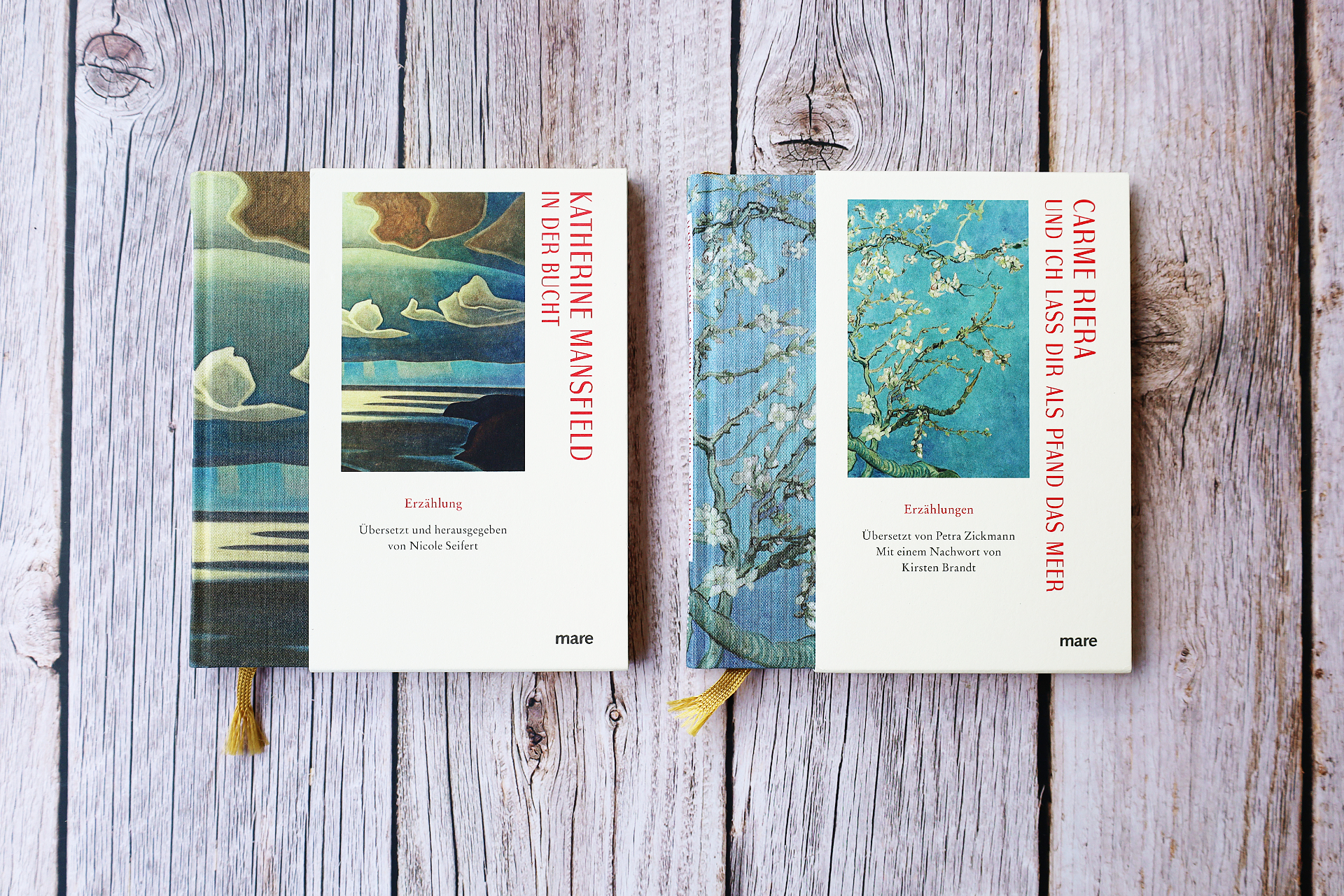
How torn I am on this issue can be seen well in two of the four small mare “Klassikerinnen”. The book Und ich lass dir als Pfand das Meer by Carme Riera I found brilliant; it was a real hit. A short story that nevertheless has a really beautiful punchline that fully convinced me and is a wonderful rediscovery. I did not like In der Bucht by Katherine Mansfield and the story is not worth reissuing. Of course, from a marketing perspective the theme can be placed very well — after all it deals with regretting motherhood and is by a very well-known author. Content-wise I did not find the book particularly worth reading and I can hardly remember anything from it. That is of course also down to me as a reader: regretting motherhood is not a topic for me, but even objectively there is not much in the book.
I would not say that I prefer male authors because I would deny women something in this regard. That makes no sense at all: why should women be able to write better or worse than men? There are numerous masterpieces by women that I love, which will always have their place on my shelf, and when choosing my books I pay only limited attention to the author’s gender. I think of masterpieces like The Handmaid’s Tale by Margaret Atwood, the novels of the Brontë sisters, Rebecca by Daphne du Maurier or Gone with the Wind by Margaret Mitchell.
Another example where I notice how difficult it is to classify is Liebe und Salzwasser by Ethel Wilson. The book is not bad, it has many excellent elements, yet for me it belongs in the middle range. It may be that the subject is not aimed at me — I am simply not a woman who wants to lead a self-determined life and go her own way. And I think that is exactly the problem. According to various studies, women read significantly more and prefer fiction, while men are less likely to pick up a book and tend to choose non-fiction. That means, from an economic point of view, it simply makes sense for a publisher to target a female audience and publish corresponding literature. And from a marketing perspective it is also sensible to address the growing awareness of equality, feminism and empowerment and to tap that as a target market.

This topic always makes me think of the book Prosaische Passionen, a collection of over one hundred short stories by women from the modern era. At the time of its publication it was praised and repeatedly mentioned and discussed in the book blogger/Bookstagrammer scene. The number of reviews and the book’s price decline indicate that it was only a short-lived success and the book disappeared from view just as quickly as it was hyped on social media.
So if a rediscovered classic by a female author is used as a selling point, I would say that in recent years it has proven to function only as a supplementary, additional argument. Just as feminism has a lot of visibility, for the average consumer it is probably only a positive reinforcement as a purchase incentive for a book. That corresponds to the behavior I often observe. Women call themselves feminists, throw around a few of the often-mentioned arguments, but otherwise are only minimally engaged or interested in the topic. A circumstance I encounter again and again. This thesis is also supported by the fact that only a few publishers jump on this bandwagon and many (like Hanser Verlag) completely ignore it in the classics area.
What does this mean for me as a reader? The search for good books becomes a little harder. Not much, but noticeably. I am already very critical when choosing suitable reading and have developed a good sense for it. There are, for example, books that cater to certain ideologies, which you can quickly recognize and then avoid. In times of an increasingly divided society, in which debates are conducted in an ever more aggressive and polemical manner, this is also reflected in the world of books. That rules out for me much of what is marketed as literature or modern classics.
Ethel Wilson’s novel left me with mixed feelings. Nevertheless, I was very happy to discover this book and to get to know the author. And that brings us to the next point I find very problematic about this trend of female classics: mostly the big female authors are simply reissued. Jane Austen, Virginia Woolf, Katherine Mansfield are reflexively thrown back onto the market. Anne of Green Gables, The Secret Garden or Little Women fall into the same category. Of course there is demand, but I am always disappointed when it is the thousandth edition of the same books. The mare Verlag’s “Klassikerinnen”, on the other hand, are very well chosen and an enriching read, even if they are not always major hits (which are also to be found in the series). It is a balancing act and while mare Verlag manages this very well without overdoing it, Manesse Verlag’s program has, for me, developed a bit of a tilt.
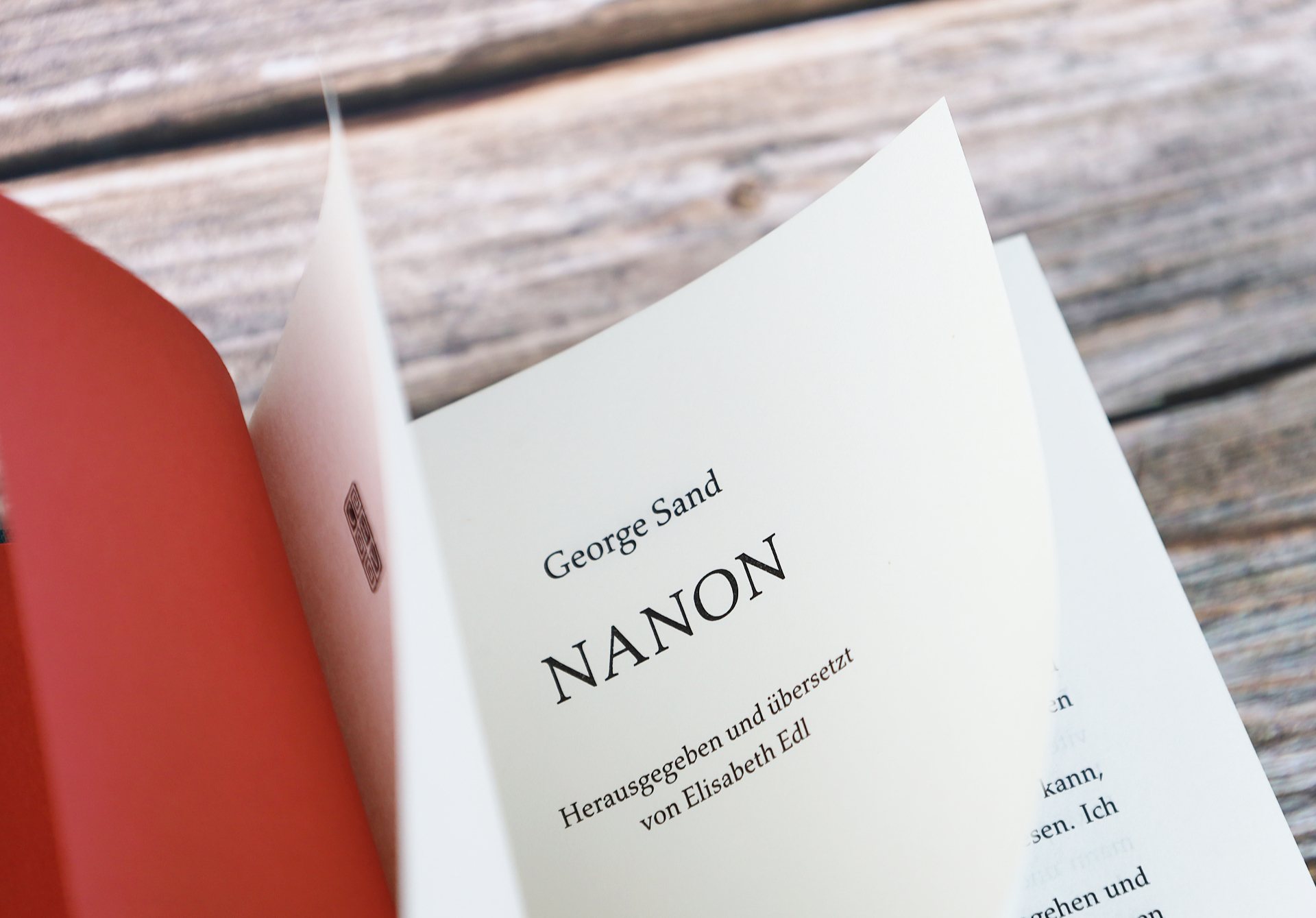
The work of publishers is more important than ever and many of them do this work with high quality. I wish for classics by women that were truly overlooked, that were neither translated nor canonized, but nevertheless belong in the league of great works. When publishers bring wonderful books by female authors to light with new editions, that is also a form of cultural reparative work. However, this is extremely demanding and time-consuming and requires a lot of research and searching. Something that does not happen with the thousandth Jane Austen reissue. It does happen with a book like Reise einer Frau in die Arktis by Léonie d’Aunet. And it is also the case with Nanon by George Sand.
As a reader who loves classics, I want more books by women. But only if they are truly very readable stories or even masterpieces of literature. And I am even more pleased about newly discovered first translations that are something special, that captivate readers and fully convince with their story. Books that happen to pick up currently discussed topics, fit ideologically, or are the thousandth reissue of Jane Austen are not what I mean.