
Nanon • George Sand
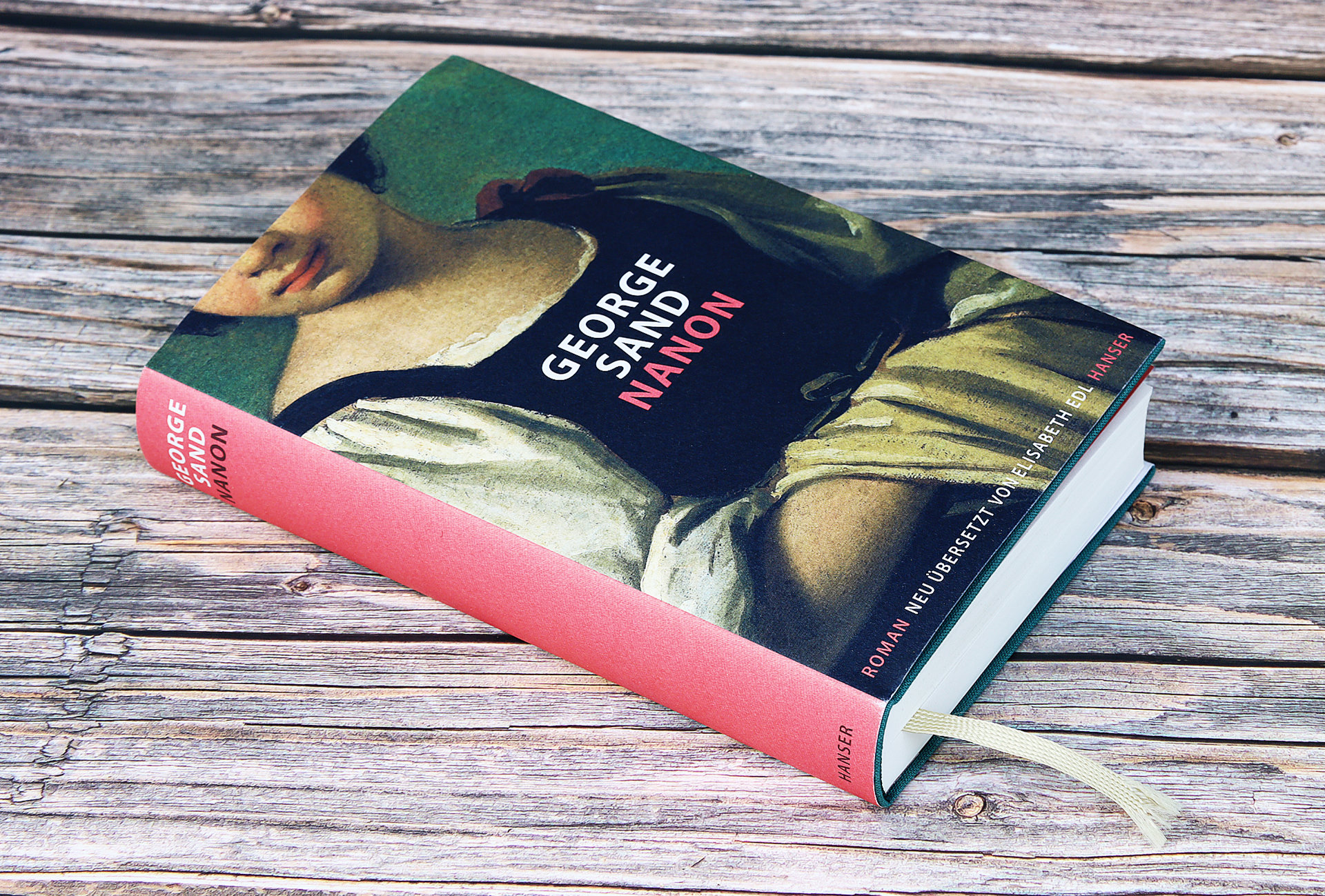
Nanon was published last year in this beautiful new edition and has been waiting on my pile of unread books ever since. George Sand was well acquainted with Balzac and Dumas, and Flaubert, too, was enthusiastic about her writing. Added to this is a high‑quality new translation by Elisabeth Edl, who has already impressed with numerous books. So it was an easy decision to read this otherwise rather unknown title. Is Nanon a worthwhile new translation or a mediocre book drifting in the wake of the great masters of literature? Let’s take a closer look at what Sand has to offer.
Nanon recounts her eventful life story during the French Revolution. She describes her early youth as a simple peasant girl and her development during a very turbulent and politically unstable time. A major role is played by Émilien, a younger son of a noble family who was destined to be sent to a monastery in favor of his older brother. From the perspective of simple peasants, the reader immerses themselves in a rural, nature‑bound everyday life that is influenced by great upheavals, yet follows its own rules and offers a unique view of the ideals and outcomes of political ideologies.
The story begins shortly before the French Revolution, and fourteen‑year‑old Nanon describes how she leads a very simple life as a peasant girl with her great‑uncle. The remote village in the province of Marche is fictional but closely based on real locations and deliberately portrayed as an ordinary small village. From there she recounts her life, her encounters with Émilien, and also with the monks of the monastery to which the peasants of the parish are bound. With the Revolution, circumstances change for the peasants—though not with the same intensity as in Paris. And that is what makes the book special. While Balzac, Hugo, Dumas, and the other great authors always focus on the center of historical events, Sand deliberately remains at the very edge of these political transformations.
Nanon quickly becomes sympathetic to the reader. She is simple but sincere, curious, kind, and pure of heart. Her modesty, diligence, and pursuit of knowledge gradually move her forward, and these very virtues are rewarded. At the same time, she emancipates herself over the course of the Revolution and rises socially—entirely through her own efforts. The plot is exciting, and the novel repeatedly takes on elements of an adventure story, though in a moderate form that keeps the narrative believable while still entertaining.

What I really loved were the descriptions of the landscape and nature. They are simply wonderful. They almost reminded me of Daphnis and Chloe by Longus and have a touch of bucolic poetry. Nanon and her companions spend some time hiding in the remote hinterland, which Sand modeled on the area around Crevant. These descriptions of nature are a true delight. How they settle in there and provide for themselves has something of Robinson Crusoe, and the journey there is once again quite adventurous. It invites the reader to dream, and I greatly enjoyed reading it in the glow of the first warm spring sunshine.
Because Nanon always lives far from the centers of power, news of political upheavals reaches her only slowly and in distorted form. The story takes place during the Revolution, the Reign of Terror under Robespierre, and the period that followed. The expulsion of the nobility, the atrocities, the numerous executions—all of this affects the characters, though in a softened form due to their remote rural location. Still, it preoccupies Nanon and those around her and naturally has a strong impact on their daily lives. Suddenly the peasants are no longer bound to corvée labor and may acquire land. At the same time, there is fear that the nobility might return, and among the common people there is disapproval of the crimes committed by the revolutionaries, even if they fight for a just cause. This tension recurs throughout the book. I found this moderate perspective very contemporary, as it highlights the excesses of the time and shows that societies always function according to similar principles, even if history never repeats itself in every detail.
“What one would need to know, what one would need to hear, you understand, is what is spoken very softly; but you will never learn these things, for you live amid declamations or shouting.” (p. 298)
From a political perspective, I found the book very topical. The excesses of the Revolution can be found in every political discourse today. Of course, it was an extreme time and not comparable to the present. But what I found fascinating was the fact that not everything could be said anymore. People kept their heads down, which is understandable—one wrong remark and you could end up under the guillotine without much of a trial. Even today, freedom of expression may still exist; you don’t end up on the scaffold for saying something that contradicts the prevailing social opinion, but there are already serious repercussions if you deviate, and you are quickly categorized and excluded politically. A free discourse? That is something currently being lost, and it is one of the most important lessons of this cruel Revolution, which forms such a crucial foundation of our present social order.
One would have to find a means that restrains without punishing, and fights with weapons that do not wound. […] Well, these weapons have been found, and one must only know how to use them: it is free discussion, which enlightens all people; it is the power of opinion, which thwarts fratricidal conspiracies; it is the wisdom and justice deeply rooted in the human heart and developed through good education, while ignorance and passion smother them. (p. 239)
Sand has Nanon tell the story in the first person, which gives it great authenticity and creates a pleasant closeness to the protagonist. The sentences are pleasant to read and at times have a certain simplicity, which suits the peasant girl well. At the same time, Sand naturally belongs to a literary milieu that was eloquent by nature, and beautiful sentences with a slightly old‑fashioned tone are simply part of the standard repertoire. One slips into a smooth and enjoyable reading flow, and the book reads easily and effortlessly.
George Sand, born in Paris in 1804, wrote Nanon in 1872. It was her last novel, and she died only four years later in Nohant. As the daughter of a noble father and his mistress, Sand—whose real name was Amantine Aurore Lucile Dupin de Francueil—was strictly raised by her grandmother and received an above‑average education. In 1836 she separated from her husband, which was a scandal at the time, but it granted her freedom. She led a turbulent life, was very emancipated for her time, had intense love affairs, even wore men’s clothing, and was highly productive as a writer. George Sand chose this name as her pseudonym because it was difficult for a woman to publish at the time. In my view, she belongs among the great writers of her era, even if she did not achieve the same fame as authors like Alexandre Dumas, Honoré de Balzac, or Gustave Flaubert.
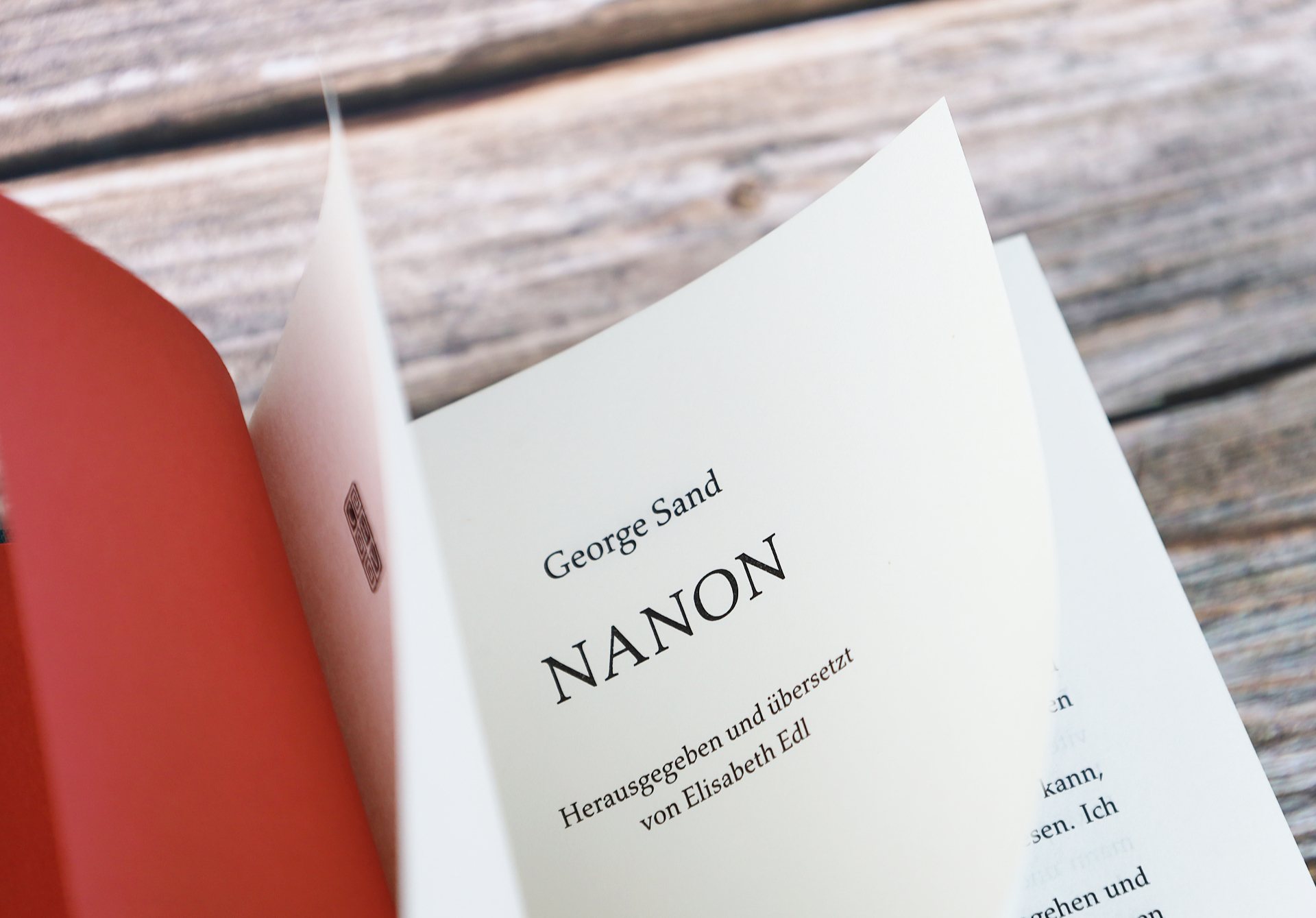
As is typical for the Hanser new translations, the book comes with extensive supplementary material. I found the notes excellent, as they contextualize the political events without being overwhelming. I always read them before each chapter, and then it becomes clear what is happening in Paris and what, in contrast, reaches the provinces. It was very informative and educational. There is also a brief chronology of French politics for those who want more information, as well as a timeline of Sand’s life. The afterword by Elisabeth Edl offers insight into Sand’s life and work and provides numerous additional background details. It is evident that the translator has studied Flaubert intensively, and thus the relationship between Sand and him receives considerable attention. It is interesting to read how Sand was embedded in this literary world and to learn about her interactions with Balzac, Dumas, and many other authors of the time. I found the afterword somewhat extensive, yet it is an excellent resource for anyone seeking more background information.

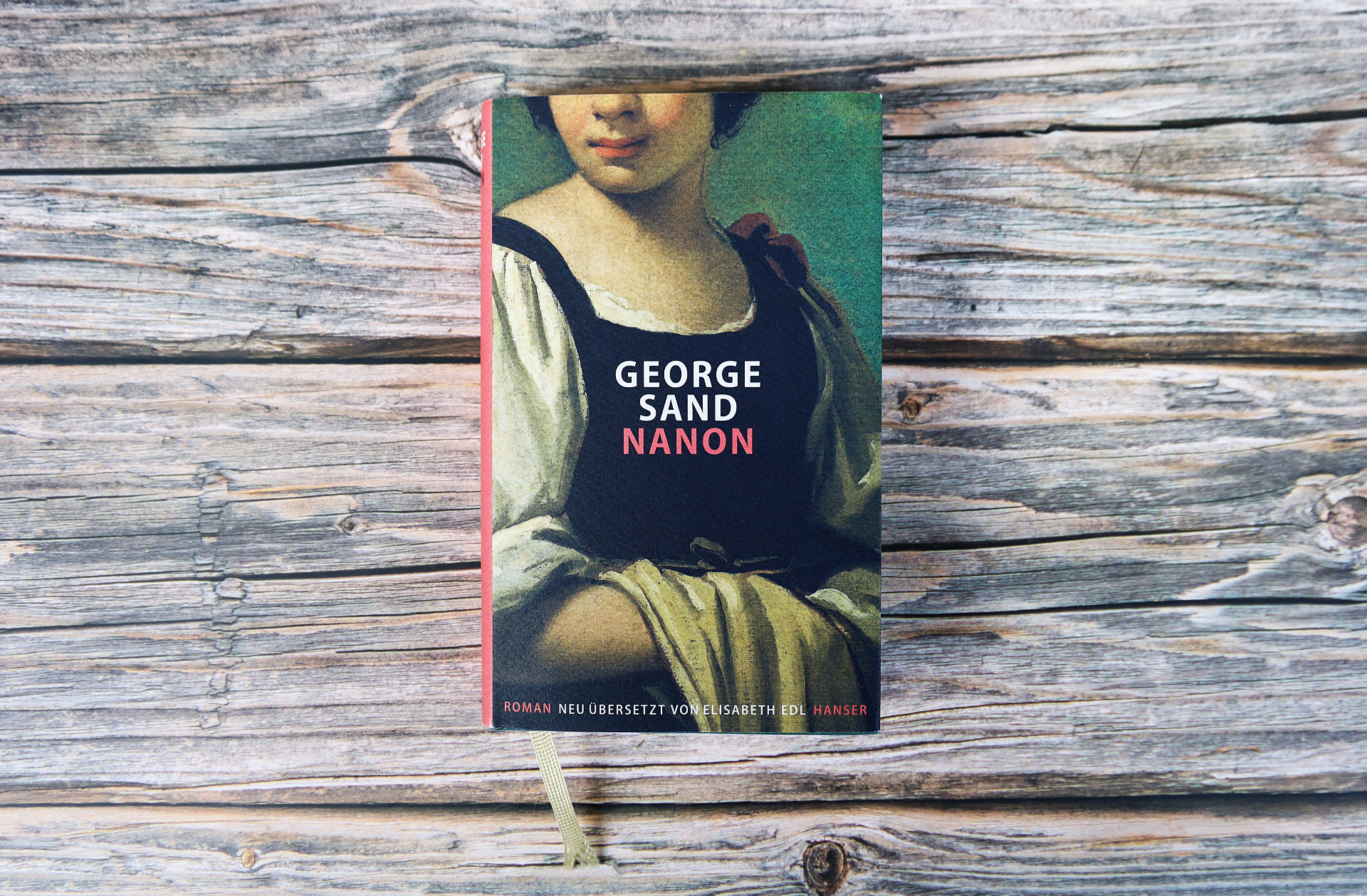
The edition is of very high quality and follows the high standards of the Hanser Classics. It has thread stitching, a ribbon marker, a cloth binding, a pleasantly sturdy and high‑quality dust jacket, and carefully chosen typography. As usual, this is a premium edition, offering a bibliophile volume that leaves nothing to be desired. Let me put it this way: even if there were another edition of Nanon, I would always prefer this Hanser edition because it is simply perfect.
Conclusion: The journey into the beautiful rural France, the almost bucolic description of the remote village, and the adventurous scenes during the Revolution make this book an exciting read. But above all, I grew very fond of Nanon and greatly enjoyed seeing the world through her eyes. Sand’s language is entirely in the tradition of the great French authors, and the book carries many messages that are utterly timeless. Elisabeth Edl has rediscovered a wonderful book, translated it perfectly as always, and made it accessible to the German‑speaking audience in the form of an outstanding bibliophile Hanser classic. Nanon is clearly a recommendation.
Book information: Nanon • George Sand • Hanser Verlag • 496 pages • ISBN 9783446284180
Ich habe Nanon mal vor ca zwanig Jahren in einer Taschenbuchauflage gelesen. Das Verkaufsargument war damals, dass Nanon einer von ganz wenigen Romanen sei, die während der Revolution spielten. In wie weit das stimmt kann ich nicht einordnen, meine aber oft gelesen zu haben “Zur Zeit des Ministeriums X” oder “Ministeriums Y”. Jedoch wurden die einzelnen Abschnitte nicht eingeordnet und google steckte noch in den Anfangsschuhen. Wenn in dieser Neuauflage jetzt über die Anmerkungen genau diese Einordnungen hinzukommen, wäre dies ein echter Mehrwert, ein Kauf- und nochmallesen-Argument.
Hatte damals noch Lelia gelesen; musste dieses Buch viermal starten, weil ichs einfach nicht verstanden habe, keinen Zugang hatte. Das war n verrücktes Ding, da hatte Sand ihre Lebensphasen mittels Briefen miteinander interagieren lassen. Zumindest war das dann meine Interpretation, mit der ich den Roman schließlich lesen konnte.
Nach Indiana war ich dann aber raus.