
The Fall of the House of Usher • Edgar Allan Poe
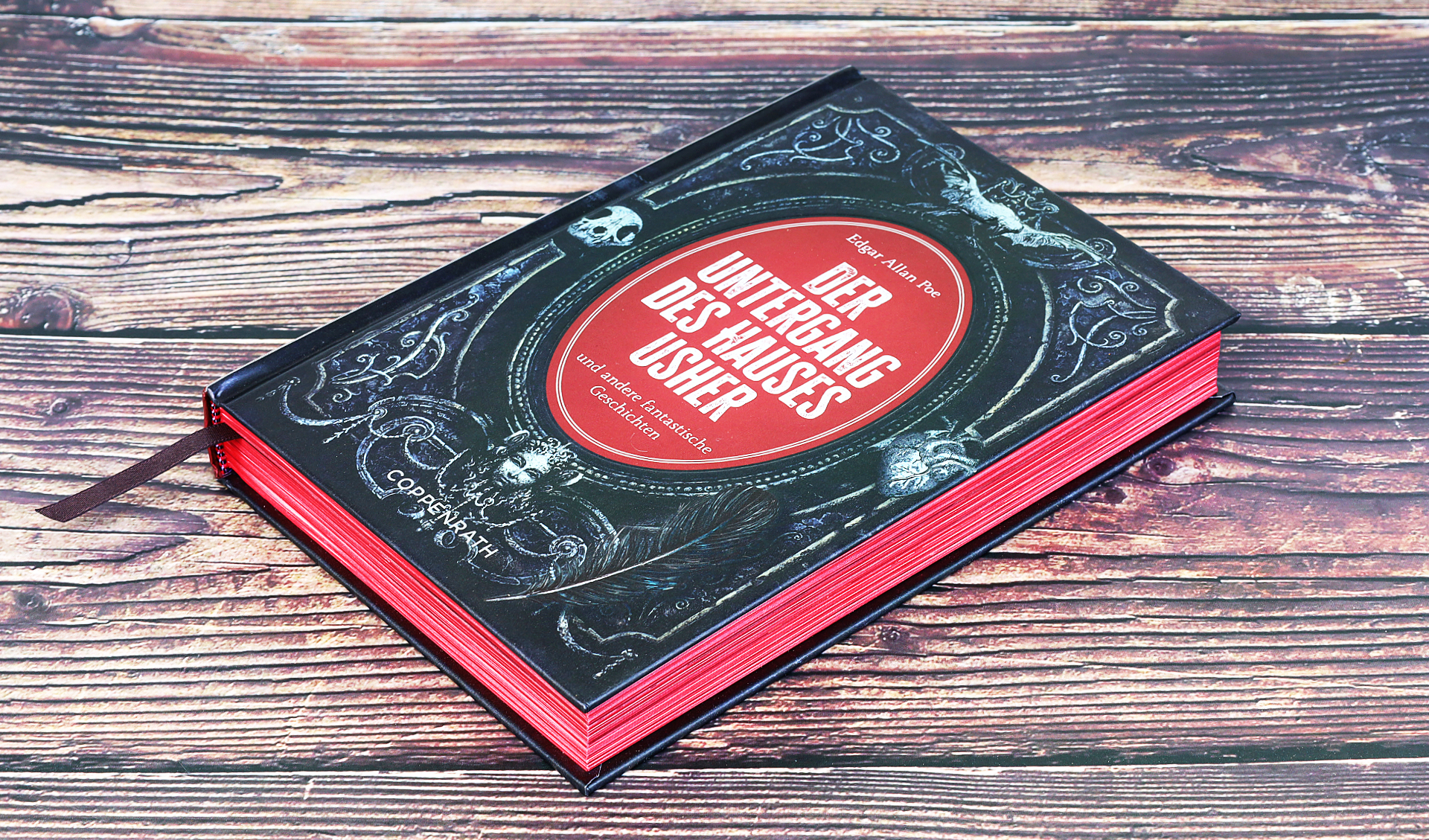
Not too long ago, I read a collection of macabre tales by Edgar Allan Poe. I enjoyed the stories very much at the time and loved their atmospheric density, their beautifully old-fashioned language, and their depth. When I came across this gorgeous Coppenrath edition, I simply had to have it. The beautiful illustrations and inserts, the visual design, the bibliophile presentation — of course I couldn’t resist. And naturally, I have to present the book here, because it fits lesestunden perfectly.

This book contains 16 of Poe’s tales of terror, collected by Coppenrath Verlag. The selection overlaps a bit with the stories from my Nikol edition, but includes a few other stories I had been missing — such as The Tell-Tale Heart and The Cask of Amontillado. I have only read the two Poe books so far, but I would say that this edition offers a wonderful selection and allows readers to immerse themselves beautifully in this atmospheric, old-fashioned world of horror. The title story The Fall of the House of Usher, as well as tales like The Black Cat or The Masque of the Red Death, provide the classic Gothic experience — in the tradition of Bram Stoker’s Dracula and Lovecraft.
Anyone who wants to experience this gothic, Victorian‑tinged, symbolic, and highly atmospheric world is in exactly the right place with Poe. His stories play with primal human fears — being buried alive, deadly illnesses, madness and psychosis, and supernatural occurrences. This makes the stories very gripping, and you want to know what happens and where they lead. They are not truly frightening, but often oppressive, psychologically fascinating, and you sense that there is always more behind the events than first appears. That is what defines Poe’s style. Told in the first person, the stories create a great closeness to the narrator, and as a reader you slip into the mind of characters who often seem strangely alien. That is part of the fascination, because you can always follow their thoughts and perceive the emotions of the protagonist. Much remains in the shadows, and the reader never fully understands why the characters act as they do — why they commit murder or behave in contradictory ways.

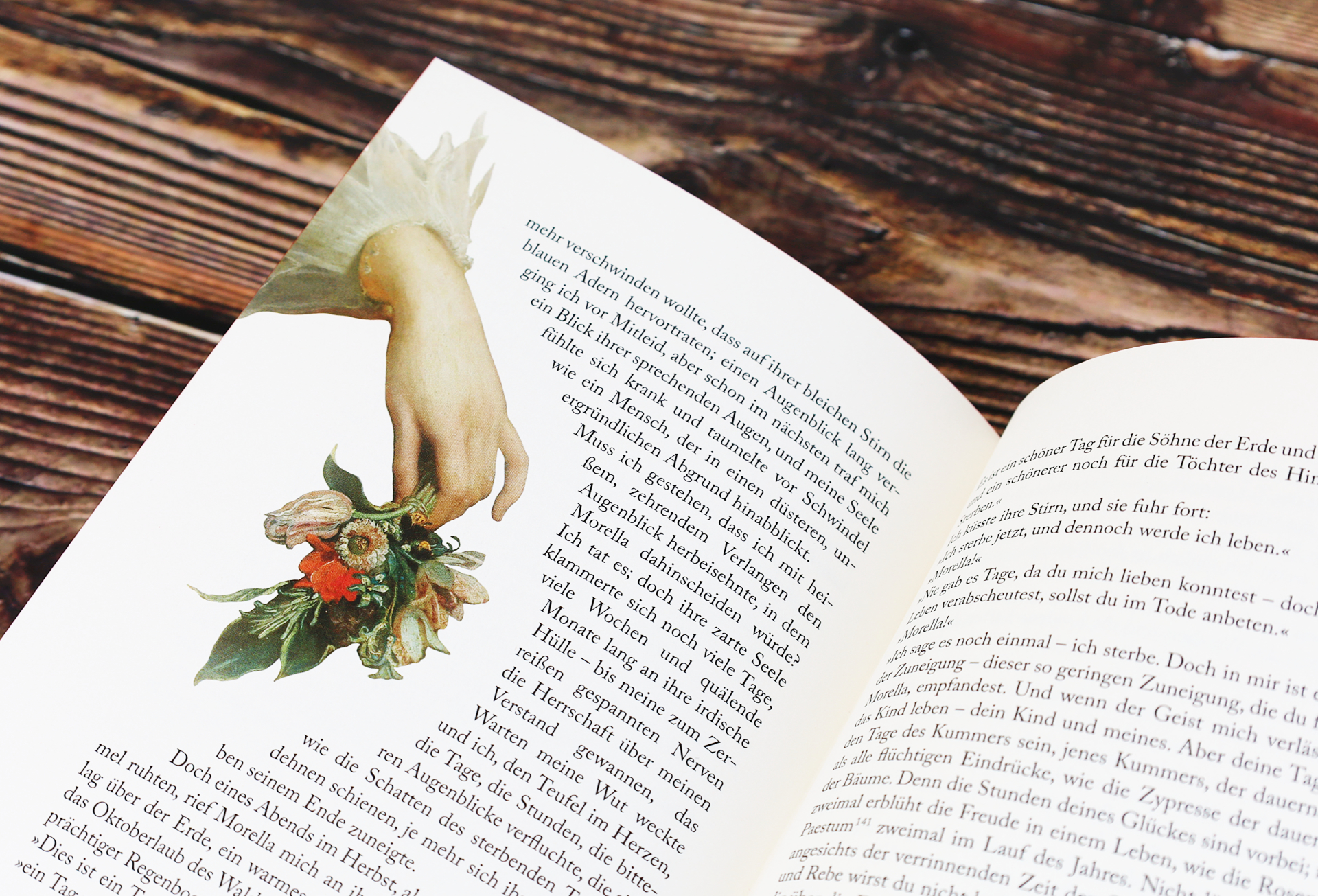
My three favourite stories were Eleonora, Ligeia, and Morella. These are wonderfully crafted, and they all share the presence of a fascinating and beautiful female figure whom the narrator admires, loves, and who remains mysterious and unattainable. This makes these women elusive, and Poe gives these stories an emotional depth that I found captivating. Here, the author himself appears — a man who lost his mother early and later his very young wife. These women are often portrayed as superior to the narrator, and he becomes their student, while their beauty exerts a physical attraction that often remains platonic. It is these many nuances that make the stories feel authentic in their own way.
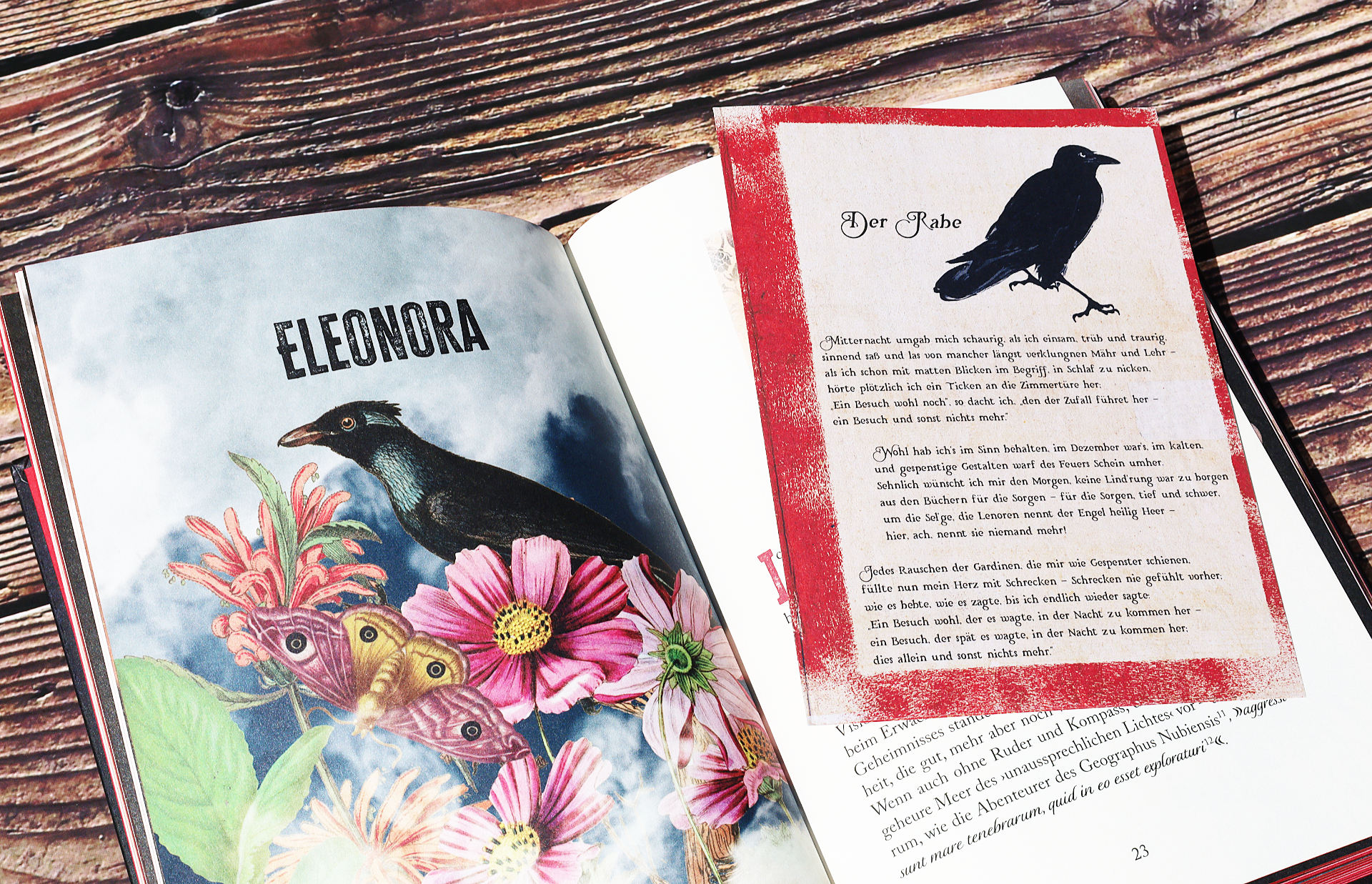
Edgar Allan Poe, born in Boston in 1809, lived a short and turbulent life that itself reads like a novel. He lost his parents early, grew up in difficult circumstances, and struggled throughout his life with financial troubles, illness, and personal loss. His marriage to Virginia, his cousin, is particularly striking — she was only 13 at the time of their wedding and died at just 24. He processed his grief, among other works, in the poem Annabel Lee, which is included as an insert in this edition, as is The Raven. I found Annabel Lee especially beautiful, and it rounds off this edition wonderfully that Poe’s most important poems are included.
In addition to the stories and the poems included as inserts, the book also contains a short afterword on Edgar Allan Poe. I found this very well done, as it focuses solely on Poe’s life in a concise way. It is informative for the reader without attempting to interpret anything. The notes with explanations of individual text fragments and words were also very helpful.
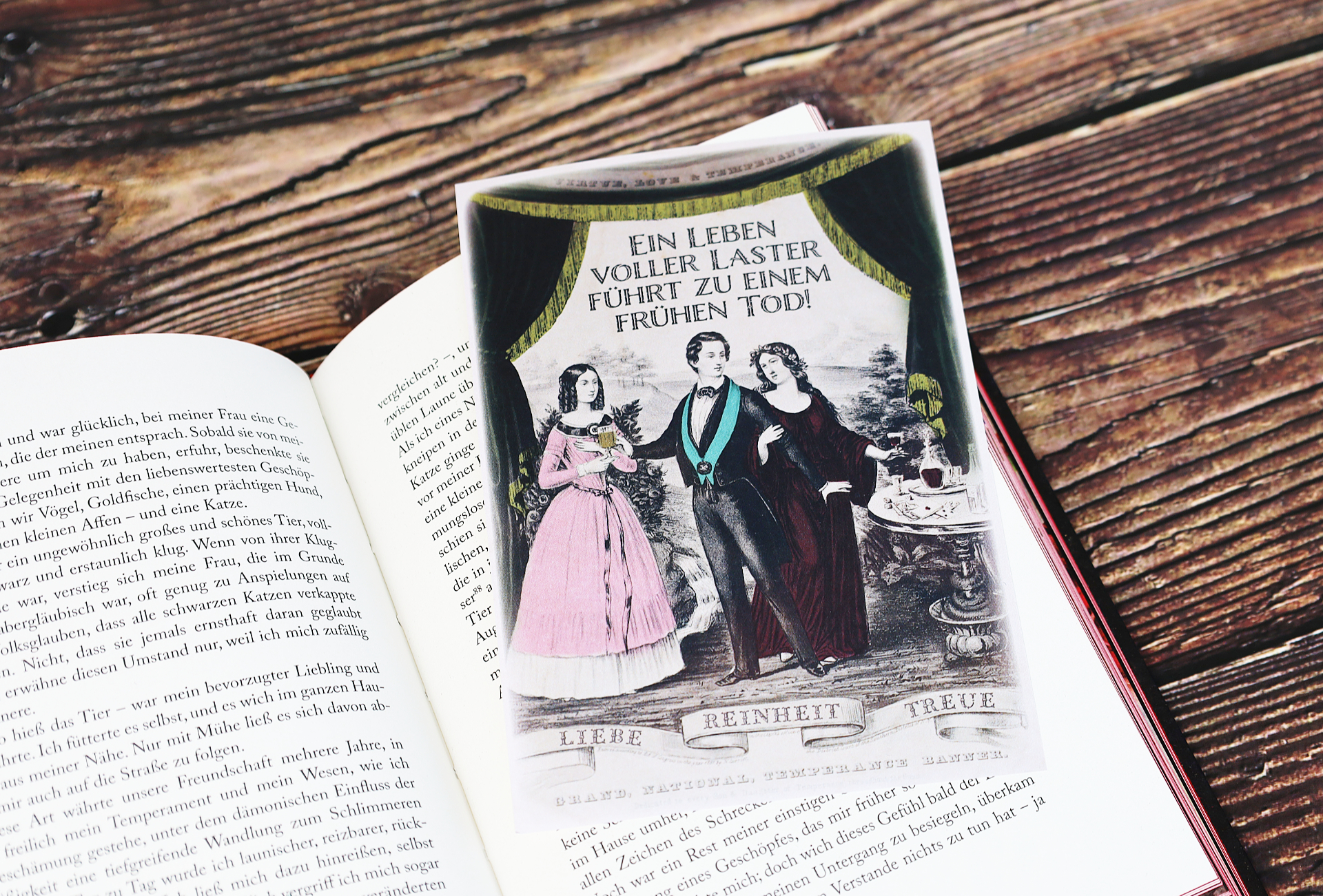
As already mentioned, this edition is beautiful, with fitting and delicate illustrations and numerous inserts. These pick up themes from the book — elements that provide additional information, such as film adaptations, a fictional advertisement for a wine, an explanation of mesmerism, an invitation to a decadent feast during the plague, or the aforementioned poems. The book features thread stitching, a ribbon bookmark, and red‑dyed page edges. For such a bibliophile edition, the price is truly fair.

Conclusion: Poe’s tales of terror are fascinating, atmospheric, and profound. They play with primal human fears, supernatural events, and psychological perspectives. Poe writes in a beautiful and refined language, moves the stories forward at exactly the right pace, and manages to keep the reader’s curiosity high throughout. This Coppenrath edition is gorgeous, and with its inserts, splendid illustrations, red page edges, thread stitching, and ribbon bookmark, it is a bibliophile delight. I can highly recommend this book — whether to get to know Poe or simply to enjoy classic tales of terror.
Book information: The Fall of the House of Usher • Edgar Allan Poe • Coppenrath Verlag • 271 pages • ISBN 9783649648659