
A Winter in Majorca • George Sand
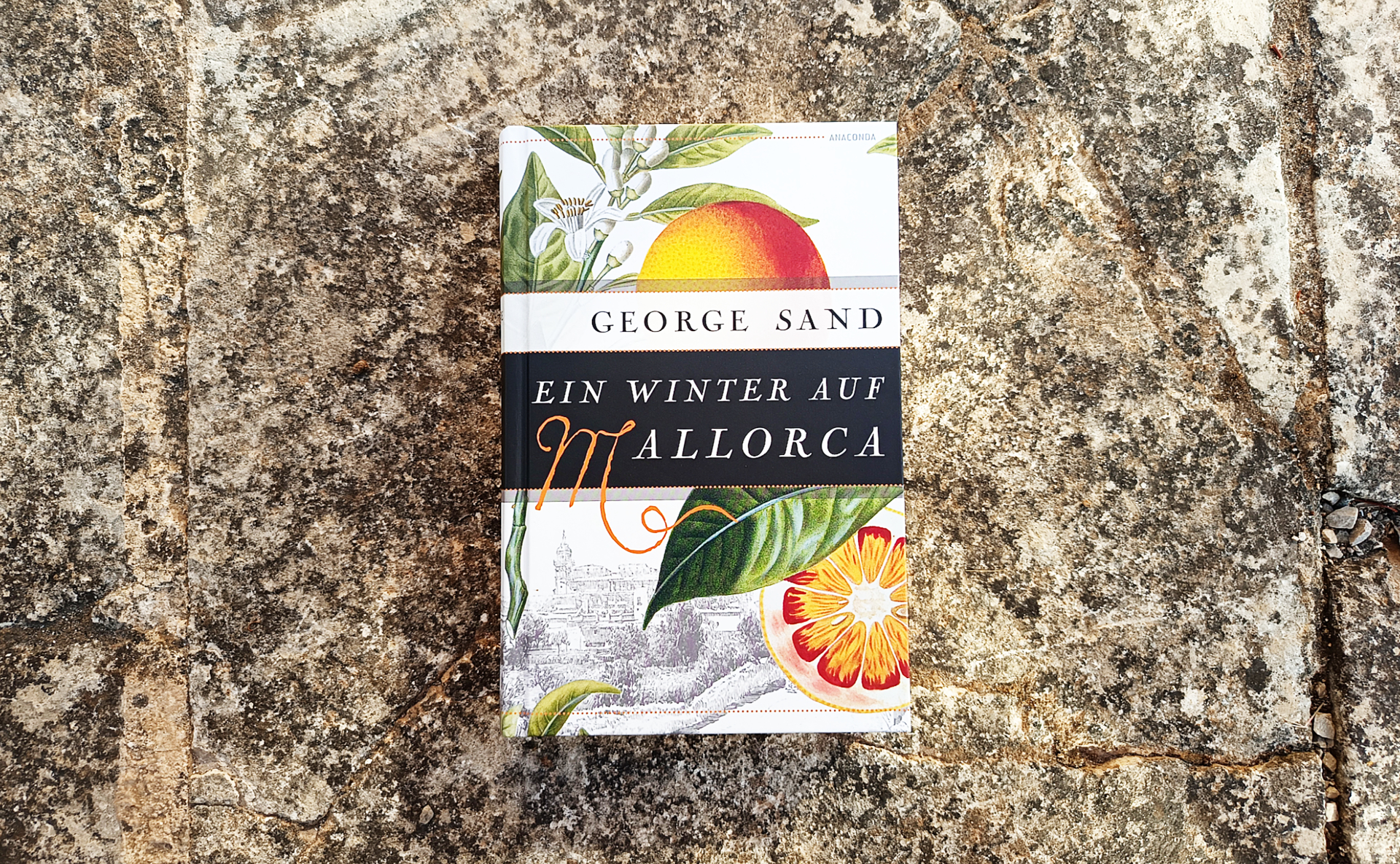
George Sand spent the winter of 1838 to 1839 on Mallorca together with her children and Frédéric Chopin. Following medical advice, the climate of the island was supposed to improve her son’s health as well as Chopin’s. And so the well-connected author set off with her family and her lover. Naturally, she intended to write a book about the journey, and since my own holiday brought me to these shores, it was clear that this book would become my vacation read. Of course, I also visited the picturesquely situated Charterhouse of Valldemossa. Read here about my literary journey and whether the book is worth reading on the local La Terraza.
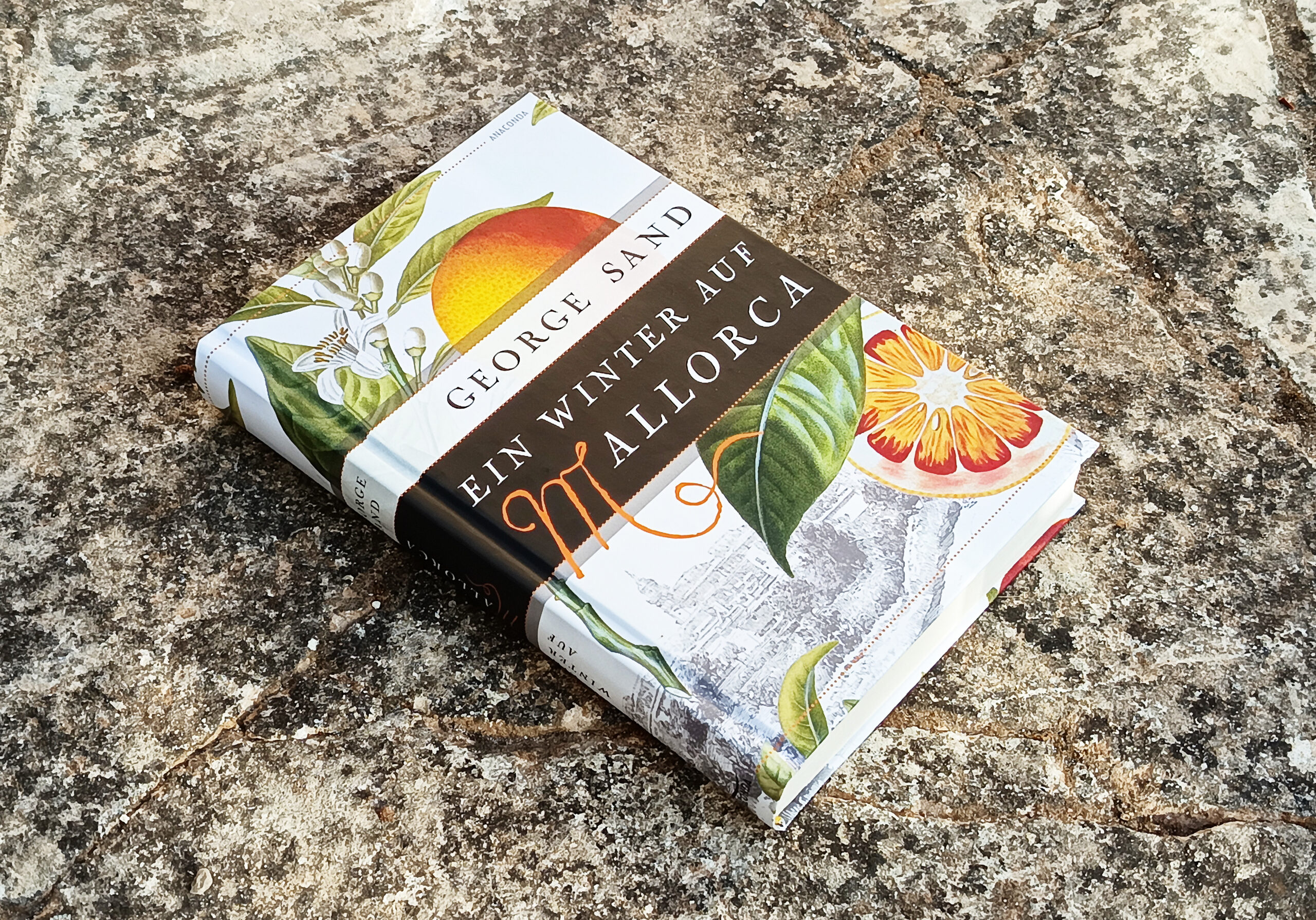
I have already read several books by George Sand, most recently Nanon, and I have always enjoyed her landscape descriptions. Un hiver à Majorque was published in 1842 and recounts her winter on Mallorca. Her son suffered from a rheumatic illness, and her lover Frédéric Chopin had tuberculosis, so the island’s climate seemed ideal. This later turned out to be a mistake, as the winter rains were heavy and worsened Chopin’s condition considerably. Yet it clearly did not harm his artistic inspiration, since Chopin composed some of his most famous pieces in the solitude of the Charterhouse.
Divided into three parts, Sand introduces the island of Mallorca and recounts her time there. Personal impressions blend with factual observations, giving the book a lively tone. In the first part, Sand provides background information on the island, looks at agriculture and the economy with a satirical eye, reflects on travel itself, and describes her journey and first days on Mallorca. In the second part, she offers a cultural overview, discusses the Moorish past and Arabic architecture, comments on Palma’s most important buildings, and includes the occasional anecdote. She even dares a glance at the Inquisition, which she criticizes through a cleverly constructed dialogue between two men. I found this second part rather slow and not particularly entertaining, even though one does learn a few things. Only the third part truly captivated me. There she describes her move to Valldemossa, portrays monastic life, depicts the Mallorcans, and especially the winter routine in the Charterhouse. Here we again find beautiful landscape descriptions and her overly romanticized image of the beautiful young peasant woman, which already appeared prominently in Nanon. I found this very well done.

Valldemossa, the view toward the sea across the mountains of the Serra de Tramuntana, the small mountain village that is full of tourists in summer (yet never feels overcrowded), the little Charterhouse, the winding roads leading up to the monastery — all of it is beautiful and a pleasure to behold. It is immediately clear why Sand chose this lovely corner of the world as her residence. When Sand describes how it took her seven hours to travel from Palma back to the Charterhouse in the pouring winter rain, it is fascinating to compare that with today’s shortcut through a tunnel, which gets you there in forty minutes by car. The biggest challenge these days? The parking meter, which apparently has not been updated since Sand’s stay. Standing in the Charterhouse’s garden, looking between cypress trees out toward the sea on the horizon, one can easily imagine Sand writing her lines here, accompanied by Chopin’s “Raindrop Prelude.” The place is stunning and definitely one of the most beautiful spots on the island.
“At every bend in the road, from considerable height, we were offered a magnificent view of the sea over the most beautiful vegetation. It was the first time I had seen shores covered with trees and lush greenery all the way down to the waterline, without pale cliffs, barren coasts, or muddy beaches.” The remainder of the passage describes how the sea appeared crystal clear and blue, framed by dark green forest, and how each step along the winding mountain path revealed yet another breathtaking view — though Sand notes that an even more sublime coastline awaited her a few months later.
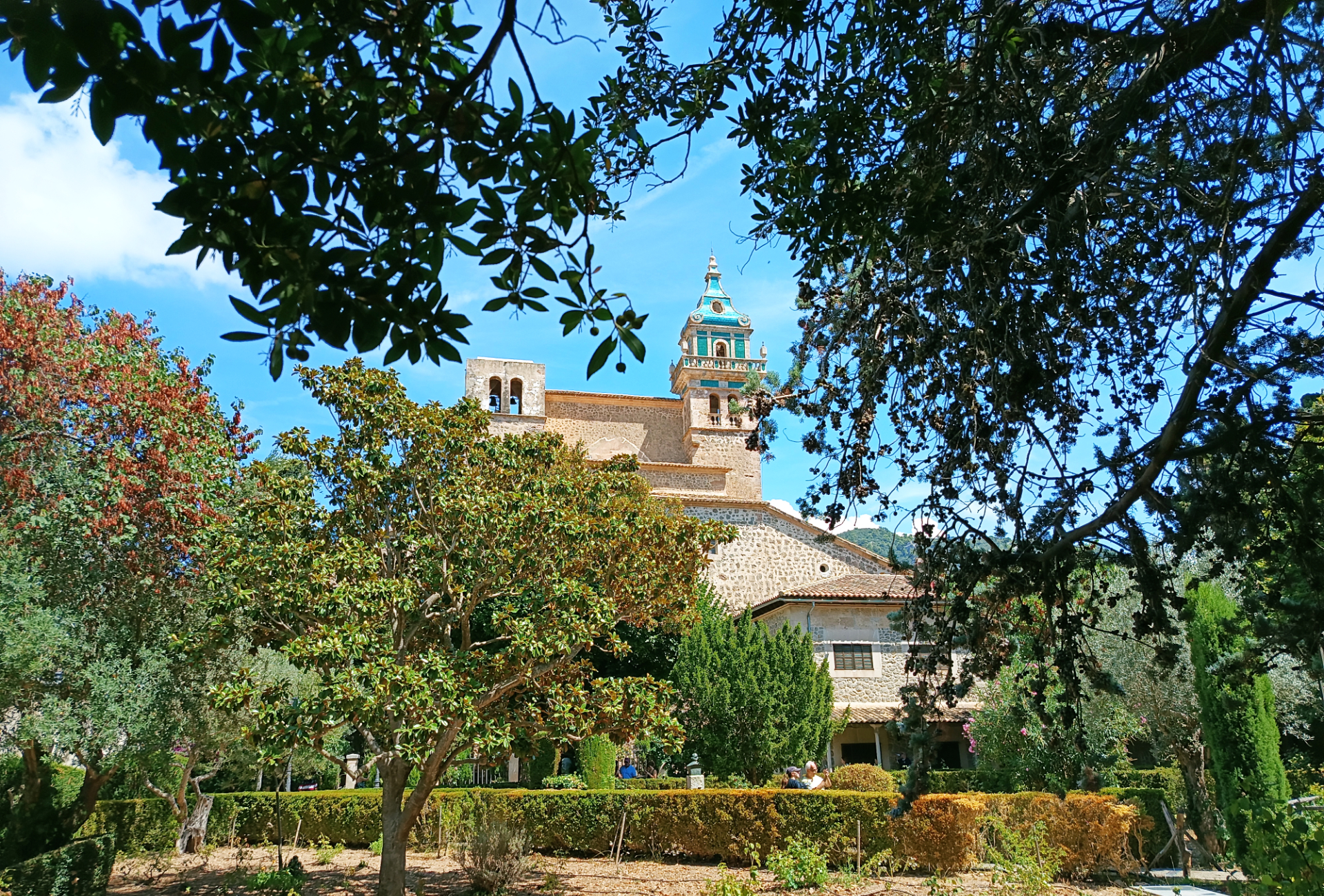
The Mallorcans naturally market the monastery, and so every year numerous tourists come to stroll through the charming village and its narrow streets. Economically this makes sense, but culturally it is at least questionable, since Sand does not speak kindly of the Mallorcans. With a sense of cultural superiority, she looks down mercilessly on the people and farmers of the island. She even goes so far as to call Mallorca the “island of monkeys,” comparing its inhabitants more to animals than to humans. This is certainly borderline. At the same time, it is somewhat understandable, as Mallorca at the time was still very rural and untouched by tourism.
“And yet the Mallorcan peasant is gentle, kind, peaceful, calm, and patient by nature. He dislikes evil and does not know good.” The rest of the passage elaborates on Sand’s harsh and exaggerated comparison of the peasants to innocent animals, describing them as superstitious, unscrupulous, and distrustful of foreigners, and explaining why she and her companions jokingly referred to Mallorca as the “island of monkeys.”
It should also be mentioned that the island’s inhabitants were terrified of Chopin’s contagious tuberculosis. When they learned of his illness, he was immediately thrown out of the rented house and all the furniture was burned. At the same time, Sand herself was undoubtedly a cultural shock for the Mallorcans: she wore men’s clothing, smoked cigars, and lived unmarried with a younger man — a full-blown scandal for the strictly Catholic, morally rigid Mallorca of the time. One must not forget: the Bierkönig did not exist yet.
It is also interesting that Chopin is never mentioned by name throughout the entire book. Sand always refers only to “our patient” or “a friend artist,” leaving it to the reader to realize that she is speaking of one of the most famous composers in music history.
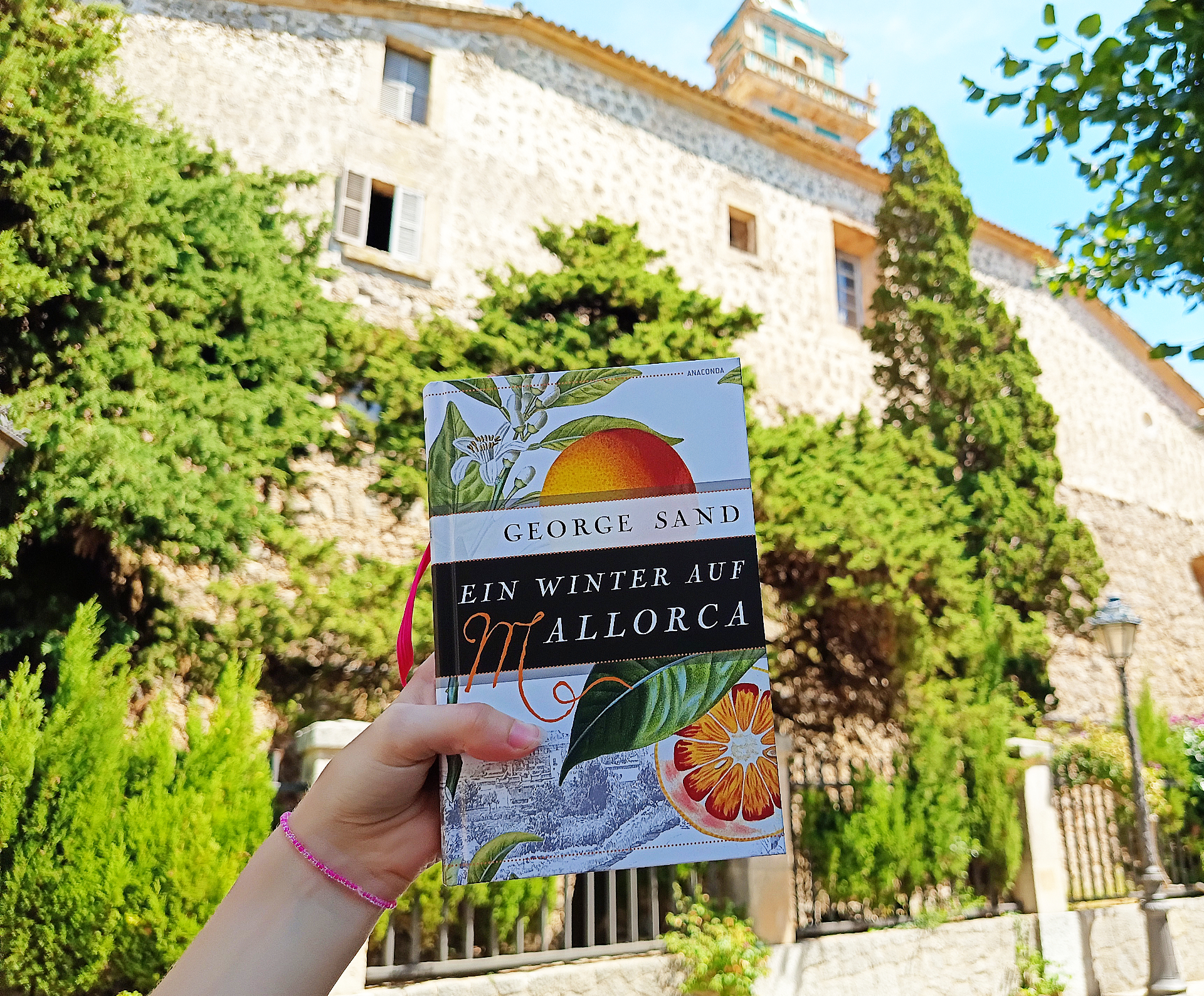
I chose the Anaconda edition. Its cover design is the prettiest, and I did not find a more bibliophilically appealing version. The Büchergilde offers an illustrated edition, but I did not find it visually convincing. The Anaconda edition is rather modest, with simple glue binding, no ribbon marker, nothing. But it is inexpensive, and you do not feel any regret if the book gets a drop of water at the pool. The translation reads pleasantly enough. Since the book is not a masterpiece, I was satisfied with a middle‑class translation. The translator, Carolin Wiedemeyer, delivers a solid text in my opinion.
Conclusion: Ein Winter auf Mallorca is not a masterpiece, but it is an entertaining and refreshing holiday read. Especially if you have the chance to visit Valldemossa and the Charterhouse, the book is a great pleasure. For those staying at home, it is definitely not essential reading: too chatty and not focused enough — there are better travelogues. But with its roughly 250 pages, it is quickly read, and I found the third part, with Sand’s own experiences and everyday observations, very enjoyable. If you want to get to know George Sand, I would rather recommend Nanon, which impressed me greatly. But if you plan to spend a holiday on Mallorca and have the opportunity to visit the Charterhouse, you should definitely pack this book.
Book information: Ein Winter auf Mallorca • George Sand • Anaconda Verlag • 256 pages • ISBN 9783730604694